
Advice for Maintaining Peace in Family Disagreements
27 min read Practical, culturally sensitive strategies to reduce tension, de-escalate conflicts, and preserve trust during family disagreements—covering listening skills, boundaries, timing, and repair after arguments. (0 Reviews)
Peace in a family isn’t the absence of disagreement; it’s the ability to disagree without damaging trust. Families are dynamic, full of overlapping roles, histories, and hopes. When conflict shows up—over money, chores, schedules, or values—it’s a chance to renegotiate how you live together, not a sign that you’re broken.
Think of a disagreement as a small fire. Left unchecked, it burns through the living room. Handled with care, it becomes a campfire: contained, safe, even bonding. This article offers practical, science-informed ways to keep your family’s fires contained—so they warm the room instead of scarring it.
Understand the Roots of Family Conflict

Conflicts rarely erupt out of nowhere. They ride in on patterns, expectations, and unmet needs. If you can name the pattern, you can change it.
Common sources of friction:
- Roles and identity: Who cooks, who earns, who decides. When roles shift (a new baby, a job loss), expectations collide.
- Scarcity: Limited time, money, energy. Scarcity amplifies fear and reduces patience.
- Values and norms: Privacy vs. togetherness, punctuality vs. flexibility, rest vs. productivity.
- Family of origin scripts: You may be replaying what you learned growing up—like equating silence with safety or volume with care.
A practical exercise:
- Map the last three arguments. For each, write Position (what each person said they wanted), Interest (why it mattered), and Pattern (what usually happens next). For example: Position: “We’re not paying for your club fees.” Interest: “We’re anxious about debt; we also want you to have opportunities.” Pattern: “Teen storms off; parent lectures; everyone avoids for two days.”
Why this matters: You can’t resolve what you won’t name. Patterns thrive in the dark; peace grows in the light of specifics.
Regulate Before You Communicate

You can’t solve a problem while your nervous system thinks it’s outrunning a tiger. Research on conflict shows that when people are physiologically “flooded,” logical reasoning and empathy drop. It typically takes about 20 minutes for the body to return to baseline once stress peaks.
Use this three-step regulation protocol:
- Check your state: Rate your activation 0–10. If you’re a 7 or higher, do not proceed.
- Pause with purpose: Say, “I want a good conversation. I need 20 minutes to cool down.” Then actually take that time.
- Reset your body: Try paced breathing—inhale 4, exhale 6—for five minutes. Shake your hands. Walk around the block. Hydrate. Small physical resets signal the brain that you’re safe.
Use HALT to catch preventable fights: Hungry, Angry, Lonely, Tired. If you hit any of these, tend to it before talking.
Quick scripts:
- “I’m at a 7/10 right now. I care about this and want to do it well. Can we meet back at 7:30?”
- “I’m feeling overheated. Let’s table this until after dinner.”
This isn’t avoidance; it’s airway before argument. Oxygen first, then conversation.
Listening That Lowers the Temperature

When people feel heard, they stop shouting. Active listening isn’t nodding politely; it’s the skill of mirroring, validating, and clarifying until the other person says, “Yes, that’s it.”
Try the “loop” technique:
- Mirror: “What I’m hearing is that when I’m late without texting, you feel disregarded.”
- Validate: “That makes sense—you’ve been juggling the kids alone and it’s stressful.”
- Clarify: “Did I get that right, or am I missing something?”
Add Nonviolent Communication ingredients:
- Observation (neutral facts): “On Tuesday and Thursday, I arrived 30 minutes late without a message.”
- Feeling: “You felt anxious and unimportant.”
- Need: “You need reliability and respect.”
- Request: “You’re asking me to text if I’ll be more than 10 minutes late.”
Mini case:
- Without listening: “You’re overreacting. It’s just traffic.”
- With listening: “I didn’t text. That left you hanging. You need reliability. Next time, I’ll send a quick message. How can we make this smoother?”
Tip: Put a physical reminder (a smooth stone, a bracelet) where you talk about tough topics. When you touch it, it’s your cue to slow down and listen.
Speak So You Can Be Heard

Speak in a way that keeps the conversation collaborative. Default to I-statements and clarity.
Use the BIFF method (Brief, Informative, Friendly, Firm):
- Brief: Keep it focused.
- Informative: Stick to facts and relevant context.
- Friendly: Neutral, non-sarcastic tone.
- Firm: Clear about boundaries or next steps.
Example transformation:
- Accusatory: “You never help with anything. You’re so selfish.”
- BIFF: “I’m overloaded with the morning routine. I need you to handle lunches or the school drop-off this week. Which works better for you?”
Make specific, testable asks:
- Vague: “Can you be more supportive?”
- Concrete: “Could you sit with me for 10 minutes after dinner tonight so I can talk through this project?”
Words to retire during conflict: “Always,” “never,” “obvious,” “ridiculous,” “whatever.” These close the door you’re trying to open.
Set Clear Boundaries and Rules of Engagement

Peace needs structure. Before you’re in a heated moment, draft basic rules everyone can accept. Post them where you live.
Rules of engagement examples:
- No yelling, name-calling, or threats.
- No interrupting; use a “talking object” (remote, spoon) to signal whose turn it is.
- Time-limited discussions: 25-minute blocks with a 5-minute break.
- No conflict when anyone is intoxicated or late at night; schedule for the next day.
Add a safe word or color:
- “Yellow” = I’m getting overwhelmed.
- “Red” = Stop now; we’ll resume after a break.
Boundary scripts:
- “I want to continue this, and I won’t stay in a conversation with insults. Let’s pause and try again at 3 p.m.”
- “I can discuss budget options. I won’t discuss it while you drive and we’re both distracted.”
Boundaries are not ultimatums; they’re commitments to the conditions under which you’ll engage.
Solve the Problem, Not the Person
It’s easy to attack character when you’re frustrated. Instead, shift from positions (“We’re not paying for that”) to interests (“We want to avoid debt and also support your growth”).
Use the 5 Whys to uncover interests:
- “Why is this important?” Ask until you land on a core value (security, belonging, autonomy, fairness, growth).
Then brainstorm options that honor both sets of interests:
- Stackable solutions: Combine partial wins. For the club fees example: the teen contributes by tutoring neighbors; parents cover half if grades stay above an agreed threshold; revisit in 90 days.
A quick decision framework:
- Clarify the decision owner(s): Who must say yes? Who should be consulted? Who needs to be informed afterward?
- Define success criteria: What must any solution accomplish? Example: “Keeps us under $300/month; teaches responsibility; avoids late-night pickups.”
- Generate three options; compare them against the criteria.
- Choose, pilot for two weeks, then review.
When the problem is about fairness, note the difference:
- Equality: Everyone gets the same.
- Equity: Everyone gets what they need. Peace often requires equity, not rigid equality.
Make Agreements You Can Keep

Vague promises break quickly. Turn agreements into something you can see, schedule, and track.
Use the SMART format:
- Specific: “I’ll text if I’m running more than 10 minutes behind.”
- Measurable: “We’ll cap eating out at $120/week.”
- Achievable: “I can do bedtime three nights a week; not five.”
- Relevant: “This reduces stress before school.”
- Time-bound: “We’ll try this for a month and reevaluate on the 1st.”
Add accountability:
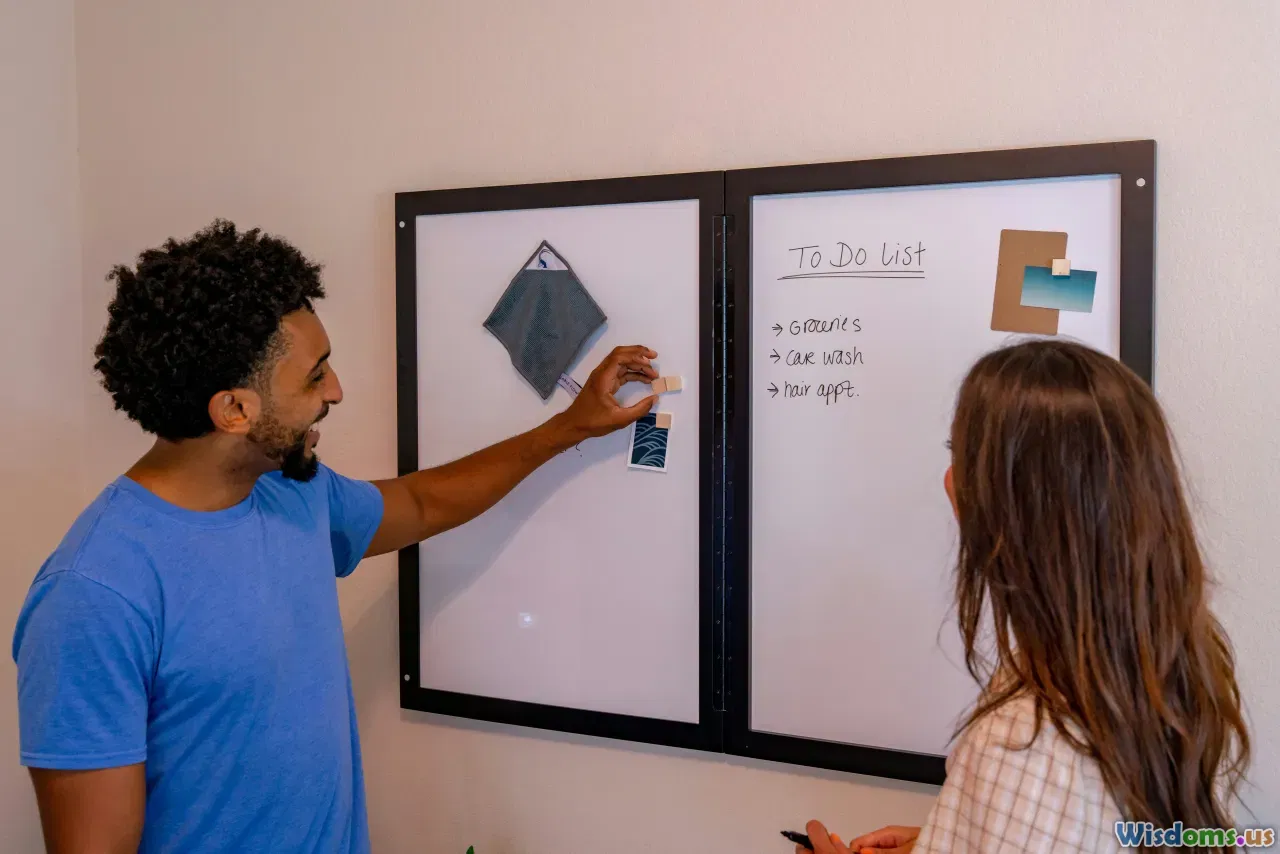
- Visual tracker: A shared calendar or whiteboard. Don’t rely on memory.
- Scheduled check-in: 10 minutes every Sunday to review what worked and what didn’t.
- Renegotiation clause: “If someone can’t keep a commitment, they’ll flag it at the check-in and propose an alternative.”
Mini case: Screen time
- Agreement: “On school nights, video games end at 8 p.m. Devices charge in the kitchen. We’ll set an alarm at 7:55 to avoid last-minute battles.”
- Review plan: “We’ll revisit after midterms.”
Good agreements are living documents, not stone tablets.
Repair Hurts Quickly and Well

Even with the best habits, you’ll miss the mark. Peace depends on how you repair.
Use the five-part repair:
- Name the impact: “When I rolled my eyes during dinner, I put you down in front of the kids.”
- Take responsibility without excuses: “I did that. It wasn’t okay.”
- Share insight: “I was embarrassed about forgetting the appointment and deflected it onto you.”
- Make it right: “I’ll apologize to the kids and own my mistake. I also want to hear how it landed for you.”
- Prevent repeat: “Next time, I’ll ask for a timeout when I feel defensive.”
Remember the 5:1 ratio: Stable relationships tend to have at least five positive interactions for every negative one. After a conflict, consciously add deposits—kind words, small favors, appreciation notes.
A repair script:
- “I hurt you yesterday when I dismissed your idea. I’m sorry. Your input matters to me. Can we set aside 15 minutes tonight so I can listen without interrupting?”
Repair is not erasing; it’s acknowledging and healing.
Differences Across Life Stages and Cultures

Peace looks different depending on age, role, and cultural norms.
With young kids:
- Keep it concrete and short. Use visual tools like timers or charts.
- Name feelings: “Your body is telling you it’s frustrated. Let’s stomp together for 20 seconds, then problem-solve.”
- Model repair: Let them see you apologize and reconcile.
With teens:
- Autonomy matters. Offer choices within boundaries: “You can do chores Friday after practice or Saturday morning.”
- Avoid public confrontations; privacy preserves dignity.
- Make room for identity exploration even when it conflicts with your preferences, provided safety is not compromised.
With elders:
- Honor legacy and agency. Ask for stories behind preferences—often there’s a wartime, immigration, or hardship tale shaping strong views.
- Plan for cognitive changes: Keep discussions simple, with one decision per conversation. Use reminders and written summaries.
Across cultures:
- Some families prioritize harmony and indirect communication; others value directness. Neither is wrong—just different.
- Translate values into behaviors: If harmony is prized, agree on gentle check-ins before tough topics. If directness is prized, agree to respectful clarity and time limits.
- Use a neutral third party or interpreter when language gaps fuel misunderstanding.
Holidays, Money, and Other Hot Zones

Plan for predictable flashpoints. Advanced clarity reduces last-minute conflict.
Holidays and visits:
- Draft a schedule by October or a month in advance of any major event. Alternate years or split time. Put travel and hosting expectations in writing.
- Set house rules for guests and hosts: bedtime routines for kids, quiet hours, dietary needs, cleanup norms.
- Create a “tap out” option: Anyone can take a walk or nap without judgment.
Money meetings:
- Hold a 30-minute monthly budget check. Agenda: review last month, adjust this month, approve any exceptions.
- Use thresholds: “Purchases over $150 require discussion.”
- Label savings with goals: “Emergency,” “Education,” “Travel.” Goals reduce the pain of saying no to impulse spending.
Family events:
- Combine preferences: One person wants a big party; another wants quiet. Compromise by hosting a small brunch plus a larger drop-in gathering.
When you anticipate the spike, you can drain it of drama.
When Peace Isn’t the Right Goal

Sometimes “keeping the peace” becomes code for tolerating harm. Safety is the priority.
If there is abuse, coercion, untreated severe substance use, or credible threats, the strategy shifts:
- Document incidents and set clear safety plans (where to go, who to call).
- Reduce contact or establish supervised contact when necessary.
- Seek support from professionals and local resources suited to your region. If you are in immediate danger, contact emergency services.
Peace without safety is silence. Your well-being comes first.
Tools and Rituals That Keep Peace Alive

Make conflict prevention a routine, not a rescue mission.
Weekly family meeting (30–45 minutes):
- Check-in: Each person shares a “weather report” for the week (sunny, cloudy, stormy) and one gratitude.
- Logistics: Schedules, rides, meals.
- Improvements: One small thing to try this week (e.g., set a 9 p.m. device basket).
- Open floor: One tough topic, timed and structured.
- Close with a ritual: Hands in, family cheer, or a shared dessert.
Daily micro-rituals:
- 10-second kiss or hug for couples; 6-second holds lower stress hormones.
- “High/Low/Helped”: Everyone shares a high point, a low, and someone they helped today.
- Device-free windows: First and last 30 minutes of the day.
Tech helpers:
- Shared calendar with color codes for each person.
- Family group chat norms (no heavy topics after 9 p.m.; use emojis to signal tone).
- A notes app for “parking lot” items that need discussion later.
Rituals aren’t fluff; they are the scaffolding that supports hard conversations.
Practice: Small Drills for Big Payoffs

Skills stick when you practice them outside the crisis.
Two minute mirroring drill:
- Partner A speaks for 60 seconds about a neutral topic (a podcast, a recipe).
- Partner B mirrors exactly, then asks, “Did I get that right?” Switch roles.
- Goal: Make mirroring feel natural so it’s available under stress.
Implementation intentions:
- If-then plans encode behavior. “If I notice my voice getting loud, then I will stand up and get a glass of water.” “If we disagree, then we will move to the kitchen table instead of arguing in the hallway.”
At-home de-escalation practice:
- Practice calling “Yellow” and pausing for three deep breaths, even when you’re calm.
- Time your 20-minute cool-down with a playlist so the time passes predictably.
Rehearsal reduces the speed bumps that derail real conversations.
Coaching Kids on Conflict

Teaching kids to handle disagreements is a long-term peace strategy.
Make feelings fluency normal:
- Use a feelings wheel on the fridge. Ask, “Point to how you feel.”
- Link sensations to emotions: “Tight tummy can mean worry.”
Problem-solving steps (kid-sized):
- Stop and breathe.
- Say the problem without blaming: “We both want the blue marker.”
- Brainstorm three ideas: “Timer, trade, or take turns by drawing two lines each.”
- Choose and test one.
Model repair:
- Let kids see you say, “I snapped earlier. I’m sorry. I was stressed, and I’m working on taking breaks.”
Teach fairness vs. equality:
- Explain: “Equal means same; fair means everyone gets what helps them. Your sister goes to bed earlier because her body needs more sleep.”
When kids learn conflict tools, the whole home gets quieter.
Two Case Studies You Can Steal From
Case 1: The college visit clash
- Situation: A high school senior wants you to visit five out-of-state colleges. You prefer in-state options to save money.
- Roots: Autonomy vs. financial security.
- Regulation: You notice you’re at a 7/10; you pause for 20 minutes.
- Listening loop: “You want to explore widely so you don’t close doors. That makes sense given how hard you’ve worked.”
- Interests: Student—options, independence; Parent—cost, safety, time off work.
- Options:
- Visit two out-of-state schools that offer strong scholarships; use virtual tours for the rest.
- Set a budget for travel and ask the student to contribute via part-time work.
- Schedule visits during a holiday weekend to minimize missed work.
- Agreement: “We’ll visit one school in March and one in April, both with merit aid. We’ll decide on the third after we see scholarship letters.”
- Repair: “I got anxious and said, ‘No way, not happening.’ That shut you down. I’m sorry. I want to support your goals while protecting our budget.”
Case 2: The in-law drop-in
- Situation: A parent-in-law visits without notice, disrupting naps and routines.
- Roots: Hospitality norms vs. structure for kids.
- Regulation: You use an if-then plan: If the doorbell rings during nap time, then I’ll text instead of answering immediately.
- Listening loop with partner: “You grew up with open doors; that feels loving to you.” “I grew up with schedules; that feels safe to me.”
- Boundary: “We love seeing you. We need text notice at least two hours ahead. If it’s nap time, we’ll schedule for later.”
- Tools: A shared family calendar for visits.
- Repair with in-law: “I sounded rude yesterday. I was worried about the baby’s sleep. We’re setting up a simple system so we can enjoy our time together.”
What to Do When You’re Stuck

Despite best efforts, some patterns resist change. When you feel trapped in loops—same fight, different day—bring in support.
Options:
- Mediation or family therapy: A neutral facilitator helps surface interests and ground rules.
- Parent coaching or workshops: Learn scripts and routines that fit your family stage.
- Written agreements: For co-parenting across households, document exchanges, holidays, and decision-making to reduce day-to-day negotiation.
Self-reflection questions:
- Where do I get defensive fastest? What fear sits underneath?
- What do I want to protect: my image, my time, my values? How can I say that directly instead of reacting indirectly?
- What one skill, if improved, would make the biggest difference this month?
If you’re reading this, you care enough to change. That’s the hardest part.
A One-Page Peace Plan You Can Start Today

Print or copy this into your notes app and try it for two weeks.
- Our rules of engagement: No insults; time-limited talks; safe word “Yellow.”
- Our pause plan: If anyone is above 6/10, we pause for 20 minutes with a walk or breathing.
- Our listening loop: Mirror, validate, clarify until the speaker says, “Yes, that’s it.”
- Our speaking guide: BIFF—Brief, Informative, Friendly, Firm.
- Our weekly meeting: Sundays at 5 p.m.; agenda posted on the fridge.
- Our repair ritual: Own it within 24 hours; five-part repair; 5:1 positives afterward.
- Our decision framework: Define success criteria; generate three options; pilot and review.
- Our hot zones: Holidays scheduled a month in advance; money meeting first Saturday.
- Our safety line: We pause any talk if someone feels unsafe; seek help when needed.
Tape it to the fridge, not as a perfection contract but as a compass. Use it to navigate—not to judge.
Conflict will still happen. Voices will rise sometimes; schedules will collide; someone will forget the eggs or the recital. But with shared rules, practiced skills, and gentle repairs, disagreements stop being a threat to togetherness and become what they can be: the workshop where families build trust, clarity, and a more livable home. When the next fire sparks, you’ll have your bucket of water—and maybe even a lighter touch to turn it into a campfire worth gathering around.
Rate the Post
User Reviews









Popular Posts