
Comparing Laws of Hammurabi and Early Chinese Dynasties
31 min read Comparative analysis of the Laws of Hammurabi and legal traditions of Shang, Zhou, and Qin China, highlighting crime, punishment, authority, and philosophy through case examples and archaeological evidence. (0 Reviews)
Laws are the fingerprints of a civilization. They capture what a society fears, values, and aspires to discipline into order. Compare the famous Code of Hammurabi, carved in basalt almost four millennia ago in Mesopotamia, with the laws that guided early Chinese states, and you see two grand experiments in building stable rule from fragile human behavior. Both sought predictable justice, but they drew on starkly different philosophies, institutions, and social structures. That contrast is not just fascinating history; it’s a map of how rules become power—and how power molds rules.
Historical context: why these laws emerged when they did

Mesopotamia and early China both underwent dramatic state consolidation, and their legal systems helped bind these new, larger polities together.
-
Babylon under Hammurabi (r. c. 1792–1750 BCE) unified competing city-states, extended irrigation infrastructures, and knit together merchants, landholders, and temple institutions. The so-called Code of Hammurabi—roughly 282 provisions inscribed in Old Babylonian Akkadian cuneiform on a basalt stele—was part monument, part legal instruction. Its prologue and epilogue frame the king as the divinely mandated guardian of justice appointed by the sun-god Shamash. Although not the first ancient law collection (earlier Sumerian codes existed, like the Laws of Ur-Nammu), Hammurabi’s is the most complete and artfully publicized of its time.
-
In early China, the path to codified, enforceable laws was longer and more contested. The late Shang (c. 13th–11th century BCE) left oracle bone inscriptions that reveal a court concerned with divination and royal decision-making, not publicly promulgated codes. The Zhou (c. 1045–256 BCE) advocated governance through li (ritual propriety), moral hierarchy, and kinship networks; written penal statutes existed, but they competed with ritual norms. It was the Qin state (221–206 BCE)—sharply Legalist in philosophy—that standardized script, measures, and punishments and issued detailed, binding statutes administered by officials. Archaeological finds at Shuihudi (Qin) and Zhangjiashan (early Han, 2nd century BCE) recovered bamboo-slip texts with statutes on theft, household registration, fields, markets, and administrative procedure. The Han dynasty (206 BCE–220 CE) then hybridized: Confucian ethics and ritual informed a state that still relied on precise statutes, clerical records, and graded penalties.
Why the difference? Babylon’s urban, temple-centered economy demanded fixed rules for contracts, irrigation, and property claims; public display of law served propaganda and guidance. Early China’s lineage-based aristocratic order had long trusted moral cultivation over explicit law; only under Legalist pressure did written, impersonal norms dominate, with the Qin and Han bureaucracy using statutes to extend central control.
Sources and formats: stone stela versus bamboo slips
-
Hammurabi’s laws survive on a tall basalt stele now in the Louvre and on clay tablets. The stele’s visual program—Hammurabi receiving a rod and ring from Shamash—broadcasts that law descends from divinity through kingship. Its text uses casuistic “if… then…” formulas tailored to recurring disputes: loans, landlord-tenant conflicts, injuries, and family matters. Display in a public place signaled universality and the king’s patronage of justice.
-
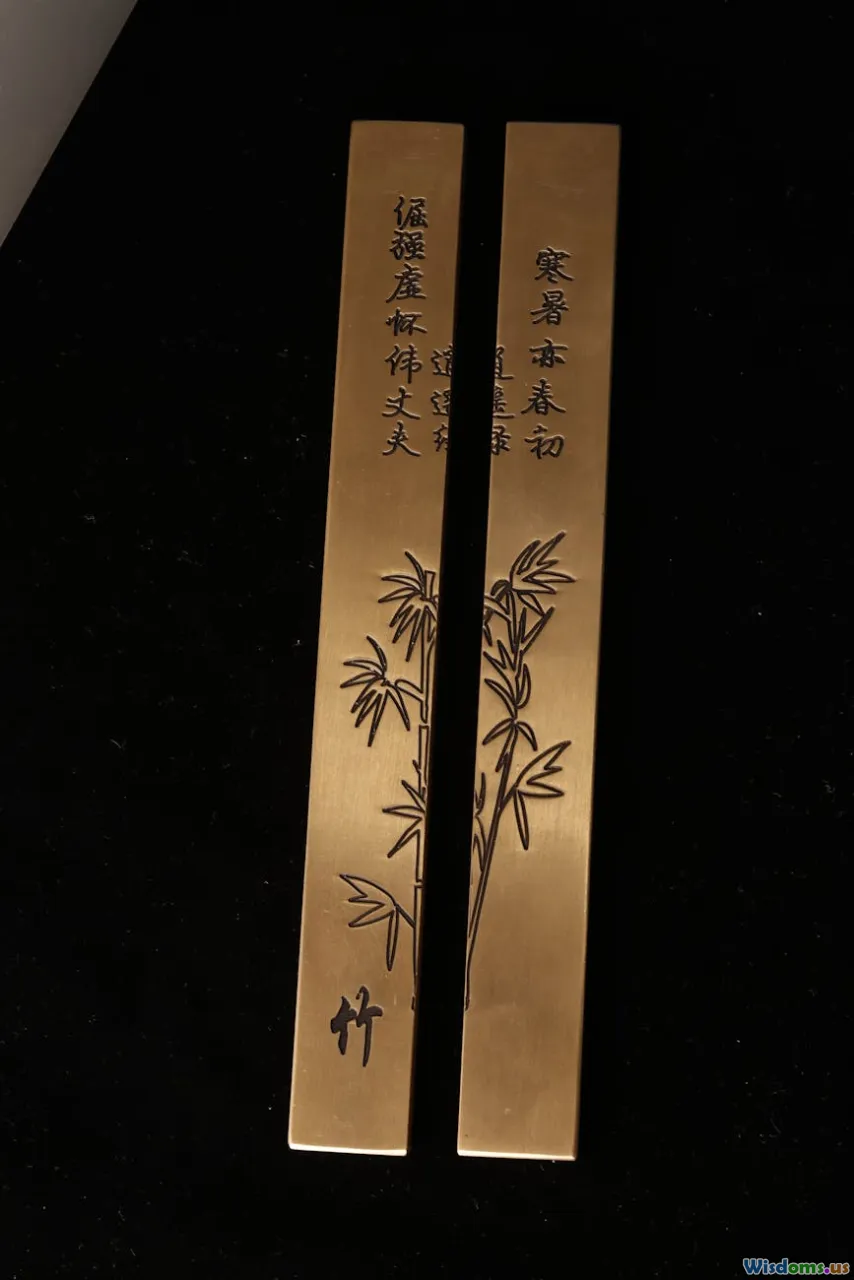
Early Chinese statutes were not carved for popular display. They circulated chiefly among officials as bamboo- and wooden-slip dossiers, sometimes silk, copied and transported between bureaus. The Qin standardized small-seal script, helping uniform application, and posted some edicts in marketplaces or along roads, but the detailed codes—on theft, capture of fugitives, military ranks, tax registration—were administrative handbooks. The Shuihudi slips (Qin) and Zhangjiashan slips (early Han, including the “Statutes and Ordinances of the Second Year”) evidence clauses on procedure, measuring tools, corvée labor, and even forensic methods. Where Hammurabi’s monument taught the public by spectacle and rhetoric, Qin-Han law taught officials by precision and file management.
This is a vital interpretive point: the Mesopotamian stele performed law, while the Qin-Han slips implemented it. Publicity versus bureaucratic circulation shaped how each legal culture thought about enforcement and legitimacy.
Philosophical foundations: talion, li, and Legalism

-
Mesopotamian kingship fused religion and rule: justice was cosmic order. The “lex talionis” principle (“an eye for an eye”) appears prominently but not uniformly. Retaliation and equivalent compensation are framed by social status: penalties differ for injuries among an awīlum (free upper-status man), a muškēnum (dependent/commoner), and a slave. Divine ordeals (for example, the river ordeal) settle cases when evidence is contested—oaths before gods are probative tools.
-
Early China staged a philosophical contest. Confucian thought prioritized li—ritual and moral education—to cultivate virtue, fearing that reliance on punishment would breed mere compliance without inner rectification. Legalists, associated with Shang Yang and Han Fei, insisted on fa—clear rules, rewards, and punishments—so predictable enforcement could overcome favoritism and secure state power. The Qin built its empire on fa: quantified ranks for merit, collective responsibility in households, and severe penalties for dereliction. The Han synthesized: Confucian moral categories shaped law’s spirit (e.g., emphasis on filial piety, graded obligations), but the machinery remained Legalist—statutes, uniform procedures, and written case records.
In short: Hammurabi’s justice is personal and theocratic; Qin-Han legality is impersonal and bureaucratic (though morally inflected in Han). Both, however, claim predictability as a virtue.
Social hierarchy and equality before the law

-
In Hammurabi’s laws, class is explicit. If an awīlum puts out the eye of another awīlum, his own eye is put out; if he harms a muškēnum, he pays silver; if a slave is injured, compensation goes to the owner. The law carefully scales fines and retaliation to rank. Builders, merchants, and farmers are subject to accountability, yet owners’ interests structure outcomes—e.g., harboring a runaway slave may incur death.
-
In Qin-Han law, hierarchy plays out differently. Qin reforms reduced hereditary aristocratic privilege by awarding military merit ranks to commoners. Statutes aimed to apply uniformly to registered households, with collective responsibility (neighbors and family units jointly liable for reporting crimes and conscription evaders). Yet inequality persisted: officials and persons of merit sometimes qualified for mitigations later formalized as “Eight Deliberations” (ba yi) in Han, which allowed consideration of rank, service, and kinship in sentencing. Family status also mattered substantively: crimes against parents or elders were aggravated; a son striking a father attracted more severe punishment than the reverse. Early Han reforms replaced some mutilating punishments with flogging (notably under Emperor Wen, 167 BCE), but the severity of flogging led to later adjustments. The promise of uniformity coexisted with graded morality and administrative discretion.
Both systems thus mixed equality-in-theory (predictable rules) with inequality-in-practice (status, kinship, office). The differences lie in emphasis: Hammurabi writes rank into the penalty scale itself; Qin-Han embed rank and relationships in mitigation, exemptions, and offense grading.
Property, contracts, and commerce

-
Hammurabi’s collection is a masterclass in commercial pragmatism. Examples:
- Loans and interest: Standard rates often cited in the Old Babylonian period are about 20% annually for silver and a third for grain. Law clauses govern collateral, default, and seasonal constraints (e.g., debt relief during catastrophe). Debt bondage of free persons is limited in duration (often to three years) to balance creditor rights with social stability.
- Builders’ liability: If a house collapses and kills its owner, the builder may be executed; if it kills the owner’s son, the builder’s son may be put to death—a stark illustration of talion and a warning to professionals.
- Irrigation: If a farmer neglects to maintain his canal and floods neighbors’ fields, he must compensate the loss—an early tort for infrastructural negligence.
- Agency and deposits: Merchants working through agents face rules on accounting, loss, and fraud, protecting investment in long-distance trade.
-
Qin-Han statutes treat property through the lens of registration and agriculture:
- Household registers and land allotments: Bamboo-slip statutes detail hukou (household) registration, field quotas, tax rates, and corvée obligations. Unregistered persons face penalties; neighbors must report them.
- Contracts: Excavated slips and frontier documents (e.g., Juyan Han slips) preserve private contracts for loans, land, and labor with witnesses and seals. The state set maximum interest rates in practice (e.g., “three tenths” per annum is a commonly referenced cap in classical sources), penalized concealment of property, and recognized pledges and guarantors.
- Markets and monopolies: Weights and measures are standardized; market supervisors inspect scales and collect fees. Under Han Wudi (141–87 BCE), the state created salt and iron monopolies (119 BCE) to fund campaigns and stabilize prices; debates recorded in Discourses on Salt and Iron (81 BCE) show legal-economic thinking about market regulation, welfare, and moral economy.
Both systems support commerce but differ in style: Hammurabi assigns specific liabilities to professions and transactional categories; Qin-Han embeds commerce in census, taxation, and administrative oversight, complementing private contracts with public controls.
Criminal law and punishments

-
In Hammurabi’s world, punishments range from restitution to death, with talion in offenses against the body. Theft, temple robbery, and certain forms of fraud can be capital crimes. False accusation may trigger the penalty sought for the accused. Adultery can lead to death by drowning, though the king (or judge) may commute under conditions. The river ordeal—submitting the accused to a divine test—appears in contentious cases (notably for suspected adultery or sorcery): if the accused sinks and dies, guilt is proven; if they survive, innocence is vindicated. Oaths, witnesses, and documentary contracts also structure proof.
-
Qin-Han criminal law is famously severe in Qin, comparatively moderated—but still strict—in Han. Features include:
- Collective responsibility: Households and neighbor groups must report crimes; failure to do so is punishable. Harboring fugitives brings penalties; reporting yields rewards, sometimes even increases in official rank in Qin’s merit system.
- Graded penalties: Tattooing, amputation, forced labor, and exile were used in Qin; early Han replaced some mutilations with flogging and penal servitude. The law meticulously grades punishments by number of strokes, years of labor, or distance of exile, with enhancements for aggravating factors such as night, conspiracy, or use of weapons.
- State-centered offenses: Treason, rebellion, illicit forging of tallies, and unauthorized use of seals are severely punished. Offenses show an administrative state worried about document integrity and command obedience.
- Evidence and confession: Written records are central. Interrogation is supervised; torture is legally bounded yet present, and false confession or wrongful conviction is a serious bureaucratic failing that can be punished.
The Mesopotamian law expresses a moral economy of equivalents and honor, often public and symbolic; the Chinese statutes express a managerial penal rationality, focused on compliance and administrative security.
Family, gender, and inheritance

-
Hammurabi’s clauses depict a patriarchal but structured family regime:
- Marriage and property: A bride-price and dowry accompany marriage; dowry remains the woman’s property under many conditions. Adultery is severely punished; accusations can be tested by ordeal.
- Divorce: Grounds and consequences are specified—if a husband divorces a wife who has borne him children, he must provide support; if she is barren or “neglects her duties,” he may dismiss her with stipulated payments.
- Inheritance: Sons typically inherit; if a father acknowledges children by a slave, they receive portions. Widows can manage property for their children; disputes over paternal recognition are litigated with oaths and witnesses.
-
Qin-Han family law fits Confucian kinship but operates via statutes:
- Filial hierarchy: Crimes against parents and elders carry heavier penalties; parents’ discipline of children is treated more leniently. The state’s moral order runs through the family.
- Marriage: Betrothal gifts and written agreements are common; the husband’s family absorbs the wife. Normative texts—heirs apparent in ritual treatises—speak of “seven grounds” for repudiation (e.g., barrenness, adultery, jealousy), but statutes also recognize protections (e.g., difficulty of divorce if the wife has nowhere else to go or has mourned the husband’s parents faithfully). Practice varied regionally and over time, and magistrates weighed equity against custom.
- Inheritance: Excavated Han legal texts and case records suggest partible inheritance among sons was standard; daughters typically did not inherit if there were sons, though they could receive dowries and inherit in the absence of male heirs. Adoption to secure a patrilineal heir was common and legally recognized.
The contrast: Hammurabi’s family law is case-bound and transactional; Qin-Han’s is more structural, embedding morality of filial ranks into criminal aggravations and procedural priorities.
Evidence, courts, and legal procedure

-
In Hammurabi’s Mesopotamia, disputes came before judges and assemblies of elders, often at or symbolically tied to the city gate. Written contracts—sealed, witnessed—anchor commercial litigation. Oaths and ordeals fill evidentiary gaps. Judges who alter their written judgments can be fined or removed, indicating attention to procedural fairness and to the authority of the written decision.
-
In Qin-Han China, the courtroom is an office (yamen’s precursor) with clerks and files. A county magistrate hears cases, cites statutes, records interrogations on slips, and forwards serious matters upward. Procedural statutes detail arrest protocols, custody, service of documents, and the hierarchy of appeal from county to commandery to central ministries. Autopsy and forensic manuals discovered among slips show standardized examination of suspicious deaths. Officials are accountable: failing to apply the correct statute or mishandling evidence can itself be a punishable offense.
Where Hammurabi’s model leans on communal witnesses and ritual testing of truth, Qin-Han’s leans on bureaucratic writing and institutional escalation.
How to compare them without anachronism

Avoid reading these texts as modern penal codes or perfectly enforced rules. A practical, research-oriented approach:
- Treat them as prescriptive ideals. Hammurabi’s laws and Qin-Han statutes articulate what rulers and officials wanted to happen. Actual practice could deviate.
- Consider genre and publicity. Hammurabi’s stele is as much royal ideology as manual. Qin-Han bamboo slips are working documents for administrators.
- Use archaeology and case records. Excavated contracts (Mesopotamian clay tablets; Han frontier documents), legal slips, and administrative correspondence anchor how rules applied.
- Watch translation traps. “Eye for an eye” does not always mean literal blinding; many cases substitute fines. Similarly, Chinese “fa” is not “rule of law” in the liberal sense; it is instrumental law aimed at order.
- Compare like with like. Align clauses about irrigation with Chinese field statutes; align builder liability with Qin-Han accountability of artisans and officials; align family-property clauses with Han inheritance practices.
- Weigh philosophy against institutions. Confucian and Legalist texts debate moral governance, but the decisive factor for enforcement was the bureaucracy—the slip, the seal, the register.
- Read across time. The Qin was harsher than Han; not all Chinese “early dynasties” are interchangeable. Likewise, Hammurabi’s code is Old Babylonian; later Mesopotamian kingdoms modified practices.
Recommended starting points for deeper study include translations and analyses of Hammurabi’s laws, the Shuihudi Qin statutes, and the Zhangjiashan Han “Statutes and Ordinances,” plus studies of excavated contracts and forensic manuals.
What modern law can still learn

- Publicity and clarity matter. Hammurabi knew that carving law in stone powerfully legitimates. Modern systems still struggle with making law legible to laypeople; plain-language statutes and public outreach are not window-dressing—they’re part of legality.
- Institutions beat intentions. Qin-Han show that filing systems, standardized forms, and trained clerks are the engine of predictable justice. Investing in court administration yields as much justice as passing new acts.
- Proportionality is political. Hammurabi’s talion and Qin’s harshness both rationalize penalties relative to social goals—deterrence, honor, state security. Modern debates over sentencing guidelines echo these ancient trade-offs.
- Beware status bias. Hammurabi codifies rank; Han mitigations for rank show the soft return of privilege. Today, wealth and status still slant outcomes. Formal equality is not self-enforcing.
- Align incentives. Qin’s rewards for reporting and military service monetized compliance; Hammurabi’s strict professional liability deterred negligence. Contemporary compliance regimes—from building codes to financial audits—benefit from equally crisp incentives and accountability.
- Integrate moral norms without weaponizing them. Han law elevated filial piety and respect, which bolstered social cohesion but also justified severe asymmetries within families. Modern law must balance cultural values with individual rights.
Quick side-by-side summary

- Time and place:
- Hammurabi: Old Babylonian Mesopotamia, c. 18th century BCE.
- Early Chinese dynasties: Shang (oracle bones, minimal codification), Zhou (ritual governance), Qin (codified Legalist statutes), Han (Confucian-Legalist synthesis), c. 3rd–2nd century BCE for surviving statutes.
- Medium and circulation:
- Hammurabi: Basalt public stele, cuneiform tablets; public-facing ideology and guidance.
- Qin-Han: Bamboo/wooden slips for officials; edicts sometimes posted, but detailed law mainly bureaucratic.
- Foundations:
- Hammurabi: Divine kingship, talion, rank-based penalties, oaths and ordeals.
- Qin-Han: Legalist fa (clear rules, rewards/punishments) blended with Confucian li (moral hierarchy), centralized bureaucracy.
- Equality/Hierarchy:
- Hammurabi: Penalties scaled overtly by social class.
- Qin-Han: Ideally uniform across registered households, but mitigations/exemptions for rank and strong kinship gradients.
- Commerce and property:
- Hammurabi: Detailed contract law (interest rates, deposit/agency, builder liability, irrigation torts), debt bondage limits.
- Qin-Han: Household registration, standardized measures, market oversight, interest caps in practice, state monopolies (salt/iron under Han), extensive administrative record-keeping.
- Criminal justice:
- Hammurabi: Restitution, execution, talion, ordeal; temple and property protection paramount.
- Qin-Han: Graded corporal punishments, forced labor, exile; collective responsibility; crimes against the state prioritized; confession and written records central.
- Family and inheritance:
- Hammurabi: Bride-price/dowry rules, conditional divorce, partible inheritance with recognition of slave-born children.
- Qin-Han: Patrilineal focus, enhanced penalties for unfilial acts, partible inheritance among sons, adoption to secure heirs; norms about grounds for repudiation tempered by protective exceptions.
- Procedure:
- Hammurabi: Elders and judges, oaths, witnesses, penalties for altering judgments.
- Qin-Han: Magistrate courts, clerks, forms, appeals, forensic manuals, official liability for misapplication.
Case-based comparison: how the same problem plays out

-
Collapsing house killing the owner:
- Hammurabi: The builder faces death; if the owner’s son dies, the builder’s son may be put to death; if property only is damaged, the builder must repair and compensate. The social message: professions bear strict, even vicarious, liability.
- Qin-Han: Statutes impose graded penalties and fines on negligent artisans and their overseers; compensation and penal labor are common. Vicarious execution of a son for his father’s fault would not fit Qin-Han practice; instead, collective responsibility might punish co-resident adults if concealment occurred.
-
Borrower defaults after crop failure:
- Hammurabi: Seasonal risk and force majeure can suspend collection; debt bondage is capped in duration; interest rates are structured, often higher in grain loans.
- Qin-Han: Tax registers track yields; remissions may occur by imperial decree during disasters; interest caps and renegotiations are documented by contract. Failure to report or conceal assets can trigger penalties.
-
Accusation of adultery without solid proof:
- Hammurabi: The river ordeal may be used; survival exonerates, drowning condemns. If proven, both adulterers face execution, though pardons are possible.
- Qin-Han: Investigation through interrogation and witness testimony; no ordeal. False accusation is punishable; family standing may influence severity.
These scenarios show Hammurabi’s symbolic equivalence versus Qin-Han’s administrative proportionality.
Tips for students and readers: building a smart comparative toolkit

- Start with the big three categories: (1) Who makes/enforces the law? (2) What values does the law encode? (3) How is information stored and moved?
- Anchor arguments in artifacts: cite the basalt stele and the bamboo-slip statutes (Shuihudi, Zhangjiashan), plus excavated contracts.
- Track vocabulary: awīlum, muškēnum, and wardum in Mesopotamia; li and fa, household registers, and ranks in China.
- Use one vivid clause per system per theme to avoid generalities: builder liability (Hammurabi), collective responsibility (Qin), filial aggravation (Han), irrigation negligence (Hammurabi), household concealment penalties (Qin/Han).
- Beware presentism: do not map “rule of law” directly onto any ancient system. Qin practiced “rule by law,” a sharp tool of statecraft; Hammurabi’s law sacralized kingship.
- Check change over time: Qin’s severity, Han’s partial moderation; local courts versus central review.
A disciplined approach like this turns scattered clauses into a coherent picture of how ancient states engineered order.
The deeper you look, the less “exotic” these codes appear. Both civilizations faced the enduring problems of collective life: coordinating agriculture and trade, curbing violence, securing obedience without smothering initiative, and legitimating power. They answered within their own cosmologies and institutions—Hammurabi with divinely tinged equivalence and public monumentality; the Qin and Han with bureaucratic files, standardized rules, and moralized hierarchy. If anything, their experiments remind us that law is never just text. It is a technology of governance, a language of values, and a living practice that must be copied, read, and believed to work. The stone, the slip, and the seal each gave law a different kind of life—and each still has something to teach us about making rules that people can see, understand, and trust.
Rate the Post
User Reviews









Popular Posts