From side hustle to agency with project management systems
34 min read A strategic roadmap for turning a side hustle into a scalable agency using project management systems, SOPs, and automation to standardize delivery, elevate client experience, and protect margins. (0 Reviews)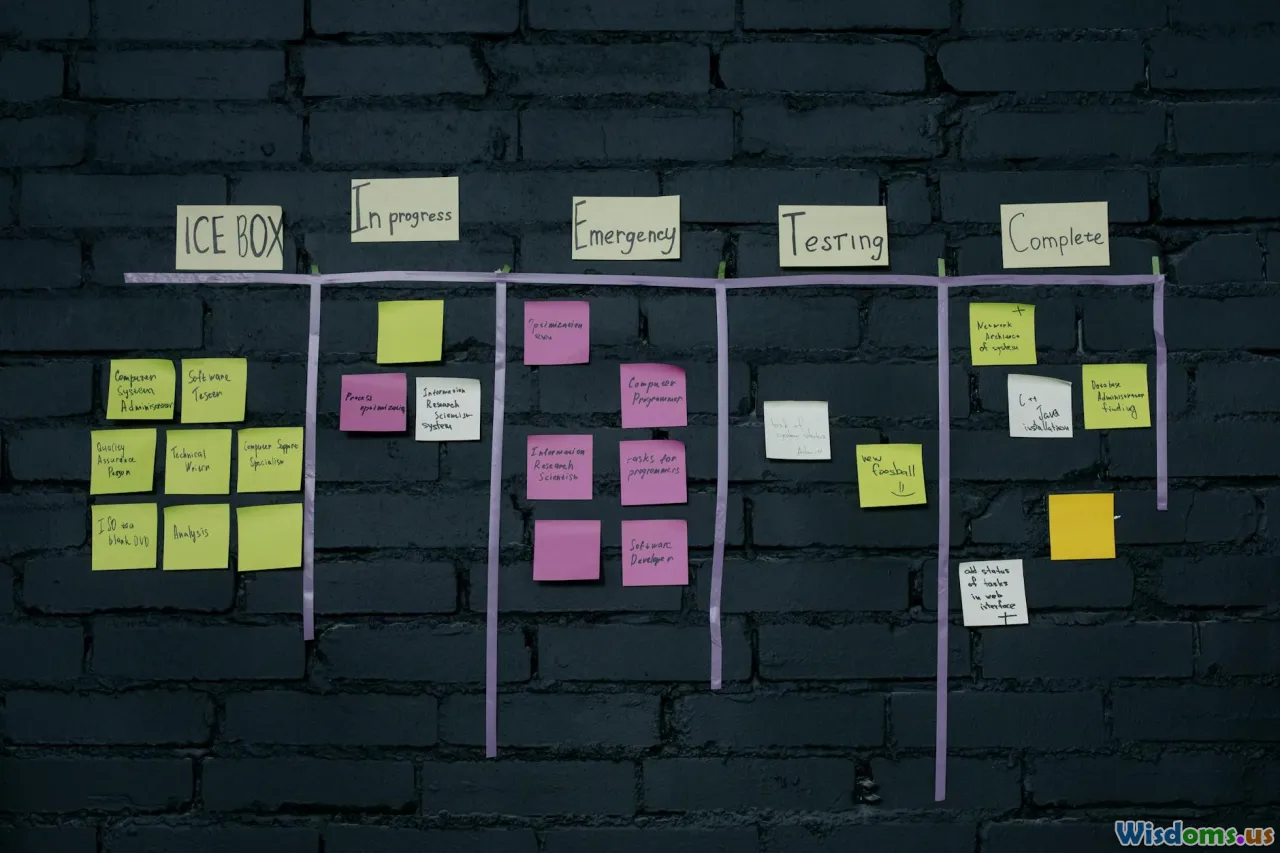
Nothing tests your discipline like waking up to a side-hustle inbox that has suddenly multiplied. One week you are a one-person show turning around client requests at midnight; the next you are fielding proposals, handing off tasks to a contractor, and guessing which deliverables are actually on track. The difference between burning out and building an agency is not talent. It is systems. Project management systems turn creative chaos into repeatable value, allowing you to grow from hustle to healthy agency without betting the business on heroics.
Below is a practical playbook for using project management to scale, with examples, calculations, and templates you can adapt immediately.
See your side hustle as a system, not a to-do list

The first mindset shift is to treat your side hustle like a production system with inputs, work stages, and outputs. When you map your value stream, bottlenecks stop being personal failures and start being design problems you can fix.
How to run a 90-minute mapping session by yourself or with a small team:
- Inventory your work types: audits, design sprints, landing pages, email campaigns, maintenance retainers.
- Sketch the flow for one flagship service from lead to invoice. Typical stages: lead capture, discovery, proposal, kickoff, production, QA, delivery, revision, sign-off, invoice, testimonial.
- Identify handoffs and delays. Example: feedback loops that wait on a single client approver; content dependencies that stall design; scope decisions that creep in by chat message.
- Add a WIP (work-in-progress) count to each stage. If you have 10 projects in production and two in QA, that is a signal about where time piles up.
Use the simple truth from queuing theory, Little's Law: WIP = Throughput × Cycle Time. If you want faster cycle time without hiring, you must reduce WIP or increase throughput by improving process. That single formula can guide dozens of decisions, from how many projects to accept to when to pause sales.
Example: You typically deliver 4 websites per month (throughput). Average cycle time is 6 weeks. That implies a WIP of roughly 6 weeks × 4 sites ÷ 4.3 weeks per month ≈ 5 to 6 concurrent builds. If your WIP is 12, delays are baked in; no pep talk fixes physics. The system must change.
Choose the right stack for where you are headed

You do not need the fanciest suite on day one; you need the combination that fits your volume, team size, and service complexity. Think in categories rather than brand names:
- Task and project tracking: Trello, Asana, ClickUp, Jira (for software-heavy work). Choose based on the complexity of dependencies and reporting you need.
- Documentation and knowledge base: Notion, Confluence, Google Docs. Prioritize search, permissions, and templates.
- Time tracking and budgeting: Harvest, Toggl, or built-in PM time modules. Accurate time data turns hunches into pricing strategy.
- CRM and pipeline: HubSpot, Pipedrive, or a lightweight Airtable base if you are just starting.
- Invoicing and accounting: QuickBooks, Xero, or Stripe for simple retainers.
- Automation: Zapier or Make to connect forms, CRM, PM, and invoicing without custom code.
Selection criteria that actually matter:
- Required views: Do you need Gantt charts and precise dependencies, or are Kanban and calendars enough?
- Permission granularity: Will you bring clients into the workspace? You need guest roles and field-level controls.
- Time and budget linkage: Can you roll up time logs by project phase and compare to estimates without spreadsheets?
- Reporting latency: Can you see up-to-date health across projects in one dashboard?
- Cognitive load: The tool should reduce context switching, not add it. Fewer apps, tighter integrations, more checklists.
If you handle under 10 concurrent projects and deliver fairly linear work, start with a Kanban-style board, docs, and time tracking. If you manage interdependent sprints, complex approvals, or regulated deliverables, adopt a system with dependencies, custom fields, and audit trails.
Build your minimum viable operating system (MVOS)

An MVOS is the smallest set of templates, fields, and rituals that standardizes how every project moves from signed to paid. It has just enough structure to keep work flowing and clients informed.
Create these five building blocks:
- A single source of truth board
- Example fields: client name, project type, contract value, scope version, start date, target ship date, phase, status, risk level, budget hours, hours used, PM owner.
- Standard statuses: discovery, in production, client review, QA, on hold, blocked, ready to ship, shipped.
- Optional fields: change order count, NPS target, retainer flag.
- SOPs and checklists
- Client kickoff: agenda, roles, decision makers, file access, brand assets, success criteria.
- Production: definition of ready (inputs), definition of done (acceptance criteria), QA steps, handover steps.
- Close-out: invoice issued, testimonials requested, case study approval, archived assets.
- A doc library with templates
- Proposal template with modular sections (problem, approach, timeline, pricing, assumptions, change policy, approvals).
- Statement of Work with measurable deliverables and acceptance criteria.
- Creative brief template and revision policy.
- Time tracking rules
- Project phases mapped to time categories (discovery, design, development, QA, PM, meetings).
- Daily time logging with clear minimum granularity (e.g., 15-minute increments).
- Naming and version control
- Use a consistent pattern: client-code_project-type_YYYYMM_phase_v1.2. It prevents asset confusion and speeds handoffs.
A side hustle becomes an agency the day you can hand the MVOS to a contractor and the quality stays high without you in the room.
Move from solo to team with roles and communication norms

When you add even one contractor, you introduce coordination cost. Control it with clear roles and explicit communication rules.
-
Roles and permissions
- Product or project manager: owns timeline, scope, risk, and client updates.
- Tech or creative lead: owns solution quality and estimates.
- Producer or coordinator: manages assets, scheduling, and checklists.
- QA: verifies acceptance criteria before client sees work.
- Client sponsor: empowered to make decisions and provide approvals.
-
RACI per deliverable
- Responsible: who does the work.
- Accountable: who signs off.
- Consulted: who gives input.
- Informed: who is kept in the loop.
-
Communication rules that reduce thrash
- One project channel per project. Keep decisions in the channel, not in DMs.
- Use your PM for tasks and due dates; chat is for quick clarifications.
- Weekly client update every Friday: status, risks, next steps.
- Standups of 10 minutes max: yesterday, today, blockers. No problem-solving inside standup.
These norms prevent silent delays and make work visible. They also reduce the classic anti-pattern where the founder becomes the only person who knows the real plan.
Estimation, capacity, and pricing tied to real data

Pricing without data is guesswork. As soon as you track time by phase and compare to estimates, you can tune your pricing, staffing, and pipeline.
-
Build an estimation library
- For each service, record actual hours by phase across at least five recent projects.
- Calculate median and 75th percentile hours to cover typical and complex cases.
- Example: A brand identity package shows median 40 hours design, 10 hours PM, 6 hours QA, 8 hours revisions; 75th percentile rises to 70 design, 14 PM, 9 QA, 14 revisions. Price your standard and complex tiers accordingly.
-
Capacity planning formula
- Team capacity in hours per week = sum of (team member weekly hours × billable utilization target).
- Agencies often target 70–85 percent billable utilization for production roles, 50–60 percent for leads and PMs.
- Example: 2 designers at 35 hours × 80 percent = 56 hours each; 1 developer at 35 hours × 80 percent = 28 hours; PM at 30 hours × 50 percent = 15 hours. Total weekly billable capacity: 155 hours.
-
Throughput vs booking
- If your median website build requires 120 hours, you can ship roughly 1.2 such projects per week at full capacity. Overbooking beyond capacity guarantees delays.
-
Pricing sanity check
- Blended billable rate = target revenue per month ÷ expected billable hours per month.
- If you need 60,000 in revenue and expect 620 billable hours, the required blended rate is about 96. If your market supports 125, you have margin to invest in QA and PM. If the market caps at 90, adjust scope or cost structure.
Data beats hope every time. Your PM system is the data engine.
Templates that print money: proposals, SOWs, and checklists

Readable, modular documents close faster and reduce scope fights. Build them once, refine forever.
-
Proposal template modules
- Problem and impact: 2–3 sentences tying business goals to work.
- Approach: short overview plus a one-page timeline.
- Pricing: tiered options (base, plus, premium) framed by outcomes.
- Assumptions: client inputs, response times, revision rounds.
- Change control: how changes are approved and billed.
- Acceptance: signature block or online acceptance step.
-
Statement of Work essentials
- Deliverables as testable statements. Example: Deliver 10 responsive landing pages, each meeting page speed index under 3 seconds and accessibility level AA.
- Milestones with dates or triggers.
- Acceptance criteria tied to definitions of done per deliverable.
- Out-of-scope list to minimize assumption creep.
-
Checklists that reduce rework
- Pre-kickoff: access, brand files, legal approvals.
- Pre-delivery: device testing, copy QA, link checks, analytics tags.
- Pre-invoice: deliverables accepted, change orders closed, links to assets delivered.
Every missing line in a proposal becomes a debate during delivery. Every clear line becomes saved time and trust.
Automations that remove friction, not thinking

Automate the handoffs and updates that consume time but require no creativity.
-
Automate lead to project creation
- Trigger: form submission or CRM deal moves to closed-won.
- Actions: create project from a template in PM tool; generate client folder with permissions; prefill fields like budget, start date, and PM owner; post a welcome message in the project channel.
-
Automate status updates
- Trigger: task or milestone status changes to client review.
- Actions: send templated client email with next steps and due date; set a 3-day auto-reminder if no response.
-
Automate time tracking hygiene
- Daily reminder at 4 pm to log time; escalate missing timesheets weekly to PM.
-
Automate invoicing cues
- Trigger: milestone completed and accepted.
- Action: create draft invoice in accounting software with attached timesheets or milestone reference.
-
Automate retrospectives
- Trigger: project marked shipped.
- Actions: spin up a retro doc with sections; assign a 30-minute debrief; send 2-question client satisfaction survey.
Automate checks, not judgment. Keep any decision that affects scope, quality, or price in human hands.
Quality and risk management baked into the workflow

Quality is not magic dust at the end; it is a system property. Build controls where errors are most likely and where they cost the least to catch.
-
Definitions of ready and done
- Ready: the inputs a task must have before work starts. Example: approved wireframes, copy, and assets.
- Done: the verifiable conditions for acceptance. Example: passes lighthouse audit, QA checklist, and client sign-off.
-
Risk register and early warning
- Maintain a simple list per project: risk description, probability, impact, owner, mitigation, trigger.
- Review weekly. If a trigger occurs, act before the risk becomes an issue.
-
QA gates
- Embed checklists in the PM. You cannot move a task to client review until QA tasks are checked.
- Peer review for complex or high-stakes deliverables.
-
Change control
- A small, well-structured change log prevents resentment and surprise invoices. Fields: date, request, impact on scope, hours, budget delta, approval.
Think PDCA: plan, do, check, act. Each completed project should leave better checklists than the last.
Reporting that wins clients and guides strategy

Dashboards should help you steer the business, not just wow a client. Focus on a handful of KPIs that connect process to profit.
-
Project health
- On-time delivery rate: percent of milestones met on or before target date.
- Budget burn: hours used vs budget by phase.
- Flow efficiency: active work time vs total elapsed time. Low efficiency means waiting dominates doing.
-
Portfolio view
- Capacity forecast: booked hours vs available capacity by role, 4–6 weeks out.
- Risk heatmap: count of projects flagged red or amber with top risks summarized.
-
Client relationship
- Response time: average time to client replies.
- Satisfaction: post-project survey score or simple thumbs up/down.
-
Agency profitability
- Gross margin by project: revenue minus direct costs (labor, contractors, software pass-through).
- Blended rate realized: revenue ÷ billable hours. Compare to target.
Weekly report template for clients:
- Summary: one paragraph on progress and focus.
- Achievements: 3 bullets.
- Risks and decisions needed: owner and due date for each.
- Next week plan: who does what by when.
Clients do not pay for busy; they pay for predictable outcomes. Reporting makes outcomes predictable.
Hiring, onboarding, and ladders inside the PM system

Your PM is also your HR operating system.
-
Hiring pipeline
- Use the same Kanban logic: applicants, screen, test task, interview, reference check, offer.
- Reuse client-facing checklists to evaluate how candidates handle real work.
-
Onboarding path
- A 30–60–90 plan with artifacts and checkpoints: tools access, SOP training, shadowing, first project with a mentor, independence criteria by day 90.
- Role scorecards with measurable expectations.
-
Growth ladders
- Define levels for each role with competencies: craft, communication, ownership, impact.
- Tie promotions to evidence in the PM: shipped work quality, estimates accuracy, risk management.
People do not grow in a vacuum. They grow in a system that makes expectations transparent and progress visible.
Compliance, security, and backups when you graduate to agency

Bigger clients bring bigger expectations. Treat data and access as seriously as design and code.
-
Access and permissions
- Role-based access control in all tools; revoke automatically on offboarding.
- Client-specific spaces to avoid cross-client data leaks.
-
Security hygiene
- Two-factor authentication required. Password manager mandatory.
- Change admin passwords quarterly. Audit app connections twice a year.
-
Data retention and privacy
- Define how long you keep client files and how you archive or delete them.
- Document where personal data lives if you collect it and who can access it.
-
Backups
- Weekly backups of docs and assets to separate storage. Test restores; a backup you cannot restore is not a backup.
Professionalism is a moat. Clients trust agencies that treat their data with care.
Case study: PixelPath Studio from nights-and-weekends to lean agency

A fictional but representative example from a boutique web studio.
Year 0: Side hustle chaos
- Single founder juggling 6 active clients via email and spreadsheets.
- Average cycle time for a website: 10 weeks, with 3–4 weeks lost waiting for content and approvals.
- Pricing inconsistent; hourly billing at 60–80 leads to scope creep and underbilling.
Quarter 1: MVOS build
- Tools: Asana for tasks, Notion for SOPs, Harvest for time, Google Drive for assets, Zapier for automation.
- Built a project template: phases, checklists, QA gates, and a client update automation.
- Implemented proposal and SOW templates with tiered pricing and clear assumptions.
Results after 90 days
- Cycle time drops to 7 weeks; on-time milestone rate up to ~80 percent due to stricter inputs and checklists.
- Blended realized rate increases to 110 by packaging deliverables and trimming untracked PM time.
Quarter 2: Team and capacity
- Hired a part-time PM and two contractors; implemented daily time logging and weekly retros.
- Tracked hours by phase; updated estimates based on median and 75th percentile.
- Booked capacity 6 weeks out to smooth workload; capped WIP at 6 concurrent builds.
Results by end of Q2
- Throughput improves to 5 sites per month at consistent quality.
- Client NPS-style thumbs-up rate at 90 percent, mostly driven by predictable updates.
- Gross margin rises from 38 percent to 52 percent; cash flow stabilized with milestone-based invoicing.
Year 1: Agency discipline
- Adopted role-based permissions and client portals.
- Introduced change control and a risk register visible to clients.
- Won a larger retainer by showing reporting dashboards and a clean QA process.
The lesson: systems created capacity, capacity created quality, and quality unlocked better clients.
Common pitfalls when systemizing, and how to dodge them

-
Over-automation
- Symptom: clients receive robotic updates that miss nuance.
- Fix: automate the trigger and the draft, but require a human to send updates that matter.
-
Tool sprawl
- Symptom: your team asks where to look for the latest version.
- Fix: adopt a single source of truth rule; prune tools quarterly; consolidate where possible.
-
Over-customization
- Symptom: every project has unique fields and statuses; training becomes endless.
- Fix: standardize 80 percent and allow only limited exceptions with clear reasons.
-
Ignoring PM time
- Symptom: projects look profitable until you add in untracked coordination.
- Fix: estimate and track PM time as its own budget line.
-
Founder as single point of failure
- Symptom: every decision routes through one person; vacations are fiction.
- Fix: implement RACI, empower leads to make routine calls, and document decisions in the PM.
A 90-day rollout plan that actually fits a busy shop

-
Weeks 1–2: Discovery and priorities
- Map your services and stages; define a target MVOS; pick your tools.
- Identify one pilot service to standardize first.
-
Weeks 3–4: Build MVOS v1
- Create the board, fields, and statuses; write SOP checklists; set up time categories.
- Draft proposal and SOW templates with tiered options and clear assumptions.
-
Weeks 5–6: Pilot on 2–3 live projects
- Enforce definitions of ready and done; capture estimate vs actual hours by phase.
- Hold a weekly retro to iterate templates and checklists.
-
Weeks 7–10: Expand and automate
- Add automation for project creation, status updates, and invoicing cues.
- Train your team on communication norms; refine permissions.
-
Weeks 11–12: Reporting and margin
- Build dashboards: on-time delivery, budget burn, capacity forecast, margin by project.
- Adjust rates and packaging using early data; set utilization targets.
-
Week 13: Institutionalize
- Freeze v1 of SOPs; schedule quarterly system reviews.
- Document ladders and onboarding tied to the PM.
You do not need perfection to benefit. You need motion and a cadence of improvement.
Pricing strategy and profitability tracking inside the PM

Use your system to evolve from hourly billing to value-aligned packages without losing control of costs.
-
Define service packages with envelopes
- Package scope with ranges: for a landing page sprint, 1 concept, 2 revision rounds, mobile and desktop, 2-week timeline.
- Attach budget hours by phase; price at or above the margin target.
-
Track margin in near real time
- For each project: revenue minus direct labor cost (time × cost rate) minus contractor expenses equals gross margin.
- Set alerts if margin drops below a threshold before it is too late to correct.
-
Adjust based on data
- If revision phases regularly exceed budget, either increase the price or change the revision policy in the SOW.
- If QA catches recurring issues, invest in templates or training rather than eat the rework.
-
Forecast cash with milestones
- Tie invoices to milestones with expected dates; see cash projections in your dashboard.
Pricing is a promise. Your PM system keeps you honest about whether you can keep it profitably.
When to graduate from spreadsheets to a full PM suite

Signals you have outgrown basic tools:
- More than 5 active projects with shared resources and overlapping deadlines.
- You onboard contractors or staff and need role-based permissions.
- Clients require predictable reporting and access to status.
- You struggle to answer basic questions: what is late, who is over capacity, which projects make money.
- You are retyping the same data across CRM, PM, and invoicing.
If 2 or more apply, move to a system that unifies tasks, time, and reporting. The cost is almost always lower than the cost of delays and write-offs.
Playbooks for different agency types

-
Design studio
- Emphasize creative briefs, asset management, and tight revision control.
- QA focuses on brand consistency and export specs.
-
Web development shop
- Emphasize dependencies, environments, and release checklists.
- QA includes automated tests, accessibility, and performance budgets.
-
Marketing agency
- Emphasize campaign calendars, content approvals, and attribution.
- QA includes tracking tags, UTMs, and landing page testing.
-
Video production
- Emphasize pre-production checklists, shot lists, and review cycles.
- QA includes color, audio levels, caption accuracy, and formats.
Tailor fields and checklists, but keep the core: one source of truth, clear gates, time by phase, and visible risks.
Quick-start checklists you can copy today

-
Core fields to add to any project board
- Scope version number
- Budget hours and used hours
- Risk level with a red-amber-green tag
- Next client decision needed (text field)
- Change order count and total hours added
-
Weekly rituals
- 10-minute standup with blockers recorded in PM
- Friday client status note with next steps
- Monday capacity check vs bookings four weeks out
-
Monthly rituals
- Portfolio review: risks, margins, and WIP limits
- Template and SOP tune-up based on retrospectives
- Tool audit: remove unused boards, archive stale tasks
-
Permissions baseline
- Guests can comment and approve; they cannot edit tasks or change scope fields
- Only PMs and leads can create or delete milestones
The fastest way to earn trust is to be predictably organized. These checklists make that visible.
Growing from a side hustle to an agency is not about adding stress or showy software. It is about designing a simple, reliable machine that protects your craft and your clients from entropy. Map your flow. Standardize what repeats. Measure what matters. Automate the boring parts. Share status before it is requested. And keep tuning the system a little every week. With the right project management backbone, you will ship more, argue less, and earn the right to take on bigger, better work.
Automation Entrepreneurship Small Business Project Management side hustle Team Collaboration KPIs Make Money Online Virtual Assistance Quality Assurance SOPs Agency Operations Workflow Automation Agency Growth Project Management Systems Client Onboarding Capacity Planning Service Delivery Resource Management
Rate the Post
User Reviews
Other posts in Virtual Assistance





Popular Posts