What Numbers Reveal About the Spiritual Universe
16 min read Explore how numbers shape our understanding of the spiritual universe and their deeper meaning across various traditions. (0 Reviews)
What Numbers Reveal About the Spiritual Universe
Numbers have fascinated humanity across centuries—not just as tools for measurement and calculation, but as vessels brimming with deeper meaning. From ancient times, numbers have whispered secrets about the universe’s fabric, surfacing in myth, sacred texts, art, and philosophy. Today, as science continues to explore the external world, numbers remain a bridge between the tangible and the spiritual, offering clues that transcend logic and point to the nature of reality itself.
The Ancient Roots of Numerical Mysticism

The mystical relationship between numbers and the universe can be traced back thousands of years. Ancient civilizations such as the Egyptians, Babylonians, and Greeks seamlessly integrated numbers into their religious and philosophical frameworks.
Take the Pythagoreans of ancient Greece. They worshipped numbers as the true building blocks of reality, believing all existence could be expressed numerically. Pythagoras himself famously asserted, “Number is the ruler of forms and ideas, and the cause of gods and demons.” Their reverence led to discoveries still relevant today—for example, the connection between musical notes and mathematical ratios, which revealed an underlying harmony in nature.
In Egypt, priests employed complex numerological systems, attributing spiritual significance to numbers like 3 (often symbolizing completeness) and 7 (seen as divine or magical). The construction of the Pyramids, astronomically aligned with Orion’s Belt, further illustrates their intricate interplay with numbers both for earthly and cosmic purposes.
Modern Insight: Today, architecture, music, and even language retain evidence of ancient numerological symbolism. The prominence of three-part structures (birth-life-death, past-present-future) or seven-fold patterns (days of the week, notes in a scale) hints at a lasting intuitive connection between specific numbers and the deeper workings of existence.
Numerology: Decoding the Universe Through Numbers
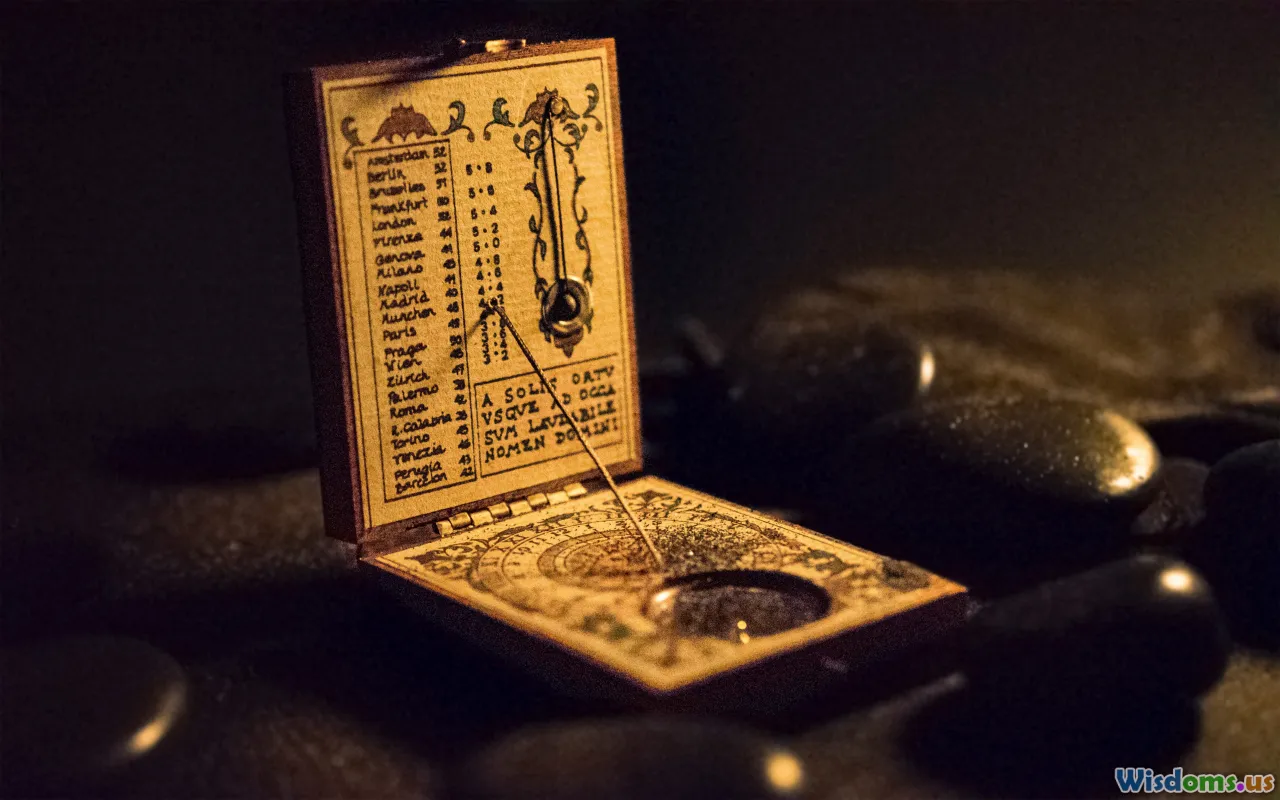
Modern numerology claims that numbers are more than mere symbols; they encode meaning about people, objects, and even cosmic events. This field goes beyond math and seeks to interpret tangible events as reflections of an underlying spiritual order.
Take the number 11, often called a "master number" in numerology. According to practitioners, individuals born on the 11th or whose names reduce to 11 via numerological calculation are believed to have heightened intuition and a deeper connection to spiritual realms. The number 7, traditionally linked to wisdom and introspection, surfaces across religious traditions: from the seven heavens in Islam, to the seven chakras in Hinduism, and the seven days of creation in Genesis.
Numerologists use personal birth dates and names as raw materials, breaking them down to core numbers and interpreting them much like astrologers read star charts. In this method, certain numbers indicate life purpose, compatibility, strengths, and challenges, shaping life’s journey by lending symbolic structure to daily experiences.
Example: The Life Path Number
A common numerological process involves adding together the digits of one’s birth date, reducing it to a single digit (or a master number, like 11 or 22). For example, a birth date of August 18, 1990 (8/18/1990):
Add: 8 + 1 + 8 + 1 + 9 + 9 + 0 = 36
Reduce: 3 + 6 = 9
=> Life Path Number: 9
The number 9 is associated with humanitarianism, idealism, and deeper spiritual insight.
Numbers in Sacred Geometry: Mapping the Divine Plan
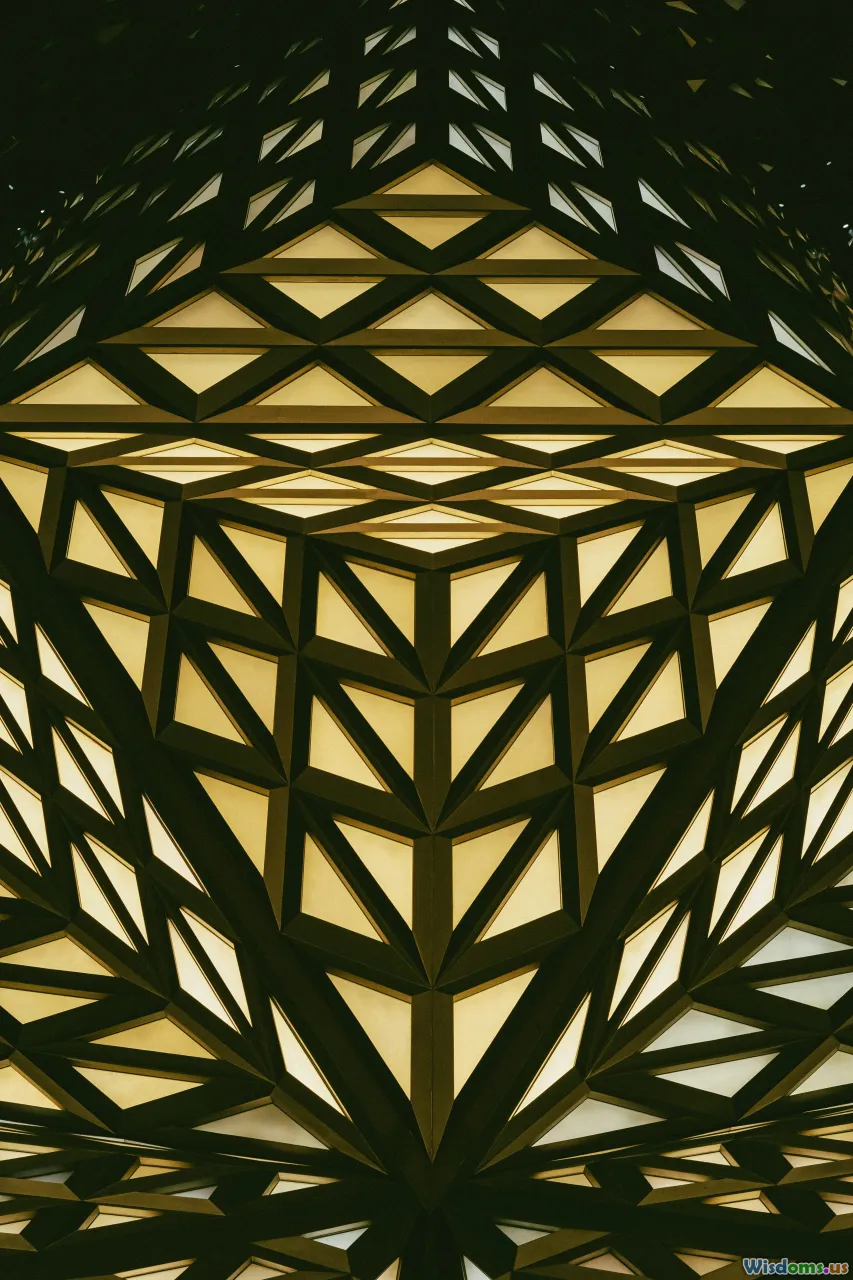
If numbers are fundamental, geometry is their three-dimensional manifestation. Sacred geometry explores how simple numerical ratios create complex patterns—mandalas, labyrinths, the Golden Ratio—said to underpin the natural and spiritual order.
Consider the Golden Ratio (Phi, or ~1.618), a number appearing everywhere in nature, from the spirals of nautilus shells to the branching of trees and the arrangement of petals. The Parthenon in Greece and Leonardo da Vinci’s Vitruvian Man are grounded in proportions echoing this ratio, suggesting that beauty and harmony are linked to universal mathematics.
The Flower of Life is another geometric archetype, composed entirely out of overlapping circles resulting in a lattice of perfectly symmetrical flowers. Found in ancient temples across the globe, it is believed to represent the structure of the universe and the interconnectedness of all life.
Tip for Home and Workspaces: Placing artworks or symbols based on sacred geometric proportions not only beautifies your environment but may also foster feelings of balance and peace—a reflection of cosmic order in personal spaces.
Synchronicity and Repeating Numbers: Messages From Beyond?

One of the most common ways people report connecting with the spiritual universe is through repeating numbers: 11:11 on clocks, sequences like 222, 333, and more. These experiences often arise at moments of self-reflection, life transitions, or emotional intensity.
Swiss psychologist Carl Jung coined the term synchronicity to describe meaningful coincidences that seem to defy rational explanation. He suggested that such patterns provide glimpses into a deeper, acausal connecting principle—possibly, a language the universe uses to speak to us.
For example, seeing 222 repeatedly during periods of decision-making might signal balance, partnership, or faith in the unfolding process. Popular culture embraces this phenomenon; online communities engage in passionate discussions about the personal significance of seeing certain numbers, seeing them as affirmations or reminders of a greater purpose.
How to Respond to Synchronicities:
- Pause and Reflect: What were you thinking or feeling at the moment? Is there a decision or change looming?
- Journal It: Logging these occurrences often reveals patterns hard to spot otherwise.
- Explore or Meditate: Consider meditating or exploring spiritual practices to deepen your connection or understanding of the messages you receive.
Mathematical Constants: Echoes of Universal Order

While the spiritual significance of numbers is ancient, the language of mathematics continues to reveal order at scales that boggle the mind. Numbers like Pi (π) and Euler’s number (e) not only permeate our equations but recur across nature.
-
Pi (π ≈ 3.14159): Represents the constant ratio of a circle’s circumference to its diameter, surfacing everywhere from spiral galaxies to subatomic particles. Its non-repeating, infinite decimals are seen by some as mirrors of existence—predictable and mysterious all at once.
-
Fibonacci Sequence (0, 1, 1, 2, 3, 5, 8, …): Each number is the sum of the previous two, yielding spiral forms underlying sunflower seeds, hurricanes, and viral DNA structures. Ancient Indian mathematicians recognized this sequence centuries before its popularization in Europe.
-
Euler’s Identity: Often heralded as "the most beautiful equation," it combines five fundamental mathematical constants:
$$e^{i\pi} + 1 = 0$$
Some mathematicians and spiritual thinkers interpret this as proof of deep-rooted cosmic harmony—the unity of seemingly distinct forces and numbers.
Application: Artists and architects, like Antoni Gaudí or Le Corbusier, have intentionally woven these patterns and ratios into their work, aligning form and function with universal mathematical beauty.
Numbers and Meditation: Unlocking Deeper States of Mind

Numbers hold power not just in the universe, but within our own consciousness. Many spiritual and mindfulness practices rely on counting to guide meditation and unlock altered states of awareness.
- Mantras & Mala Beads: In Hindu, Buddhist, and other spiritual disciplines, practitioners repeat mantras using sets of 108 beads—chosen for its mathematically significant factors (divisible by 2, 3, 4, 6, 9, and 12) and astronomical importance (the approximate ratio of Earth’s distance to the Sun and moon diameters).
- Breath Counting: Many mindfulness approaches have practitioners count breaths (often in cycles of 4, 7, or 8) to induce calm, regulate heart rhythms, and enter deeper meditative states.
Counting transforms abstract numbers into tangible tools, syncing the mind with external or internal rhythms, and grounding transcendental philosophy in day-to-day reality.
Try This: Practice intentional breathing: inhale for a count of four, hold for a count of seven, and exhale for eight. Over time, the rhythmic numerical cycle eases stress and strengthens concentration.
Numbers, Language, and Symbolism: Universal Codes

Numbers are present in written language beyond simple calculation. Ancient languages often assigned numbers to letters (gematria in Hebrew, isopsephy in Greek), using these ciphers to glimpse hidden connections in sacred texts.
For example, the Hebrew word for "life" (chai) adds up to 18. This significance persists; Jewish gifts and donations are commonly given in multiples of 18 as a spiritual expression of wishing life or blessing.
Similarly, the number 40 recurs in biblical and Quranic stories as a period of testing or transformation—40 days and nights of rain, 40 years in the desert, 40 days of fasting. Such repeated use across traditions has led many to interpret the number as a stand-in for substantial, transformative experiences.
Practical Application: When you encounter repeated numbers, names, or container sizes, consider their historical or spiritual background. Mindful interpretation often brings richer meaning to rituals, decisions, or milestones.
Quantum Physics and Numeric Patterns: New Frontiers of Mystery

Our growing knowledge of the quantum world pushes the mystery of numbers further. Quantum physics hinges on probabilities, discrete numerical outcomes, and constants like Planck’s number. The universe, on its most fundamental level, appears quantized—not indefinitely divisible, but composed of numerical chunks or units.
Wavefunctions collapse into discrete energy levels; quantum entanglement presents patterns of correlation that defy everyday logic. Mathematical formulas are the only way to accurately predict, measure, and harness these events. Some physicists now speculate that at the heart of reality may lie nothing but “math itself” – a set of numbers and relationships forming the blueprint for everything observed and experienced.
Many contemporary spiritual thinkers see parallel here to ancient beliefs—numbers and ratios as encoded signatures, marking out reality’s scaffolding both for the smallest particles and the grandest galaxies.
Bridging Science and Mysticism: Personal Engagement with Numbers

Whether you approach numbers as concrete facts or transcendent symbols, a practical path emerges: leverage them for greater self-awareness, insight, and harmony. Here’s how to bring the spiritual dimensions of numbers into everyday life:
- Observe Patterns: Develop your eye for recurring numbers—on clocks, receipts, license plates—and consider what’s happening internally when they appear.
- Numerical Journaling: Track personal numbers (birthdays, house numbers, recurring dates) and ask what underlying lesson or connection arises for you.
- Learn the Basics of Numerology: Read classic books or try simple calculations to glean possible meanings behind events or relationships.
- Apply Sacred Geometry: Incorporate geometry-inspired symbols in art, architecture, or meditation, connecting your environment with universal harmony.
Key Insight: These exercises need not conflict with logic or evidence; rather, they supplement analysis with creative, symbolic understanding—cultivating a richer, multidimensional relationship with reality.
Numbers, at once abstract and omnipresent, continue to yield spiritual insight—from ancient pyramids to modern quantum breakthroughs. By opening ourselves to their overt and hidden messages, we not only navigate the material world, but begin to touch the ineffable order and meaning woven into the fabric of the universe.
Rate the Post
User Reviews






Popular Posts