Are Modern Secret Societies More Dangerous Than Ever Before
15 min read Examining whether contemporary secret societies are more influential and threatening compared to their historical counterparts. (0 Reviews)
Are Modern Secret Societies More Dangerous Than Ever Before?
When we think of secret societies, images of cloaked figures and clandestine rituals often come to mind. These enigmatic organizations have influenced history—from the shadows of medieval Europe to today’s bustling city centers. But in a hyper-connected digital age, questions abound: Are these societies more dangerous than ever? Or is the threat just another rumor magnified by a mix of fact, myth, and social media?
The Evolution of Secret Societies in the Modern Age
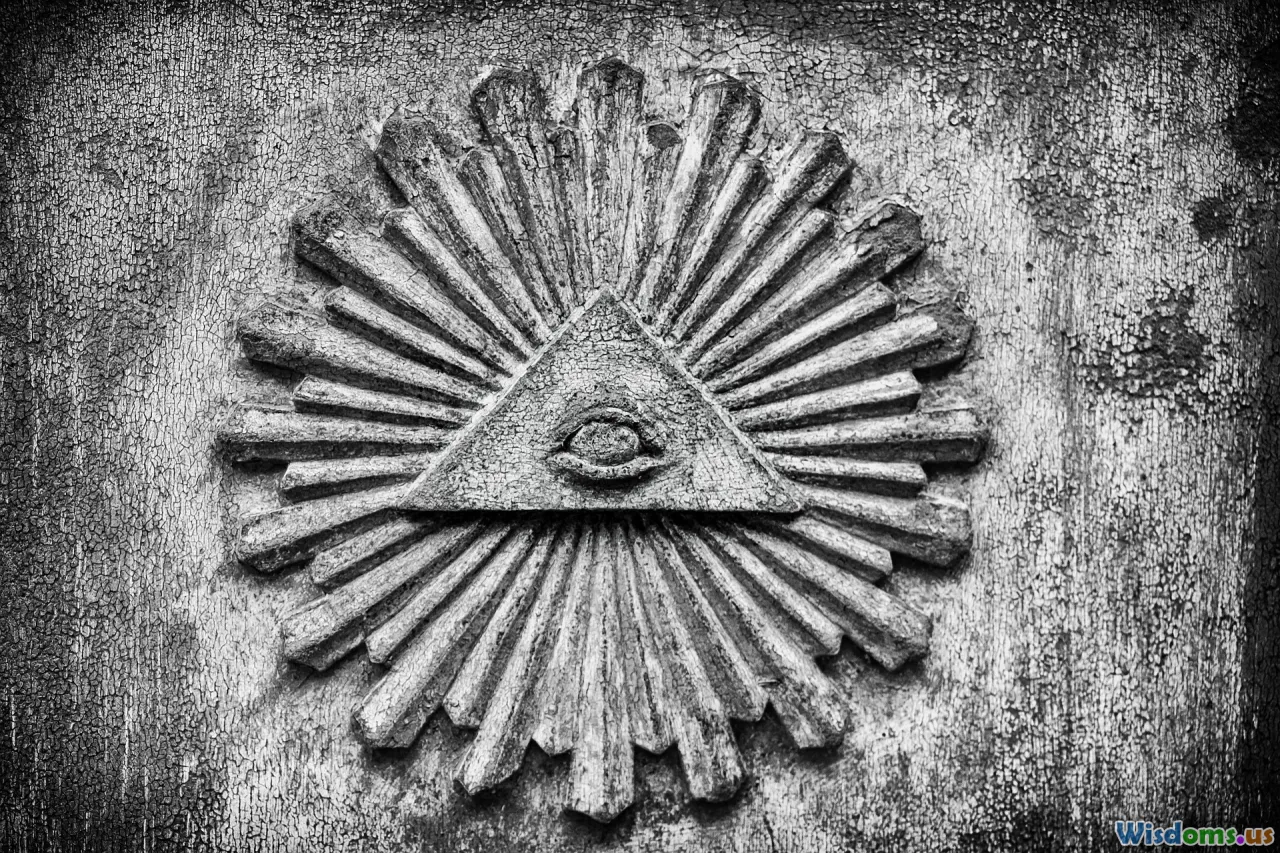
Secret societies are hardly new. From the Freemasons, known for their discreet handshakes and influential members, to the Illuminati, the alleged puppet masters in countless conspiracy theories, these groups have left imprints on culture and politics. Historically, their secrecy allowed them to wield power behind closed doors, evade scrutiny, and occasionally steer the course of nations.
In today’s world, though, the nature of secrecy itself has transformed. The spread of social media and digital encryption makes meeting, recruiting, and communicating in secret far easier than centuries before. Networks like Signal, Telegram, and even dark web forums are fertile ground for elite circles—as well as fringe conspirators. Unlike the past, where face-to-face gatherings safeguarded secrets, today’s networks operate globally and leave almost no physical trace.
A concrete example: the cyber-based group Cicada 3301, which emerged in 2012 with a series of mysterious online puzzles. Believed to be a talent harvesting mechanism for government agencies or private groups, Cicada 3301 exemplifies how the definition of a “secret society” now blurs with the world of hackers and cyber networks.
The Impact of Technology: Amplification or Mitigation?

One can argue that technology has both amplified the reach and mitigated the danger of modern secret societies. On one hand, encrypted channels now let groups operate on a scale, and with a speed, unimaginable to their historical counterparts. Members can coordinate across continents without ever meeting in person—a reality exploited not just by ideological secret societies, but criminal syndicates and extremist cells alike.
Take the example of QAnon. Born as a fringe forum conspiracy, it used the connective tissue of platforms like Reddit, 4chan, and Twitter to envelope millions globally in its cryptic narratives. Its anonymity and viral spread demonstrate how, unlike in past centuries, modern secret societies can sway public opinion, prompt real-world rallies, and even inspire violent acts (as seen in the 2021 U.S. Capitol riots).
At the same time, technology acts as a double-edged sword. Law enforcement can infiltrate and expose digital cliques, mapping their networks and sometimes predicting actions. The 2019 Europol crackdown on dark web markets—like the takedown of Wall Street Market—shows that even digitally-savvy societies can be caught. However, for every exposed group, others morph tactics or migrate platforms, maintaining an ongoing cat-and-mouse dynamic.
Secrecy Meets Influence: Are Elites More Discreet Than Ever?

Elite networking societies have always existed, but modern versions wield global reach and subtly shape economies and politics.
The Bilderberg Group, for instance, convenes high-profile leaders from politics and business in annual, off-the-record summits, fueling conspiracy theories about decisions affecting the fates of nations. The Bohemian Club hosts exclusive retreats for influential men from the arts, science, and government in California’s redwood forests—with quasi-rituals that encouraged the likes of Richard Nixon and Ronald Reagan to consider alliances.
What makes these modern gatherings potentially more dangerous is their blend of discretion and institutional clout. While physical events might be protected by veils of privacy, the digital era allows networked lobbying, sub rosa deals, and coordination that spreads far beyond the confines of a meeting room. Critics argue this fosters an accountability vacuum where shadow actors make decisions outside the public eye—impacting elections, regulations, or wars.
Yet, it’s vital to distinguish between plausible clandestine activity and mere paranoia. Critics and conspiracy theorists may overstate the influence of such groups; after all, privacy alone does not always equate to nefarious intent. The real danger may lie less in the existence of connection, and more in the lack of transparency and oversight facilitating abuse of power.
The Dark Side: Extremist Secret Societies and Radicalization
Not all secret societies are benign think tanks or elite clubs. Some, especially in the digital realm, serve as breeding grounds for extremist ideologies and illicit activity. Secret online societies can radicalize isolated individuals, tipping them towards hate crimes, terrorism, or real-world violence.
For instance, ISIS leveraged a network of encrypted online communities to coordinate attacks, recruit followers globally, and share propaganda with impunity. Far-right organizations often utilize encrypted messaging, meme subcultures, or invitation-only servers to propagate hate—sometimes escaping notice until planned actions unfold offline.
A 2021 report by the Global Network on Extremism and Technology detailed how extremist secret societies capitalize on gaming forums, Discord channels, and fringe networks to operate ‘hidden in plain sight.’ Advanced use of coded language and digital signals make detection and infiltration difficult, even for seasoned intelligence officers.
This creates a phenomenon law enforcement calls “leaderless resistance,” where loose networks, existing as purposefully secret societies, can inspire lone wolves with devastating effect. The Christchurch mosque shooter, for instance, was reportedly engaged in secret online circles promoting violence and racist ideology.
Corporate and Political Secret Societies: Shaping the Game

Secret affiliations run deep in business and government, sometimes challenging democratic principles of accountability. Corporate secret societies are not always formal groups, but rather loose cartels and lobbyist circles operating with clandestine strategies.
For example, the Panama Papers leak in 2016 uncovered a global network of secret offshore companies used by politicians, billionaires, and business elites to evade taxes and hide wealth. While not a “society” in name, these secret agreements and communications operated in a manner as circumspect as any historic lodge.
Political societies, too, can undermine transparency. The 2022 scandal of undisclosed WhatsApp backchannels between government ministers and corporate executives in the UK raised concerns about policy being shaped in secret. In the United States, the so-called “shadow campaign” cited by Time magazine, detailing how activists and corporate players covertly coordinated to influence the outcome of the 2020 election, adds another layer to modern clandestine maneuvers.
Transparency International lists corruption, backroom deals, and secret lobbying among the top threats to democratic accountability, situating modern secret societies—formal or otherwise—as a tangible danger to fair governance.
How to Recognize the Red Flags: Modern Secret Societies in Action

For those concerned about the reach of modern secret societies, vigilance is key. Here are actionable red flags for spotting potentially dangerous societies or secretive groups:
- Exclusionary structure: Initiations, oaths, or identity-based vetting.
- Information control: Coded language, digital encryption, or heavy compartmentalization.
- Cross-sector influence: Overlapping presence across politics, business, and cultural organizations.
- Secrecy around goal or funding: Shadow funds, anonymous donors, or untraceable financial flows.
- Impact without visibility: Significant events or decisions occur with little public scrutiny or explanation.
- Recruitment promises: Offering access to influence, power, or financial gain on the basis of secrecy.
Modern investigative journalists advise that triangulating public leaks, following digital breadcrumbs, and leveraging freedom-of-information legislation are effective ways to pierce veils of secrecy. Many revelations concerning today’s secret societies arise from whistleblowers inside these systems—a reminder of the power of transparency and ethical courage.
The Psychology of Secrecy: Why Do They Flourish Today?
At their core, secret societies fulfill deep human yearnings for belonging, influence, and shared purpose. In a fast-paced world where traditional communities have frayed, the allure of exclusive knowledge or inner circles persists—whether in elite boardrooms or anonymous chatrooms.
Psychologists point out that secrecy can breed both solidarity and toxicity. The sense of “us vs. them,” secrecy, and ritual are powerful social glue. But as recent studies show, groups operating in secrecy can develop groupthink, moral disengagement, and justification of ethically questionable actions. The Stanford Prison Experiment, though flawed, famously underscored how secrecy and lack of oversight can transform behavior.
Legacy secret societies often thrived in times of social upheaval or mistrust. Today, with institutions questioned and misinformation rampant, the appeal is arguably stronger—and more dangerous—than in periods of stability. The risk, magnified by modern communication, is that secrecy divorces accountability from action, enabling manipulation and radicalization under the guise of exclusivity.
Are We More Vulnerable—or More Protected—Than Before?
While secret societies have reinvented themselves for the digital age, the tools for exposing and countering their worst impulses have also evolved. Democracies today possess investigative bodies, watchdog organizations, and the power of open media. Historic societies—like the Carbonari or even the Ku Klux Klan—often operated without significant oversight, at times with open societal or institutional backing.
Now, society is better equipped to demand transparency, and whistleblowers like Edward Snowden highlight both the reach and limits of clandestine influence (albeit on the state rather than societal level). Civil activism, FOIA requests, and data journalism have uncovered hidden organizations, illicit lobbying, and covert alliances at both local and global levels.
Still, with modern societies buffeted by information overload and digital echo chambers, widespread manipulation—whether by secret societies or through open networks—remains a real concern. The danger is ever-present: an interplay of expanding secrecy and intensifying scrutiny. The true hazard lies not just in secret societies themselves, but in our collective willingness or inability to question, challenge, and unmask such arrangements.
The portraits of secret societies painted in films and novels are dramatic, but the true risks now are subtler and more pervasive. Far from being relics of the past, secret societies have evolved—folding technology, social fragmentation, and elite networking into their core. Whether more dangerous than before depends on our vigilance, legal frameworks, and collective commitment to openness. Shadows persist, but so does our capacity to illuminate them.
Rate the Post
User Reviews
Other posts in Modern Secret Societies




Popular Posts