Boost Self Confidence With Daily Mindset Habits
31 min read Practical daily mindset habits to build self-confidence, backed by science—self-talk reframes, micro-wins, visualization, boundaries—with examples, habit stacks, and a 30-day plan. (0 Reviews)
Confidence is not a lightning strike; it is sunrise—quiet, predictable, and earned by showing up in small ways every day. You do not need a new personality to feel sure of yourself. You need repeatable habits that prove, to your own nervous system, that you are the kind of person who does hard things on purpose and recovers when it goes imperfectly. This article gives you a practical playbook for building that kind of self-confidence through daily mindset habits—moments you can execute before breakfast, between meetings, and after setbacks.
Confidence Is Not a Trait; It’s a System

Confidence often gets mistaken for charisma or luck. In practice, it is an expectation about your ability to navigate a situation—what psychologist Albert Bandura called self-efficacy. Expectation is built from two things you can train daily:
- Evidence bank: memories of taking action and surviving outcomes, especially when conditions were uncertain.
- State regulation: the skill of steering your emotions, physiology, and attention so they do not overwhelm execution.
Think of self-confidence as a loop, not a switch. Behavior precedes belief. You act, you gather evidence, your brain updates its prediction about your capability, and confidence increases in the next similar moment. Expecting confidence to appear first is like demanding interest before you make a deposit.
Practical implications:
- You do not have to feel ready to start; you need a tiny next step that is low-friction and high-signal.
- You can de-risk the day by controlling inputs that influence mood and execution—sleep window, hydration, morning light, and a specific first task.
- You can pre-write recovery scripts for when the day derails so that a single slip does not become a spiral.
Short example:
- Situation: Delivering updates in a weekly team meeting triggers doubt.
- Habit system: The day before, write one bullet per update, plus a 10-second summary. The morning of, rehearse the summary once while walking to work. After the meeting, log one sentence about what went well and one risk to fix next time.
- Outcome: You are not relying on adrenaline or willpower; you are running a system that generates proof.
Research to anchor this thinking:
- People adopt identities after consistent actions—they do what they believe people like them do, and belief follows behavior. Habit studies show that repetition in stable contexts is the strongest driver of automaticity, with average habit formation taking about 66 days (Lally et al., 2009), though it varies widely.
- Cognitive-behavioral approaches show that catching and reframing distorted thoughts reduces anxiety and increases performance in challenging tasks.
Design Your Personal Confidence Loop

Use a four-step loop that fits on a sticky note. Call it PALR: Plan, Act, Log, Review.
- Plan: Choose the smallest next action that would count as progress and set a trigger time.
- Act: Do it in under five minutes if possible. Make the cost of starting trivial.
- Log: Capture what you did and what happened in two sentences.
- Review: Weekly, scan for patterns, extract wins, and define one tweak.
Example for public speaking:
- Plan: Today at 9:30 a.m., record a 60-second explanation of yesterday’s work for a teammate who missed the stand-up.
- Act: Record and send the voice note.
- Log: Wrote bullet points first. Spoke too fast. Teammate replied it was clear.
- Review: Add a 2-second breath before starting, and put one stat early.
Why this works:
- Confidence grows when you convert vague goals into controllable actions.
- Logging preserves a trail of successes that your brain will otherwise forget. Humans are loss-sensitive; we recall mistakes better than wins. The log rebiases your memory toward accurate evidence.
A 10-Minute Morning Primer To Set Direction

The day’s first minutes can set a default emotional tone. If you prime with clarity and a small win, the rest of the day has something to build on.
Try this 10-minute primer:
- Two minutes: Posture and breath. Stand tall, feet hip-width, shoulders down. Do two cycles of a physiological sigh: inhale through the nose, take a second small top-up inhale, then slow exhale through the mouth. This can help reduce acute stress and steady your state.
- Three minutes: One-card plan. On a small index card, write: Top task for confidence, 10-second summary of why it matters, and the first 60-second step. Example: Top task—draft email to pitch my idea. Why—practice owning my voice. First step—write the subject line.
- Two minutes: Micro-visualization. See yourself performing the first step smoothly, then visualize one obstacle appearing and yourself handling it—known as mental contrasting, part of the WOOP method (Wish, Outcome, Obstacle, Plan) developed by Gabriele Oettingen.
- Two minutes: Movement ignition. Ten squats, ten wall pushups, ten shoulder rolls. Movement can shift mood and energy quickly; it signals readiness to act.
- One minute: Send a two-sentence message of appreciation to a colleague or friend. Social connection is a potent, shareable win that strengthens you and someone else.
Protect this ten-minute window by minimizing early inputs that spike reactivity. Delay news and social feeds until after the primer. If you have children or caregiving duties, compress the primer to three minutes: one sigh cycle, one-card plan, and a quick thank-you message.
The Self-Talk Audit and Rewrite

Your inner narration shapes attention and behavior. The aim is not to silence thoughts; it is to label and steer them.
Run this weekly audit:
- Capture: For two days, when you notice a confidence dip, jot the exact sentence that flashed through your head. Example: I always mess up details.
- Label: Tag the distortion—overgeneralization, mind-reading, catastrophizing, or all-or-nothing thinking.
- Evidence: Write two pieces of evidence for and against the thought.
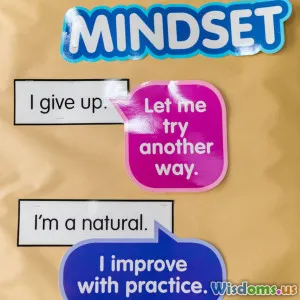
- Rewrite: Replace the sentence with a neutral, task-focused version. Example: I missed a detail on Tuesday; checklists help me reduce that.
Cognitive-behavioral research shows that simply labeling distortions reduces their grip. You are not lying to yourself; you are opting into a more accurate frame.
Practical scripts for common triggers:
- Before a meeting: From I am not ready to I have prepared the key points and can ask a clarifying question if needed.
- After criticism: From They think I am incompetent to They gave me two actionable notes; integrating them will improve the work.
- When procrastinating: From I should be further along to I can do the next two minutes now; progress beats perfection.
Make a competence file: a notes folder or photo album where you collect thank-you messages, delivered work snapshots, and small compliments. Review it for two minutes before a high-stakes moment. This is not vanity; it is memory calibration in your favor.
Micro-Wins and Skill Stacking

Large goals are confidence sinks because they withhold a feeling of progress until completion. Micro-wins provide daily deposits.
Use the 2–10–30 ladder for any skill:
- Two-minute starter: A tiny action that marks participation. Example: write one sentence of the proposal.
- Ten-minute practice: A focused drill that builds a subskill. Example: outline the three main bullet points.
- Thirty-minute stretch: A chunk that moves the project meaningfully. Example: draft the first section, ignoring polish.
Stack skills: Identify three subskills that compound confidence in your domain. For a new manager: 1) clear requests, 2) meeting facilitation, 3) feedback delivery. Practice one subskill daily using the ladder. Over two weeks, you accumulate repeatable moves.
Micro-win tracking ideas:
- Give yourself a win token every time you start within two minutes of planning to. Five tokens equal a treat you enjoy.
- End each day by listing three moments of applied courage, not outcomes—asked a clarifying question, said I do not know and will find out, or declined a request respectfully.
Body Language and Your Nervous System

Physiology and psychology are a two-way street. You can influence your state through breath, posture, and movement, which in turn affects confidence. While headline claims like power posing have faced mixed evidence in replications, there is consistent support that physical states can shape subjective experience and perceived readiness.
Try this 120-second reset when you feel small or scattered:
- Stance: Feet hip-width, knees soft, chest open, chin level. Imagine a string lifting the crown of your head.
- Exhale emphasis: Six breaths with longer exhales—inhale for three counts, exhale for six. Slower exhales can engage the parasympathetic system and help settle arousal.
- Gaze horizon: Lift your eyes from the desk to the horizon line or the far wall to expand your visual field; this often broadens cognitive flexibility as well.
- Micro-release: Clench fists for five seconds, release, then shake out. Follow with two shoulder rolls.
Adopt a ready stance in conversations—open torso, shoulders back, feet planted. This signals to both your body and others that you are engaged and balanced.
Exposure, Not Avoidance: The Confidence Budget

Avoidance teaches your brain that the thing is dangerous; approach teaches mastery. Use graded exposure—taking on slightly uncomfortable actions—to update your confidence map.
Build a 100-point monthly discomfort budget. Spend points on exposures ranked 10–30 points based on how edgy they feel to you. Example list for social confidence:
- 10 points: Ask a cashier how their day is going and actually listen.
- 15 points: Offer a specific compliment to a colleague.
- 20 points: Ask a question in a meeting where you are not the expert.
- 25 points: Share a brief progress update in a group chat.
- 30 points: Invite someone for a 15-minute coffee to discuss their work.
Rules:
- Always plan the first sentence.
- Keep exposures brief; end while it is still going okay.
- Log outcome and what you will try next time.
The mechanism is simple: predictions adjust when reality contradicts them. Repeated, safe exposures can recalibrate fear-based expectations and grow confidence faster than thinking about it alone.
Social Confidence Playbook

Confidence in social settings is a skill set. Prepare a few reliable moves so you do not depend on inspiration.
Openers that do not feel forced:
- Location link: What brought you to this event or project?
- Work-without-title: What problem are you most interested in solving this quarter?
- Past-to-present: What has been the highlight of your week so far?
Use the CCR loop—compliment, comment, request:
- Compliment: I liked how clearly you explained the risk trade-offs.
- Comment: It helped me think about the launch timeline differently.
- Request: Would you be open to a quick call next week so I can learn how you structured that analysis?
Conversation structures:
- SOAR: Situation, Obstacle, Action, Result. Ask people to walk through these steps about a recent project; it keeps exchanges concrete.
- FIRE: Facts, Insights, Risks, Experiments. When you present your own update, frame it with these four points in under two minutes.
Confidence is also knowing how to exit:
- Closing scripts: I am going to grab water and say hello to a teammate before I head out. Great to meet you. or I have to jump to the next session—thanks for the chat.
Decision Hygiene and Follow-Through

Indecision silently drains confidence. Establish hygiene rules so choices do not sit half-made and nag at attention.
- One-sentence decisions: For routine choices, write the decision in one sentence and add a because clause. Example: I am shipping the draft by 4 p.m. because timely feedback matters more than polish.
- 48-hour rule: If a new idea still excites you after two sleeps, schedule the first 10-minute step.
- Premortem: Before a meaningful action, ask, Suppose this fails—what are the three most likely reasons? Add a micro-countermeasure for each. This embeds resilience preemptively.
- Pre-commitment: Tell a colleague your next deliverable and ask them to check in. Social accountability increases follow-through more than private intentions.
Confidence grows when you see yourself decide cleanly and move.
Track What You Want To Grow

What you measure, you can refine. Build a Confidence Ledger you can update in 60 seconds.
Ledger fields:
- Context: Meeting with client, writing sprint, gym session.
- Action: The next step you took.
- Rating: 0–10 confidence before and after.
- Note: One sentence about what helped or hurt.
Weekly review ritual (15 minutes on Friday):
- Scan for the three highest after ratings and list the behaviors that preceded them.
- Pick one low before rating that flipped to a higher after—this is an exposure win; clone it next week.
- Identify one friction to remove. Example: writing without a bullet-point plan tanks confidence—fix it by scripting the first three bullets the day before.
Remember the 66-day habit formation average is a mean with wide variation. Your aim is not a perfect streak; it is a trendline of more automatic execution and a thicker evidence bank.
Detox the Comparison Trap

Confidence wobbles when attention fixates on others’ highlight reels. Instead of trying to erase comparison—impossible—shift the reference class and control inputs.
- Reference class shift: Compare yourself to your past self in similar conditions, not to someone with different resources or a decade more practice. Keep a photo or note of a past version of you to make this tangible.
- Compassionate accounting: Track effort and learning, not just outputs. List what you tried and what you changed.
- Declare no-compare windows: First 90 minutes of the day and last 60 minutes before sleep—no feeds, no leaderboards. Use those windows for building and restoring.
- Hide vanity metrics: If possible, disable like counts, remove tools from your home screen, and use website blockers in working blocks.
A small shift in attention pattern compounds. You cannot win at someone else’s timeline; you can win at yours.
Foundations: Sleep, Fuel, Movement

Confidence relies on a brain and body that can regulate arousal and sustain focus. Foundational habits are not glamorous, but they are decisive.
- Sleep: Aim for a consistent sleep window. Sleep restriction increases amygdala reactivity and reduces prefrontal control, making stressors feel bigger. Dim screens and bright lights in the late evening, and seek morning light exposure for 5–10 minutes to anchor circadian rhythms.
- Caffeine: Use strategically. Early caffeine can help, but avoid heavy doses late in the day. Consider a caffeine delay of 60–90 minutes after waking to smooth the energy curve.
- Nutrition: Anchor meals around protein, fiber, and healthy fats to stabilize energy. Hydrate—mild dehydration can impair concentration and mood.
- Movement: A brisk 10–20 minute walk can elevate mood and sharpen attention. Resistance training, even twice a week, boosts self-efficacy—confidence in your capacity to influence outcomes.
Small decisions—like a 12-minute walk at lunch—can transform the afternoon from heavy to workable.
Implementation Intentions That Stick

An implementation intention is a preloaded rule: If X happens, then I will do Y. Research by Peter Gollwitzer shows these if-then plans increase follow-through by tying actions to cues.
Make three anchor rules for confidence:
- If I open my laptop at 9 a.m., then I will spend the first five minutes drafting the one-card plan.
- If I feel a rising wave of self-doubt, then I will label the thought and do two cycles of exhales longer than inhales.
- If a meeting ends, then I will log one sentence about what I did well and one tweak for next time.
Pair if-then with WOOP for stickiness:
- Wish: Build confidence leading meetings.
- Outcome: Leave each meeting with clear next steps and a sense of control.
- Obstacle: I freeze when conversation derails.
- Plan: If the meeting drifts, then I will say, Let’s capture that and circle back after we finish agenda item two.
Engineer friction:
- Put your phone in another room during your first deep work block; make the undesired behavior inconvenient.
- Place the index card and pen on your keyboard before bed; make the desired behavior conspicuous.
Tools, Apps, and Prompts

Keep tools simple so you use them. Options:
- Paper: A stack of index cards for the one-card plan and ledger notes.
- Timers: A basic timer for 10-minute drills and 2-minute resets.
- Notes app: A single pinned note titled Competence file with bullet points of wins and kind feedback.
- Habit trackers: Any lightweight app or a paper calendar with checkmarks for the morning primer.
Prompts to paste where you will see them:
- What is the smallest step that would count today?
- What would 10 percent braver look like in this moment?
- Did I just predict the future? What evidence am I missing?
- What can I do in two minutes that the future me will thank me for?
Troubleshooting: When Confidence Dips

Dips are inevitable. Use a playbook so a dip is a detour, not a disappearance.
Common patterns and fixes:
- Rumination loop: You replay a mistake.
- Fix: Set a two-minute timer to write down what you can control, what you cannot, and the single next action. Then move your body for five minutes. Motion interrupts rumination.
- Perfection freeze: You avoid starting because the standard is too high.
- Fix: Write a deliberately bad first paragraph or outline. Your only job is to produce a version you are willing to revise.
- Social recoil: You withdraw after awkward interactions.
- Fix: Send a brief repair message if needed—Wanted to clarify that I appreciated your point about X—and schedule a low-stakes interaction the next day to reenter the arena.
- Chronic overwhelm: Everything feels too big for too long.
- Fix: Reduce goals by half for a week, protect sleep, and do the morning primer daily. If low mood or anxiety persists, consider professional support; therapy and coaching can accelerate change and uncover hidden constraints.
Remember the 90-second rule: strong emotional waves often peak and pass within about 90 seconds if you do not feed them with catastrophic thoughts. Ride the wave; act in alignment with values once it eases.
A 30-Day Sprint Plan

Treat the next month as a confidence sprint. You will practice daily, review weekly, and adjust intentionally.
Daily checklist (15 minutes total):
- Morning primer (10 minutes).
- One micro-win that advances a meaningful goal (2–10 minutes).
- Confidence Ledger entry (1 minute).
- Two-sentence message of appreciation or curiosity (2 minutes).
Week 1: Build the base
- Set up tools: index cards, ledger note, and the three implementation intentions.
- Choose one domain to focus on—presentations, social interactions, or a specific project.
- Run the Self-Talk Audit for two days. Create three default rewrites.
- Do three exposures in the 10–15 point range.
Week 2: Stack skills
- Identify three subskills for your domain. Use the 2–10–30 ladder to practice daily.
- Add the ready-stance and breathing reset before meetings or calls.
- Increase exposures: add one 20–25 point exposure.
Week 3: Decision hygiene and data
- Implement the one-sentence decision rule for routine choices.
- Run a premortem for one important task; add countermeasures.
- Audit your Confidence Ledger: pin top three behaviors that lifted after ratings.
Week 4: Calibrate and expand
- Detox comparison: set up no-compare windows and hide one vanity metric.
- Stretch exposure: choose a 30-point action with a backup plan.
- Share a progress update with a friend or mentor; talking about progress consolidates identity.
End-of-sprint reflection (20 minutes):
- What behaviors most reliably nudged confidence up? Keep them in your baseline.
- What friction did you remove that mattered? Keep it removed.
- What one area deserves a second month of focus?
Two Mini Case Studies

Case 1: New manager, quiet in cross-functional meetings
- Starting point: Felt overshadowed by louder peers; avoided asking questions; post-meeting regret.
- Habits adopted: Morning primer, CCR loop for contributions, two 10-point exposures per week, and a one-sentence decision about stepping in when projects drifted.
- Application: Before meetings, wrote one clarifying question and one data point. During meetings, used a ready stance and asked the question before the first agenda item ended.
- Outcomes after five weeks: Spoke in every meeting without adrenaline spikes, peers started directing questions to her, and her manager noted increased clarity in summaries. Confidence ledger showed after ratings moving from 3–4 to 6–8 consistently.
Case 2: Career changer, hesitant to reach out to industry contacts
- Starting point: Believed outreach was annoying; spent months perfecting portfolio instead of asking for conversations.
- Habits adopted: Discomfort budget, WOOP plan for outreach, and two-minute rule—send one message per weekday.
- Application: Crafted a simple template—one compliment, one sentence about a shared interest, one clear ask for a 15-minute call. Logged outcomes and iterated.
- Outcomes after six weeks: Secured six calls, two referrals, and a paid trial project. Reported a shift from fearing rejection to treating no as neutral data. Confidence moved from dependent on replies to anchored in daily action.
Keep the Door Open to Future You

Self-confidence is a moving average, not a moment. Every small choice either widens or narrows the door to your future self. When you plan, act, log, and review—even in brief windows—you train your mind to expect effective action from you. That is what confidence feels like in the body: a quiet readiness to proceed and a willingness to repair if you stumble.
Start today with one card, one breath pattern, one small exposure. Put your evidence where you can see it. Let tomorrow’s version of you inherit a little more proof and a little less doubt. Keep going until your habits make assurance feel ordinary.
Mental Health Personal Development Behavioral Science Growth Mindset Success & Motivation Visualization Techniques Morning Routine Mindset Mastery Self-Confidence positive self-talk Habits & Routines habit stacking implementation intentions self-efficacy cognitive reframing mindset habits micro-goals
Rate the Post
User Reviews




Popular Posts