The Unexpected Benefits of Consistent Positive Affirmations
32 min read Discover science-backed, surprising gains from consistent positive affirmations, from stress resilience to better habits and performance. (0 Reviews)
You can spot it in high performers who don’t seem rattled by setbacks: their language about themselves is steady, specific, and strangely effective. Not because they’re pretending everything is fine, but because they’re training attention and identity at the same time. That is the unexpected power of consistent positive affirmations when they’re done well. They don’t just make you feel good; they shape what you notice, how you act under pressure, and how you interpret tomorrow’s challenges.
This article goes beyond the motivational posters. We’ll unpack what affirmations actually do in the brain, when they’re most useful, how to write them so they stick, and how to test their impact with a no-hype plan you can run in six weeks.
What affirmations actually do in the brain

When people hear 'affirmations', they often picture empty positivity. Neurocognitive research paints a different picture. Consistent self-affirmation can prime brain networks tied to value, attention, and goal maintenance.
-
Attention and the reticular activating system (RAS): The RAS is a gatekeeper that filters sensory input so your conscious mind isn’t overwhelmed. If you repeatedly reinforce that you are the kind of person who notices opportunities to improve, your RAS learns to flag cues aligned with that identity. It’s not magic; it’s selective attention built through repetition. Example: After adopting the affirmation 'I spot one small improvement in every meeting', a team lead began literally noticing redundant agenda items and loose metrics. The changes were small, but over three months they shipped updates faster because they saw more opportunities to streamline.
-
Value computation in the brain: Studies using fMRI suggest that affirming personally important values increases activity in regions like the ventromedial prefrontal cortex, an area associated with valuation and self-relevance. This matters because it can increase openness to information that would otherwise feel threatening, such as health warnings or tough feedback. In other words, when the brain first grounds itself in what matters, it can handle discomfort better.
-
Stress-buffering and cognitive control: Under acute stress, the amygdala ramps up and executive functions can sputter. Experiments indicate that brief self-affirmation before a stressful task can preserve working memory and problem-solving performance. This shows up behaviorally as fewer panicked mistakes and more flexible thinking under time pressure.
-
Memory reconsolidation and self-narrative: Repeated, specific statements about your identity alter the narrative you consult when making decisions. That narrative affects whether you interpret a delay as evidence of laziness or as a signal to adjust the plan. With repetition, affirmations become cognitive defaults you reach for in ambiguity.
The point: affirmations condition attention, reduce defensiveness, and anchor identity to values and actions. The practice is less about hype and more about training a mental stance you can use under stress.
The surprising situations where affirmations shine

Beyond motivation, affirmations show evidence of helping in particular contexts:
-
High-stakes problem-solving: When people affirm core values before a test or competition, they often perform closer to their potential. For example, college students who briefly wrote about important values before an exam showed better problem-solving under pressure than controls. It wasn’t an IQ boost; it was reduced stress interference.
-
Reception to critical feedback: Affirming identity before receiving critique reduces the urge to argue or rationalize. In organizations, managers who used a 30-second pre-brief of identity-based affirmations reported higher receptivity to 360-degree reviews, and made more concrete action items from the feedback.
-
Health behavior change: Self-affirmation has been shown to increase openness to health-risk information and promote adherence to change plans (e.g., exercise or diet recommendations), with effects stronger when the information is self-relevant. In plain terms: first remind yourself who you are and what you care about, then the hard advice becomes easier to hear and use.
-
Pain and discomfort tolerance: In lab tasks like the cold pressor test (hand in icy water), people who affirmed personal values beforehand often held on longer. That matters because discomfort tolerance predicts whether you stick with rehab exercises, therapy exposures, or endurance training.
-
Negotiation and difficult conversations: Anchoring to statements like 'I am calm, fair, and prepared' can reduce reactive behavior, which keeps you listening. That usually improves outcomes more than any clever tactic.
-
Skill acquisition: Consistent affirmations can reduce the fear of looking foolish at the early stage of learning, which shortens the time to first competent reps. Habits follow identity; new guitarists who affirmed 'I am the kind of person who practices five minutes a day' logged more days played than those who used outcome-only language like 'I will be a great guitarist.'
None of this means you can affirm your way out of objective obstacles. It means that where your mindset matters for performance, brief identity priming helps more than most people expect.
Affirmations vs. mantras, visualization, and journaling: a practical comparison

Different tools, different mechanics. Use the right one for the job.
-
Affirmations: Short, specific identity or action statements. Mechanism: reduce defensiveness, prime attention, and encode identity-linked goals. Best when stakes or resistance are high (feedback, habit formation, performance).
-
Mantras: Rhythmic phrases (often spiritual or tradition-based) repeated for calm or focus. Mechanism: attentional anchoring and parasympathetic activation via breath cadence. Best when you need stability and stress reduction fast.
-
Visualization: Simulating the process or outcome in vivid detail. Mechanism: primes procedural memory and expectancies. Best when a sequence must be executed (presentations, sports plays). Works better when you visualize the process, not just the trophy.
-
Journaling (gratitude, reflection): Longer form writing shaping narratives and memory. Mechanism: reconsolidation of experience and biasing recall toward meaning and growth. Best for integration after events and for noticing patterns.
Practical combo:
- Before feedback or a challenging workout: two affirmations, one process visualization, one deep breath.
- At night: brief gratitude journaling, then a reinforcing affirmation about who you’re becoming.
- During crunch time: mantra breathing while repeating a succinct, action-oriented affirmation to keep you steady and on-task.
How to write affirmations that actually work

Evidence and practice point to seven rules:
- Make it identity-first, action-second.
- Effective: 'I am the kind of person who ships draft work early.'
- Less effective: 'I will be a better writer.'
- Keep it plausible with a bridge.
- If your brain scoffs at 'I am confident', use: 'I am learning to speak up with clarity.'
- Bridges include phrases like 'I’m becoming', 'I practice', 'I choose to', or 'I’m learning to'.
- Tie it to a cue you already encounter.
- Pair with time (after brushing teeth), a place (before opening email), or an object (when you put on running shoes). Implementation matters more than poetry.
- Frame toward approach, not avoidance.
- Effective: 'I focus my mornings on deep work.'
- Avoidance: 'I don’t procrastinate.' The brain struggles with negation; give it a target.
- Use concrete language and constraints.
- Effective: 'I move my body for 10 minutes before lunch.'
- Vague: 'I am active.'
- Include a 'because' clause when helpful.
- Effective: 'I do first drafts by 10 a.m. because my ideas are sharper before noon.' This adds meaning, which makes the statement stick.
- Seed who-you-are, not just what-you-do.
- Effective: 'I keep promises to my future self.' That identity angle strengthens follow-through across domains.
Mini A/B test you can run:
- For one week, use 'I am disciplined at deep work.' Track minutes of focus and number of task-switches.
- Next week, switch to 'At 9:00 a.m., I silence notifications and do 25 minutes on my most important task.' Track the same metrics.
- Compare data. Most people discover that identity plus a concrete trigger outperforms generic traits.
Examples by domain:
- Work: 'I open with the problem and ask one clarifying question in every meeting.'
- Health: 'I prepare tomorrow’s lunch right after dinner because it removes noon decisions.'
- Relationships: 'I assume positive intent first and ask for specifics.'
- Learning: 'I practice for five minutes even on off days; consistency beats intensity.'
- Money: 'I am the kind of person who checks accounts on Friday and automates one small improvement each month.'
A 6-week protocol you can test

You don’t need belief to start; you need a plan and a baseline.
Week 0: Baseline and selection
- Pick two areas: one performance (e.g., deep work), one behavior (e.g., exercise).
- Define one outcome metric for each (e.g., minutes of focus; workouts/week) and one subjective metric (e.g., stress level 1–10; confidence before meetings 1–10).
- Collect 7 days of baseline without affirmations.
Weeks 1–2: Identity priming + tiny actions
- Write 2–3 affirmations per area using the rules above.
- Link each to a cue: before opening your calendar, just before workouts, while waiting for the kettle.
- Keep sessions under 90 seconds; say them aloud once, then visualize doing the next small step.
- Journal one sentence at day’s end: 'What I noticed because of today’s affirmations.'
Weeks 3–4: Add data and a 'because' clause
- Tweak wording to include a reason: 'I review my top 3 at 8:30 because mornings decide my day.'
- Track your outcome metrics daily (e.g., 52 focused minutes; 3 workouts).
- Optional: add a short values affirmation once per week (write for two minutes about why your chosen value matters). This supports stress buffering.
Weeks 5–6: Stress test and feedback
- Purposely layer affirmations before something uncomfortable: a tough conversation, a long run, or metrics review.
- Solicit feedback from a colleague or friend. Note whether you notice less defensiveness.
- At the end of week 6, compare to baseline. If you see even a 10–15% improvement in adherence, you have evidence that this is worth keeping.
Time cost: roughly 3 minutes per day. If you can’t spare that, trim to 60 seconds but keep the cue consistent.
Unexpected benefit #1: better feedback tolerance and learning velocity

Why it works: Feedback threatens our self-concept. When we start by affirming broader values and a growth identity, our brain relaxes its guard. Openness rises, and learning accelerates.
Example: A software engineer used the affirmation 'I value truth over ego; I seek out the problem fast.' Before a code review, he read it once, breathed, and then wrote down three questions he genuinely wanted answers to. Over three months, his review cycles shortened by 20% because he preemptively fixed issues and asked better questions. He didn’t magically become smarter; he simply stopped burning cycles defending himself.
Try this sequence:
- 30 seconds: values affirmation (e.g., 'I care about reliability and teamwork.').
- 30 seconds: identity affirmation ('I am the kind of person who changes my mind when presented with better evidence.').
- 30 seconds: write one thing you hope to learn from the feedback.
Signal of success: You can summarize critique without justifying yourself, and you identify one specific change to test.
Unexpected benefit #2: health and behavior change that stick

Why it works: Health advice often feels like judgment. Affirming values and identity before exposure to that advice reduces defensiveness and increases follow-through. Meta-analytic work in self-affirmation research has found small-to-moderate improvements in acceptance of health-risk information and in intentions to change.
Practical use:
- Before opening your workout app: 'I keep promises to my future self.' Then visualize lacing up and doing the first minute. Start moving within 30 seconds.
- Before reading lab results or a dietary plan: 'I am the kind of person who faces facts and acts in small steps.' Then write one question for your provider.
- For medication adherence: 'I take my meds on time because my clarity at 3 p.m. matters to my clients and family.' Attach this to a daily anchor like coffee.
Unexpected side-effects:
- Reduced all-or-nothing thinking. People more often do shorter workouts instead of skipping entirely.
- Higher appointment attendance. When identity stakes are clarified, showing up once feels more like keeping a promise than grinding.
Unexpected benefit #3: creativity under constraints

Creativity needs safety—just enough to explore unconventional paths. Positive emotion broadens attention and thought-action repertoires; affirmations can nudge you into that broadened state without denying constraints.
Micro-ritual for teams:
- 60 seconds: each person silently writes an identity-focused affirmation, such as 'I look for at least one delightful outlier idea.'
- 2 minutes: warm-up with constraints ('five solutions that cost under $100').
- 15 minutes: rapid idea generation without evaluation.
Outcome: Teams report more ideas that survive the first round of scrutiny because participants spend less energy signaling credibility and more energy exploring.
Personal practice:
- Before a creative sprint: 'I produce B-minus drafts quickly; clarity beats perfection.' Pair this with a timer for 25 minutes. Unblock by reminding yourself the identity is a drafter, not a critic.
Unexpected benefit #4: less stereotype threat and more inclusive teams

Stereotype threat—performing worse when a negative stereotype about your group is salient—can shrink performance. Values affirmation interventions in classrooms have been shown to reduce achievement gaps for some students by buffering identity threats. In workplaces, the principle translates: when individuals reinforce core values and team identity, they reduce the mental tax of stereotype threat and can focus on the task.
Team practices:
- Start high-stakes meetings with a brief values check: 'What value matters for this decision?' This normalizes grounding in shared identity.
- Encourage personal affirmations that center competence and belonging, e.g., 'I contribute uniquely through careful analysis and clear writing.'
- Leaders can model self-affirmation before error discussions: 'We value transparency; learning from this error is more important than blame.' This reduces defensive spirals.
Why this is unexpected: People often assume affirmations are private. Making space for values and identity in team contexts—without forcing personal disclosures—can change the climate of a conversation.
Ethical use, cultural nuance, and avoiding toxic positivity

Affirmations should not be tools to deny reality or to pressure people to smile through harm.
- Respect constraints: Some barriers are structural. Affirmations help with attention and action, not with removing systemic obstacles. Use them alongside advocacy and resource changes.
- Avoid gaslighting yourself: If you’re in pain or danger, the most honest affirmation might be 'I deserve safety and I ask for help now.'
- Cultural language matters: In collectivist contexts, affirmations that emphasize role and contribution can fit better: 'I support my team by preparing thoroughly.' In spiritual contexts, grounding in faith values may resonate; in secular contexts, focus on purpose and contribution.
- Trauma-aware phrasing: For some, 'I am safe' may trigger disbelief. Use evidence-linked language: 'In this moment, I notice three safe things: locked door, supportive friend, steady breath.'
- Ethics for leaders: Never prescribe affirmations to employees as a substitute for fair workload or compensation. Offer as an optional tool and protect psychological safety.
Troubleshooting: when affirmations backfire

Common problems and fixes:
-
Cognitive dissonance: The statement feels like a lie. Fix: Add a bridge ('I’m learning to...'), shrink the scope ('for the next five minutes...'), or make it evidence-based ('I have done this before and can do it again.').
-
Overreach: Too many affirmations. Fix: Use two or three, repeated consistently. Variety can be the enemy of conditioning.
-
Abstractness: Vague traits aren’t actionable. Fix: Add context and behavior: 'At 9 a.m. I write one paragraph before email.'
-
Negation: Saying what you won’t do. Fix: Reframe toward the behavior you will do.
-
No cue: Great words, nowhere to plug in. Fix: Tie each affirmation to a specific trigger you already encounter.
-
Mood dependence: Works only when you feel good. Fix: Make affirmations process-focused and keep them short. Even on bad days, 30 seconds of identity priming can help you take one useful action.
-
Mental health mismatch: For severe depression or anxiety, affirmations alone can feel hollow. Fix: Pair with professional care. Try self-compassion statements ('This is hard and many people struggle; I can take one small step.') which often land better.
Advanced: affirmations as prompts for action and environment design
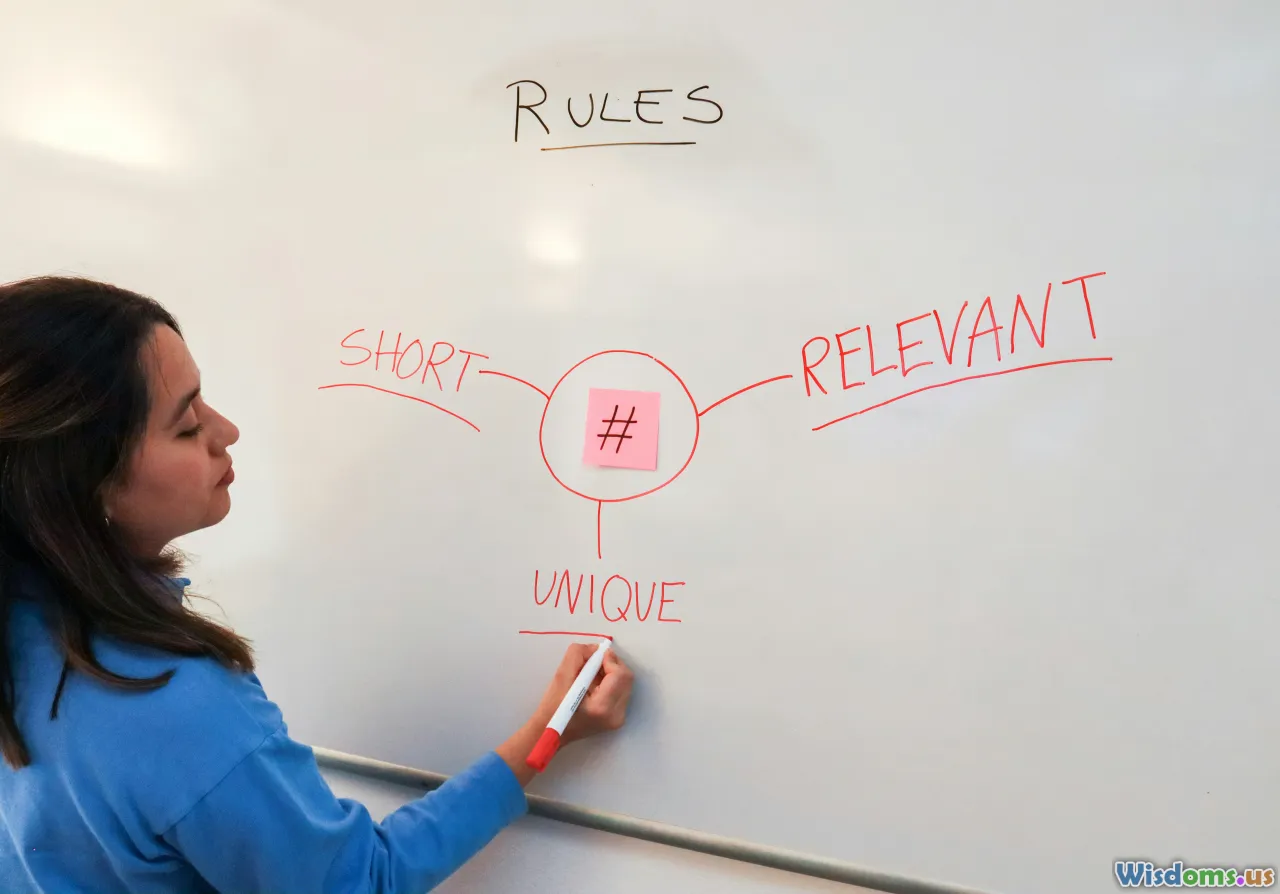
Affirmations are most effective when they trigger the next behavior and the environment supports that behavior.
-
If-then planning: Merge an affirmation with an implementation intention. 'I am the kind of person who protects deep work; if it’s 9 a.m., then I put on headphones and open the brief.'
-
Visual cues: Place a short affirmation where it matters: a sticky note on your monitor, a phone wallpaper, or the first line of your calendar description. The location is a silent coach.
-
Social proof: Agree on a shared team affirmation that cues a behavior: 'We demo early and often.' Put it at the top of sprint planning notes. It’s less cheesy when you see it connected to a behavior you actually do.
-
Pre-commitment: Pair identity statements with small commitments: 'I am the kind of person who supports my energy—so I set a 10:30 p.m. bedtime alarm.'
-
Data-friendly: Add a checkbox next to the affirmation in a daily tracker. The micro-reward of checking it off reinforces the identity.
Scripts by domain: work, money, relationships, recovery, parenting

Use these as starting points. Personalize for your context.
Work
- I open my day by naming the one task that moves the needle, then I do a scrappy first version.
- I ask one clarifying question before I propose a solution.
- I document decisions so my future self can move fast.
- I surface risks early because that’s how we ship quality.
Money
- I am the kind of person who checks accounts weekly and improves one small lever each month.
- I pay myself first; saving is how I create options.
- I pause 24 hours before any unplanned purchase over my set limit.
- I reduce fees and friction because simplicity keeps me consistent.
Relationships
- I listen for feelings and needs, not just words.
- I assume positive intent and ask for specifics.
- I repair quickly: if I stumble, I circle back the same day.
- I celebrate small wins; appreciation is fuel.
Recovery and health
- I stack tiny choices; consistency beats intensity.
- I fuel my day with foods that leave me clear-headed.
- I move my body daily because energy is a leadership skill.
- I ask for support because doing it together is stronger.
Parenting and caregiving
- I model the calm I want to see; I lower my voice when stakes are high.
- I describe the behavior I want, not the one I dislike.
- I catch my child doing something right and name it.
- I take my own pauses; rested caregivers make better choices.
Learning
- I practice publicly; shipping drafts is how I improve.
- I expect confusion at first; that’s a sign I’m learning.
- I ask for one piece of advice from someone ahead of me.
Public speaking
- I serve the audience; clarity over performance.
- I pause to breathe; silence is part of the message.
- I start with a story that earns attention.
Measuring impact without the hype

You can demonstrate value with simple measures.
- Define what success looks like in numbers and signals.
- Numbers: minutes of deep work; workouts/week; pages written; revenue calls made; sleep hours; HRV if you track it.
- Signals: reduced avoidance, easier start-up, calmer before tests, faster recovery after setbacks.
- Build a lightweight tracker.
- Columns: date, affirmation session done (Y/N), key outcome metric, quick note on what you noticed.
- Keep it under 60 seconds to fill out.
- Run a simple A/B test.
- Weeks 1–2: Identity-first affirmation.
- Weeks 3–4: Outcome-only or generic positivity.
- Compare adherence and output. Most people see higher consistency with identity-first, cue-linked affirmations.
- Look for lagging vs leading indicators.
- Leading: starting on time, first minutes of activity, number of times you avoided a distraction.
- Lagging: grades, revenue, race times. Affirmations typically show up first in leading indicators.
- Guard against memory bias.
- Snapshot your numbers weekly. Don’t trust your vibe check alone; we remember extremes.
- Seek external signals.
- Ask a colleague if they notice differences in how you receive feedback or how quickly you ship drafts.
Frequently asked questions (no-nonsense)

Q: Do affirmations work if I don’t believe them yet? A: Yes, if they are plausible and anchored to action. Use bridging language ('I’m becoming...') and tie them to specific cues.
Q: How many should I use? A: Two or three, repeated daily. Add or rotate only after a few weeks once they become automatic.
Q: Morning or night? A: Whenever the cue makes sense. Many find a short morning prime plus a pre-challenge booster most effective.
Q: Should I say them aloud? A: Saying them aloud adds embodiment and attention. Whisper if needed. Writing also works, especially for values affirmations.
Q: Isn’t this just placebo? A: Expectancy effects are part of many helpful practices. The point is behavior and outcomes. If consistent, identity-linked affirmations increase your adherence by 15%, that’s useful regardless of the mechanism label.
Q: Can affirmations replace therapy or systemic change? A: No. They are one tool. Use them with professional care when needed and alongside structural improvements.
Q: What if I feel worse after saying them? A: Reduce ambition, add a bridge, or switch to self-compassion statements. If distress persists, consult a professional.
Q: How long until I notice effects? A: Often within 1–2 weeks in leading indicators (starting on time, staying calmer). Larger shifts come over months with practice.
Q: Can teams use them without getting cheesy? A: Yes. Keep them behavioral and tied to shared values: 'We demo early and often.' Put them in docs, not posters.
Q: Are values affirmations the same as positive self-talk? A: They overlap but aren’t identical. Values affirmation grounds you in what matters broadly; positive self-talk is immediate, task-focused phrasing. Use both strategically.
Affirmations won’t build your business, heal your body, or repair your relationships by themselves. But they can quietly tilt the field: you start on time more often, you listen longer before reacting, you notice opportunities you used to miss. That’s how compounding works in human behavior—tiny shifts repeated over months become new defaults. If you pick two precise statements, attach them to daily cues, and track your results for six weeks, you’ll have your own data. The surprise for many is not that affirmations feel good, but that, done right, they make life a little less random and a lot more intentional.
Rate the Post
User Reviews








Popular Posts