Do witches trade secret mystical knowledge in covens
29 min read Explore whether modern witches share secret knowledge in covens, separating myth from practice, tracing history, ethics, and community learning across Wicca, folk magic, and contemporary pagan traditions. (0 Reviews)
Ask a dozen witches whether secret knowledge changes hands inside covens and you will hear a dozen flavors of yes, no, and it depends. The short answer is that covens do share and sometimes guard teachings that are not posted on social media; the long answer is that this is less about hoarding cosmic cheat codes and more about preserving context, consent, and community memory. What many people think of as occult secrets turn out to be layered skills, ritual choreography, and stories that make the most sense when transmitted inside a trusting circle.
What counts as secret in witchcraft?

Before we can talk about trading, we need to define secret. Across modern Pagan and witchcraft communities you will hear at least three kinds of knowledge described as private or oathbound:
- Oathbound liturgy and techniques: Some lineaged traditions such as Gardnerian and Alexandrian Wicca keep their ritual scripts, initiation words, and certain techniques private. Members take an oath not to publish or share specifics with non-initiates. This is often called inner-court material.
- Experiential secrets: Some insights only click after doing the work — meditating through a rite, dancing a specific rhythm, or learning to sense energy through repeated practice. They are not secret in principle, only opaque until experienced.
- Contextual or community knowledge: Local lore about a sacred grove, the group’s preferred way to cast a circle, or the origin story of a coven symbol. These bits matter deeply to insiders and mean little out of context.
Even within the same tradition, what is considered oathbound can vary by coven and lineage. There is no universal occult bar exam. And crucially, vast amounts of witchcraft knowledge have always been public. Historical grimoires like the Key of Solomon have circulated for centuries, and in the 20th century everything from ceremonial magic to folk magic saw major publication. By the mid-1900s, Gerald Gardner popularized Wicca in the UK, and by the 1960s Alex Sanders and others had added new currents to a growing stream. Today anyone can find planet-day correspondences, candle color meanings, or ethical discussions in bookstores and online.
A useful test: if the alleged secret can be Googled in 10 seconds, it’s not a mystery; if you need a circle of skilled people to help you master it, that’s the heart of what covens actually keep safe.
Covens then and now: from Gardner to group chats
Covens have evolved considerably over the last century. Some facts help ground the conversation:
- Mid-20th century Britain saw the birth of modern Wicca, with Gerald Gardner publishing Witchcraft Today in 1954. Doreen Valiente shaped much of Wicca’s poetry and ritual language soon after. Academic historians such as Ronald Hutton (in The Triumph of the Moon, 1999) argued that while modern Wicca is new, it wove together older strands from folklore, ceremonial magic, and romanticism.
- The idea of an initiatory, oathbound priesthood took cues from older magical orders like the Hermetic Order of the Golden Dawn and Masonic structures, adding ritual grades, training, and group-focused liturgy. That priesthood model influenced how covens handled knowledge — not as commodities but as responsibilities given at each stage.
- In North America, covens cross-pollinated quickly. By the 1970s and 1980s, researchers like Tanya Luhrmann (Persuasions of the Witch’s Craft, 1989) and Helen A. Berger (A Community of Witches, 1999) documented the blend of public coven events, private initiations, and a marketplace of books and classes.
- The 2000s and 2010s digitized it all. Message boards, blogs, Discord servers, and WitchTok introduced open-source styled witchcraft, where recipes and correspondences are traded freely, while some initiatory groups kept their core liturgy offline. The result is a hybrid culture where both open and closed doors exist side by side.
If you picture covens as medieval guilds bartering spells behind velvet curtains, you’re missing the modern texture. Yes, there are oathbound lines. But there are also public sabbats, open moon circles, and a culture of sharing safety practices, book lists, and ethical norms.
Do covens trade knowledge? How exchange actually happens

The verb trade implies barter, as if covens swap ritual lines like baseball cards. In practice, knowledge moves through relationships and responsibilities more than transactions. Some common pathways:
- Mentorship within a coven: Elders teach newer members how to prep a temple room, time rituals to lunar phases, or safely lead trance. None of this is sold or swapped; it’s passed down because stewardship is part of priesthood.
- Cross-lineage friendships: Priests or priestesses from different lineages may exchange perspectives on energy raising or temple etiquette. Where material is oathbound, they keep details fuzzy, discussing principles without betraying words or signs.
- Public festivals and moots: At Pagan Pride Days, conferences, or open circles, you’ll find workshops on consent in ritual, grounding and centering, herbal safety, or mythic framing. Such knowledge is deliberately non-oathbound and intended to circulate widely.
- Initiation or elevation: Some teachings are revealed at specific initiatory moments. That’s not a trade; it’s a rite of passage. The new priest takes on both knowledge and accountability.
Occasionally, you will encounter structured skill-sharing between covens: one group hosts an open training on ritual drumming; another shares best practices for conflict mediation in small groups. Think professional development, not cloak-and-dagger swaps.
A candid example: at a regional gathering, two long-time coven leaders hold a private chat about how they handle medical emergencies during rituals — where to place first-aid kits, who keeps an eye on participants in trance, when to call an early close. No one needs to know your secret passwords to benefit from another group’s practical wisdom.
Inside the coven: what members learn

What does a coven actually teach? While specifics vary, the curriculum tends to include these categories:
- Ritual literacy: How to cast and close a circle, purify space, invoke deities or elemental forces consistent with the coven’s theology, and debrief afterward. Members learn to lead quarter calls, hold silence, and time the arc of a rite so energy rises and falls with intention.
- Craft skills: Safe candle work, altar setup, correspondences (for example, rosemary for remembrance, basil for prosperity in many European folk streams), crafting charms or talismans, and formulating offerings. The emphasis is on clear intention, safety, and respect.
- Mythic and seasonal cycles: Understanding sabbats (solstices, equinoxes, cross-quarters), the group’s chosen mythic narrative (perhaps the descent of the Goddess or a seasonal god cycle), and the ethics that flow from those stories.
- Trance and sensing: Grounding, centering, shielding, and journeying techniques, developed carefully and monitored by experienced ritual leaders. Many covens require robust post-ritual grounding and hydration — practicalities that sound mundane but make a difference.
- Ethics and consent: How to ask for and receive consent before energy work or touch; why not to hex lightly; how to hold confidentiality; what to do if someone needs to step out of a rite.
- Leadership, facilitation, and group care: Running agenda meetings, rotating roles, managing conflict, handling burnout, and including all bodies and abilities in circle.
Notice what’s missing: step-by-step recipes for glamours that bend minds or instant-gratification spells. Genuine coven training has more in common with a slow apprenticeship in theater, counseling, and folk practice than with wizard duels.
Why secrecy exists (and when it harms)

Secrecy has both practical and spiritual reasons:
- Privacy and religious freedom: Not everyone can be out as a witch without risking jobs, custody, or safety. Covens protect member identities.
- Integrity of experience: Some rites are more powerful if encountered fresh. Knowing the choreography can dull the transformation.
- Boundary setting: Oathbound material draws a line between public and private practice and gives initiates a shared language.
But secrecy can be misused. Red flags include:
- Isolation and control: Leaders forbid outside friends or reading, or demand money and labor beyond modest costs. Healthy groups welcome independent thought and provide clear accounting for dues and supplies.
- Vague authority: Claims of ancient, unverifiable lineages used to shut down questions. Reputable leaders can explain what is historical, what is mythic, and what is personal revelation.
- Breaches of consent: Any pressure to engage in sexual or risky practices. Legitimate covens prioritize consent and well-being.
Transparency and consent must match any oaths. A common best practice is dual-court structures: an open, public-facing outer court for education and community, and a private inner court for initiates. This provides a safe on-ramp and checks against insularity.
Open sources vs oathbound material: what is actually public

There is more public information than newcomers often realize. Some widely respected sources include:
- History and ethnography: Ronald Hutton’s The Triumph of the Moon (1999) for modern Pagan history; Sabina Magliocco’s Witching Culture (2004) for folklore and community; Helen A. Berger’s A Community of Witches (1999) for sociology; Ethan Doyle White’s academic articles on witchcraft and Paganism.
- Classic texts: Doreen Valiente’s works such as The Rebirth of Witchcraft and Witchcraft for Tomorrow; Stewart and Janet Farrar’s Eight Sabbats for Witches and The Witches’ Way, which include significant ritual material that inform many modern practices.
- Public ritual methods: Grounding, circle casting variants, meditation practices, and energy exercises are published in dozens of books and taught in open workshops.
- Ethical and legal resources: Guides to religious rights in workplaces and schools; community safety toolkits for event organizers.
Contrast that with oathbound material — the precise words used in initiation rites for specific lineages, signs and countersigns of recognition, or particular god-names as used in a coven’s liturgy. These are typically not posted online by initiates. A good rule of thumb: if it names names, reveals passwords, or claims to be the One True Script for a living lineage, be skeptical and respectful.
How to engage ethically with witchcraft communities

If you are curious about covens, here is a practical, ethical approach to build relationships and knowledge without trampling boundaries.
- Start with public events: Attend a public sabbat or full-moon circle. These are where you meet people, learn group norms, and see whether the community’s style fits you.
- Ask about structure and safety: A healthy group can explain how decisions are made, how dues are handled, what their stance on consent is, and what support is available if someone is distressed during ritual.
- Respect closed practices: Some traditions — especially within African Diaspora Religions like Lukumí (Santería), Palo Mayombe, or Haitian Vodou — are initiatory and often culturally closed. Seekers should learn respectfully about boundaries and avoid cherry-picking rituals outside proper context.
- Credit your sources: If you teach or post publicly, name where you learned a technique. This builds trust and preserves community memory.
- Share the safe stuff: You can trade book lists, altar hacks, candle safety, event planning tips, and meditations without touching anything oathbound. Many covens appreciate that kind of contribution.
- Mind legal and health safety: Never ingest herbs you cannot identify or that may interact with medications; avoid illegal substances; use fire safety; do not substitute ritual for medical care.
A safe, practical approach for seekers

If you are building a practice — with or without a coven — you don’t need secrets to get started. Here is a step-by-step, safety-forward plan:
- Set a rhythm
- Choose a weekly 30–45 minute window for solitary practice.
- Keep a simple altar: a cloth, a candle in a stable holder, a bowl of water, a stone. Avoid flammables nearby.
- Grounding and observing
- Begin with three slow breaths, feet on the floor. Imagine roots into the earth; exhale tension.
- Spend five minutes noting the lunar phase and weather. Journal one sentence on what you notice.
- Learn correspondences mindfully
- Choose one herb and one stone per month. Research their common folk associations from reliable sources. For beginners, consider rosemary (culinary-safe, associated with remembrance) and clear quartz (versatile symbol of clarity). Do not ingest herbs unless you are certain they are safe for you; rosemary, for instance, can be contraindicated for some medical conditions. When in doubt, do not ingest — use as a scented sachet or simply as a symbol.
- Practice ritual structure
- Practice a generic circle: mark your space, light your candle, greet the four directions in your own words, state a simple intention such as cultivating patience or gratitude.
- Close with thanks and extinguish your candle safely. Record how you felt before and after.
- Ethics and reflection
- Write your own code: consent, privacy, ecological respect, and no harm. Review it monthly.
- Community engagement
- Visit a public event quarterly. Notice how different groups open and close; note what feels grounded and respectful. Ask organizers what reading they recommend.
This routine builds discernment — the number one quality covens value in new members. It also keeps you within the realm of publicly shareable practice.
Case studies: three ways knowledge moves
Consider these composite vignettes, drawn from patterns reported by practitioners and researchers:
-
British Traditional Wicca cross-pollination: Two Gardnerian covens in different cities maintain contact through a shared elder. They never share initiation wording across the internet. But they do exchange best practices: one describes using a consent check-in before any blindfolding in ritual; the other shares a training calendar that staggers reading assignments with practice nights. Neither coven reveals oathbound texts, yet both improve by swapping practical frameworks.
-
Eclectic online coven’s open-source ethos: A Discord-based group publishes its meditation scripts and reading list on a public repository, invites feedback, and hosts a monthly Q&A. When members ask about initiatory rites, moderators explain that their group does not offer lineaged initiations and direct people to regional directories for local, in-person covens, noting safety questions to ask. Knowledge circulates; boundaries hold.
-
Diaspora tradition boundaries: A curious seeker attends a public cultural presentation about Haitian Vodou. They learn about the lwa, music, and community service aspects but are clearly told that initiation and rituals are handled within the tradition by qualified priests and mambos. The seeker honors those boundaries, supports community-led events, and refrains from attempting ceremonies without training. Knowledge is shared at the appropriate level.
These scenarios reflect a recurring theme: responsible sharing is common and beneficial; oathbound liturgy remains where it belongs.
Frequently asked nuances

-
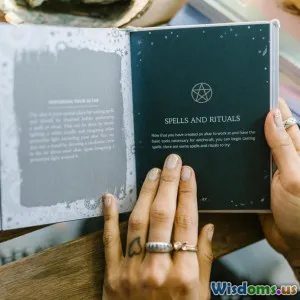
Do secret grimoires exist? Yes and no. Many covens maintain a Book of Shadows — a working book of rituals and notes. Some material echoes published texts; some is customized liturgy and group lore. Its power lies less in never-before-seen words and more in the chain of hands that have used it.
-
Do covens charge money for secrets? Reputable covens may collect modest dues to cover space rental, candles, and supplies. No legitimate group should sell you an initiation or promise wealth for fees. Be wary of paywalls around salvation.
-
Are men witches? Yes. Witch is a gender-inclusive term in many communities, though some covens are women-only by design, and others are mixed or specifically inclusive of nonbinary practitioners. Language varies by tradition.
-
Are all witches Wiccan? No. Witchcraft is a broad category that includes Wiccan, non-Wiccan Pagan, folk magical, and secular practitioners. Some witches work with deities; others do not. Some are religious; others treat it as a craft.
-
Can I learn everything from books? You can learn a great deal from books and honest practice. Some skills — facilitating group energy, crisis response, deep trance — are best learned with mentors and peers. Books plus community often beats either alone.
-
Are covens dangerous? Most are simply groups of people doing seasonal rites and sharing tea. As with any small group, there can be dysfunction. Use the red-flag list above: coercion, isolation, demands for secrecy about unhealthy behavior, and financial exploitation are signs to leave.
-
Do witches hex? Positions vary. Some traditions forbid cursing; others see it as a last-resort tool under strict ethics. Good groups will discuss consequences and alternatives and will never pressure members into work that violates their ethics.
What actually changes hands: knowledge as craft memory
If covens do not swap spell passwords, what really moves from hand to hand? Think in terms of craft memory — the intangible, communal know-how that keeps a practice alive:
- Timing and tempo: How long to hold silence before a chant lands. When to dim lights to help a group shift into trance without startling anyone. These are micro-skills built through repetition.
- Caretaking: How to spot someone getting dizzy during energy work; who quietly hands them water and an exit path; how leaders signal a gentle close if the room runs hot.
- Cultural literacy: Which myths the group enacts and why, and how it adapts them for inclusivity and current events, resisting rigid scripts without losing coherence.
- Discernment: How to tell a genuine personal gnosis from wishful thinking, and what to do with both.
These skills are difficult to write into a manual and are not worth trading as currency. They are better seen, practiced, and refined together.
Practical tips for coven leaders who want healthy knowledge sharing
- Build an outer-court program: Offer quarterly 101 workshops on grounding, consent, setting up a basic altar, and seasonal lore. Keep the content open-licensed to encourage sharing.
- Create a visible ethics page: Spell out your group’s stance on consent, accessibility, money handling, photography, and substance use at events. Post it publicly.
- Host skill exchanges: Invite drummers, accessibility advocates, conflict mediators, and herbalists to teach practical, non-oathbound skills. Credit your teachers and share notes with attendees.
- Document safely: Maintain private notes on ritual improvements and safety incidents. Share anonymized lessons learned with peer organizers at festivals or regional councils.
- Mentor beyond your lineage: Where appropriate, offer general facilitation training to the wider community. Keep liturgy private; share leadership skills.
Such practices improve the whole ecosystem without exposing what should stay in circle.
So… do witches trade secret mystical knowledge in covens?

Here is the clearest answer this topic allows:
- Yes, covens share knowledge that you will not see online — but that knowledge is mostly about doing ritual well, caring for people, and carrying a lineage responsibly. It is exchanged through mentorship and initiation, not bartered like contraband.
- No, most of the so-called secrets are not miracle shortcuts. If you expect a whispered incantation to replace practice, you will be disappointed. What feels hidden is often just subtle and relational.
- And importantly, a great deal of craft knowledge is, and should be, public: safety, ethics, seasonal lore, and foundational techniques thrive when shared openly.
If you are seeking, you can begin today with open resources, safe personal practice, and thoughtful community engagement. If you are leading, you can strengthen the craft by sharing what keeps people safe and what makes rituals sing, while honoring the oaths that protect your coven’s heart. The living secret, such as it is, is not a line of text but the way hands, voices, and breath come together in a circle — something you cannot quite trade, only tend.
Rate the Post
User Reviews




Popular Posts