Spark Streaming The Secret Sauce Behind Real Time Data
32 min read A practical guide to Spark Streaming—architecture, DStreams vs. Structured Streaming, exactly-once semantics, windowing, stateful ops, and deployment patterns—with examples using Kafka, Kinesis, and checkpointing for fault tolerance. (0 Reviews)
Spark Streaming: The Secret Sauce Behind Real‑Time Data
The world doesn’t wait for nightly batch jobs anymore. Clickstreams, IoT sensors, financial trades, cyber events, and operational logs all arrive as a ceaseless torrent of events. Converting that raw flow into timely insight is increasingly the difference between a product people like and a product people rely on. Spark Streaming—more specifically, Apache Spark’s Structured Streaming engine—has become the “secret sauce” for building reliable, scalable, and maintainable real‑time data systems. It blends the ease of SQL with distributed systems rigor, enabling teams to go from raw events to production-grade analytics with less friction than you might expect.
In this article, we’ll unpack how Spark Streaming works, when to use it, how to tune it, and how to avoid common pitfalls—complete with practical examples you can adapt.
What “real time” really means

“Real time” isn’t a single number—it’s a range that depends on your use case:
- Fractions of a second: fraud scoring, ad bidding, control systems. You care about sub‑second latencies, often below 200 ms.
- Seconds: near‑real-time monitoring, operations dashboards, product analytics. Latencies of 1–10 seconds are common.
- Minutes: streaming ETL, continuous machine learning features, rolling aggregates to data lakes. Latencies of 10–300 seconds may be acceptable.
Spark’s default style of real‑time processing—micro‑batching—naturally achieves low seconds to hundreds-of-milliseconds latencies with the right tuning and hardware. It trades a tiny delay for stability, fault tolerance, and exactly‑once state semantics for many operations. Continuous processing (an experimental mode) can push latency lower for limited operator sets, but micro‑batch remains the battle‑tested workhorse.
The key is to translate your business objective into a measurable service-level objective (SLO). For example: “95% of events should be reflected in the monitoring dashboard within 2 seconds, and 99% within 5 seconds.” From there, you back into trigger intervals, partitioning, and resource sizing.
From legacy Spark Streaming to Structured Streaming
Spark Streaming has two eras:
- DStreams (legacy): Based on discretized streams forming RDD micro-batches. It introduced micro‑batch at scale but required a lot of RDD-level plumbing.
- Structured Streaming (current): Introduced in Spark 2.x. Treats a stream as an unbounded table updated over time, using the same Catalyst optimizer, DataFrame/Dataset APIs, and SQL you use for batch. It unifies streaming and batch logic.
Why Structured Streaming won:
- Unified API: You can run the same logic in batch and streaming, simplifying development and testing.
- Declarative semantics: You define what you want (aggregations, joins, windows) and Spark plans incremental updates.
- State management: Built‑in support for stateful operations with deterministic recovery via checkpoints.
- Exactly‑once processing for supported sinks and operations: By tracking offsets and using transactional sinks (e.g., Delta Lake or Kafka with transactions), Structured Streaming achieves end-to-end correctness many teams need.
While DStreams still exist, new projects should choose Structured Streaming for its stability, features, and ecosystem support.
The micro‑batch engine, demystified
Under the hood, Structured Streaming runs a tight loop:
- Read a chunk of new data (bounded by offsets for sources like Kafka or by file discovery for file sources).
- Transform the data using your DataFrame/Dataset/SQL logic.
- Update state (if you use windows, joins, or deduplication) and write the results to a sink.
- Commit progress to a checkpoint and repeat.
Essential concepts:
- Trigger: The cadence at which micro-batches run. For example, Trigger.ProcessingTime("2 seconds"). Shorter triggers reduce latency but can increase overhead.
- Offsets: Structured Streaming tracks exactly which input records were processed in each batch (e.g., Kafka partition offsets). This enables deterministic replay after a failure.
- Checkpointing: A directory in durable storage (e.g., HDFS/S3) holding offsets, state snapshots, and metadata logs. It is critical for fault tolerance.
- Output modes: Append (new rows only), Update (only changed rows), Complete (full result table each batch). Your choice depends on your transformations.
Typical latencies:
- With modest transformations and efficient sinks, hundreds of milliseconds to a few seconds per micro‑batch are normal.
- File and JDBC sinks can be slower due to I/O and transaction overhead.
Event time, windows, and late data
Real streams arrive out of order. If you blindly group by processing time (the time Spark sees the data), your aggregates drift and your business logic becomes opaque. Event time analysis solves this by using a domain timestamp carried in the data (e.g., click_time or sensor_ts).
Key tools:
- withWatermark: Declares how late data may arrive while still being considered. It also bounds state growth by allowing Spark to drop old state safely.
- Windowing: Tumbling (fixed, non‑overlapping windows), sliding (overlapping windows), or session windows (gaps define boundaries). Choose based on business logic.
Example: Count unique users by 1‑minute tumbling window, allowing 5 minutes of late data.
import org.apache.spark.sql.functions._
import spark.implicits._

val kafkaDf = spark.readStream
  .format("kafka")
  .option("kafka.bootstrap.servers", "broker:9092")
  .option("subscribe", "clicks")
  .option("startingOffsets", "latest")
  .load()

val schema = new org.apache.spark.sql.types.StructType()
  .add("userId", "string")
  .add("ts", "timestamp")
  .add("url", "string")

val clicks = kafkaDf.selectExpr("CAST(value AS STRING)")
  .select(from_json($"value", schema).as("e"))
  .select($"e.*")

val agg = clicks
  .withWatermark("ts", "5 minutes")
  .groupBy(window($"ts", "1 minute"))
  .agg(countDistinct($"userId").as("uu"))

val q = agg.writeStream
  .outputMode("update")
  .option("checkpointLocation", "/checkpoints/clicks_uu")
  .format("console")
  .start()
Details that matter:
- Watermarks are for event time logic and state eviction. If data arrives later than watermark, Spark can drop it for windowed aggregations and deduplication.
- To join two streams with event time, both sides typically need watermarks so Spark can trim join state safely.
- Choose windows that fit business semantics. If marketing reports on 5‑minute blocks, use tumbling windows of 5 minutes for simplicity and accuracy.
Stateful processing and stream joins

Many real‑time tasks require remembering context: deduplicating by a key, accumulating counts across windows, or correlating events between topics. Structured Streaming performs this via a state store—a pluggable key‑value store used to persist per‑key state between micro‑batches.
Core patterns:
- Deduplication: dropDuplicates(keys, eventTime) with a watermark keeps only the first occurrence per key within the watermark horizon, evicting old state over time.
- Windowed aggregations: counts, sums, and custom aggregations keyed by time windows.
- Stream‑stream joins: match events across streams (e.g., click to conversion). Requires careful watermarking on both sides to bound state.
- Stream‑static joins: enrich streaming data with a static dimension table. Safe and simpler—often used for geolocation, product catalogs, or risk scores.
State store considerations:
- Memory footprint grows with cardinality and lateness. Use watermarks and reasonable keys to bound it.
- Provider: The default state store is built into Spark. For very large state, a RocksDB‑based provider (introduced as experimental in Spark 3.x) can reduce memory pressure by keeping more state on disk while maintaining acceptable latency.
- Exactly‑once state: Because Spark writes both input offsets and state updates transactionally in checkpoints, it can restore consistent state after failures.
Connecting sources and sinks that matter

Common sources:
- Kafka: The dominant choice. Supports subscribing to topics with offset tracking. Optionally cap read rate with maxOffsetsPerTrigger.
- Kinesis and other message buses: Via connectors. Capabilities vary.
- Files: Streams can tail directories of JSON/CSV/Parquet. Good for drop‑based ingestion, but beware of small files and listing costs on object stores.
- Sockets: Useful for demos, not production.
Common sinks:
- Data lake formats (e.g., Delta Lake, Parquet): Ideal for analytics and incremental ETL; support schema evolution and batch reads downstream.
- Kafka: For re‑publishing processed events; Spark supports transactional writes to Kafka for exactly‑once delivery semantics with supported brokers.
- JDBC: For warm aggregates in OLTP stores. Ensure idempotency and batch upserts to avoid hotspotting.
- Custom sinks via foreachBatch: Lets you use any client library in a micro‑batch callback, enabling complex side effects with transactional control.
Reading Kafka, aggregating, then writing to a data lake is a canonical pattern. For near‑real‑time dashboards, consider writing both to an analytical store (lakehouse) for long‑term queries and a key‑value store (e.g., Redis) for instant lookups.
A step‑by‑step pipeline: fraud scoring in seconds

Scenario: You receive credit card transactions from Kafka. You want to flag suspicious activity within 3 seconds by scoring each transaction with a model, maintaining per‑card rolling aggregates, and writing alerts to another Kafka topic and long‑term storage.
Steps:
- Define SLO: Latency under 3 seconds at P95.
- Size cluster: Start small (e.g., 1 driver, 4–8 executors) and scale based on throughput.
- Read transactions from Kafka with a schema and reasonable rate limits to avoid initial overload.
- Enrich with static dimensions (e.g., cardholder risk tier) using a broadcast join.
- Maintain rolling features per card (e.g., number of transactions and total amount over last 10 minutes) via watermark + window.
- Score with a model (best if it runs on the JVM; if using Python UDF, measure overhead carefully).
- Write alerts to Kafka and full records to a lake table with checkpoints.
Illustrative code (Scala):
import org.apache.spark.sql.functions._
import org.apache.spark.sql.types._

val txSchema = new StructType()
  .add("txId", StringType)
  .add("cardId", StringType)
  .add("amount", DoubleType)
  .add("currency", StringType)
  .add("merchant", StringType)
  .add("country", StringType)
  .add("ts", TimestampType)

val raw = spark.readStream
  .format("kafka")
  .option("kafka.bootstrap.servers", "broker:9092")
  .option("subscribe", "transactions")
  .option("startingOffsets", "latest")
  .option("maxOffsetsPerTrigger", 20000)
  .load()

val tx = raw.select(from_json(col("value").cast("string"), txSchema).as("e")).select("e.*")

// Static enrichment: card risk tiers
val tiers = spark.read.format("parquet").load("/ref/risk_tiers").cache()
val txEnriched = tx.join(broadcast(tiers), Seq("cardId"), "left")

// Rolling features: 10‑minute window with 2‑minute slide for more frequent updates
val features = txEnriched
  .withWatermark("ts", "15 minutes")
  .groupBy(
    col("cardId"),
    window(col("ts"), "10 minutes", "2 minutes")
  )
  .agg(
    count(lit(1)).as("txCount10m"),
    sum("amount").as("sumAmount10m"),
    countDistinct("merchant").as("uniqMerchants10m")
  )

val latestFeatures = features
  .select(
    col("cardId"),
    col("window.end").as("featureTs"),
    col("txCount10m"),
    col("sumAmount10m"),
    col("uniqMerchants10m")
  )

// Join back to current txs using stream‑static semantics: choose most recent features per card
val windowedFeatures = latestFeatures
  .withColumnRenamed("cardId", "f_cardId")

val scored = txEnriched
  .join(windowedFeatures.orderBy(desc("featureTs")).dropDuplicates("f_cardId"),
        col("cardId") === col("f_cardId"), "left")
  .withColumn("riskScore", expr("coalesce(0.1 * txCount10m + 0.001 * sumAmount10m + 0.5 * (uniqMerchants10m > 5), 0.0)"))
  .withColumn("isSuspicious", col("riskScore") > lit(5.0))

// Branch to two sinks via foreachBatch
val query = scored.writeStream
  .option("checkpointLocation", "/chk/tx_fraud")
  .foreachBatch { (batchDf, batchId) =>
    // Kafka alerts for suspicious
    batchDf.filter("isSuspicious")
      .selectExpr(
        "to_json(named_struct('txId', txId, 'cardId', cardId, 'riskScore', riskScore, 'ts', ts)) as value"
      )
      .write
      .format("kafka")
      .option("kafka.bootstrap.servers", "broker:9092")
      .option("topic", "fraud_alerts")
      .save()

    // Full record to lake with partitioning
    batchDf
      .withColumn("date", to_date(col("ts")))
      .write
      .mode("append")
      .partitionBy("date")
      .parquet("/lake/transactions_scored")
  }
  .trigger(org.apache.spark.sql.streaming.Trigger.ProcessingTime("2 seconds"))
  .start()
Notes:
- foreachBatch gives multi‑sink flexibility and external transaction control.
- Keep models close to the JVM path if possible for lower latency; consider MLeap or native Spark ML for scoring.
- The watermark (15 minutes) ensures state doesn’t grow unbounded.
Tuning for low latency and high throughput

Tuning starts with measuring. Use queryProgress events, the Spark UI, and logs to identify where time goes: input, processing, state updates, or writes. Then apply these strategies:
- Trigger interval: Start with 1–5 seconds. If CPU is underutilized and latency SLOs allow, shorten it. If you’re I/O bound, a slightly longer interval can amortize overhead.
- Parallelism:
- For Kafka sources, increase partitions in the topic to scale reads/writes.
- Align shuffle parallelism with data volume: tune spark.sql.shuffle.partitions (e.g., set near total cores for CPU‑bound workloads, or higher for large aggregations).
- Input throttling: Use maxOffsetsPerTrigger (Kafka) to avoid overfilling state or overwhelming sinks during spikes or catch‑ups.
- Serialization: Use Kryo (spark.serializer=org.apache.spark.serializer.KryoSerializer) for better performance versus Java serialization.
- State size control: Always apply watermarks to stateful ops. Consider the RocksDB state store for very large state (available as an optional provider in Spark 3.x).
- Skew mitigation: If one key dominates (e.g., a “hot” user), use techniques like salting (adding a small random suffix to keys for aggregation, then de‑salting) to balance load.
- Sinks:
- For data lakes, write batch sizes that create sufficiently large files (e.g., 128–512 MB) and compact small files later.
- For JDBC, use batch upserts and idempotent keys. Avoid row‑by‑row writes.
- UDFs: Prefer built‑in Spark SQL functions. Python UDFs incur serialization overhead; if unavoidable, use vectorized (Pandas) UDFs and test end‑to‑end latency.
Backpressure vs. buffering:
- Spark Structured Streaming controls read rates via options like maxOffsetsPerTrigger rather than dynamic backpressure in the same style as DStreams. You can also lengthen triggers or scale out to absorb spikes.
Fault tolerance and exactly‑once guarantees

Structured Streaming aims for end‑to‑end correctness:
- Checkpoints: Store offsets, state snapshots, and metadata logs. If a job restarts, Spark resumes from the last committed batch. Never delete or reuse checkpoint directories across different queries.
- Exactly‑once for stateful ops: Because state updates and offset commits are coordinated, Spark avoids double‑counting in aggregates.
- Sinks:
- Data lakes (e.g., transactional table formats) provide idempotent appends or transactional upserts when combined with checkpointing, yielding effectively exactly‑once semantics.
- Kafka sink supports transactional writes with compatible brokers (transactions and idempotent producers enabled). This allows exactly‑once publishing for many use cases.
- For non‑transactional sinks (e.g., raw object storage or some JDBC targets), implement idempotency (dedup keys, merge semantics) or use foreachBatch to coordinate external transactions.
Failure drills:
- Kill the driver and observe recovery time to a healthy state.
- Simulate network partitions and check if offsets/state remain consistent.
- Validate alerting on failed micro‑batches and downstream lag.
Observability: know what your stream is doing

You can’t tune what you can’t see. Build observability into your streaming app from day one.
- Spark UI: The Streaming tab (for active queries) shows batch durations, input rates, and recent progress. The SQL tab visualizes physical plans and stage times.
- queryProgress: Each micro‑batch emits JSON with numInputRows, inputRowsPerSecond, processedRowsPerSecond, and detailed metrics per source/sink. Persist it to logs or a monitoring system.
- StreamingQueryListener: Hook into lifecycle events to push metrics to Prometheus, Datadog, or CloudWatch.
Example listener (Scala):
import org.apache.spark.sql.streaming._

spark.streams.addListener(new StreamingQueryListener {
  override def onQueryProgress(event: StreamingQueryListener.QueryProgressEvent): Unit = {
    val p = event.progress
    // Push p.numInputRows, p.processedRowsPerSecond, etc., to your metrics system
    println(s"Query ${p.name} batch ${p.batchId} inputRows=${p.numInputRows} procRPS=${p.processedRowsPerSecond}")
  }
  override def onQueryStarted(event: StreamingQueryListener.QueryStartedEvent): Unit = {}
  override def onQueryTerminated(event: StreamingQueryListener.QueryTerminatedEvent): Unit = {}
})
Operational metrics to track:
- Batch duration vs. trigger interval: If duration > interval consistently, you’re falling behind.
- Input lag: For Kafka, monitor end offsets vs. committed offsets.
- State store memory/disk usage: Spikes may signal missing watermarks or skew.
- Sink latency: Often the bottleneck; ensure back‑pressure strategies exist.
Deployment patterns: scaling and resilience
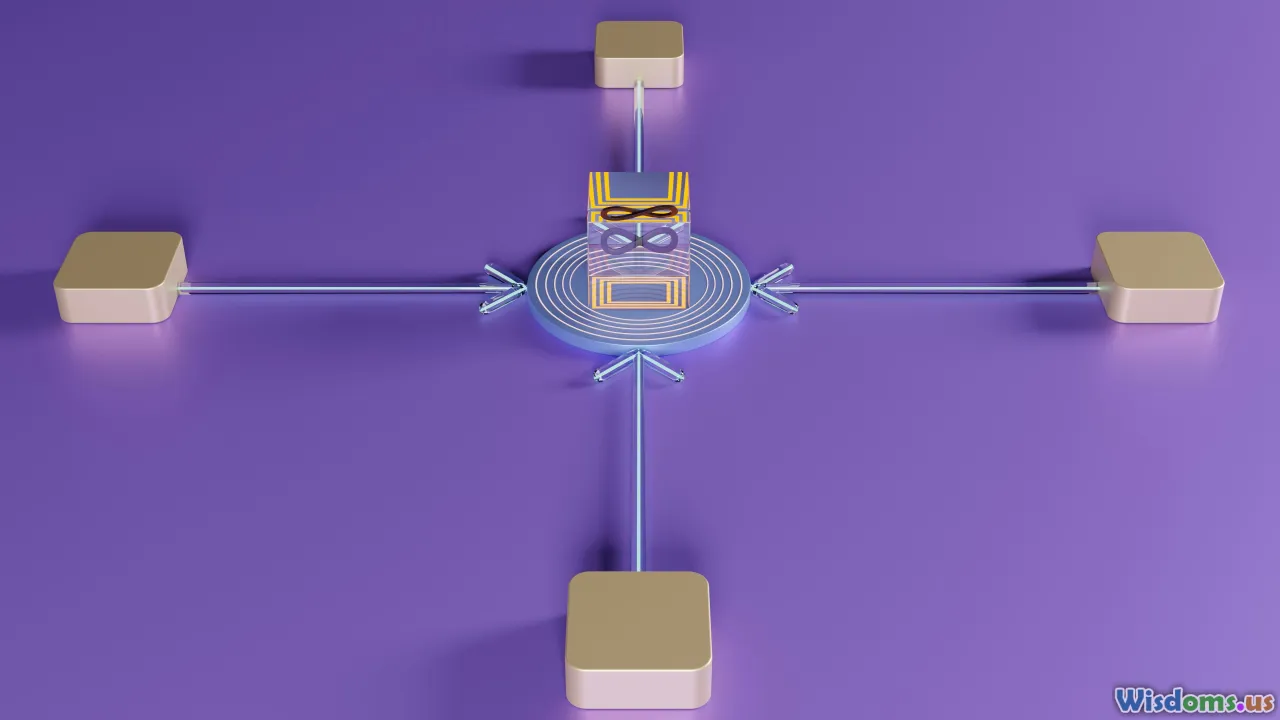
Where you run matters:
- Cluster managers: Spark runs on Kubernetes, YARN, standalone, and cloud services. Kubernetes offers container packaging and autoscaling hooks, while YARN remains common in on‑prem clusters.
- Autoscaling: For variable traffic, enable autoscaling to add executors during spikes. Be mindful of warm‑up time; maintain a minimum baseline to hit SLOs.
- Isolation: Use separate clusters or pools for production vs. ad‑hoc development to avoid resource contention.
- JVM tuning: For long‑running jobs, right‑size executor memory and cores; avoid excessively large heaps that make GC pauses unpredictable. Prefer more executors with fewer cores each for steady parallelism.
DevOps tips:
- Immutable deployment: Package your app and configs; avoid drift. Keep connector versions aligned with Spark.
- Rolling updates: Stop with graceful termination (awaitTermination) and restart from the same checkpoint to avoid gaps.
- Security: Configure TLS/SASL for Kafka, lock down service accounts, and audit your checkpoint storage.
Data modeling for streams: schema and evolution

A solid schema pays off every minute of every day in streaming systems.
- Self‑describing formats: Avro or Protobuf with schema registry add type safety and evolution contracts to Kafka topics. JSON is human‑friendly but slower and less strict.
- Evolution: Additive changes (new optional fields) are easiest. Set up downstream readers to tolerate unknown fields. Avoid destructive changes to keys or event time fields.
- Partitioning: In Kafka, choose keys that spread load evenly while grouping related events (e.g., userId). In lakes, partition by date/hour and possibly a high‑cardinality dimension only if it balances sizes.
Testing strategies:
- Deterministic fixtures: Generate synthetic events with controlled skew and lateness.
- Replay tests: Feed a historical slice of data into a test cluster using Trigger.Once or Trigger.AvailableNow to validate logic at scale.
When not to use streaming (or when to simplify)
Not every problem is a nail for the streaming hammer.
- Low event rates: If you only get a few hundred events per hour and don’t require second‑level freshness, scheduled batch (every few minutes) may be simpler and cheaper.
- Strict per‑event sub‑10‑ms latency: Consider specialized systems built for request/response or streaming SQL engines with continuous processing and minimal operator sets.
- Complex ACID writes to OLTP: If your sink can’t do idempotent or transactional updates, you may struggle to ensure exactly‑once semantics; redesign the sink path or use a lakehouse pattern first.
Simplifications that help:
- Use Trigger.Once or Trigger.AvailableNow for backfills; then switch to ProcessingTime for steady state.
- Prefer stream‑static joins over stream‑stream when business logic allows.
- Push enrichment upstream into message buses if that reduces downstream state and join complexity.
Comparing ingestion choices: Kafka vs. files vs. APIs

-
Kafka:
- Pros: Strong ordering per partition, offset tracking, mature ecosystem, transactional writes supported.
- Cons: Requires cluster operations, partition planning, and quotas.
- Best for: High‑throughput, low‑latency pipelines; multi‑consumer fan‑out.
-
File streaming (object storage):
- Pros: Simple, cheap, durable; easy backfills.
- Cons: Latency depends on file arrival and listing; small file problems; lack of per‑record ordering.
- Best for: Streaming ETL and analytics where seconds‑to‑minutes latency is fine.
-
REST APIs and webhooks:
- Pros: Easy integration with SaaS.
- Cons: Less control over throughput and reliability; often requires a buffering layer.
- Best for: Event sources without native bus integrations—buffer into Kafka or a durable queue first.
The craft of windowing: picking the right shape

Each window type encodes assumptions:
- Tumbling windows: Non‑overlapping, fixed length. Cleanest for reporting. Example: sales by minute.
- Sliding windows: Overlapping windows with a slide interval that’s smaller than the window length, providing more frequent updates. Example: compute a 10‑minute metric updated every minute.
- Session windows: Boundaries defined by inactivity gaps. Great for user sessions and IoT device activity. Handle them with care—state can grow with session count and gap size.
Practical tips:
- Choose a watermark comfortably larger than typical lateness. If most events arrive within 1 minute, a 5–10 minute watermark is a safe start.
- Start with coarser windows, then refine. It’s easier to add a real‑time drill‑down later than to maintain thousands of tiny windows prematurely.
- Monitor per‑key state size. If a few keys inflate state, segment or salt them.
Making writes reliable and affordable

Your sink dictates cost and reliability:
-
Data lakes:
- Favor columnar formats and transactional tables for analytics and MERGE support.
- Compact small files regularly to reduce query overhead.
- Partition by date/time and one additional low‑to‑medium cardinality column if it improves pruning.
-
Kafka:
- Tune linger.ms and batch.size for producer batching.
- Use compression (lz4 or snappy) for network efficiency.
- Plan topic retention aligned with replay needs; use compacted topics for deduplicated state.
-
JDBC/OLTP:
- Prefer upserts via merge keys and batch writes.
- Add idempotency tokens to avoid duplicates on retries.
-
foreachBatch:
- Wrap writes in external transactions when possible.
- Log batchId externally so you can implement exactly‑once by skipping previously processed batches.
Common pitfalls and how to avoid them

- Missing checkpointing: Without a stable checkpoint, you’ll reprocess data after restarts. Always set checkpointLocation for production queries.
- No watermark on stateful ops: State stores grow until they hit memory or disk limits. Always bound state with withWatermark.
- Overly tight triggers: A 100‑ms trigger may spend more time managing metadata than doing work. Profile and prefer 1–5 seconds unless you’ve proven sub-second triggers help.
- Hot keys and skew: Leads to imbalanced tasks and timeouts. Detect via Spark UI stage summaries, fix with salting or logic changes.
- Unbounded small files: Writing tiny files every micro‑batch cripples downstream reads. Use foreachBatch to coalesce output or run regular compaction.
- Heavy Python UDFs in the hot path: Serialization overhead kills low latency. Move transforms to JVM when possible or use vectorized UDFs thoughtfully.
- Reusing checkpoint dirs across different jobs: This corrupts state. A checkpoint directory is tied to a specific query plan and options.
A mental model for operating streaming systems

Think of a streaming pipeline as a long‑lived service with three loops:
- Data loop: Events arrive, are processed, and written. Measure lag and correctness here.
- Control loop: Triggers, scaling, and back‑pressure keep the system in a stable operating zone.
- Learning loop: You inspect queryProgress, alerts, and costs, then adjust configuration, schemas, and infrastructure.
Make small, observable changes. Adjust one dimension at a time: trigger, partitions, executors, batch size, or watermark. Document your SLOs and your rationale so future teammates can reason about tradeoffs.
The secret to great real‑time systems isn’t magic—it’s a blend of clear objectives, deliberate architecture, and pragmatic tuning. Structured Streaming helps by turning gnarly distributed‑systems mechanics into a declarative, SQL‑friendly workflow. You bring business intent; Spark brings the engine. Combined, they deliver the kind of real‑time experience that keeps dashboards fresh, fraud at bay, and customers engaged.
Big Data Data Science Big Data Technologies Real-Time Analytics Fraud Detection Apache Spark Real-Time Data Data Engineering Data Pipelines Spark Streaming Structured Streaming Kafka Kinesis Windowing Watermarking Exactly-Once Semantics Stateful Processing Checkpointing Micro-Batching Continuous Processing Event-Time Processing Backpressure Streaming Architecture IoT Analytics Clickstream Analytics
Rate the Post
User Reviews










Popular Posts