Top Five Advancements in Fighter Jet Cockpit Technology
25 min read Explore the five biggest leaps in fighter jet cockpit technology—sensor fusion, helmet-mounted displays, augmented reality HUDs, touch/voice controls, and AI copilots—with examples from F-35, Rafale, and Tempest. (0 Reviews)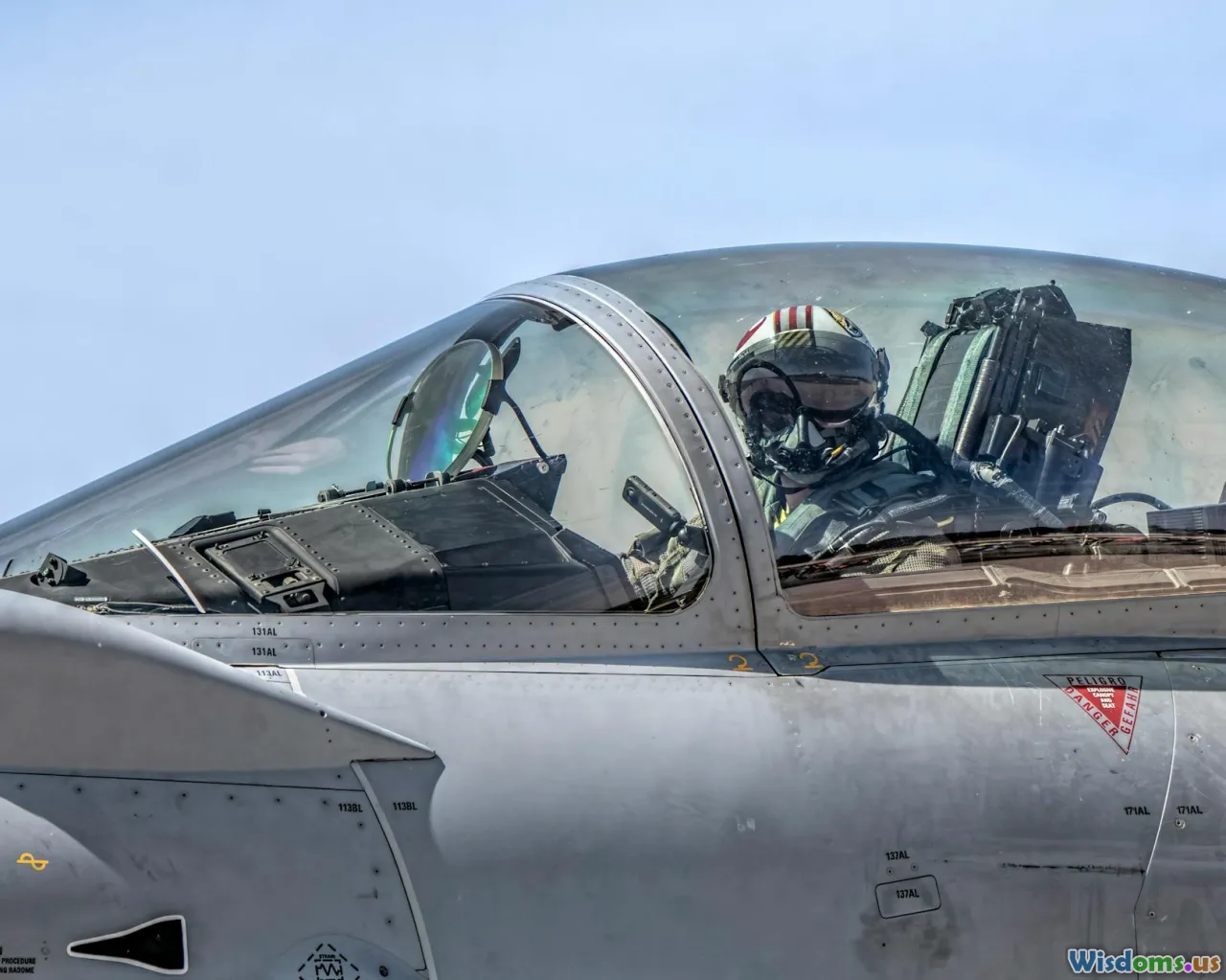
Top Five Advancements in Fighter Jet Cockpit Technology
A modern fighter cockpit is more than a seat with switches; it is a decision engine designed to compress seconds into victories. Where pilots once stitched together the tactical picture from steam gauges and paper kneeboards, they now manage fused timelines, networked formations, and autonomy at the edge. The goal is unchanged — perceive, decide, act — but the means have been transformed by a wave of avionics, display, and human–machine teaming breakthroughs. Below are the five advancements that most decisively reshape how fast jets are flown and fought today, illustrated with concrete systems, fielded examples, and practical ways to extract their full value.
1) Wide-area, touch-first cockpit displays
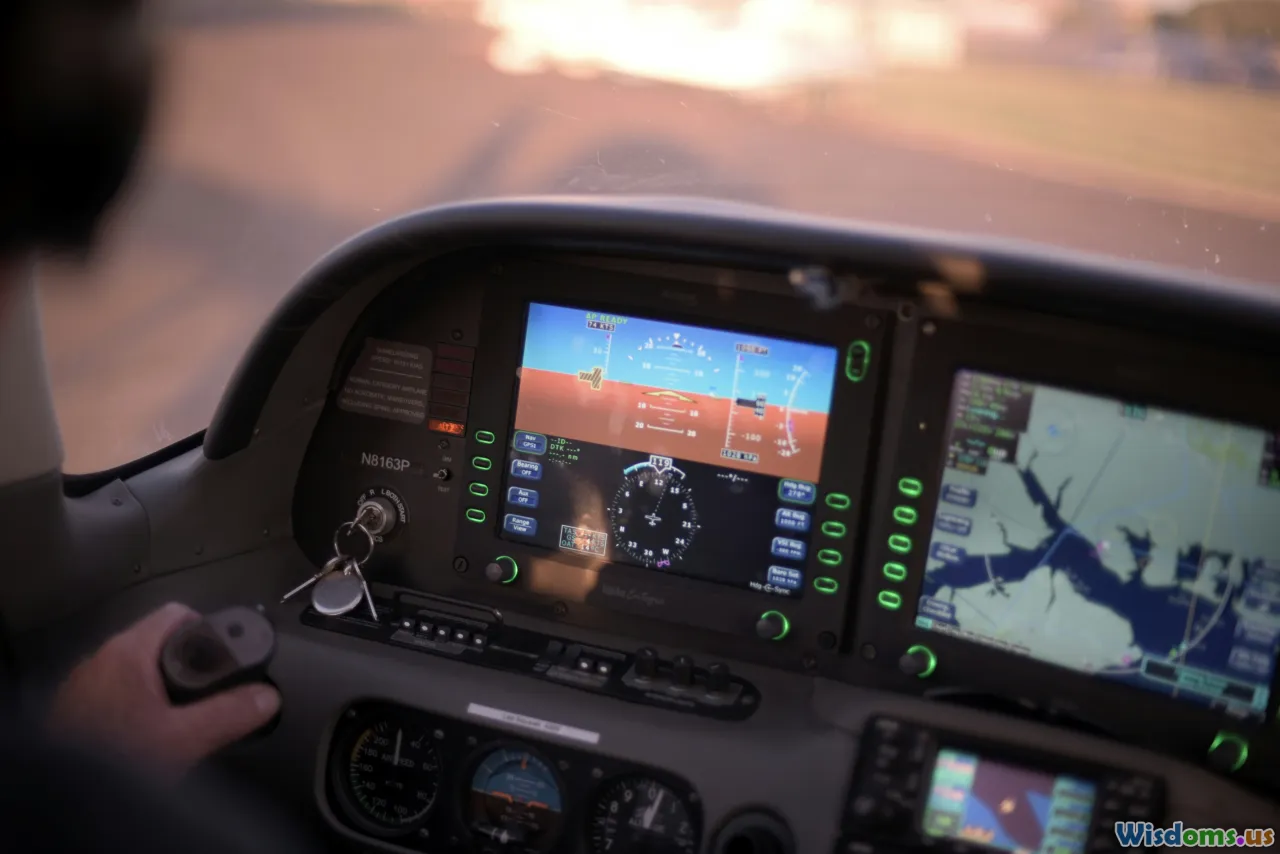
For decades, fighters relied on two to six small multi-function displays (MFDs). Today, the best cockpits are built around one or two reconfigurable wide-area displays (WADs) or panoramic cockpit displays (PCDs) that stretch across the instrument panel. These let pilots compose their own workspace: sensor picture on the left, weapons page center, map and electronic warfare (EW) overlays on the right — all resizable with a tap.
Representative examples:
- F-35: A panoramic cockpit display about 20 by 8 inches consolidates mission and flight data into a continuous canvas. It supports multi-function windows, video streams, and sensor overlays.
- Gripen E: A 19 by 8 inch wide-area display by AEL Sistemas (partnering with Elbit) gives pilots a single, configurable pane for mapping, tactical symbology, and sensor feeds.
- F/A-18E/F Block III: A roughly 10 by 19 inch touch display provides a high-resolution, sunlight-readable surface where multiple pages can be tiled or stacked.
- F-16V: While not panoramic, the 6 by 8 inch center pedestal display is a large-format upgrade that modernizes older blocks with high-res color tactical pages.
Why this matters:
- Less head and eye travel: One continuous display reduces scan time between separated screens. In a merge or during air-to-ground time-on-target runs, milliseconds count.
- Contextual composition: Pilots no longer hunt for pages; they compose them. Overlay threat rings on a digital map, drag a radar picture next to an infrared search and track (IRST) window, and park weapon timeline bars beneath.
- Future-proofing: New sensors and apps can be added without new bezels. Software pushes update tiles, not hardware panels.
Design details that make these displays combat-credible:
- Glove-friendly touch: Projected capacitive or hybrid resistive layers tuned to work with flight gloves and under vibration. Many systems include confirmation zones or multi-tap guards for critical actions.
- Reversionary controls: When turbulence or high-G makes touch less reliable, HOTAS (hands on throttle and stick) commands and physical selectors back up key functions.
- Sunlight readability and night compatibility: High brightness and anti-reflection coatings for day; dimming curves and NVG-friendly color palettes at night.
- Fault isolation: The display is segmented, so a pixel fault or localized damage does not knock out the entire picture.
How to extract value from a WAD on day one:
- Build mission-phase layouts: Create presets for ingress, target area, egress, and recovery. Example: Ingress — left pane moving map with terrain and threats; center pane radar tactical; right pane datalink tracks. Target area — center pane weapons with release cues; left pane targeting pod; right pane EW and threat missile approach.
- Use tiers of importance: Put the most time-critical pane center and nearest your natural head/eye line; move secondary context to the periphery.
- Color with intent: Reserve highly saturated reds and ambers for true warnings. Use consistent hues for friendly, unknown, and hostile tracks across pages.
- Practice degraded modes: Know the HOTAS backup for every critical touch action. Rehearse fighting with a single pane after simulated damage.
Field pitfall to avoid: Fat-finger actions. Mitigation includes enabling confirmation for destructive commands (jettison, master arm changes), and using larger touch targets for frequently accessed functions during turbulence. Squadrons often adopt standard tile layouts so wingmen share mental models when talking through a tactical picture.
2) Helmet-mounted displays and augmented reality cueing
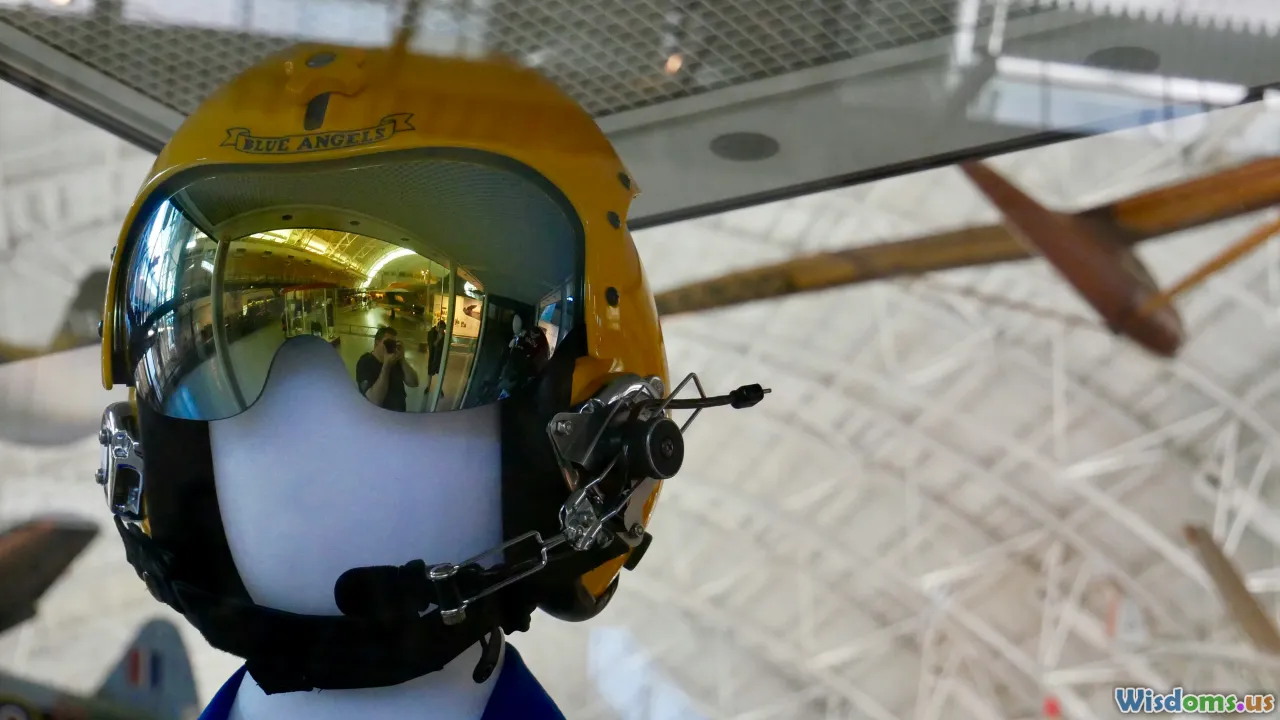
The head-up display (HUD) used to be the prime reference for aiming and flight cues. Helmet-mounted displays (HMDs) project symbology wherever the pilot looks, turning the canopy into an all-aspect HUD. This change enables high off-boresight weapon employment, 360-degree awareness, and target designation by simply looking.
Representative systems:
- F-35 Helmet-Mounted Display System (HMDS): Replaces a traditional HUD entirely. The visor projects flight, navigation, and weapon symbology; inputs from the Distributed Aperture System allow the pilot to see a stitched, 360-degree night-vision-like imagery.
- Striker II (Typhoon and Gripen variants): Adds digital night vision into the helmet, enabling visor-based low-light operations and cueing without separate NVG tubes.
- Joint Helmet-Mounted Cueing System (JHMCS) on F-15, F-16, and F/A-18: Provides cueing for high off-boresight missiles such as AIM-9X; matured across thousands of fleet hours.
Combat implications:
- Faster target handoff: A pilot can look, lock, and launch a high off-boresight missile without needing to point the nose directly at the bandit. This shaves seconds from weapons employment timelines and expands no-escape zones in a turning fight.
- All-aspect SA: Helmet symbology can overlay threat bearings even when the pilot is checking the six o'clock. Cueing can also slave sensors (radar, IRST, targeting pods) to the helmet line of sight.
- Reduced heads-down time: Critical flight and navigation cues stay in the field of view, improving safety during low-level or dynamic targeting.
What separates great HMDs from merely good ones:
- Low latency and stable calibration: If symbology lags head motion, pilots get motion sickness and aiming errors. Modern systems push latencies to low tens of milliseconds with frequent auto-boresight checks.
- Night fusion: Integrating night imaging into the visor removes the weight and alignment issues of clip-on NVGs and allows color-coded symbology overlaid on the scene.
- Ejection compatibility and weight balance: HMDs add mass. Balance and neck ergonomics matter during high-G; fit quality and posture training reduce strain.
Operational tips for HMD excellence:
- Calibrate often: Quick boresight checks before taxi and prior to a fight reduce drift-induced misses.
- Manage brightness: Too much luminance washes out outside cues or degrades night adaptation; too little makes symbols disappear against bright clouds. Standardize brightness settings for weather regimes.
- Train vestibular resilience: Helmet visuals updating with head motion can conflict with the inner ear under G or turbulence. Exposure training helps pilots manage sensory mismatch.
- Use look-to-steer sparingly: Slaving sensors to the helmet is powerful, but guard against accidental slews during a fight. Map a deadman switch or use a press-to-enable for slewing.
Comparison snapshot:
- F-35 HMDS: Deepest integration, no standalone HUD, 360-degree video overlay; heavy emphasis on full-mission cueing.
- Striker II: Digital night vision in-helmet and robust cueing for European platforms; strong night CAS use cases.
- JHMCS: Battle-tested cueing for legacy fleets; lower cost and wide fielding, with incremental modernizations.
3) Deep sensor fusion and AI copilots

Fighter cockpits once mirrored their sensors: one page per radar, targeting pod, electronic warfare receiver, or IRST. Fusion changes that by composing all inputs into a single, coherent set of tracks with confidence scores and identities. The pilot works a fused battlespace rather than babysitting each sensor.
Key ingredients:
- Diverse sensors: Active electronically scanned array (AESA) radar (e.g., APG-81 in F-35, APG-77 in F-22), electro-optical and infrared systems (EOTS on F-35, PIRATE on Typhoon, IRST21 on some Super Hornets), distributed aperture systems for spherical awareness, and electronic support measures (ESM) for passive geolocation.
- Track correlation and identity management: Algorithms associate measurements across sensors and time, producing track files with kinematics, classification, and threat intent. Confidence rings and color codes indicate quality, with options to manually promote/demote track ID based on ROE.
- Cognitive aids: Software highlights outliers (a fast-closing track at low altitude), recommends intercept geometries, and prioritizes radio calls or datalink messages. We are seeing first steps toward AI copilots that filter chatter, flag contradictions, and suggest likely next actions.
A practical scenario: You are leading a two-ship over the littorals. The fusion engine correlates an ESM hit (emitter characteristic), a radar skin track (kinematics), and a warm IR signature at medium altitude. The cockpit presents one composite track with an identity ladder and confidence above a threshold. The AI assistant proposes a bracket geometry based on fuel state and known threat missiles, offers a probable classification, and recommends pushing a sanitized track to a shooter outside threat WEZ via datalink. You tap to accept the geometry, refine ID per ROE, and fly the bandit into a teammate’s envelope — all with fewer mode changes.
What to demand from a fusion cockpit:
- Transparent confidence: Show why a track is classified as hostile, friendly, or unknown, and let the pilot override with a logged reason.
- Temporal persistence: Tracks should gracefully degrade, not vanish, when a sensor drops momentarily due to notch or clutter.
- Cross-sensor tasking: Let pilots choose which sensor should own a track based on tactics (e.g., passive-only until commit), and automate handoff between sensors.
Cognitive safety nets now saving lives:
- Automatic Ground Collision Avoidance System (Auto-GCAS): When a pilot is task-saturated or experiences G-induced loss of consciousness, Auto-GCAS monitors the flight path and commands a recovery if a ground impact is imminent. This technology, introduced on fighters like the F-16 and later integrated into the F-35, has been credited with saving multiple airframes and at least a dozen pilots across services.
- Envelope protection: Fly-by-wire logic and caret cues prevent over-G and departure-of-controlled-flight. Some systems softly push back against unsafe commands, while still allowing pilot authority when needed.
How to work with an AI copilot rather than fight it:
- Set filters early: Before push, define what the assistant should elevate: pop-up threats, fuel anomalies, or datalink conflicts. Reduce false alerts.
- Learn the why: Read the reason codes behind a recommendation. This builds trust and speeds acceptance or dismissal.
- Practice red-team scenarios: Train with deliberate algorithmic mistakes. Pilots who know when to overrule are safer and deadlier.
- Use voice where proven: Direct voice input (as seen in some European cockpits) can speed radio changes or page calls. Keep it for low-stakes tasks until reliability is demonstrated in your jet.
4) Secure datalinks and the emerging combat cloud

A lone cockpit can only see so much. The network extends the pilot’s reach by fusing multiple aircraft, ships, and ground sensors into a shared picture. Modern fighters host multiple waveforms: legacy interoperability links and low-probability-of-intercept/low-probability-of-detection (LPI/LPD) stealth links for sensitive data.
Common building blocks:
- Link 16: The NATO workhorse for situational awareness and mission data sharing. It provides track sharing, text messages, and time synchronization. It is widely understood and still indispensable, but emissions are not especially subtle.
- Stealthy intra-flight links: Proprietary or program-specific waveforms on fifth-generation platforms enable LPI/LPD exchanges between stealth aircraft without advertising presence. These carry high-fidelity target data and sensitive status.
- Gateways and translators: Airborne nodes can translate between stealth links and Link 16 or other networks, enabling a stealth jet to feed a legacy shooter without exposing itself directly. High-altitude relay platforms extend range and bridge disparate systems.
Operational effects:
- Shooter–sensor decoupling: A stealth platform quietly detects and classifies a threat, pushes high-quality targeting over a low-probability link to a fourth-gen fighter or ship, which then fires without ever seeing the target directly. This expands magazine depth and keeps stealth assets deep and survivable.
- Formation elasticity: Distributed elements can maintain a coherent tactical picture even when spread across hundreds of miles, so long as time synchronization and track correlation are maintained.
- Cooperative EW: Multiple jets can coordinate jamming, decoys, and emissions plans to shape an adversary’s picture. One jet monitors, another dazzles, a third holds fire — all orchestrated in near real time.
How to make the network work for you:
- Emission control (EMCON) discipline: Agree on who talks and when. Use push-to-share modes rather than continuous broadcast when stealth matters. Build trigger conditions for silent periods and burst data pushes.
- Watch track quality (TQ): Not all tracks are equal. Prioritize shots and vectoring based on TQ and latency; avoid chasing ghosts from low-confidence, stale tracks.
- Manage time: Networked fire control demands tight clocks. Confirm time sources and monitor for drift, especially when operating near the edge of coverage.
- Standardize symbology: Ensure that what your wingman paints as ‘hostile probable’ appears the same on your screen. Cross-brief the symbology and color codes to avoid misreads.
Concrete examples in service or test:
- Cooperative engagement has been demonstrated where a stealth aircraft silently cues a legacy fighter or a surface combatant for a beyond-visual-range shot. Translating gateways allowed the stealth waveform to inform the shooter’s Link 16 picture without revealing the stealth jet’s position.
- Navy and Air Force programs continue to mature airborne gateways that can pass targeting-quality data between dissimilar fleets, a prerequisite for a true combat cloud rather than isolated networks.
Checklist to avoid network fratricide:
- Validate ID doctrine before push; rehearse who declares what and how.
- Use geo-fencing for track sharing to keep irrelevant data off the net.
- Exercise ‘radio silence drills’ with fallbacks to minimal exchanges — the side that talks least often lasts longest.
5) Human–machine teaming with loyal wingmen

The next cockpit frontier is not inside the jet; it is the ability to command aircraft that are not in it. Manned–unmanned teaming (MUM-T) lets a fighter pilot task low-cost, attritable drones — often called loyal wingmen — to scout, jam, decoy, or even carry weapons. The cockpit becomes a mission-control node with simple, high-payoff controls rather than a remote pilot station.
Demonstrators and programs to watch:
- Valkyrie-class attritable UAVs have flown under manned control or supervision in tests, receiving tasking from fighters without overloading the pilot.
- MQ-28-class loyal wingmen developed with international partners illustrate a path to operational teaming, with modular payload bays for sensors and weapons.
- Service roadmaps envision a next-generation air dominance (NGAD) family of systems where a crewed centerpiece commands multiple collaborative combat aircraft (CCA), each optimized for roles like sensing, EW, or strike.
What this means for cockpit design:
- Command by intent, not by stick: The fighter pilot should not be flying a drone with a virtual joystick. They should assign tasks: trail me at X miles, sanitize this corridor, jam this band, hold weapons on my cue. The system handles autonomy, routing, and deconfliction.
- Abstraction and safeguards: The interface must display the wingman’s capability envelopes, comm status, and fuel/weapon state at a glance, with clear hand-back logic if autonomy fails or comms degrade.
- Minimal head-down cost: Loyal wingman control surfaces should live in a single tile and respond to HOTAS shortcuts and voice for the top three commands.
A practical playbook for MUM-T from the cockpit:
- Pre-brief roles and verbs: Assign an ‘EW escort’ to one drone, ‘forward sensor picket’ to another. Restrict in-mission commands to a small verb set: screen, mark, jam, trail, strike, RTB.
- Use autonomy levels: Level 1 — monitor only; Level 2 — suggest and confirm; Level 3 — execute bounded tasks. Start with Level 2 in complex airspace to preserve pilot veto.
- Plan lost-link behavior: Every task has a default fallback: climb, hold, and listen; return to waypoint; or continue and transmit after-action. Set these before takeoff.
- Keep the data thin: Share intent and waypoints rather than continuous video. Low-bandwidth, burst communications are more survivable and reduce cognitive load.
Risk management that pays off:
- Deconfliction timelines: Loyal wingmen should publish their planned paths and times as ghost tracks on the WAD, with automated conflicts flagged.
- Hogging the net: Too many CCAs speaking at once can saturate links. Prioritize one or two shares at a time and enforce a contention protocol.
- Ethical and legal overlays: Ensure the interface presents the human with unambiguous confirmation for any lethal action, preserving meaningful human control.
Where this is already showing value:
- ISR extension: Forward pickets push passive detections back to the fighter without exposing the manned aircraft.
- Survivable SEAD/DEAD: Attritable wingmen can bait or blind threats. The manned jet stays outside the most lethal zones yet holds decision authority.
- Magazine depth: Wingmen with standoff munitions expand the formation’s shots without dragging a vulnerable tanker closer.
The single hardest design problem in MUM-T is cognitive cost. Every control or status element for a loyal wingman competes with basic flying, formation leadership, and weapons employment. The best implementations keep the verbs few, the displays quiet, and the autonomy trustworthy — and they integrate with the same color codes, geofences, and timelines already living on the WAD.
A final note on training and sustainment across all five advancements:
- Simulator-first currency: You cannot fully test network effects, fusion edge cases, or MUM-T conflicts in a single-ship sortie. High-fidelity sims, networked as a virtual formation, are where pilots should refine layouts, trust models, and response drills.
- Human factors as a weapon system: Neck endurance for HMDs, eye tracking discipline for WADs, and checklist hygiene for AI overrides are as important as weapons employment sets.
- Software maturity cycles: Treat cockpit software like another engine. Measure stability, mean time between anomalies, and patch quality. Build squadron-level feedback loops with developers so that what pilots learn on Monday ships as an update by Friday.
In the end, the modern fighter cockpit is trending toward invisibility. When the display fades into a natural field of view, when the network feels like a sixth sense, when an AI quietly prevents a controlled flight into terrain while you solve the fight, the technology has done its job. The best cockpits do not wow with gadgets; they let a pilot think faster with less effort, marshal more teammates with fewer words, and take smarter risks with bigger payoffs. And that is how seconds become victories.
Military Technology Defense Innovation military aviation Sensor Fusion Air Force Technology Aerospace Technology augmented reality HUD Avionics Fighter Jet Cockpit Technology Helmet-Mounted Display (HMD) Glass Cockpit Voice and Touch Controls AI Copilot Data Links and Networking F-35 Lightning II Rafale F4 Tempest Program Sixth-Generation Fighters
Rate the Post
User Reviews
Other posts in Air Force Technology

Popular Posts