Top Trends in Military Robotics for Battlefield Success
34 min read Explore top trends in military robotics—from swarming drones and UGVs to edge AI and human-machine teaming—driving battlefield awareness, survivability, and logistics efficiency while addressing ethics and interoperability. (0 Reviews)
Robots are changing the character of warfare in ways that feel both familiar and entirely new. We have long used machines to extend reach, magnify force, and protect people from harm. What has changed is the maturity of autonomy, the precision of sensors, the reliability of communications, and the speed with which militaries and industry can iterate on cheap, attritable platforms. From the skies over the Caucasus in 2020 to the trenches of Eastern Europe since 2022, uncrewed systems and software-defined tactics have accelerated. The question is no longer whether robots will matter on the battlefield, but how quickly organizations can master the trends that deliver real advantage while staying within legal and ethical guardrails.
Below is a practical, detailed tour of the top trends shaping military robotics for battlefield success, with examples, comparisons, and concrete guidance that program managers, technologists, and decision makers can use today. The focus is on high-level insights and responsible innovation, not on field-expedient designs or tactics that would bypass safety, law, or policy.
Autonomy at the edge: from remote control to trusted teaming
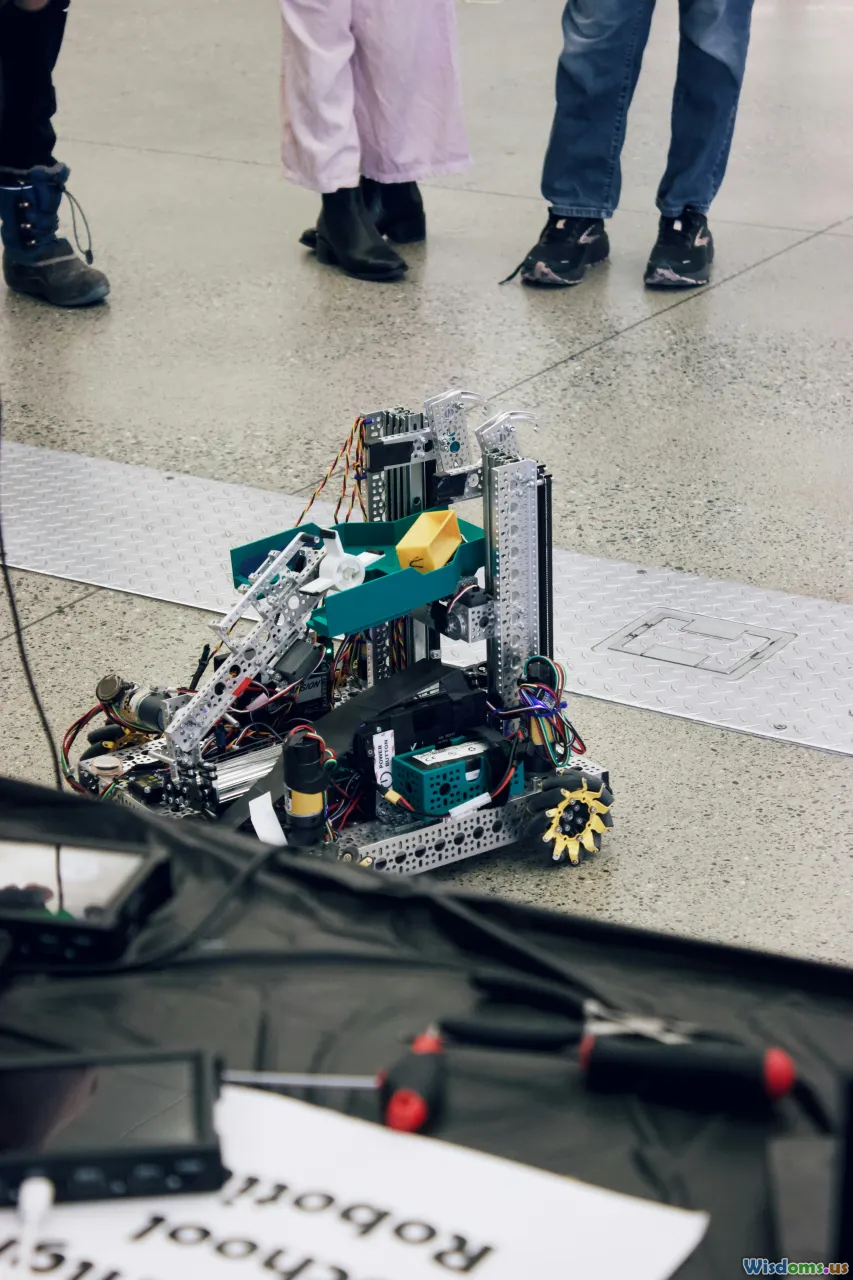
The defining shift in military robotics is the move from teleoperation to autonomy at the edge. Early systems relied on operators to steer and decide. Modern platforms blend local perception, onboard planning, and human oversight, making the human a mission commander rather than a joystick pilot.
What is driving this trend
- Compute at the edge: Low-power GPUs and ASICs enable real-time perception and navigation on small drones and ground vehicles.
- Better algorithms: Advances in visual-inertial odometry, simultaneous localization and mapping, and robust object detection have escaped the lab and entered ruggedized hardware.
- Communications realism: The battlefield is congested and contested, pushing autonomy to function when links are degraded or intermittent.
Examples in the field
- Small uncrewed aircraft equipped with commercial off-the-shelf edge accelerators can follow waypoints, avoid obstacles, and recognize common objects without a continuous link. These capabilities, once confined to large drones, now fit in the palm of a hand.
- Ground robots such as tracked utility UGVs have progressed from teleoperated bomb disposal to semi-autonomous route following and convoy behaviors for logistics resupply.
Actionable guidance
- Treat autonomy as a spectrum. Map tasks to autonomy levels, from teleop to on-the-loop. For critical effects, require human confirmation even if the vehicle can act independently.
- Demand real-world robustness. Insist on demonstration in GPS-denied, dusty, wet, and electromagnetically noisy environments. Sim-only performance is not sufficient.
- Invest in interpretable autonomy. Use explainable planning summaries and confidence metrics so operators know what the robot thinks it sees and plans to do.
Key takeaway: Battlefield success depends less on more autonomy and more on the right autonomy, aligned with mission, risk, law, and operator trust.
Uncrewed aerial systems evolve: attritable, agile, and networked
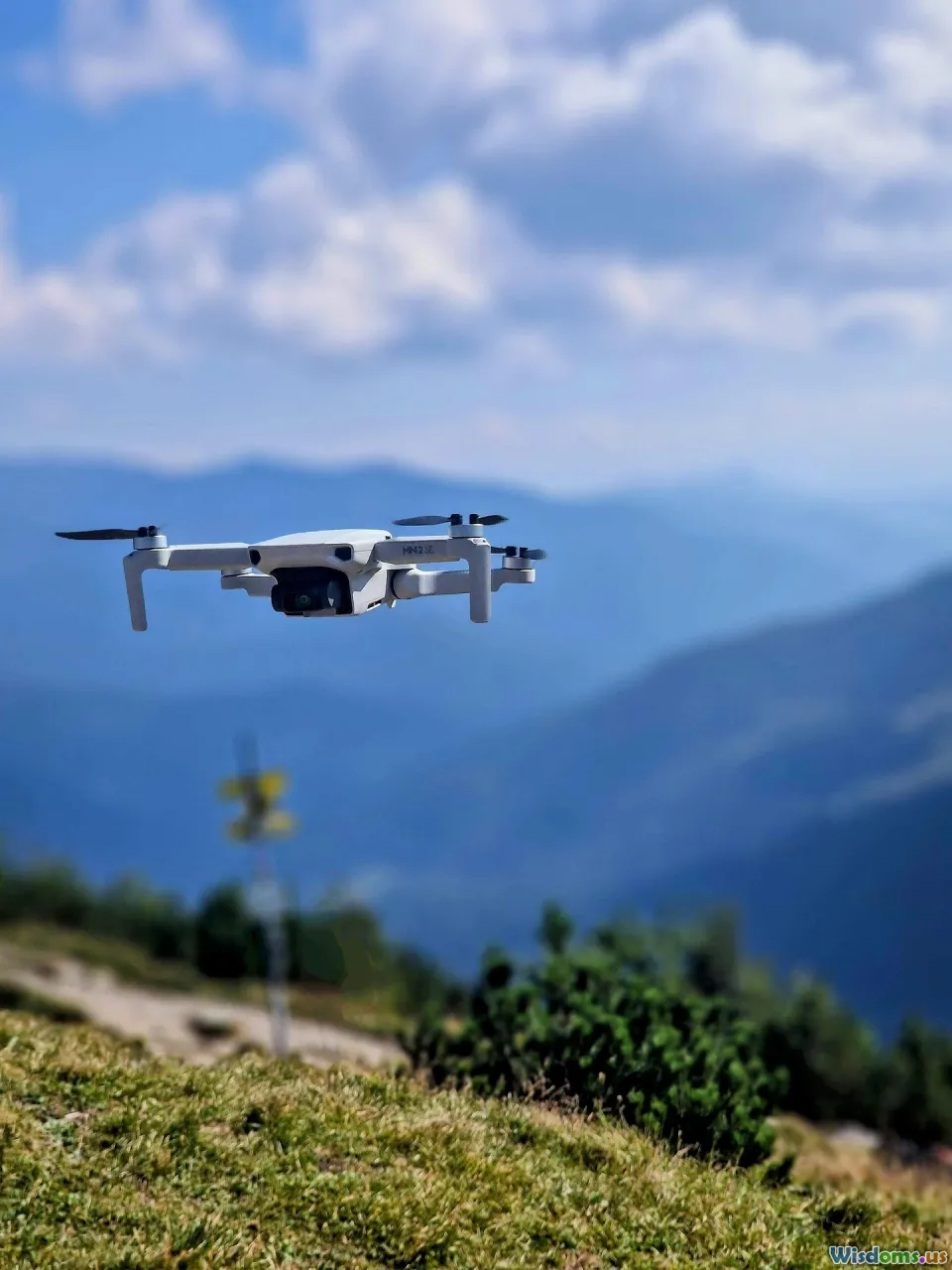
Uncrewed aerial systems remain the most visible face of military robotics. The trend is toward a layered ecosystem: long-endurance assets for persistent sensing, nimble small drones for close reconnaissance, and low-cost attritable aircraft for risk-tolerant missions.
What is new
- Proliferation of small UAS: Light quadcopters and fixed-wing minis now provide unit-level surveillance, spotting, and damage assessment. Their small size challenges traditional air defenses but demands strong counter-UAS orchestration.
- Attritable platforms: Medium-size uncrewed aircraft designed to be affordable enough to accept losses in contested airspace enable daring ISR tasks and decoy roles.
- Modular payloads: Swappable pods provide day/night optics, signals collection, or communication relay, making a single airframe useful across missions.
Real-world signals
- Conflicts from the Nagorno-Karabakh war in 2020 to the ongoing fighting in Ukraine show large-scale use of small drones for tactical awareness and battle damage confirmation. Militaries now treat UAS as consumables in some contexts, driving supply chains more akin to ammunition than exquisite aircraft.
- Loyal wingman prototypes, such as collaborative combat aircraft programs and similar efforts, demonstrate teaming concepts in test ranges where uncrewed aircraft extend the sensor range and complicate enemy targeting.
Planning considerations
- Plan in layers. Mix endurance platforms for a wide-area picture with agile micro-UAS for local clarity. Ensure they feed a common operating picture rather than creating unconnected video feeds.
- Prioritize spectrum stewardship. Small drones share crowded frequencies. Adopt spectrum management tools and discipline to limit fratricide with friendly comms and counter-UAS systems.
- Budget for sustainment over replacement. Consumable drones still require batteries, motors, ground equipment, and training pipelines. Build lifecycle costs into plans from day one.
Ground robots move from niche to necessity

If the air domain captured early headlines, the ground domain is where commanders are quietly extracting steady, tangible value. UGVs are advancing on three fronts: logistics, breaching and engineering, and sensors-forward reconnaissance.
Logistics and resupply
- Robotic mules can follow dismounted units, carrying ammunition, water, and sensors across broken terrain. This reduces fatigue and enables faster maneuver.
- Convoy automation helps move supplies along predictable routes. By automating spacing and lane keeping under human supervision, forces can reduce cognitive load and exposure.
Combat engineering and EOD
- Demining and explosive ordnance disposal robots drastically reduce risk. With better manipulators, haptics, and cameras, modern systems can handle complex tasks previously requiring human proximity.
- Breaching UGVs push through obstacles and inspect choke points before troops commit, increasing survivability and speed.
Recon and security
- Small tracked and wheeled platforms scout inside buildings, tunnels, and urban alleys. Quiet electric drives and stabilized cameras improve observation without giving away position.
What to look for in a ground robot
- Mobility that matches terrain: Track width, wheel size, and suspension tuned for mud, sand, rubble, and stairs. Resist the temptation to over-specialize; modular drive trains are valuable.
- Manipulation capability: Grippers or arms that handle typical unit tasks, from door opening to sensor placement.
- Swappable power: Hot-swappable batteries and safe field charging allow continuous operations.
Tip: Logistics UGVs that earn soldier trust do three things reliably: follow-me without constant babysitting, stop safely when confused, and recover gracefully after losing comms.
Manned-unmanned teaming comes of age

Human-machine collaboration is most effective when each partner does what it does best. Manned-unmanned teaming, or MUM-T, pairs crewed platforms and dismounted units with uncrewed assets.
Why it matters
- Sensor reach: Uncrewed assets extend the range of manned platforms, spotting threats beyond line of sight.
- Risk management: Crewed platforms keep standoff, while robots probe, flank, or act as decoys.
- Cognitive relief: Autonomous copilots process video, suggest routes, and monitor system health, letting humans focus on intent.
Emerging patterns
- Air-to-air teaming in which a crewed aircraft directs several uncrewed teammates, each performing ISR or electronic support. Operators set goals; autonomy manages execution and deconfliction.
- Ground teaming where squads employ a family of small robots to scout and relay communications, controlled by a single intuitive tablet interface.
Design principles for effective teaming
- Clear roles: Define decision rights explicitly. The robot should know when to ask, when to execute, and when to yield.
- Shared mental model: Provide the human with concise status and predicted actions. Use visual timelines or planned path overlays.
- Fail-safe behaviors: If separated, the robot should adopt conservative defaults such as loiter, return, or hide, based on mission context.
Sensor fusion: seeing more, sooner, and smarter

Success in modern operations depends on better perception, not just more pixels. The winners are systems that fuse multi-spectral inputs into actionable insights under clutter and stress.
Key directions
- Multi-spectral sensing: Daylight electro-optical, low-light, infrared, short-wave infrared, and small radars fill gaps created by camouflage, smoke, and darkness.
- AI-powered detection: Onboard models flag anomalies, track movements, and prioritize feeds. The best systems explain their confidence so humans can verify.
- Collaborative sensing: Multiple robots share bearings and tracks to triangulate and filter false positives, improving accuracy without adding large sensors.
Practical advice
- Prioritize sensor complementarity over redundancy. A small radar plus a mid-quality thermal camera may outperform two high-end RGB cameras in bad weather.
- Insist on calibration workflows that survive field conditions. Include quick field checks to prevent drift.
- Think latency budget. Decide what must be processed onboard versus sent uplink. Avoid clogging networks with raw video when metadata would do.
Note: Successful programs treat data as a capability. Plan for cataloging, labeling, and compliance so today s missions create tomorrow s training sets without violating policy or privacy.
Surviving the spectrum: EW resilience and navigation without GPS

Robots are brittle if they rely on perfect GPS and clean radios. Adversaries will jam, spoof, and listen. The trend is toward resilient autonomy, hardened links, and multiple navigation modalities.
What resilience looks like
- Multi-modal navigation: Visual-inertial odometry, terrain-relative navigation, magnetometers, and celestial cues work together. The system uses GPS when available, but does not need it.
- Adaptive radio stacks: Frequency agility, spread spectrum, and power control minimize detection and disruption. Mesh networks route around interference.
- Emission control: Robots learn to operate silently, limiting active sensors and transmissions unless necessary.
Checklist for programs
- Test in contested environments. Include red-team jamming and spoofing in trials.
- Define lost-link behaviors clearly, including timeouts and priorities.
- Bake in adversarial awareness. Train perception models against common spoofing artifacts and decoys.
Remember: The best EW resilience is often tactical restraint. If a robot does not have to talk, it should not.
Open architectures and interoperability

Speed and flexibility matter more than ever. Open architectures let teams add new payloads, replace radios, and swap autonomy stacks without writing off entire fleets.
Core elements
- Modular open systems approach, widely adopted in procurement, encourages standard interfaces for subsystems.
- Interoperability standards for control and data, such as widely used UAS control and motion imagery standards, ease cross-vendor integration.
- Robotics middleware like ROS 2 and defense-oriented profiles support common messaging, time sync, and safety patterns, while hardened variants address security and determinism.
Program guidance
- Require interface control documents from vendors and verify with plugfests. Black box systems will slow you down.
- Separate compute from payloads. Treat sensors and radios as line-replaceable units.
- Plan for second sources. Choose components with multiple vendors and clear export and licensing paths.
Open systems are not just technical; they are strategic. They allow faster adaptation to emerging threats and opportunities.
Power, endurance, and the energy fight

Energy is destiny for small robots. Mobility, sensor fidelity, and comms all draw from the same battery. Improving endurance and power management is therefore a top trend.
What is changing
- Better batteries: Improvements in cell chemistry and packaging have increased energy density and safety margins, though thermal management remains crucial.
- Fuel cells for niche roles: For long-endurance small UAS or silent watch missions, compact fuel cells reduce heat and acoustic signatures, trading complexity for endurance.
- Hybrid powertrains: Small generators and hybrid-electric drives extend UGV range while keeping quiet modes for stealth.
Practical tips
- Energy-aware autonomy: Plan routes and loiter strategies that account for wind, grade, and payload draw. Avoid all-out sprinting unless essential.
- Fast swap logistics: Standardize battery form factors across fleets to simplify supply.
- Field charging: Consider portable solar or generator chargers to reduce dependency on fixed bases. Factor in noise and signature control.
Metrics that matter
- Watt-hours per kilogram is only a start. Track real mission endurance: time on task with sensors and comms active under realistic conditions.
Safety, ethics, and lawful use of autonomy

As autonomy grows more capable, so does the responsibility to use it within the bounds of law and ethics. Military robotics teams must operationalize principles such as meaningful human control, accountability, and proportionality.
Good practice
- Human-on-the-loop for critical functions: Even when autonomy executes, humans set intent and boundaries and retain the authority to intervene.
- Rigorous test and evaluation: Validate perception and decision models across varied scenarios, including edge cases, adverse weather, and adversarial conditions.
- Governance artifacts: Maintain model cards, data lineage, and change logs. Ensure every update is traceable to requirements and test results.
- Training and doctrine: Incorporate legal and ethical instruction alongside technical training to reinforce norms and compliance.
Why this matters operationally
- Trust accelerates tempo. Operators who understand a system s limits use it more effectively.
- Structured oversight reduces risk of accidental escalation and collateral harm.
Ethics is not a brake on innovation; it is a guide rail that keeps programs stable and scalable under scrutiny.
Training, simulation, and digital twins

One of the quiet revolutions in robotics is the fidelity of simulation and the practicality of digital twins. These tools cut costs, speed iteration, and improve safety.
Advances you can leverage
- Physics-accurate simulation: Realistic aerodynamics, ground friction, and sensor noise models let autonomy train on plausible data without hazardous field trials.
- Synthetic data generation: Balanced datasets covering rare conditions, from dust storms to complex urban geometries, supplement real-world collections.
- Digital twins of platforms: A digital replica that mirrors wear, battery health, and sensor calibration helps predict failures and schedule maintenance.
Implementation guidance
- Blend sim and reality. Use simulation to pre-train, then quickly validate and fine-tune in the field. Keep a feedback loop so real missions improve the sim.
- Instrument everything. Telemetry from fielded robots should be anonymized and fed into test rigs to recreate issues and verify fixes.
- Train the team, not just the model. Operators should rehearse missions with simulated radio degradation, GPS loss, and unexpected obstacles.
Outcome: Better-trained people using better-trained robots, with fewer surprises when it counts.
Cybersecurity and hardware assurance

Robots are computers that move. They are vulnerable to cyber threats and supply chain risks. The trend is toward secure-by-design robotics with verifiable components and continuous monitoring.
Key pillars
- Zero trust principles: Every component authenticates and authorizes; no network segment is assumed safe.
- Software bill of materials: Maintain and verify SBOMs for embedded systems to track vulnerabilities over time.
- Secure boot and attestation: Hardware roots of trust ensure devices run authorized firmware.
- Red teaming: Regular cyber exercises against deployed systems uncover issues before adversaries do.
Procurement advice
- Mandate vulnerability disclosure programs and patch SLAs.
- Evaluate vendor security posture: secure development lifecycle, code review practices, and incident response.
- Plan for isolation. If a subsystem is compromised, it should fail in a safe, contained way without cascading effects.
The rise of counter-robotics and the defense-in-depth response
As robots proliferate, so do systems to detect, disrupt, or defeat them. Counter-robotics is now a core competency that must integrate across sensors, effectors, and policy.
Trends to watch
- Multi-sensor detection: Radars tuned for small targets, RF direction finding, and optical analytics combine to spot small drones and ground robots.
- Graduated effects: Soft-kill methods such as jamming and spoofing complement hard-kill options. Deconfliction with friendly forces is essential.
- Automation at the edge: AI helps triage detections and recommend responses, reducing operator burden.
Operational lessons
- Avoid whack-a-mole. Integrated air and ground defense layers with common C2 outperform isolated counter-UAS gadgets.
- Train for blue-on-blue risk. Friendly drones must be identifiable, and rules for when to jam must be clear.
- Sustainment matters. Counter-robotics systems require constant updates as adversaries adapt.
Speed to field: acquisition, sustainment, and the attritable shift

Time is a weapon. Procurement is moving from bespoke programs to continuous delivery of good-enough systems that evolve in months, not decades.
What is changing
- Attritable economics: Lower-cost platforms produced at volume let commanders accept losses and learn fast, rather than rationing rare assets.
- Spiral development: Capabilities roll out in small increments with frequent software updates.
- COTS leverage: Commercial components shorten lead times and widen supplier bases, though they increase supply chain diligence needs.
Practical program strategies
- Pilot fast, scale deliberately. Start with small units, gather data, fix issues, then expand. Avoid premature fleetwide buys.
- Measure the right metrics: mission utility, uptime, sustainment cost per hour, and operator workload are more informative than maximum range alone.
- Plan for recovery and recycling. Attritable does not mean wasteful; build processes for repair, refurbishment, and responsible disposal.
Budget insight: Factor training, spares, batteries, and software integration into total lifecycle cost from the outset. Acquisition wins are often eroded by sustainment surprises.
Weatherization, ruggedization, and the last 10 percent

Robotics projects rarely fail in the lab; they fail in the last 10 percent when dust, precipitation, heat, cold, and vibration reveal design shortcuts.
Engineering focus areas
- Environmental sealing: Gaskets and IP-rated enclosures that still allow field service.
- Thermal management: Heat sinks, active cooling, and smart duty cycling to keep compute within safe limits.
- Cable discipline: Strain relief, armored routing, and common connector standards for field repairs.
- Human factors: Glove-friendly controls, readable displays in sun and night, and ergonomic carry points.
Testing tip: Run mean time between failure trials in representative conditions. Use accelerated life testing with temperature cycles and dust chambers to discover weak points before deployment.
Human factors and operator experience
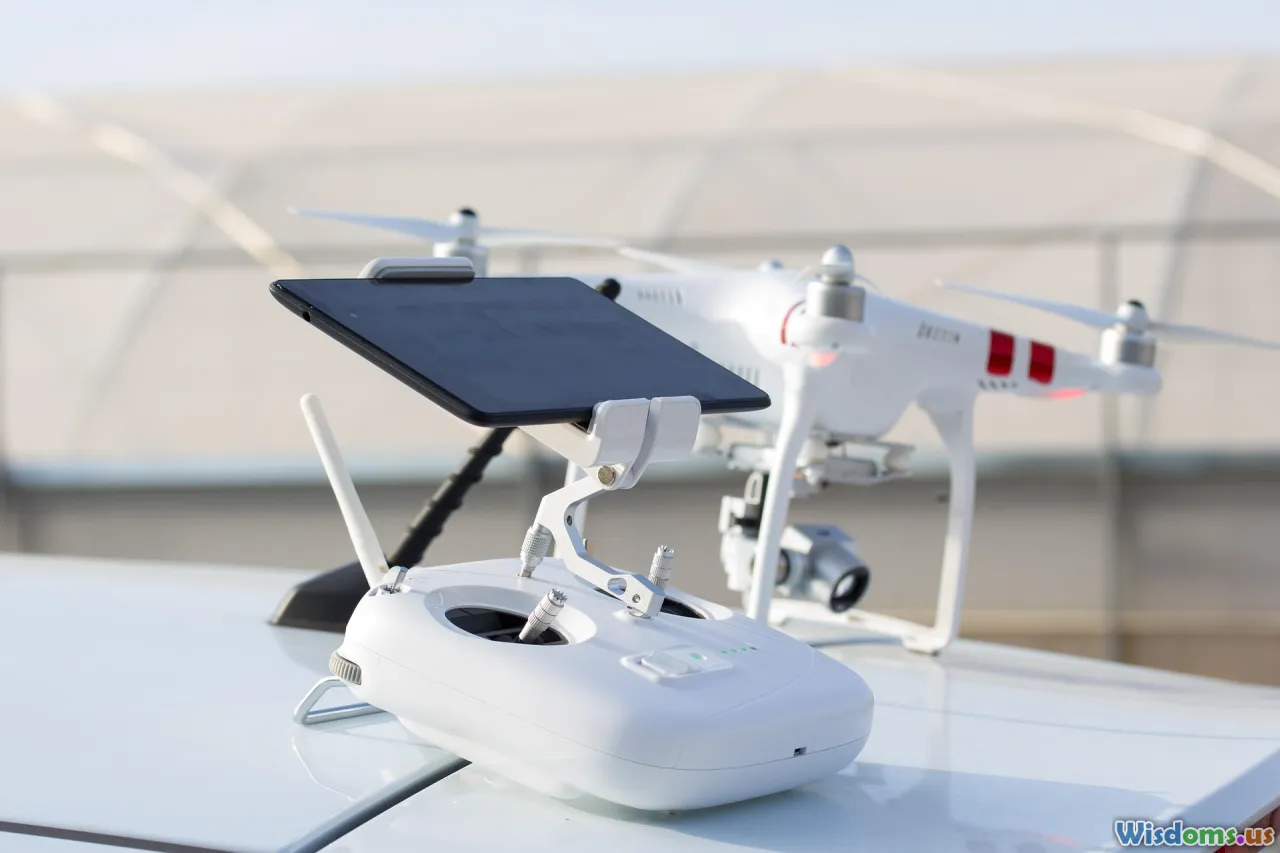
The best robot is the one that operators actually use. Human-machine interfaces have matured from complex ground control stations to intuitive tablets and heads-up overlays.
Design principles
- Reduce cognitive load: One operator should supervise several robots under routine conditions. Use autonomy to handle low-level tasks.
- Simple defaults: Make the common tasks one tap away. Hide advanced settings unless necessary.
- Clear feedback: Present status with concise icons, vibrations, and short haptic cues, not just text.
Training approach
- Progressive complexity: Start with straightforward missions, then add stressors such as degraded comms and unexpected events.
- Embedded trainers: Simulators on the same device used in the field allow just-in-time refreshers.
Outcome: Better outcomes with fewer operators, less fatigue, and fewer mistakes under pressure.
Data advantage: from raw feeds to decisions

Robots generate torrents of data. Turning that into decisions is a competitive edge.
Key moves
- Common operating picture: Fuse robot telemetry, detections, and mission plans into a shared, role-based view.
- Edge filtering: Extract tracks, alerts, and summaries on-platform to conserve bandwidth.
- Data governance: Policies for retention, access control, and audit logs protect sensitive information and enable learning without misuse.
Execution tips
- Standardize metadata schemas. Naming conventions, geotags, and timestamps enable search and replay.
- Build analytics ladders: Near-real-time alerts now, deeper post-mission analysis later.
- Close the loop. Use field data to refine models and tactics through disciplined cycles of update and validation.
How to start and scale a military robotics program
Practical steps for defense organizations seeking to adopt robotics responsibly and effectively.
- Define concrete mission problems
- Start with narrowly scoped use cases such as patrol augmentation, perimeter sensing, or resupply of a specific commodity.
- Articulate success criteria: time saved, risk reduced, or coverage improved.
- Choose partners and architectures
- Favor vendors that commit to open interfaces, security transparency, and frequent updates.
- Ensure modularity so payloads and radios can be swapped as needs evolve.
- Pilot in operationally realistic settings
- Include weather, spectrum stress, and contested navigation. Observe operator workload and fatigue, not just platform performance.
- Capture structured feedback from users, maintainers, and commanders.
- Build a sustainment backbone
- Stock spares, chargers, and test equipment. Train maintainers, not just operators.
- Establish cybersecurity and update processes before wide deployment.
- Scale deliberately
- Expand to additional units after meeting reliability and safety gates. Share lessons learned via playbooks and communities of practice.
- Institutionalize governance
- Create oversight boards with operational, legal, safety, and technical representation.
- Keep audit trails of model versions, data sources, and deployment decisions.
What industry teams should do now

For companies building military robotics, winning programs in this space requires more than slick demos. It demands rugged engineering, transparent security, and a partnership mindset.
Actionable advice
- Make reliability your brand: Publish mean time between failure under specified conditions and show your test regimen.
- Build for integration: Provide SDKs, APIs, and documentation. Support common control and telemetry interfaces.
- Prioritize security and assurance: Offer SBOMs, secure boot, and third-party security assessments. Have a vulnerability disclosure policy with clear timelines.
- Design for maintainers: Field-replaceable components, clear part numbers, and easy diagnostics win customer loyalty.
- Offer training ecosystems: Simulators, courseware, and certification tracks accelerate adoption and reduce support burden.
Market signals
- Procurement favors vendors who deliver incremental value quickly. Show progress in measured sprints rather than promising moonshots.
- Dual-use can help, but be realistic. Commercial adjacency is helpful for components and cost, but defense integration, security, and ruggedization take time and focus.
Case studies and signals from recent conflicts

Observations from recent conflicts underscore the direction of travel, while reinforcing the importance of ethics and control.
Nagorno-Karabakh 2020
- Extensive use of uncrewed aircraft for surveillance and precision effects challenged traditional armored formations. The key lesson was not simply drone effectiveness, but the value of integrated ISR and rapid decision cycles.
Ukraine since 2022
- Ubiquitous small UAS for reconnaissance and artillery spotting demonstrated how even modest units can gain situational awareness. Rapid adaptation with commercial components highlighted both the power and the risk of COTS; supply chains and countermeasures evolve quickly.
- Electronic warfare emerged as a central factor. Units learned that managing emissions, rotating frequencies, and using autonomous behaviors were critical to survival.
Common themes
- Speed of learning beats initial advantage. Teams who iterated tactics, software, and support processes outpaced static adversaries.
- Attrition at scale is a logistics problem as much as a tactical one. Batteries, motors, and spares became as important as airframes.
The road ahead: responsible advantage through adaptability

If the last decade was about proving that military robotics matters, the next will be about building reliable, secure, and ethically governed systems that scale. The most successful organizations will treat autonomy as a capability integrated into doctrine, not a novelty grafted onto old ways of working. They will invest in spectrum resilience, sensor fusion, open architectures, and robust sustainment. They will empower operators with intuitive interfaces and training that matches the chaos of real missions. And they will build governance frameworks that ensure lawful, accountable use.
For all the technical complexity, the core ideas are simple:
- Clarity of mission over novelty of tech.
- Human-machine collaboration over machine independence.
- Open, secure, and modular systems over closed monoliths.
- Continuous learning over one-time procurement.
Robotics will not remove the fog and friction of war, but it can shift the odds by making forces more aware, more agile, and more survivable. By focusing on these trends and the practical steps to apply them, defense teams and industry partners can deliver real value at speed, while honoring the legal and ethical obligations that must guide any use of force.
Artificial Intelligence Military Technology Robotics Defense Technology Military Strategy Military Robotics Ethical AI Human-Machine Teaming Robotics in Military Operations Edge AI Counter-UAS Drones & UAVs Swarm Drones Unmanned Ground Vehicles (UGV) Electronic Warfare Resilience Interoperability Standards Manned-Unmanned Teaming (MUM-T) Battlefield Logistics ISR and C2
Rate the Post
User Reviews



Popular Posts