Unlock Business Growth With Unconventional Networking Events
29 min read Discover how unconventional networking events—hackathons, pop-ups, volunteer sprints—unlock partnerships, pipeline, and brand equity with measurable ROI, actionable playbooks, and real-world examples for modern growth. (0 Reviews)
Unlock Business Growth With Unconventional Networking Events
If you’ve ever left a hotel ballroom with a pocket full of business cards and zero meaningful follow-ups, you already know what’s broken about traditional networking. Strangers shout their “elevator pitches,” small talk runs out of steam, and everyone drifts toward people they already know. Unconventional networking flips that script. Instead of standing around waiting for connections to happen, you design an experience that makes productive collisions inevitable—through shared activities, playful constraints, and intentional facilitation.
This isn’t about novelty for novelty’s sake. It’s about engineering environments where people can show—not just tell—what they’re great at, where trust builds quickly, and where your brand becomes the catalyst for real outcomes: partnerships, hires, pilots, customer deals, and investor interest. Below, you’ll find practical frameworks, formats, and step-by-step playbooks to host events that create value far beyond the room they happen in.
What Counts as “Unconventional Networking”—and Why It Works
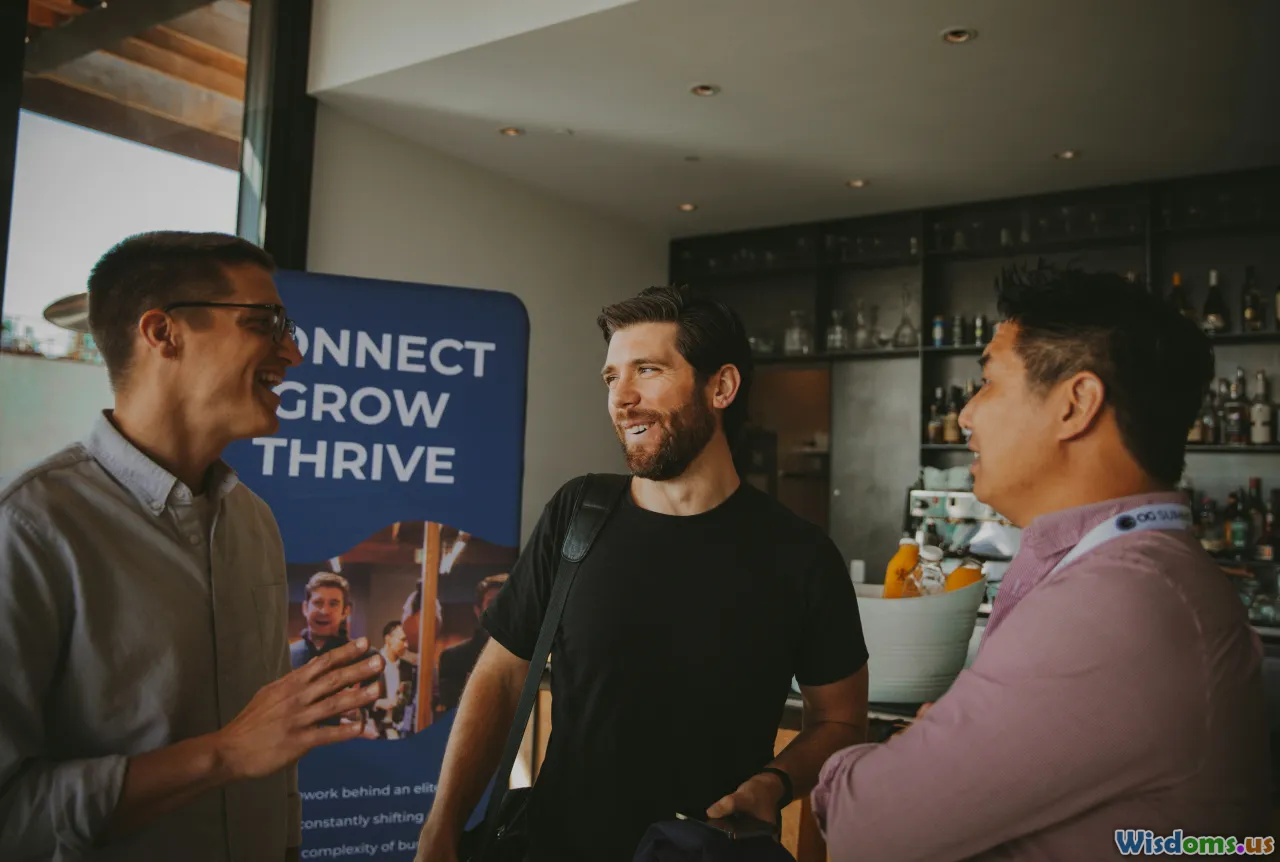
Unconventional networking replaces passive mingling with a purposeful activity that aligns strangers around a shared task, curiosity, or game. Whether you’re running a maker night, a volunteer sprint, or a problem-solving lab, the goal is to convert awkward small talk into natural collaboration.
Why it works:
- Activity replaces anxiety: Give people a mission—build, test, sketch, cook, troubleshoot—and conversations take care of themselves. The task provides immediate context and lower-stakes entry points.
- Weak ties become strong quickly: Decades of research in social science suggest that “weak ties” often unlock opportunities because they connect you to new information and networks. Designing formats that cross-pollinate roles and industries accelerates that effect.
- Social physics favors interaction density: Studies in organizational behavior have found that face-to-face interaction patterns often predict team performance. In events, short, repeated interactions (“collisions”) across diverse groups create more idea flow than long, unstructured mingling.
- Authenticity beats pitch mode: When participants co-create—prototyping a feature, co-writing a brief, volunteering—they reveal competence, generosity, and style. That’s more persuasive than a rehearsed value proposition.
- Memory follows novelty: People remember experiences that feel distinct, useful, and a little fun. What’s memorable is shareable—and shareable events compound your brand reach.
A reliable litmus test: If you removed your brand and someone could still describe the evening as a “typical networking event,” it wasn’t unconventional enough.
Formats That Outperform the Hotel Ballroom

Choose formats where action equals connection. Here are proven concepts with details you can take to your calendar.
- Maker Night (Build Something Real)
- How it works: Partner with a local makerspace. Offer stations—3D printing demos, laser-cut name tags, Arduino lights, or screen-printing tote bags.
- Who it attracts: Product leaders, designers, engineers, and hands-on marketers.
- Business unlock: While people build, ask them to customize an artifact relevant to your product (e.g., print a custom jig if you’re in manufacturing software). You’ll end the night with branded keepsakes and richer product conversations.
- Problem Lab (Customer Challenge Workshop)
- How it works: Curate 3–4 “challenge owners” (customers or prospects). Small groups rotate through 20-minute sprints to generate solutions.
- Who it attracts: Consultants, product managers, founders, ops leads.
- Business unlock: Live discovery. You observe language, priorities, and roadblocks—gold for roadmap and sales messaging.
- Walking Salon (Conversation by Design)
- How it works: Map a 60-minute city walk with three stops. Assign rotating partner prompts at each stop.
- Who it attracts: Community-oriented professionals, early-stage founders, creatives.
- Business unlock: High-quality one-to-ones without awkwardness. End at a venue you sponsor for deeper conversations.
- Service Sprint (Do Good, Meet Better)
- How it works: Team up with a nonprofit for a half-day skills sprint—build a microsite, plan a campaign, or design a data dashboard.
- Who it attracts: Mission-driven professionals and companies seeking meaningful CSR.
- Business unlock: Press-worthy impact and authentic employer branding.
- Escape Room x Strategy Debrief
- How it works: Pre-book multiple rooms. Afterward, host a structured debrief that connects collaboration lessons to real work.
- Who it attracts: Sales, customer success, and cross-functional teams.
- Business unlock: Natural way to discuss teamwork tools or leadership programs you sell.
- Lightning Co-Build Night
- How it works: 5-minute demos of open problems, then 45-minute pop-up build groups. End with 2-minute share-outs.
- Who it attracts: Builders, tinkerers, and decision-makers who value speed.
- Business unlock: Surprising prototypes that spark pilots or integrations.
- Micro-Retreat (Half-Day, Out-of-Office)
- How it works: Rent a serene venue. Mix a guided workshop, silent working block, and curated peer coaching trio.
- Who it attracts: Executives, founders, senior ICs.
- Business unlock: Depth over breadth. Relationships form faster with fewer, longer touches.
- Industry Field Trip
- How it works: Visit a factory, lab, urban farm, or distribution center. Pair with a Q&A and small-group reflection.
- Who it attracts: Curious generalists and specialists alike.
- Business unlock: You become the connector to otherwise closed worlds.
- “Teach One, Learn One” Swap
- How it works: Attendees list a skill they can teach in 15 minutes and a skill they want to learn. Build a rotating schedule.
- Who it attracts: Polymaths and growth-minded professionals.
- Business unlock: Your brand curates a living skills marketplace.
- The No-Deck Demo
- How it works: Founders or PMs show a live workflow—no slides allowed. Attendees annotate pain points on printed journey maps.
- Who it attracts: Pragmatic operators.
- Business unlock: Qualitative insights and immediate feature requests.
Design Your First Unconventional Event: A Step-by-Step Playbook

Follow this sequence to go from idea to impact.
- Define your single business outcome
- Example outcomes: 8 qualified partner intros, 3 pilot commitments, 2 high-signal hires, 1 co-marketing agreement.
- Decision filter: If an activity doesn’t make your outcome more likely, cut it.
- Map your attendee archetypes
- List 3–4 roles you want in the room (e.g., Head of Ops at DTC brands, RevOps leaders at SaaS firms, design leads at agencies).
- Identify their motivations: learning, hiring, visibility, community, fun.
- Pick the right format and capacity
- Use the formats above. Cap attendance to maintain interaction density. For workshops, 18–36 people with three facilitators is a sweet spot.
- Secure an activity-first venue
- Prioritize layout over prestige. You want movable furniture, whiteboards, and natural break zones. Outdoor options are excellent for walking salons or micro-retreats.
- Script the arc
- Warm entry (5–10 min): Welcome, show the map of the evening.
- Task sprint (25–40 min): Focused, facilitated activity.
- Shuffle (5 min): People switch groups or roles.
- Second sprint (20–30 min): Deepen or pivot.
- Share-out (10–15 min): Two-sentence headlines from each group.
- Open mingle (20–40 min): Now that trust exists, unstructured time shines.
- Prime participants before they arrive
- Send a 3-bullet brief: purpose, what to bring, one prompt to ponder.
- Ask for a one-sentence “ask” and “offer” to print on badges or a wall.
- Recruit anchors
- Invite 5–8 “anchor” participants who are generous connectors. Their presence shapes the room’s tone.
- Prep materials and roles
- Roles: Lead host, facilitator for each table, roamer (fixes issues), capturer (photos/notes), sponsor whisperer (ensures partners shine).
- Materials: Sharpies, Post-its, cue cards, timers, snacks, name badges with pronouns, QR codes linking to resources.
- Make connection easy and specific
- Place co-created artifacts on tables (journey maps, canvases). Prompts should tie to your outcome but be brand-agnostic enough to invite creativity.
- Engineer follow-through
- End with a micro-commitment: schedule office hours on a public calendar, collect intros attendees want, and share a “who-to-meet” list during the event.
The Psychology of Connection: Prompts, Games, and Facilitation

The right structure turns strangers into collaborators. Use these elements deliberately.
- Framing: Open with “This is a working session, not a pitch parade. You’ll leave with two real connections and one new idea you can use tomorrow.” That sets expectations and reduces anxiety.
- Role cards: Assign rotating roles—Timekeeper, Synthesizer, Challenger, Notetaker. Roles reduce social loafing and invite quieter voices.
- Constraint-based prompts: Constraints drive creativity. Try, “Design a zero-budget activation to double referral sign-ups,” or “Redesign onboarding for someone who has only 10 minutes.”
- Rule of three: Keep sprints to three short rounds. Novelty resets attention.
- Yes, and: Encourage improv’s basic rule. It keeps energy constructive and fast.
- Opt-in vulnerability: Use prompts that reveal professional context without prying: “What’s a decision you made in the last month that you’d repeat?”
- Share-out discipline: Each group delivers two sentences: the sharpest insight and one next step. Strict brevity curbs grandstanding.
Facilitation script example (10 minutes):
- Set the mission: “In 20 minutes, you’ll sketch a rough plan to reduce onboarding time by 30% without writing code.”
- Individual jot (3 min): Silent thinking.
- Round-robin (4 min): 60 seconds each, no interruptions.
- Synthesis (3 min): Notetaker writes the top three ideas.
- Next step (2 min): Assign a tiny follow-up action with a name and date.
Accessibility, Inclusivity, and Risk Management
Inclusive design isn’t a bonus; it’s a business imperative. It expands your talent and customer surface area and reduces risk.
- Physical access: Choose venues with step-free entry, accessible restrooms, and seating variety. Share floor plans in advance.
- Neurodivergent-friendly: Offer a clear agenda, quiet corners, and lighting that isn’t harsh. Provide written prompts alongside verbal ones.
- Low/no-alcohol-first: Lead with mocktails and interesting nonalcoholic options. If you serve alcohol, do so later and with limits; connections should not depend on drinking.
- Dietary needs: Collect restrictions early. Label everything clearly.
- Pronouns and names: Include pronouns on badges by default; let people write preferred names.
- Photography consent: Use colored lanyards or sticker codes (green = okay to photograph, yellow = ask, red = no photos).
- Code of Conduct: Publish and enforce a short, plain-language policy: be respectful, zero tolerance for harassment, how to report issues, and who’s on duty.
- Insurance and waivers: For physical activities (maker tools, escape rooms), ensure the right coverage and participant waivers.
- Data minimization: Collect only essential data during registration. Be explicit about how you’ll use it.
These choices make your room safer—and signal that your brand cares about real people, not just optics.
Measuring ROI Without Killing the Vibe

Measure what matters, but avoid turning the event into a lab experiment. Blend qualitative and quantitative signals.
Leading indicators (during/after the event):
- Hand-raises: Count explicit asks for demos, pilots, or intros captured via QR forms.
- Collisions: Track how many distinct people each attendee interacted with (estimate through facilitated rotations and sign-in for breakouts).
- Artifact output: Number of prototypes, canvases, or solution drafts produced.
Lagging indicators (2–12 weeks):
- Pipeline influenced: Add an “Event Source” tag in your CRM for new opportunities and track progression.
- Product feedback implemented: Number of insights that made it into roadmap or messaging updates.
- Hiring outcomes: Interviews or hires that cite the event as origin.
- Partner traction: MoUs signed, co-marketing pieces launched.
Lightweight tools and tactics:
- One-tap follow-ups: A single link with three buttons—“Pilot Interest,” “Partner Intro,” “Job Seeker/ Hiring”—routes to the right owner.
- Short NPS + “What changed?”: Ask one question about likelihood to recommend, plus one open-ended prompt about what changed because of the event.
- Network map snapshot: Have attendees select from a list who they meaningfully collaborated with; visualize (privacy-considerate) density over time.
Interpretation: Don’t over-attribute. Use contribution language (“event contributed to X”) rather than claiming full credit unless causality is clear. The goal is a tight feedback loop, not vanity metrics.
Budget-Smart Tactics and Sponsorships
Great doesn’t have to be expensive. Make every dollar create surface area for connection.
- Venue swaps: Offer to host a “behind-the-scenes” tour or share branded content in exchange for discounted space.
- In-kind sponsors: Think beyond cash—coffee roasters, nonalcoholic beverage brands, local bakeries, printers for artifacts, rideshare credits.
- Tiered tickets: Keep a small paid tier to increase commitment, plus scholarship tickets. Paid attendees show up more reliably.
- Cost drivers to watch: Staffing (good facilitators are worth it), insurance (nonnegotiable), high-utility materials (whiteboards, markers), and post-event editing of artifacts.
- Sponsorship packages: Anchor sponsor gets brand placement, a meaningful speaking/facilitation role (not a sales pitch), and structured intros aligned with your Code of Conduct.
- Sponsor alignment: Choose partners whose products enhance the experience (tools for collaboration, wellness brands for breaks). The test: does the sponsor make the core activity better?
Sample outreach note to potential sponsors:
“Hi [Name], we’re convening 40 [target roles] for a hands-on [format] on [date]. Everyone will [core activity]. Your [product/service] directly enhances that experience. We’d love to feature you as our [tier] partner with [in-kind/financial] support. In return, you’ll get [specific exposure] and curated intros to [attendee archetypes]. Are you open to a 15-minute call to explore fit?”
Case Snapshots: What Worked in the Real World

These anonymized composites illustrate how unconventional formats create tangible outcomes.
Case 1: API & Art Night (B2B SaaS)
- Context: A developer tools company wanted deeper relationships with mid-market product teams.
- Format: Evening maker workshop where attendees used the API to pull real data into a generative art canvas projected on walls.
- Execution: 30 builders, three facilitators, no slides. Role cards and two 25-minute build sprints. Share-out gallery at the end.
- Outcomes: Multiple teams booked exploratory sessions during the event. Product managers offered unsolicited feedback that shaped better onboarding docs. Social posts of the art wall drove inbound interest from teams not in attendance.
Case 2: Volunteer Build Day (Creative Agency)
- Context: An agency sought to grow its nonprofit portfolio.
- Format: Half-day service sprint with two local NGOs—teams designed campaign concepts and simple landing pages.
- Execution: Clear briefs, pre-vetted assets, and a no-phones-first hour to encourage focus.
- Outcomes: One NGO signed a scoped project; the other invited a pro-bono retainer discussion. Attendees reported stronger peer recommendations that later led to introductions across the nonprofit ecosystem.
Case 3: Factory Floor Open Lab (Industrial Supplier)
- Context: A supplier aimed to reach operations leaders at regional manufacturers.
- Format: On-site tour and problem lab inside a partner’s plant, focusing on maintenance bottlenecks and safety.
- Execution: Safety briefing, guided walk, then roundtables with whiteboard prompts—“Reduce changeover time by 15% without new equipment.”
- Outcomes: Several facilities managers requested trials. The host plant secured vendor evaluations they’d been delaying because the event created a low-pressure forum to discuss real constraints.
Case 4: Founders’ Walking Salon (Local Ecosystem)
- Context: An accelerator wanted to cross-pollinate cohorts.
- Format: 90-minute city walk with curated stops (library rooftop, public art, cafe courtyard). Prompt cards rotated founders into new pairs.
- Outcomes: Two founder-to-founder partnerships emerged over the following month. Mentors reported easier coaching sessions after the salon because rapport had already formed.
Digital and Hybrid Twists That Still Feel Human
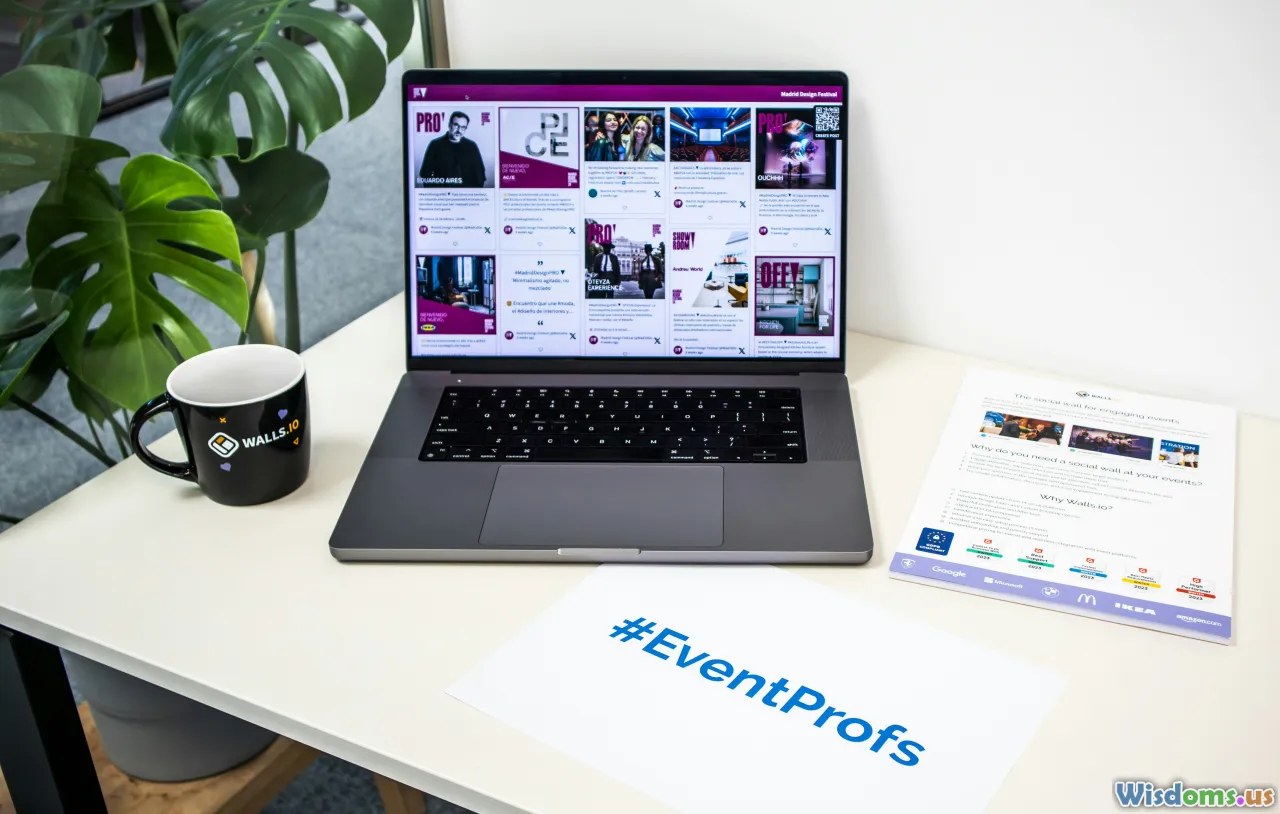
Even virtual rooms can generate serendipity with intentional design.
- Spatial platforms: Use tools with spatial audio and table mechanics so people can move freely (e.g., platforms that simulate rooms). Limit sessions to 75 minutes and include a mid-session shuffle.
- Pre-event kits: Ship small physical kits (sticky notes, markers, a printed canvas) to participants for a tangible shared context.
- Asynchronous warm-up: A one-question video prompt (“What’s a problem you solved recently, and how?”) posted in a private channel primes the group.
- Producer + facilitator: Always run virtual sessions with both. The producer handles tech and timing; the facilitator keeps energy and clarity.
- Captioning and transcripts: Standardize accessibility. Share time-stamped notes post-event for easy reference and SEO-friendly recaps.
- Hybrid fairness: If some join remotely, assign an in-person “buddy” to each remote attendee. Mirror activities so remote people contribute to the same artifacts via shared canvases.
A 12-Month Program That Compounds Impact
Single events create sparks; programs build engines. Plan a rolling year where each event feeds the next.
Quarter 1: Discovery and Trust
- January: Walking Salon to map shared interests.
- February: Problem Lab focused on one vertical you care about.
- March: Digital micro-summit with lightning co-builds, capturing a backlog of ideas.
Quarter 2: Co-Creation and Pilots
- April: Maker Night to prototype solutions from Q1 ideas.
- May: Service Sprint to apply capabilities in a real context.
- June: Open Office Hours (virtual) with curated 1:1 intros.
Quarter 3: Depth and Proof
- July: Micro-Retreat for advanced peers to refine pilots.
- August: Field Trip to a partner site relevant to your ecosystem.
- September: No-Deck Demos to showcase working results and gather feedback.
Quarter 4: Amplify and Scale
- October: Partner Showcase (hybrid) with case walkthroughs.
- November: Mentorship Roundtables for hiring and talent matching.
- December: Community Retrospective and planning session for next year.
Each month, publish:
- A two-page artifact recap (photos, key insights, next steps).
- A “who-to-meet” list highlighting 5 members and their asks/offers.
- A calendar of office hours and working groups.
Common Pitfalls and How to Avoid Them

Steer clear of these traps.
- Over-programming: Too many segments kill spontaneity. Fix: Two substantial sprints and generous mingle time.
- Vague prompts: “Discuss marketing trends” invites fluff. Fix: Make it specific and time-bound: “Design a 2-week experiment to increase trial-to-paid conversions.”
- One-to-many talks: Keynotes reintroduce passivity. Fix: If you must include a talk, make it a 7-minute spark that feeds an activity.
- Alcohol as glue: Relying on drinks to ease tension excludes many. Fix: Lead with activities; serve good nonalcoholic options.
- No follow-up: Warmth evaporates in 48 hours. Fix: Prebuild your follow-up workflows and send them within one business day.
- Misaligned sponsors: A sponsor that can’t enhance the experience feels bolted on. Fix: Accept fewer sponsors over the wrong ones.
- Ignoring accessibility: You’ll lose attendees and reputation. Fix: Bake inclusive practices into venue, materials, and facilitation.
Turn Moments Into Movements: Follow-Up Systems That Compound Value

The event is not the product; the network is. Build systems that transform a great evening into ongoing deal flow and collaboration.
- Day 0 (at the event): QR codes on tables link to a lightweight form capturing asks/offers and permission to share. Print a board with “Looking for” and “Can offer.”
- Day 1 (24 hours later): Send a recap with three elements—photos of artifacts, the distilled top five insights, and a calendar link for office hours. Include a “warm intros” section listing 5–10 requested connections you’ll broker this week.
- Day 3–5: Deliver intros. Use double opt-ins to respect privacy. Track in your CRM using an “Introductions Made” custom object or similar tag.
- Day 7: Publish a two-page playbook summarizing the session. Share it with permission on LinkedIn or your newsletter, tagging attendees who consented.
- Day 14–30: Host small follow-on circles (6–8 people) to progress promising threads. Give them a light template and a time box.
- Ongoing: Quarterly check-ins to collect outcomes. Ask: “Did something change because of this event?” Curate a living wall of wins—pilots launched, hires made, partnerships formed.
Pro tip: Appoint community stewards—volunteer or part-time roles who own one thread (e.g., hiring, partnerships, product feedback). They ensure continuity so energy doesn’t dissipate between events.
A simple CRM workflow:
- Create an Event object with unique ID.
- Attach attendee records and their asks/offers.
- Log intros with source event ID and expected outcome type (pilot, hire, partner, sales).
- Review monthly for progression and share highlights with sponsors and leadership.
By treating connection as an operational capability, not a one-off activity, you’ll build a reputation for convening rooms where good things reliably happen.
The fastest path to unlock business growth might not be another ad campaign or a bigger booth at a trade show. It could be the night you hosted 30 curious people to build, walk, test, and serve—then sent them back into the world with momentum. Here’s your nudge: pick two formats from this guide, set a clear outcome, and commit to a 30-day pilot. Measure what matters. Repeat what works. Your future partners, customers, and teammates are waiting for a better room to meet in—go build it.
Rate the Post
User Reviews





Popular Posts