Ways the Fibonacci Sequence Energizes Modern Mindfulness Practices
27 min read Explore how the Fibonacci sequence informs breathwork, pacing, and focus techniques to deepen mindfulness, reduce stress, and align practice with natural rhythms and cognitive science. (0 Reviews)
In a world that rewards constant acceleration, mindfulness asks us to notice the next breath, the weight of a step, the shape of a passing thought. The Fibonacci sequence—1, 1, 2, 3, 5, 8, 13, and so on—offers a surprisingly effective scaffold for this noticing. It’s more than a mathematical curiosity; its rhythm shows up in spirals of shells, seed heads of sunflowers, branching trees, and even how we find proportion pleasing. When you translate that rhythm into breathing counts, step patterns, session lengths, and journaling prompts, you get a set of practices that are easy to remember, pleasantly challenging, and neurologically calming.
Below you’ll find practical ways to weave Fibonacci patterns into modern mindfulness—designed for individuals, facilitators, and product designers. You’ll see not only how to do it, but why it helps, when to tweak it, and how to measure whether it’s working for you.
Why Fibonacci Resonates With the Nervous System

The Fibonacci sequence approaches the golden ratio (approximately 1.618) as you move up the numbers. That ratio appears frequently in nature—spiral shells, pinecone scales, hurricane clouds—and many people find those forms aesthetically soothing. But the deeper reason Fibonacci can be calming is functional: it offers a predictable yet gently expanding rhythm. Our nervous system likes patterns with gradual change; abrupt jumps tend to signal threat.
Here’s what’s happening physiologically when you follow a Fibonacci pattern in breath or attention:
- Predictability reduces cognitive load. A known pattern frees working memory for sensory awareness rather than “what’s next?” planning.
- Gradual increase supports vagal tone. Longer exhales, and mild breath holds, can stimulate the vagus nerve and enhance parasympathetic activity. Slow breathing around 5–6 breaths per minute (roughly 0.1 Hz) is associated with increased heart rate variability (HRV) and better emotion regulation in numerous studies.
- The pattern scales. Whether you’re working with seconds, steps, or minutes, the ratio of one unit to the next remains roughly constant, so your body learns the flow once and can apply it anywhere.
A simple example: breathing in for 3 counts, holding for 5, and exhaling for 8 approximates the proportions people naturally find comfortable when downshifting. The exact values are less important than the relationship between them—shorter inhale, longer exhale, and a progressive, non-jarring build.
Fibonacci Breathing: A Practice You Can Start Today

Try this seated or lying down. If you have any respiratory or cardiovascular conditions, keep the counts modest and skip holds until cleared by a clinician.
A beginner-friendly sequence (per breath cycle):
- Inhale: 2 counts
- Hold: 3 counts (optional)
- Exhale: 5 counts
Do 12 cycles. If each cycle is about 10 seconds, that’s roughly 6 breaths per minute—within the 0.1 Hz range associated with HRV benefits. If you feel restless, drop the hold and keep the inhale-to-exhale ratio at 2:5.
An intermediate progression:
- Inhale: 3
- Hold: 5
- Exhale: 8
Complete 8–10 cycles. In practice, a 3–5–8 pattern often produces a comfortably full exhale without strain.
An advanced pattern (use care):
- Inhale: 5
- Hold: 8
- Exhale: 13
This is best for those already comfortable with slow breathing and breath retention. Do 5 cycles, rest, then evaluate. You should never feel lightheaded, panicky, or air-hungry; if you do, shorten the counts or switch to a simpler pattern like 3–3–6.
How to time it without gadgets:
- Use your steps: inhale for 3 steps, hold 5, exhale 8 while strolling.
- Use finger taps: alternate hands tapping your knee to a quiet count.
- Use natural words: silently repeat “one-two-three” for the inhale, “one-two-three-four-five” for the hold, and continue for the exhale.
If you want to measure changes, track:
- Rate-of-perceived calm (0–10) before and after.
- Heart rate variability if you have a wearable; look for increased RMSSD or a more coherent pattern over sessions.
- Mind-wandering: simply note how many times your mind drifts during 10 breaths and watch that number change over weeks.
Spiral Attention: Tracing Patterns to Train Focus
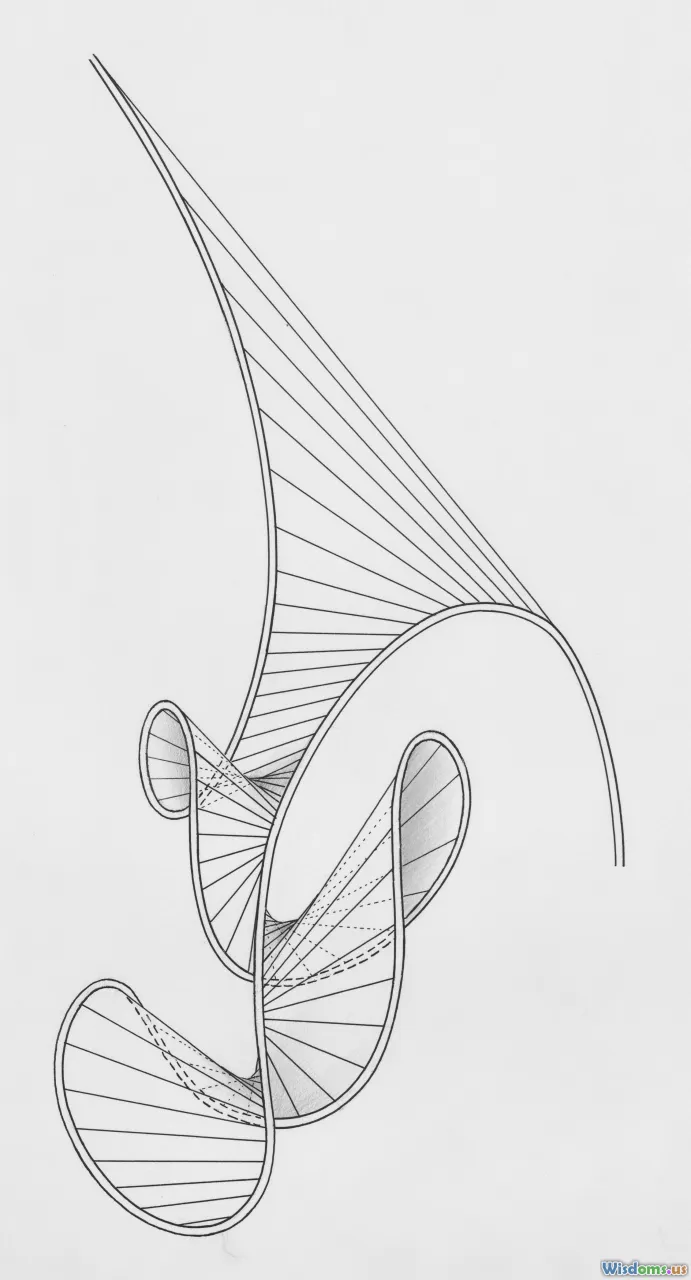
Mindfulness is not only breath; it’s also how we direct and sustain attention. The Fibonacci spiral provides a visual cue that naturally centers then widens focus.
How-to exercise (4–6 minutes):
- Draw a small square on paper. Next to it, draw another square of the same size (1, 1). Then draw a rectangle by adding a square of size 2 to the side, then 3, then 5. Finally, sketch a smooth spiral that curves through the corners of these squares.
- Start at the smallest square. Track the spiral outward with your eyes while breathing in for 2 and out for 3 for the first lap.
- On the next lap, increase to in 3, out 5. Continue widening your gaze as the spiral expands.
- If thoughts intrude, notice them, label them (“planning,” “worry,” “memory”), and return to the next segment of the spiral.
Why this works:
- Narrow-to-wide and wide-to-narrow sweeps engage different attentional networks. Beginning small and expanding can recruit alerting and orienting systems without flooding them.
- Visual smoothness helps reduce saccadic “jitter.” You’re essentially practicing a slow, deliberate saccade that dampens sympathetic arousal.
- It’s portable. You can trace a spiral on a napkin, or use a seashell photo, a nautilus, or a sunflower head with spirals that approximate Fibonacci phyllotaxis.
Variations:
- Spiral counting: silently count “1, 1, 2, 3, 5” each time your eyes complete a quadrant.
- Finger spiral: trace small-to-large spirals on your palm to add tactile feedback.
Walking Meditation in Fibonacci Steps

Walking meditation becomes easier when paces and breath work together. Fibonacci counts create a satisfying “stride story” that’s memorable and gently challenging.
Try a 10-minute protocol:
- Minutes 0–2: natural walking. Notice heel-to-toe. Don’t impose counts yet.
- Minutes 2–5: pair steps with breath—inhale for 3 steps, exhale for 5 steps. If your cadence is 100–120 steps per minute, this yields a slow 8-step cycle, about 12–15 cycles per minute; adjust by walking a touch slower.
- Minutes 5–8: move to a 1–1–2–3–5 stepping attention pattern. For example, place full attention on foot sensations for 1 step right, 1 step left, then 2 steps, then 3, then 5, before resetting. This interleaves focused awareness with mild working memory.
- Minutes 8–10: cool down with free walking; notice any changes in the field of awareness.
Options for different terrains:
- Stairs: count 1, 1, 2, 3, 5 steps between landings; pause briefly to breathe before continuing.
- Outdoors: pair the counts with landmarks—1 tree, 1 bench, 2 lamp posts, 3 flower beds, 5 deep breaths.
Benefits:
- Vestibular soothing: rhythmic head movement at a steady cadence can calm the autonomic system.
- Reduced rumination: counting and sensing the feet produce cognitive load that competes with worry loops without feeling like work.
Sound and Silence: Fibonacci Pacing for Deep Listening

Sound-based mindfulness leverages the fact that attention naturally syncs to rhythm, and silence gives the nervous system space to integrate. Fibonacci timing toughens your listening “muscle” without boredom or overwhelm.
A simple practice with a timer or chime:
- Listen for 13 seconds; then sit in silence for 8 seconds.
- Repeat for 8–10 rounds.
Then reverse it:
- 8 seconds of sound, 13 of silence. Notice how silence becomes the primary object.
For music lovers:
- Build a short playlist where track durations follow Fibonacci numbers (e.g., 34-second ambient clip, 21 seconds of recorded room tone, 13 seconds of a bell, 8 seconds of silence). Many composers—from Debussy to Bartók—have experimented with golden-ratio structures; while claims vary in rigor, you can test what actually calms you.
Why it helps:
- Alternating sound and silence with expanding intervals challenges your attentional set-shifting—a skill linked to resilience.
- The brain’s predictive coding machinery learns to anticipate but not obsess over transitions.
What to notice:
- Onset reaction: do you flinch at the first tone? That’s sympathetic activation. See if it softens after a few rounds.
- Dissipation: how long does the echo of a tone remain in your awareness? Track this across sessions.
Journaling and Reflection with Fibonacci Prompts

If sitting still isn’t your thing, use numbers to structure reflection. The goal is clarity through constraint.
A five-layer prompt (1, 1, 2, 3, 5):
- 1 word: name your emotion (e.g., “apprehensive”).
- 1 sentence: describe a body sensation (e.g., “There’s a tightness under my ribs on the left.”)
- 2 sentences: write the thought driving the feeling.
- 3 sentences: offer a compassionate reframe as if to a friend.
- 5 sentences: list a micro-action you can take, how you’ll do it, and when.
Example:
- Emotion: “Tense.”
- Body: “Jaw clenched, shoulders up.”
- Thought: “I’ll never finish this proposal on time; my boss will be disappointed.”
- Reframe: “The first draft is the hardest. I’ve delivered under pressure before. A clear outline will cut the chaos.”
- Plan: “Set a 13-minute outline sprint. Turn phone face down. Pick 3 headings. Send a progress note after 34 minutes.”
You can also reverse the counts when debriefing a tough day: 5 lines of gratitude, 3 lines of what was hard, 2 lines of what you learned, 1 sentence of self-kindness, 1 word intention for tomorrow.
Designing Your Day: Fibonacci Timeboxing

Traditional Pomodoro uses 25 minutes on, 5 off. Fibonacci timeboxing swaps fixed length for a sequence that gently stretches focus without harsh jumps.
A 90-minute creative block:
- Focus 8 minutes → Rest 3 minutes
- Focus 13 minutes → Rest 5 minutes
- Focus 21 minutes → Rest 8 minutes
- Optionally close with a 5-minute reflection
Why it works:
- The early, shorter focus blocks reduce activation energy.
- Gradually longer sprints build momentum just as your mind settles.
- Rest scales too, preventing burn while respecting ultradian rhythms.
Tips:
- Use a single-line checklist: “8F,3R,13F,5R,21F,8R(,5R).” Crossing off each mini-block gives small wins.
- If interrupted, resume the current block rather than restarting. The sequence is forgiving.
Microbreaks for screen fatigue:
- Work 13 minutes; stand and gaze 21 seconds at a distant object (reduces eye strain via accommodative rest).
- Work 21 minutes; stretch shoulders for 34 seconds.
- Work 34 minutes; walk for 55 seconds and drink water.
Gradual Exposure and Habit Building with Fibonacci Progressions

Behavior change thrives on steps that are small enough to start yet big enough to matter. Fibonacci progressions give you a ready-made ladder.
Digital diet example:
- If you currently check social media 34 times a day, reduce by the sequence: 34 → 21 → 13 → 8 → 5 over successive weeks. Each step is meaningful, but none feels like a cliff.
Meditation duration example:
- Week 1: 3 minutes daily
- Week 2: 5 minutes
- Week 3: 8 minutes
- Week 4: 13 minutes
- Week 5: 21 minutes
Cold exposure, running, or reading time can use similar increments. The key is to make increases when your last step feels stable 3 days in a row.
Safety note on exposure therapy contexts:
- If applying this to anxiety triggers, combine the time or difficulty increase with a SUDS (Subjective Units of Distress) check. Only progress if your SUDS stayed under 5/10 for the prior step.
Group Mindfulness: Fibonacci Rounds That Keep Circles Flowing

Group sharing often drifts long. Fibonacci rounds keep sessions crisp and fair.
A 30–40 minute group protocol for 6 people:
- Round 1: 1 minute each to name a word and breath quality.
- Round 2: 1 minute each to note a body sensation.
- Round 3: 2 minutes each to share what brought them to practice today.
- Round 4: 3 minutes each for a brief story.
- Round 5: 5 minutes total of open popcorn shares.
Why it works:
- Everyone speaks early, reducing social anxiety.
- Time expands gradually, so deeper shares arrive after trust forms.
Facilitation tips:
- Display a visible timer. When it chimes, gently invite the next person.
- Offer pass tokens: anyone can pass on any round and re-enter later.
- For remote groups, name the next speaker before you finish to reduce dead air.
Digital Mindfulness Products: Fibonacci as UX Strategy

Designers can embed Fibonacci patterns to make practice sticky without being manipulative.
Ideas:
- Session presets: 3, 5, 8, 13, 21-minute meditations. Users feel gentle progressions without decision fatigue.
- Notification backoff: If a user dismisses a reminder, the system waits 1 hour, then 1, then 2, 3, 5 before the next nudge. This mimics network backoff strategies and prevents alert fatigue.
- Progress arcs: Visualize streaks as a spiral expanding by Fibonacci units rather than a flat line.
A simple backoff algorithm concept:
- Start with minutes = [1, 1, 2, 3, 5, 8].
- If user opens the reminder, reset to the early part of the list (e.g., 1, 1).
- If user snoozes or dismisses repeatedly, continue stepping forward to avoid annoyance.
Metrics to track ethically:
- Opt-in rate to reminders over 30 days.
- Completion rate for 5, 8, and 13-minute sessions.
- Churn or uninstall rates correlated with notification cadence changes.
Scientific Caveats and Responsible Practice

A pattern can be powerful without being mystical. The golden ratio is not a cure-all, and many pop claims about “nature’s secret code” are overstated. Here’s what’s well-supported, what’s plausible, and what to treat carefully.
Well-supported:
- Slow, paced breathing around 0.1 Hz (about 6 breaths per minute) increases HRV and can improve anxiety, sleep, and blood pressure in some populations.
- Attention training that alternates focus and release can reduce rumination and improve cognitive flexibility.
Plausible with mixed evidence:
- Aesthetic preferences for golden-ratio proportions vary by culture and context; some people find them pleasing, others indifferent.
- Using Fibonacci structures for timing and count sequences likely helps through habit formation and predictability—not a special cosmic resonance.
Use with caution:
- Long breath holds if you’re pregnant, have COPD/asthma, cardiovascular disease, or panic disorder. Favor longer exhales over holds.
- Rigid adherence. If Fibonacci counts cause strain, switch to gentler ratios (e.g., 4-in, 6-out) that maintain the spirit of gradualism.
How to check if it’s working for you:
- Keep a 2-minute log for two weeks: rate calm, sleep quality, and focus after sessions.
- If you have a wearable, look for upward trends in RMSSD or reductions in resting heart rate. If not, note practical markers: faster recovery from stressors, fewer afternoon crashes, easier initiation of tasks.
A 14-Day Fibonacci Mindfulness Challenge

This plan keeps each day simple while building momentum. Expect about 10–25 minutes daily.
Day 1
- 3 minutes of Fibonacci breathing (2–3–5 pattern)
- 1-minute journal (1 word, 1 sentence)
Day 2
- 5 minutes spiral attention tracing
- 1-minute silent sit afterwards
Day 3
- 8-minute walking meditation (3–5 breathing)
- 1-minute body scan
Day 4
- 13 minutes timeboxed creative task (8 focus + 3 rest + 2 focus)
- Write 2 sentences about energy changes
Day 5
- 5-minute sound/silence practice (13s sound/8s silence for a few rounds)
- 1-minute gratitude list (3 things)
Day 6
- 8-minute breathing (3–5–8 for 6 cycles; rest; then free breathing)
- 2-minute reflection: what counts felt natural?
Day 7
- 13-minute nature observation: count spirals (pinecones, flowers)
- 1-minute note on any surprising details
Day 8
- 5–8–13 minute work block with 3–5 minute breaks as needed
- Short check: rate focus 0–10
Day 9
- 8-minute journaling using 1-1-2-3-5 structure
- 2-minute stretching with 3–5–8 breathing
Day 10
- 13-minute meditation combining breath and spiral tracing
- 1-minute note on distractions
Day 11
- 21-minute calm focus block (5 warmup, 13 deep work, 3 review)
- 2-minute walk with 1-1-2-3-5 attention steps
Day 12
- Group share (if possible): 1,1,2,3-minute rounds
- Solo alternative: record a voice note using the same timing
Day 13
- Choose your favorite practice and extend by the next Fibonacci step (e.g., from 8 to 13 minutes)
- 3-minute free writing on what’s changed
Day 14
- Light day: 5 minutes of any practice + 5 minutes of reflection celebrating wins
Troubleshooting: When the Numbers Feel Like a Cage

Mindfulness is not a math test. If a pattern becomes a burden, adapt.
Common snags and fixes:
- Breath strain: shorten all counts by 1–2. Keep the exhale longer than the inhale.
- Boredom: skip ahead in the sequence for one cycle (e.g., 3–5–8 to 5–8–13) and then return.
- Anxiety about perfection: switch to Lucas numbers (2, 1, 3, 4, 7, 11…) for a week, just to prove you can be flexible while staying rhythmic.
- ADHD restlessness: layer movement—walk while breathing, or fidget with a soft ball while journaling. Shorter blocks (3, 5, 8 minutes) often work better.
Mindset reminders:
- The sequence is a scaffold, not a rulebook. If your body says “no,” the correct move is to listen.
- The point is awareness and kindness, not numeric purity.
Stories from Practice: Three Mini Case Studies

Case 1: The Overthinking Analyst
- Profile: Data professional, excellent at modeling, struggling with nighttime rumination.
- Intervention: 8-minute sound/silence practice followed by 5 minutes of journaling (1-1-2-3-5).
- Outcome after 3 weeks: Fell asleep 20 minutes faster by self-report, HRV improved modestly on a consumer wearable. Main shift: reported “less urgency to solve everything at 11 p.m.”
- Key tweak: Removed breath holds; exhale-only focus during late sessions.
Case 2: The Burned-Out Teacher
- Profile: Middle-school teacher with afternoon energy slumps and “never done” feeling.
- Intervention: Fibonacci timeboxing for grading: 8F/3R, 13F/5R, 21F/8R, with microbreaks of 34 seconds to stand and stretch.
- Outcome after 4 weeks: Claimed 30 minutes/day reclaimed due to fewer context switches. Reported less resentment toward grading, more presence with students.
- Key tweak: Added a 5-minute closing ritual—one appreciative note per student batch.
Case 3: The Product Designer Leading a Mindfulness App Team
- Profile: Wanted a humane notification strategy after users complained of nagging pings.
- Intervention: Implemented Fibonacci backoff (1h, 1h, 2h, 3h, 5h) after dismissals; session presets at 3, 5, 8, 13 minutes.
- Outcome after 6 weeks A/B test: 17% reduction in weekly uninstalls; 9% increase in completion of 8-minute sessions. Support tickets mentioning “too many reminders” dropped by half.
- Key tweak: Reset backoff to early steps when a user completed two sessions in a day—respect momentum.
Bringing It Together

The Fibonacci sequence succeeds in mindfulness not because it’s mystical but because it’s humane. It offers memory-friendly patterns, gentle progressions, and enough novelty to keep attention curious. Whether you’re breathing 3–5–8, timeboxing 8–13–21, tracing a spiral, or journaling in 1-1-2-3-5 layers, you’re giving your nervous system something it loves: clear signals, predictable changes, and room to settle.
Start tiny. Pick one practice and run it for a week. Let your body teach you the right next step, and let the numbers serve their best role—not as masters, but as companions guiding you back to the simplest gift: awareness, right now.
Rate the Post
User Reviews









Popular Posts