
Are Dynamic Toll Roads Worth the Investment
30 min read Evaluate costs, benefits, and equity of dynamic toll roads with ROI scenarios, case studies, and policy considerations for cities weighing demand-based pricing and managed lanes investments. (0 Reviews)
If you’ve ever crept through a bottleneck while an adjacent lane whisks a steady stream of cars past you, you’ve likely met a dynamic toll road. These “express” or “managed” lanes change prices in real time to keep traffic flowing. Proponents say they deliver reliable trips, better transit service, and safer driving conditions; critics call them “Lexus lanes” that advantage the wealthy. So, are dynamic toll roads worth the investment? The honest answer is: it depends—on corridor demand, design, policy, and execution. But with the right ingredients, they can be a smart way to unlock speed and reliability where it’s needed most.
What Dynamic Toll Roads Are—and What They’re Not
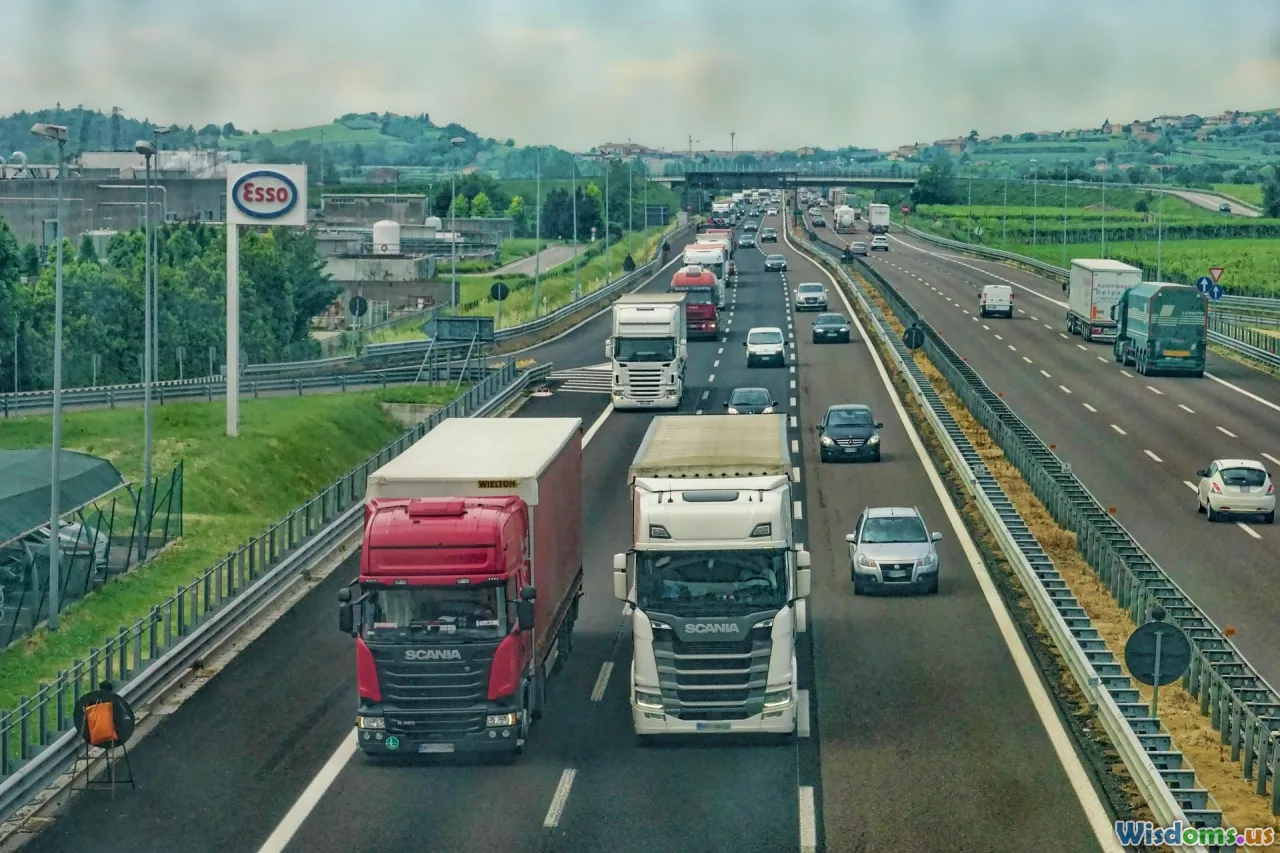
Dynamic toll roads (often called express lanes, HOT lanes, or managed lanes) are freeway lanes whose prices fluctuate frequently—typically every few minutes—based on congestion. The core idea is to maintain free-flowing speeds by adjusting price to throttle demand. When many drivers want in, the toll rises; when the lane has room, the toll falls. It’s not about making driving expensive; it’s about preserving the option of a predictable, fast trip and maximizing the number of people the corridor can move.
Common features include:
- Electronic tolling: Transponders (like E-ZPass, SunPass, Good To Go!, FasTrak) or license-plate recognition bill drivers without stopping.
- Dynamic message signs: Overhead boards display the price to specific exits in real time.
- Occupancy rules: Carpools, vanpools, and sometimes clean-air vehicles travel discounted or free—often HOV 3+ during the peak to keep lanes moving.
- Access control: Designated ingress and egress zones reduce weaving and preserve safety.
Examples exist across the U.S. and beyond: SR‑91 in Orange County (one of the earliest managed lanes), I‑95 Express in Miami, I‑495/I‑95 Express Lanes in Northern Virginia, I‑405 Express Toll Lanes near Seattle, and MnPASS corridors in Minnesota. These projects vary widely in length, design, and policies. Some were built as new capacity; others were conversions of underperforming HOV lanes.
Dynamic pricing is not the same as traditional toll roads that charge a flat fee by time of day. It’s also not a citywide congestion charge like London or Stockholm. Think of it as a corridor-level scalpel rather than a citywide hammer.
The Investment Math: Costs, Revenues, and What They Don’t Tell You

Building and operating dynamic toll lanes involves more than paint and signs. Key cost drivers include right-of-way and structures (bridges, flyovers, ramps), pavement for added lanes, barriers or buffers, toll gantries, cameras and readers, fiber communications, back-office billing systems, customer service, and enforcement technology.
Costs vary widely by corridor:
- Urban reconstruction can run high when interchanges are reconfigured, auxiliary lanes are added, and utilities are relocated. For example, major express-lane projects with complex interchanges have reached into the billions of dollars for a few dozen miles when bundled with broader reconstruction.
- Simpler conversions—such as turning an underutilized HOV lane into a dynamically priced HOT lane—can be much less costly, especially when most physical infrastructure is in place.
Operating expenses include credit-card processing fees, customer service, back-office costs, maintenance of gantries and sensors, and law enforcement support. A rough planning benchmark is that toll operations can consume a noticeable share of revenues, though efficient systems and scale bring that down.
Revenue depends on corridor demand, price elasticity, and policy. Prices can range from pennies per mile off-peak to several dollars per mile during crunch times. Short-run demand for express-lane trips tends to be relatively inelastic: when travelers urgently need a reliable arrival (think daycare pickup or catching a flight), they’re willing to pay. Over time, though, people adjust their behavior—some shift travel times, share rides, or use improved express buses.
Crucially, toll revenue rarely tells the full investment story. The clearest benefits are in travel time savings and reliability for users and transit, reduced crash risk from more stable speeds, and potential emissions benefits from less stop-and-go. These are social benefits—real but not fully monetized at the tollbooth. When agencies perform benefit–cost analyses, a meaningful portion of the “return” comes from those broader effects, not just the cash ledger.
Financing approaches reflect that mix:
- Traditional public delivery using toll-backed bonds or state funds.
- Public–private partnerships (P3s) where a concessionaire designs, builds, finances, operates, and maintains the lanes for decades, earning toll revenues and often sharing them with the state.
- Availability-payment P3s where the private partner is paid based on performance rather than toll receipts, leaving revenue risk with the public sector.
Some early private concessions used non-compete clauses that limited improvements to nearby free lanes. That created public backlash—famously on SR‑91—leading the public agency to buy out the private concession years later. Today’s agreements are more nuanced and typically allow reasonable corridor upgrades with agreed revenue-sharing or compensation formulas.
Do Dynamic Tolls Actually Reduce Congestion?

They can—when designed and operated well. The primary performance target is a steady, reliable speed in the tolled lane, typically around 45–55 mph during peaks. Dynamic prices rise just enough to keep demand in balance with capacity. Because flow increases with stable speeds up to a point, managed lanes can carry more people per hour than a jammed general-purpose lane, especially when buses and carpools use them.
Real-world results provide useful patterns:
- In regions that paired express lanes with robust express bus service, agencies reported marked improvements in on-time performance and ridership on those routes. For a commuter weighing a slow free lane against a faster low-cost (or employer-subsidized) express bus in a frictionless managed lane, transit becomes far more competitive.
- General-purpose lanes adjacent to express lanes often experience small but meaningful improvements during peak periods. Some drivers self-select into the tolled option, others shift travel time, and fewer abrupt slowdowns can ripple outward.
- Reliability gains are typically larger than raw speed gains. Getting a guaranteed 15–25 minutes back on a critical trip, every time, is often the value users pay for; average speeds tell only part of the story.
To be fair, results vary. If lane access points are too sparse, drivers may hesitate to enter; if too many are allowed, weaving can degrade both safety and throughput. If toll ceilings are set too low by policy, prices cannot rise enough to manage demand, and the lane can bog down. Conversely, if ceilings are excessively high without clear public rationale, political support may erode. Calibration—not ideology—decides success.
Equity and Fairness: Who Benefits and Who Pays?

The “Lexus lanes” critique resonates for a reason: the ability to buy a faster trip can feel unfair. Equity isn’t an afterthought; it needs to be built into policy and funding from the start.
What agencies are doing:
- HOV and toll discounts: Many corridors allow HOV 3+ to use the lane for free or at a discount during the peak. That means anyone can “buy in” by sharing a ride.
- Income-based programs: Some operators offer lower fees, start-up credits, or discounted transponders for low-income drivers. These reduce barriers to accessing the benefits.
- Transit reinvestment: Directing a portion of toll revenue to frequent, reliable express bus service in the same corridor democratizes speed. Riders pay a low fare for a reliable, highway-speed trip that competes with driving alone.
- Off-peak access: Prices are low outside the commute peak, which makes lanes accessible to a broad cross-section—useful for shift workers whose schedules fall outside traditional peaks.
Equity considerations extend beyond price:
- Jobs-housing geography: If lower-income communities are more likely to live far from job centers along the corridor, time savings for express buses and vanpools can be particularly valuable.
- Fee design: Requiring transponders with hefty deposits can exclude cash-constrained households; offering plate-based options and waiving deposits for qualifying accounts helps.
- Transparency: Public dashboards on toll rates, speeds, and use of revenues build trust that the system serves the corridor, not just a balance sheet.
Bottom line: When revenue supports affordable express transit and carpooling, dynamic lanes need not be elitist. They can become a mobility ladder.
Environmental and Safety Impacts You Can Actually Measure

Smoother flows at steady speeds reduce the stop-and-go conditions that waste fuel. While the exact magnitude depends on vehicle mix, speed management, and idling time, models consistently show that keeping traffic nearer to steady-state flow lowers per-vehicle emissions of pollutants associated with accelerating and braking. Layer in high-occupancy vehicles and buses, and person-miles per unit of emissions improve further.
Safety is another lens. Speed variance—not speed alone—drives many crash risks. A managed lane that maintains consistent speeds with fewer shockwaves can lower crash frequencies inside the lane. That said, poorly designed merge areas can offset gains with more sideswipes or rear-ends. Design choices matter:
- Buffer widths and barriers reduce conflicts between managed and general lanes.
- Well-placed access points (not too frequent, not too sparse) minimize weaving.
- Direct access ramps for buses and carpools can avoid tricky merges altogether.
Add enforcement—both automated and with targeted patrols—and managed lanes can become among the safest parts of a corridor. The caveat: monitoring and quick clearance of incidents are essential so a disabled vehicle doesn’t collapse throughput.
How the Technology Works (and What It Takes to Operate It)

Under the hood, dynamic tolling is a control system. Sensors feed conditions; software sets price; signs inform drivers; billing systems settle accounts.
Key components:
- Detection: Radar, loop detectors, and cameras measure speed, volume, and occupancy. Bluetooth/Wi‑Fi readers or connected-vehicle data can estimate travel times.
- Pricing engine: Algorithms map measured density and speed to a price that maintains a target operating point. Prices typically update every 3–5 minutes with guardrails for minimum/maximum changes to avoid whiplash.
- Communications: A resilient fiber and wireless backbone links gantries, signs, enforcement, and the control center.
- Back office: Account management, invoicing, dispute resolution, and compliance.
- Enforcement: Occupancy verification (for HOV claims) increasingly uses machine vision to estimate passenger counts, often combined with manual verification for due process and privacy.
A practical setup approach:
- Define a performance target (e.g., 45–50 mph) and reliability metric (e.g., meet target 90% of peak hours).
- Simulate price–demand interactions using historical data to set initial price curves and caps.
- Pilot with conservative cap/floor values, then tune based on observed lane occupancy and violation rates.
- Calibrate message sign placement and messaging so drivers can decide in time to enter safely.
- Stand up a 24/7 operations center with incident response protocols and transparent reporting.
Privacy and accuracy are ongoing concerns. Agencies should publish clear data-retention policies for license plate images and enforce tight cybersecurity on account systems. For occupancy tech, error rates must be measured and audited, with a fair appeals process.
What Are the Alternatives—and How Do They Compare?

Dynamic toll lanes are one tool among many. Choosing them requires honest comparison with other strategies.
- Add general-purpose lanes: Often popular, but added capacity fills quickly in congested metros due to induced demand. Without a mechanism to manage demand, free lanes tend to revert to previous congestion levels.
- Ramp metering: A low-cost, high-return tool that smooths freeway inflows and can dramatically improve throughput. It pairs well with managed lanes.
- Bus-only lanes or shoulders: Cost-effective for transit, especially if enforcement is strong and direct access ramps exist. On freeways, dedicated bus lanes are rare unless transit volumes are heavy.
- Arterial improvements and signal optimization: Important, but usually address local rather than regional bottlenecks.
- Cordon or area pricing: Citywide pricing can be powerful (London, Stockholm), but it is a different scale of policy requiring broad political consensus. Managed lanes can be a stepping stone.
Where dynamic tolls shine:
- Corridors with sustained peak congestion but inadequate transit speed and reliability.
- Places where right-of-way is constrained and a single added lane must deliver outsized benefits.
- Regions seeking a self-financing approach that funds both the lane and transit in the corridor.
Where they struggle:
- Corridors without strong peak demand patterns (prices won’t do much if there’s no queue to manage).
- Places where political or legal constraints cap tolls below what’s needed to control demand.
- Networks with geometry that makes safe access points scarce or expensive to build.
Financing Models and Risk: Who Holds the Bag?

Dynamic tolling projects can be delivered traditionally (public build, public operate) or via P3s. Each model allocates cost, schedule, and revenue risk differently.
- Public delivery: The agency finances construction with bonds or pay-as-you-go funds. It retains toll revenue risk and operational responsibility. Upside: full public control and policy flexibility. Downside: all revenue variance lands on the public, and agencies need strong operations capacity.
- Revenue-risk P3 (concession): A private partner designs, builds, finances, operates, and maintains the facility for decades. It collects tolls, often with revenue-sharing once thresholds are met. Upside: transfers revenue and lifecycle O&M risk, may accelerate delivery. Downside: complex contracts; policy changes (like occupancy rules) may require compensation.
- Availability-payment P3: The private partner is paid based on lane availability and performance; the public entity sets and collects tolls. Upside: retains policy control while leveraging private delivery discipline. Downside: the public still carries revenue risk.
Lessons learned:
- Avoid rigid non-compete clauses that constrain reasonable public improvements.
- Include performance metrics (speeds, incident response, maintenance) with clear remedies.
- Build in flexibility for occupancy rules and equity programs without creating unintended compensation triggers.
- Maintain transparent revenue-sharing to align incentives with corridor goals, not just toll maximization.
When Are Dynamic Toll Roads Worth It? A Decision Checklist

Use this quick screen before committing billions:
- Demand profile: Do you have sustained peak-period queues that last more than an hour and recur most weekdays? Are travel times unreliable?
- Geometry and access: Can you safely add or repurpose a lane? Are there feasible locations for regular entry/exit zones and direct access for buses/carpools?
- Transit readiness: Are there transit agencies ready to operate frequent express bus service? Are park-and-ride lots or feeder routes in place or fundable with toll revenue?
- Policy levers: Can you set and adjust toll caps and HOV rules to meet performance targets? Are enabling laws in place for enforcement and electronic tolling?
- Equity plan: Do you have income-based discounts, low-cost account options, and a commitment to reinvest revenue in the corridor’s transit and safety needs?
- Communications: Is there political and community support grounded in transparent goals and metrics? Do you have a plan for dashboards, outreach, and ongoing engagement?
- Financial realism: Will toll revenue cover operations and a reasonable share of capital? If not, is there a broader funding package acknowledging the non-revenue benefits?
- Operations capacity: Is a 24/7 operations model budgeted and staffed, including incident response and back-office management?
If you can answer yes to most of these, a dynamic toll lane is more likely to deliver durable value.
Case Snapshots: What We’ve Learned in the Field

-
SR‑91, Orange County, CA: Among the first modern managed lanes, SR‑91 demonstrated that corridor-level pricing can maintain fast, reliable trips for decades. An early private concession included a non-compete clause that limited public improvements to the adjacent freeway lanes and spurred controversy. The public sector later purchased the facility and expanded it, setting a template for public control with market-based management.
-
I‑95 Express, Miami, FL: Converting existing lanes to dynamically priced express lanes and pairing them with frequent express bus service transformed reliability. The project rolled out in phases with iterative adjustments to access and occupancy rules. Transit agencies leveraged the lanes to offer faster, more reliable service, drawing new riders and improving person-throughput along the corridor.
-
I‑495/I‑95 Express Lanes, Northern Virginia: Delivered via long-term public–private partnerships, these lanes added capacity and reconfigured interchanges on a notoriously congested beltway and radial corridor. The dynamic pricing maintains target speeds while general-purpose lanes benefit from spillover relief. Revenue-sharing provisions and clear performance standards were built into the agreements, and occupancy policies evolved over time to preserve performance at higher demand levels.
-
I‑405 Express Toll Lanes, Puget Sound, WA: Rolled out in stages, the lanes initially faced public scrutiny over pricing spikes and access design. Over time, with adjustments to toll policies and added capacity in key segments, performance stabilized, with express bus services leveraging the lanes for reliable operations. The case underscores the need for calibration, transparent reporting, and strategic investments where bottlenecks are geometric rather than purely demand-driven.
-
MnPASS Corridors, Minneapolis–St. Paul, MN: By converting underperforming HOV lanes to HOT lanes with dynamic pricing, MnPASS delivered high reliability to carpools and transit while opening paid access to solo drivers. The program emphasized low-cost conversions, robust enforcement, and incremental expansion, demonstrating a budget-conscious pathway for regions without the means for massive rebuilds.
Common Pitfalls—and How to Avoid Them

- Blurry goals: If the public message oscillates between “faster trips for payers” and “reduced congestion for everyone,” you invite skepticism. Set clear goals: preserve 45–50 mph in the express lane, move more people per hour, improve bus reliability, lower crashes—and report on them monthly.
- Inadequate access design: Too few access points frustrate users; too many degrade safety. Use data to tune spacing and consider braided ramps or direct connectors where feasible.
- Toll caps set by politics, not performance: Caps that are too low neuter the control system and produce jammed toll lanes—worst of all worlds. Pair caps with a performance trigger: if speeds drop below target for a defined interval, allow a temporary exceedance.
- Weak enforcement: If occupancy cheats face little risk, credible HOV incentives vanish. Invest in detection technology, predictable patrols, and a fair dispute process.
- Back-office hiccups: Billing errors, opaque dispute processes, or slow customer service can tank public trust. Scale up systems before opening, pressure-test vendor performance, and publish service-level metrics.
- Equity as an afterthought: Launching without income-based features or visible transit investments invites a “Lexus lanes” narrative that is hard to shake. Bake equity into day one and keep showing the benefits in service hours, riders, and safety projects delivered.
Practical Tips for Agencies Planning a Managed Lane

- Start with a pilot mentality: Phase deployment, monitor aggressively, and adjust. Reserve budget and political capital for changes in the first year.
- Integrate express buses from day one: Coordinate with transit to align schedules, stops, and direct access. Publicize bus travel times alongside car times to normalize the transit option.
- Design for incidents: Provide shoulder or pullout areas and quick-clear protocols. A single stalled vehicle can shatter the value proposition.
- Use plain-English signs: Show prices clearly and early enough to make a safe choice. Include estimated travel times to key destinations when space allows.
- Open data and dashboards: Share lane speeds, volumes, violation rates, and how toll revenue is reinvested. Public trust thrives on transparency.
The Future: Dynamic Lanes in a Connected, Priced Network

Dynamic toll roads are a bridge to broader, smarter networks. As vehicles become more connected, pricing can respond not only to measured congestion but also to predicted conditions minutes ahead. Agencies are exploring:
- Integrated corridor management that coordinates ramp meters, arterial signals, and express lanes using shared data.
- Occupancy verification via privacy-preserving sensors and machine vision that reduce false positives and streamline enforcement.
- Mobility wallets that combine transit fares, micromobility, and tolling with income-based credits—so low-income travelers can choose the best mode without financial friction.
- Gradual moves toward per-mile road user charges, where dynamic lanes serve as laboratories for pricing mechanics, enforcement, and revenue distribution.
The human factor remains central. Technology can optimize flows, but credibility, fairness, and clarity determine whether the public embraces or rejects a project. Operators that explain not just “what the price is” but “what the price does”—keeping the lane moving, funding better buses, and making the whole corridor safer—win more durable support.
The larger lesson is that congestion is a geometry problem before it’s a technology problem: too many cars for too little space at the same time. Dynamic pricing makes the most of limited roadway by matching demand to capacity in real time. Combined with high-occupancy incentives and strong transit, it can move more people with fewer vehicles, more safely and predictably.
So, are dynamic toll roads worth the investment? In the right corridors—with thoughtful design, equitable policies, committed operations, and clear public reporting—the answer can be a confident yes. They won’t cure congestion everywhere, and they’re not a substitute for complete transit, biking, and land-use strategies. But they are a proven way to buy back time and reliability where they matter most, turning one additional lane into a high-performance artery that pays dividends across the network.
Rate the Post
User Reviews









Popular Posts