Five Unexpected Communication Skills Every Expedition Guide Needs
26 min read Five overlooked communication skills that help expedition guides lead safely, build trust, and elevate client experience—from radio brevity to cultural cues and conflict de-escalation in remote environments. (0 Reviews)
Snow flurries erase the ridgeline. Your rope team slows. Someone coughs into a balaclava, another fiddles with a binding, and the radio crackles with half a syllable from a team out of sight. In moments like this, an expedition guide’s most powerful tool isn’t the ice screw on their harness or the GPS in their pocket—it’s communication. Not the obvious kind of commands and briefings, but a quieter set of skills that most training programs barely name.
Guides who thrive in volatile terrain cultivate a handful of unexpected communication habits. They turn silence into information. They translate data into shared mental pictures. They secure tiny agreements that compound into safety. They use stories to align risk perception. And they build a culture where anyone—novice or ace—can speak up in time to prevent a bad decision. Here are five such skills, with concrete ways to practice each in the field.
Strategic Silence and Pause Literacy
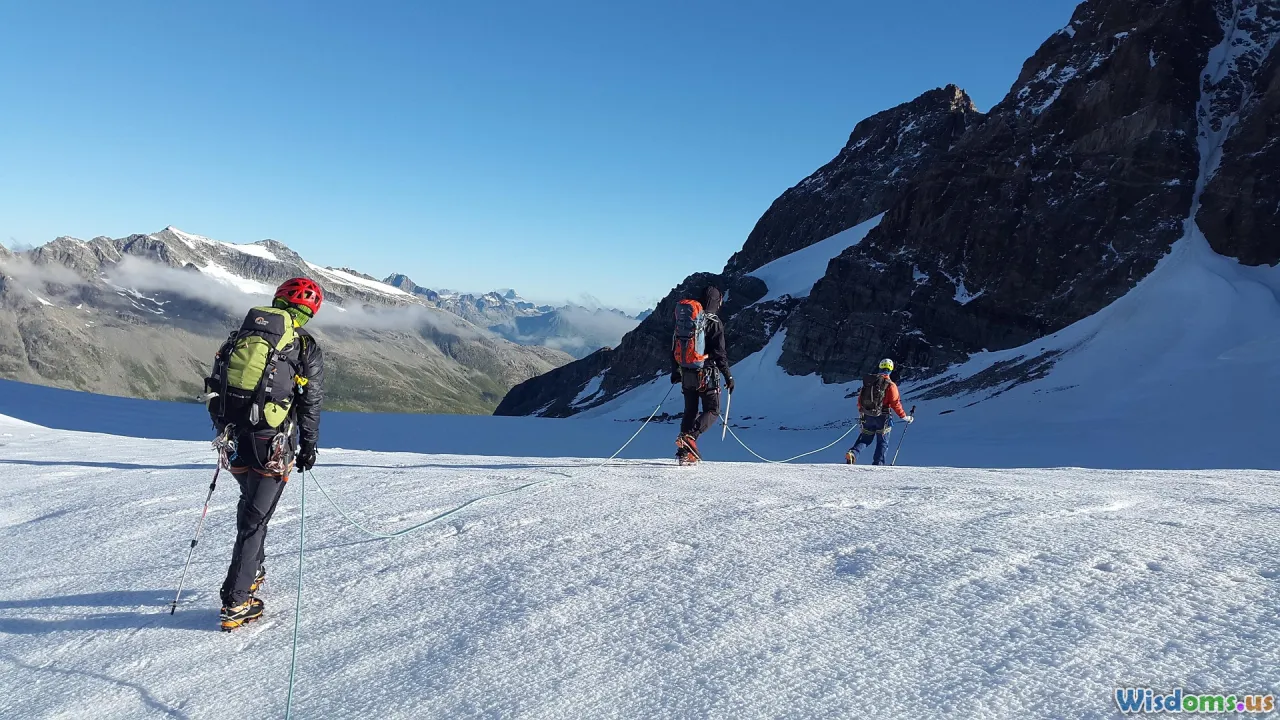
Silence is not an absence; it’s a signal. In cold, altitude, or heat, the brain’s bandwidth shrinks. People process slower. Many guides instinctively fill quiet moments with extra words, but deliberate pauses give teams the cognitive space to absorb instructions and notice their own body states. They also give you time to scan for subtle risk cues—someone’s hands trembling while adjusting a carabiner, a person who suddenly stops asking questions, a second team’s radio check going unanswered.
Why it matters:
- Cognitive load in extreme environments can spike quickly; brief, intentional pauses reduce errors by letting working memory catch up.
- Negotiation research and aviation Crew Resource Management (CRM) both suggest that short, purposeful silences increase the quality of decisions by allowing more information to surface.
How to use silence on purpose:
- Name the pause. Say, “Stand by for ten seconds while I scan,” or “Quiet for a breath while we confirm wind direction.” Naming the pause prevents anxious chatter from filling it.
- Pair pauses with micro-observations. During the silence, intentionally look for hands, eyes, and breathing. Are people clumsy with buckles? Are pupils dilated? Is someone avoiding eye contact? These cues often signal cold stress or rising fear.
- Use radio silence as a tool. On shared channels in busy ranges or deserts, try, “Alpha team, 5-second radio check silence,” then listen. Interference patterns and faint carriers reveal whether another party is nearby or whether your antenna is shadowed by terrain.
- Let silence carry consequences. After asking, “On a scale of 1–10, how steady do your feet feel on this surface?” wait. Don’t rescue the moment. The delayed answer is often truer than the quick one.
Field example: Crossing a sketchy snow bridge, you kneel at the lip to evaluate. Instead of narrating every thought, you call, “Quiet check, ten seconds.” In the stillness you hear subsurface water—a sound that was buried beneath chatter. You re-route. A minute of silence beats an hour of rescue.
Micro-scripts to keep handy:
- “Hold radio chatter. Confirm wind in five…four…three.”
- “Give me a quiet look left-right for cornices. Hand up when you’ve scanned.”
- “Take two breaths. Ask yourself if your toes are warm enough for the next 30 minutes.”
Mistakes to avoid:
- Weaponizing silence. Long, ambiguous quiet can read as judgment. Keep pauses short and named.
- Filler talk. Phrases like “Okay, we’re just gonna” can balloon into nervous monologues. If it isn’t informative, let the quiet work.
Practice drill:
- The 3-2-1 brief. Before any move, give a three-sentence brief, then two silent breaths to scan, then one clarifying question to the group.
Translating Terrain and Data into Shared Mental Maps

Maps, GPS tracks, and forecasts are only as useful as the shared picture your team holds. The guide’s job is to translate abstract lines and numbers into a vivid, common mental model—what people will see, feel, and do in the next hour.
Why it matters:
- Dual-coding theory suggests that we remember information better when it’s paired with sensory imagery. In the field, that means using concrete, physical language to anchor abstract data.
- Misalignment in mental models is a common precursor to accidents. Two people can agree on “we’ll traverse under the cliff” yet imagine different ledges.
How to do it:
- Convert technical terms into bodily sensations. Instead of “40-knot gusts,” say, “You’ll feel your poles get slapped sideways every few steps—chin straps tight and goggles ready.”
- Tie map features to landmarks and time. “From this boulder, the moraine bends right in ten minutes. Look for the S-shaped snow patch; that’s our cue to angle left.”
- Narrate the tactile sequence of the next move. “First, you’ll feel the snow turn to ice for three boot lengths. Then you’ll step onto firm rock with wet lichen. Expect one awkward high-step.”
- Check for alignment using recall, not recognition. Ask, “What’s the first thing your feet will feel?” rather than, “Do you understand?” Listen to the answer for mismatches.
- Use your hands and simple props. Draw slope angles in the air with a ski pole, or shape the ridge line with your glove against the skyline. On glaciers, trace “handrails” like crevasse fields and moraines as safe boundaries.
Field example: Navigating a whiteout on a broad glacier, you might say, “In six minutes, we should feel a gentle leftward tilt underfoot—like the deck of a ship turning. That tilt marks the top of a shallow basin. If we don’t feel it, we drifted too far north.” When the team feels the tilt and calls it out, you’ve created a living map.
Weather translation mini-brief:
- Forecast: “Gusts 30–40 mph, wind chill -20°C, cloud ceiling 2,500 m.”
- Translation: “Hands will go numb faster than on the last ridge—keep liners under shells. We’ll walk slightly diagonal to the wind so it hits your left shoulder. If your hood starts flapping hard enough to drown your own steps, call it; that’s our cue to shift back to the lee side of the rib.”
Common pitfalls:
- Curse of knowledge. Experts compress information. Fight it by requiring sensory confirmations from the least experienced person.
- Over-reliance on devices. Batteries die, touchscreens freeze. Build an oral map that stands without electronics.
Practice drill:
- The Two-Sense Map. Before moving, each person repeats in their own words what they expect to see and feel in the next 15 minutes. You correct until the pictures match.
Micro-Negotiation: The Art of Tiny Agreements
Big decisions often get the postmortem, but expeditions are built from dozens of small commitments: how fast to walk, where to pause, how much to drink, when to add a layer. Micro-negotiation is the skill of shaping these tiny agreements so the group stays aligned without lapsing into committee-style paralysis.
Why it matters:
- Decision fatigue is real. People make worse choices late in the day or when cold and hungry. Pre-committing to small rules and checking understanding saves energy and reduces friction.
- Closed-loop communication, a staple in emergency medicine and aviation, ensures that what you said is what was heard and what gets done.
How to do it:
- Offer constrained choices. Instead of “Where should we stop?” say, “We can break at the wind scoop in five minutes or at the rock outcrop in twelve. Preference?”
- Use closed-loop language. Name the person, the action, and confirm:
- Guide: “Maya, set the pace to conversation pace until the cairn.”
- Maya: “Copy: conversational pace until the cairn.”
- Guide: “Correct.”
- Timebox commitments. “We’ll try this foot placement for four minutes, then reassess.” Temporary commitments remove the fear of being stuck with a bad plan.
- Embed bright-line rules. “No one removes crampons until I say and I’m touching the ground.” Bright lines reduce ambiguity under stress.
- Use the 1–10 check-in with a follow-up. “On warmth, where are you 1–10?” If someone says 6, ask, “What would make it a 7?” Now you have an actionable tweak.
Field example: In a hot canyon, people under-drink and overestimate their pace. You agree: “Every 20 minutes, three sips and a two-minute shade stop. We’ll keep this for the next hour, then reassess.” The agreement is tiny, but it changes the group’s physiology and attitude.
Phrase bank:
- “Two options, both safe: A gets us there cooler, B gets us there faster.”
- “Confirm: gloves on before we touch the fixed line.”
- “We’ll hold this bearing for 300 meters; if we don’t see the tarn, we backtrack.”
- “Standby for an A/B vote: traverse above or below the boulder field?”
Radio micro-negotiation:
- “Beta team, say again: do you prefer sheltering now or moving to the saddle in 15?”
- “Beta to Alpha: prefer saddle; copy wind drop at saddle?”
- “Alpha: Copy. Wind drop confirmed by anemometer 2–3 m/s lower at saddle. Moving.”
Mistakes to avoid:
- False democracy. When a choice has a right answer, own it. Save votes for genuinely acceptable options.
- Endless adjustments. Micro-negotiations work because they are small and timebound. Close loops.
Practice drill:
- The 5-5-5. Plan five micro-agreements pre-route, execute them for five minutes each, and debrief them for five sentences.
Risk Storytelling that Changes Behavior
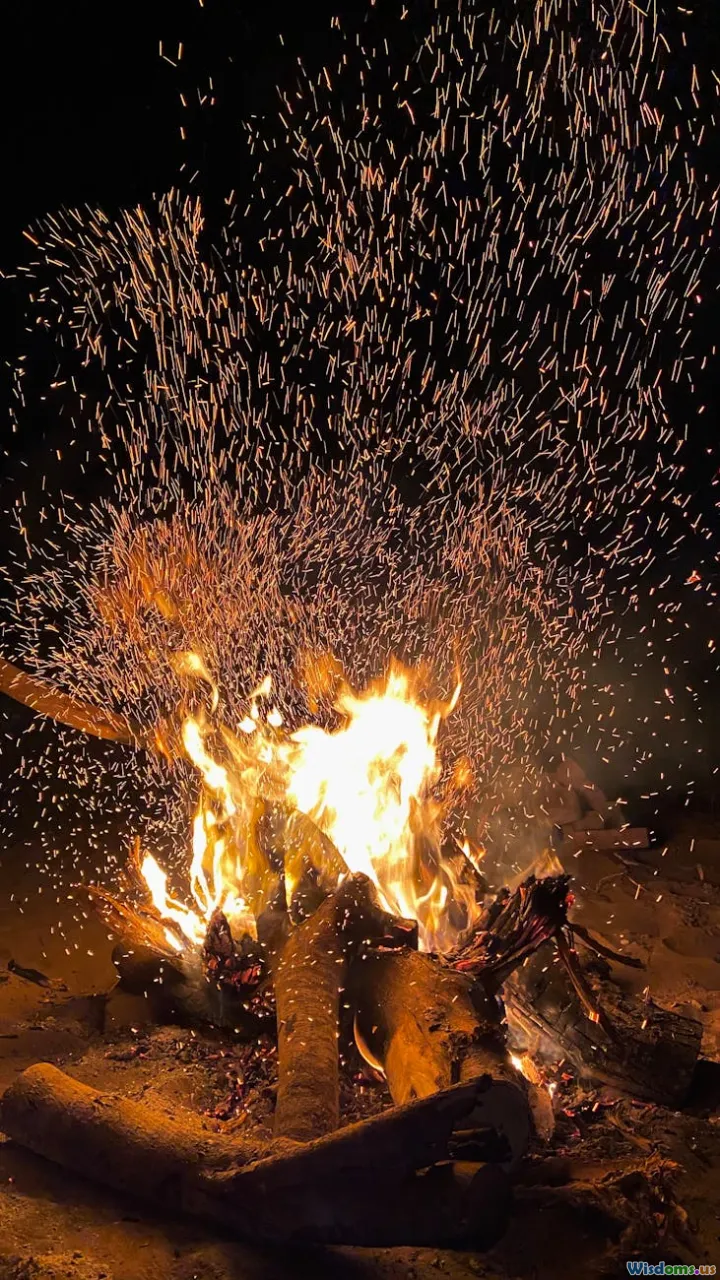
Facts alone rarely shift behavior in the field. People carry powerful heuristics—familiarity bias, social proof, scarcity—that whisper, “It’s fine; everyone else crossed.” An unexpected superpower for guides is purposeful storytelling that makes the right behavior feel vivid, memorable, and socially acceptable.
Why it matters:
- The availability heuristic means vivid stories shape how risky something feels more than base-rate statistics do. If your team just heard a crisp story about a cornice collapse, they will give the ridge more room.
- Avalanche education frameworks like FACETS (Familiarity, Acceptance, Commitment, Expert halo, Tracks/Scarcity, Social proof) illustrate how narratives and group dynamics can pull people into bad choices. A counter-narrative helps.
How to do it:
- Use the pre-mortem. Before entering hazard, tell a short “future accident” story: “It’s 15 minutes from now. We ignored the wind slab at the roll-over, and now we’re buried to our hips. How did we get here?” Then narrate what you will do instead.
- Pair a hazard with a sensory detail, a behavior, and a bright line:
- Hazard: “Wind-loaded roll-over just before the col.”
- Sensory: “Surface will sound hollow—like a drum.”
- Behavior: “Spread out 10 meters, one person at a time across the convexity.”
- Bright line: “If anyone hears the ‘drum,’ we stop and probe.”
- Anonymize real incidents. “A client in Patagonia sat on a pack too close to a cliff edge and slipped when the rock shifted. We learned to sit on the uphill side, packs clipped to us.” Keep it short—under 90 seconds.
- Use contrast pairs. “I’ve crossed this stream wet to the knee and miserable. I’ve also waited 40 minutes, found a snow bridge, and stayed dry and warm. Today we’re choosing the second story.”
- Invite a team story. “Anyone have a time when a ‘shortcut’ bit them?” Let the group’s own narratives carry the lesson.
Field example: At a river swollen by afternoon melt, you say, “Quick story: A well-trained team I know tried to cross after lunch. They waded mid-thigh, then the person up front slipped when their ankle hit a hidden rock. They lost a pole and a radio. We’ll switch the story: early crossing, hip belts unclipped, and a diagonal line facing upstream, with the shortest person in the strongest arm slot.” The group now owns a script for success.
Don’t:
- Scare for sport. Gory accidents paralyze more than they teach. Keep stories purposeful and tied to today’s decisions.
- Over-index on hero tales. Stories where a guide “saved the day” can shut down speaking up, as people defer to the expert halo.
Practice drill:
- The 2-Minute Hazard Story. Before any crux, deliver a 120-second story that names a hazard, the feel of it, the safe behavior, and the bright line. Rotate storytellers.
Building a Speak-Up Culture in Harsh Environments
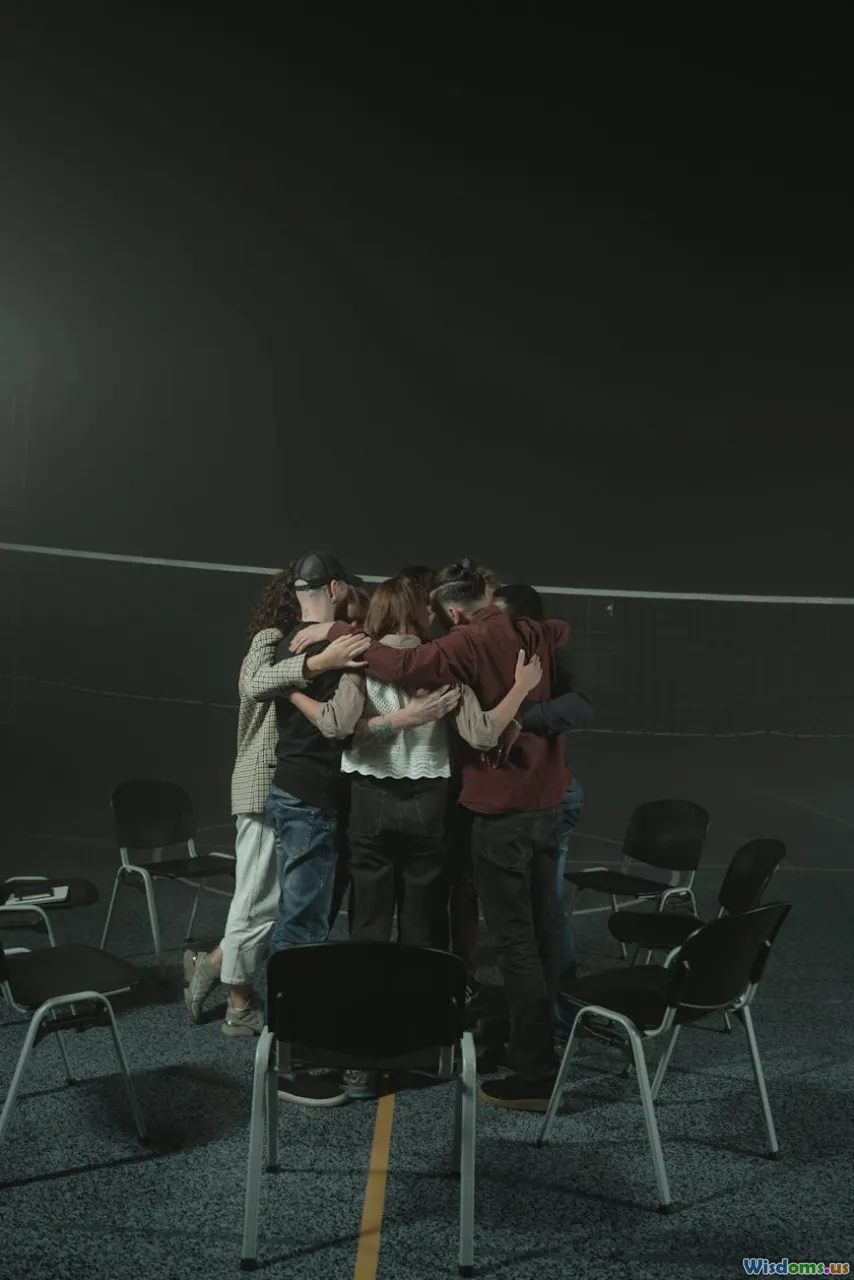
On expedition, hierarchy can keep people alive. It can also keep dangerous information quiet. The unexpected communication skill here is engineering a culture where anyone can interrupt the plan for safety—without derailing momentum or authority.
Why it matters:
- Research on psychological safety, popularized by Amy Edmondson, shows that teams share critical information more readily when leaders make it safe to do so. In the mountains, that can be the difference between catching a route-finding error early and doubling down into a trap.
- High-reliability industries use standard phrases and “permission to challenge” norms to prevent silent errors.
How to do it:
- Grant explicit interrupt rights. “Anyone can call ‘Pause for safety’ at any time. When you hear it, we all stop and listen for a single sentence explaining why.”
- Teach CUS words (from healthcare’s TeamSTEPPS):
- Concerned: “I’m concerned our spacing is too tight for this slope.”
- Uncomfortable: “I’m uncomfortable with how the snow sounds.”
- Safety issue: “This is a safety issue—we need to spread out.” Encourage clients to use them without apology.
- Use the sterile cockpit rule. Borrowed from aviation: “For the next 15 minutes on this ridge, no chat unless it’s about safety or movement.” This prevents small talk from masking critical cues.
- Model non-defensive responses. When challenged, say, “Good catch,” or “Say more,” and adjust if needed. Your reaction teaches the team whether to raise the next concern.
- Invert the halo. Ask the least experienced person first: “Kai, if we continue, what are you worried about?” This counters social proof and the expert halo.
- Close the loop after speaking up. If someone’s comment changes the plan, say, “We’re choosing the lower traverse based on Maya’s observation of roller balls. Nice spot.” This reinforces the value of speaking up.
Field example: On a narrow arete, a novice at the back says, “I’m uncomfortable with the wind bursts.” You reply, “Copy the discomfort; we’ll drop one meter below the crest and go ‘sterile cockpit’ for five minutes. Thank you.” The team adjusts without drama, and the novice learns that their voice matters.
Common traps:
- Token permission. Saying “speak up” without a protocol is noise. Give words and steps.
- Over-democratizing critical calls. Safety input is invited; decisions still land with the guide. Make that clear.
Practice drill:
- The Red Team Minute. Before a crux, give one person the job of finding reasons to delay or change the route. Everyone listens for 60 seconds, then you decide.
Field Drills to Build These Five Skills
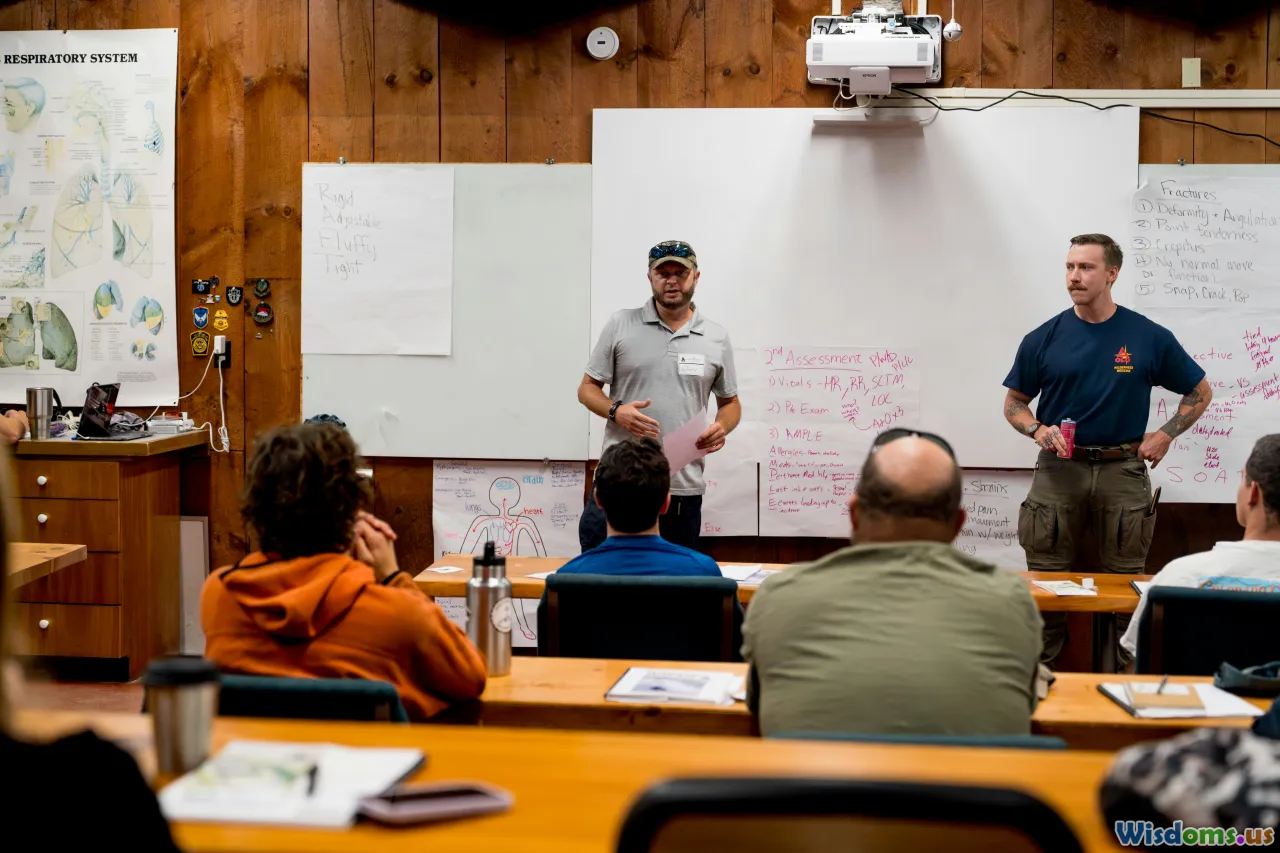
Skills deepen through deliberate practice. Here are drills to run on mellow days or in training blocks, with clear signals to measure progress.
- Silence and Pause Literacy
- Drill: Counted Scans. Before any move, call a 10-second silent scan. Everyone must report one observation when the time ends. Rotate the leader. Objective: Raise the number of unique, relevant observations per scan.
- Metric: Track how often teams catch small risks (loose strap, open carabiner) during the scan compared to runs without the drill.
- Shared Mental Maps
- Drill: Two-Sense Briefs. Each person must describe the next 10 minutes using one visual and one tactile cue. The guide annotates and corrects. Objective: Tighten alignment of mental models.
- Metric: During whiteouts, record deviation from intended line with and without the drill.
- Micro-Negotiation
- Drill: Five Tiny Agreements. Pre-plan five micro-commitments (pace, sip rate, spacing, layer check, route checkpoint). Execute and then debrief: Which agreement saved the most cognitive load? Which was ignored and why?
- Metric: Measure time to decision and post-decision compliance rate.
- Risk Storytelling
- Drill: Hazard Deck. Build a deck of 20 hazard cards (cornice, scree traverse, swollen creek, loose moraine). Before each hazard, a team member draws a card and delivers a 90-second story with hazard, sensory cue, behavior, and bright line.
- Metric: After the day, quiz for recall of bright-line rules. Aim for 80%+ correct.
- Speak-Up Culture
- Drill: CUS Relay. In safe terrain, stage three planted observations (loose helmet strap, deteriorating snow, missing glove). Award points when someone uses CUS to escalate and when you respond non-defensively and act.
- Metric: Track time from observation to action. Goal: under 30 seconds.
Bonus: Radio Etiquette Scrimmage
- Drill: Read-Back/ Hear-Back. Practice giving short, standard phrases (“Alpha, hold at cairn two, switch to channel three”). Receiver must read back exactly. The originator either confirms or corrects. Introduce white noise to simulate wind.
- Metric: Reduce read-back errors to near zero in noise.
Putting it all together on a real day:
- At breakfast, you set interrupt rights and CUS norms.
- At the trailhead, you deliver a Two-Sense Map for the first hour.
- Every 25 minutes, a micro-negotiated sip and shade stop, closed-looped to an individual.
- Before the crux, a 2-Minute Hazard Story, followed by a named silent scan.
- On the ridge, you go sterile cockpit. A client calls a Concern; you adjust and thank them. The team descends aligned and calm.
Tools and prompts to carry:
- A laminated card with micro-scripts: “Stand by…,” “Copy…,” “Confirm…,” “Say again…,” “Concerned/Uncomfortable/Safety.”
- A tiny pencil and waterproof paper for drawing a quick ridge profile or writing “Bright line: one at a time across the slab.”
- A small deck of hazard prompts tucked into a map case.
Common objections and responses:
- “I don’t want to scare clients.” Purposeful risk stories aren’t horror tales; they are brief, behavior-linked narratives. The tone is calm and practical.
- “Silence wastes time.” Ten seconds of quiet saves minutes of confusion and hours of regret.
- “Micro-negotiations slow us down.” They speed the day by reducing mid-move debates and misalignments.
What this looks like as a habit:
- You speak fewer total words but each sentence does more work. You pair data with sensory cues. You leave space for the team to think. You build small commitments early so big decisions are simpler later. You answer challenges with curiosity so information flows to you, not around you.
The crux of guiding is judgment, and judgment is built from information. These five unexpected communication skills—strategic silence, shared mental maps, tiny agreements, risk storytelling, and speak-up culture—multiply the information you get and the clarity you give. On a good day, they make the trek smoother. On a bad day, they turn a near miss into a non-event. And that is the quiet art that keeps people alive and makes hard places feel, for a moment, like home.
Adventure Travel Communication Skills Risk Management Professional Development Nonverbal Communication client management Cultural Intelligence Adventure & Exploration Expedition Leadership Wilderness Leadership Outdoor Leadership Expedition guide Radio etiquette Risk communication Conflict de-escalation Storytelling for guides
Rate the Post
User Reviews





Popular Posts