How to Turn Hardships Into Powerful Opportunities
29 min read A practical guide to transforming adversity into growth using mindset shifts, antifragility, and action plans, featuring evidence-based tactics, real-world examples, and step-by-step frameworks for personal and professional breakthroughs. (0 Reviews)
Hardships pull focus. They strip away the nice-to-have and reveal what actually matters—skills you possess (or don’t), relationships you can rely on, and the choices you’re brave enough to make. While none of us goes looking for difficulty, we can treat hardship like high-grade raw material: heavy, stubborn, but capable of becoming something durable and valuable when handled with skill.
This article is a practical playbook for turning hard moments into strong advantages. It combines psychological tools, strategic methods, and real examples so you can respond to setbacks with clarity and momentum—not just resilience, but opportunity.
Reframe the Narrative: From Threat to Data

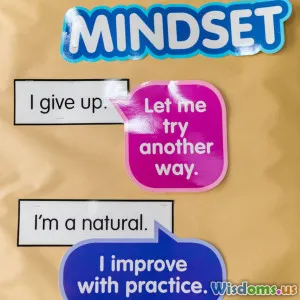
Most opportunity creation starts in your head. The same event—a layoff, a failed launch, a medical diagnosis—can be appraised as either a threat to be endured or a data-rich signal to be decoded. Cognitive appraisal research consistently shows that when people interpret stressors as challenges rather than threats, they perform better and recover faster.
Try this two-step reframing process:
-
Name the event precisely. Avoid vague labels like “everything is falling apart.” Instead: “I lost my main client,” or “I failed the certification exam by five points.” Precision lowers emotional noise and reveals levers.
-
Translate pain into prompts. For each hardship, write three "What is this telling me?" prompts:
- What skill gaps is this pointing to?
- What systems failed or were missing?
- What opportunities become more likely because of this constraint?
Example: After a layoff, your impulses might be panic and rapid applications. A reframe could be: “This is data that my role is vulnerable to automation, that my network is shallow in two industries, and that my portfolio isn’t visible enough online.” From there, you’re already closer to specific moves: upskilling in complementary areas, targeted introductions, and a public project.
Pro tip: Use language that keeps you in the driver’s seat. Instead of “I have to rebuild,” try “I get to redesign.” That subtle shift increases your sense of control—an essential ingredient for effective action.
Map the Terrain: Diagnose the Real Problem

Hardships often seem like single problems; they’re usually clusters. If you attack the wrong node, you waste energy. Diagnosis protects your limited time and money.
Use a quick diagnostic stack:
-
Five Whys: Ask “why” up to five times to reach a root cause. Example: Sales dropped. Why? Fewer inbound leads. Why? Blog traffic declined. Why? Publication cadence fell. Why? Content team overloaded. Why? No content calendar and unrealistic volume goals. Now the fix isn’t “spend more on ads,” it’s process design.
-
Ishikawa (Fishbone) Sketch: Draw a simple spine (the problem) with bones for categories like People, Process, Tools, Market, and Timing. Populate causes under each. A startup blaming “market is down” might realize Process and Tools are the bigger culprits: slow onboarding and a misconfigured CRM.
-
Pre-mortem: Pretend your next attempt fails. Write the headline and reasons. This surfaces hidden risks before you spend resources.
When a small café’s foot traffic drops 30%, the surface diagnosis is “location visibility.” But mapping reveals: an altered bus route (Timing), new construction blocking sidewalks (Environment), and a menu skewed toward dine-in meals when takeout demand increased (Product). The opportunity becomes obvious: clearer signage, delivery partnerships, and a takeout-friendly lunch combo. Correct problem, right response.
Set a Direction: Opportunity Hypotheses

We find opportunity by testing hypotheses, not by waiting for certainty. Turn hardship insights into "How Might We" questions and corresponding bets.
Template:
- Hardship: State it plainly.
- Insight: What signal does it contain?
- How Might We: Frame the opportunity.
- Hypothesis: If we do X, we expect Y within Z time.
- Evidence to Watch: Metrics or qualitative signs that confirm or refute the bet.
Example—Mid-career professional laid off from a retail operations role:
- Hardship: Role eliminated as chain automates inventory and checkout.
- Insight: Process optimization skills are transferable to e-commerce and warehousing.
- How Might We: Position as a fractional operations lead for small e-commerce brands.
- Hypothesis: If I package a 90-day “Ops Tune-Up,” I’ll close 2 clients within 8 weeks.
- Evidence to Watch: Discovery call count per week, conversion rate, time-to-close, and client outcomes at 30/60/90 days.
Opportunity hypotheses don’t lock you in; they give you something to measure. Plans are guesses. Hypotheses keep your guesses honest.
Convert Emotion into Fuel, Not Fire

Emotion is energy. Handle it well and it powers decision-making; mishandle it and it burns options.
Practical methods:
-
Name and normalize: “I’m feeling fear and anger.” Labeling emotions reduces their intensity, a phenomenon confirmed across affective science studies.
-
Set a physiological baseline: Two minutes of slow exhale breathing (e.g., 4 seconds in, 6–8 seconds out) reduces sympathetic activation and helps the prefrontal cortex do its job.
-
Adopt a stress-is-enhancing mindset: Research shows that seeing stress as a resource can improve performance and health markers. Before a tough meeting, say, “My body is mobilizing to help me focus.” It’s not magical thinking; it reframes arousal as helpful rather than harmful.
-
Create a 10/10/10 buffer: When receiving bad news, delay response for 10 minutes, then 10 hours, then 10 days—what will matter at each interval? This spacing curbs impulsive choices you’ll regret.
-
Write a “fear to task” list: For each fear, add a tiny task. Fear: “I’ll never re-enter my field.” Task: “DM three alumni asking for 15-minute calls.” Action metabolizes anxiety.
Example: A founder facing negative press feels spirals starting. They schedule a 20-minute walk (physiology), write a one-page narrative clarifying facts vs conjecture (cognition), and draft a three-step plan: an internal team brief, a customer email, and a Q&A doc. Emotion becomes motion.
Build the Smallest Useful Response

When conditions are chaotic, small bets beat big swings. Design the smallest step that can produce learning or revenue. The Lean Startup idea of a Minimum Viable Product applies beyond software.
-
For career pivots: Instead of enrolling in a 12-month degree, try a 4-week micro-course plus a weekend project. If it energizes you and attracts interest, then consider deeper investment.
-
For service offers: Don’t create a polished website first. Write a one-page PDF with a clear outcome, price, and timeline. Send it to 10 people. Iterate based on replies.
-
For a new product: Pilot with 10–20 users in a private group. The aim is not perfection, it’s signal: Do people finish? Do they return? Do they refer?
Example: A freelance designer loses a long-term client. Instead of applying broadly, she builds a 2-hour “Design SOS” session: live audit + prioritized fixes + Loom walk-through. It’s fast, helpful, and priced accessibly. Within two weeks, five sessions replace 60% of the lost income while providing testimonials for a retainer offer.
Learn Fast: Design Experiments With Metrics

Speed matters, but only if you learn the right things. Choose metrics that map to your hypothesis.
-
Avoid vanity metrics: Page views, social followers, or generic “engagement” often don’t predict outcomes you care about.
-
Use leading indicators: For consulting offers, leading indicators include discovery calls booked and proposal acceptance rate. For products, it might be activation rate (first meaningful action) and Day-7 retention.
-
Create a Decision Boundary: Before launching a test, define what result means “continue,” “pivot,” or “stop.” Example: “If conversion is above 5%, we scale ads. Between 2–5%, we iterate landing page. Below 2%, we revisit the offer.”
-
Close the loop with the OODA cycle: Observe, Orient, Decide, Act—repeat. Document insights after each cycle so hard-won learning compounds.
Example: You test a webinar to sell your analytics course. Target: 40 attendees, 20% buy rate, average order value $300. Actual: 52 attendees, 12% buy, AOV $270, strong chat questions about dashboard templates. Decision: Keep format, improve close with a template bonus, and offer a payment plan. Next run: 61 attendees, 21% buy, AOV $315. You don’t just work harder; you work smarter.
Use Constraints as Creative Catalysts

Hardship imposes limits—time, cash, access. Counterintuitively, constraints often boost originality by forcing prioritization and novel combinations.
Turn constraints into design rules:
-
Time-boxing: Ship something meaningful in 10 days. This slashes perfectionism and surfaces the essential.
-
The 3-Resource Rule: Choose only three: a channel (e.g., LinkedIn), a format (e.g., biweekly newsletter), and an asset (e.g., a research-backed guide). Anything else is extra.
-
Budget envelopes: Cap spending at a small, fixed amount for each test. Creativity flourishes under a ceiling.
-
Limiting assumptions: Pick one deliberately limiting assumption and design around it: “Assume zero ad spend” or “Assume only async communication.” Solutions discovered under these constraints often remain valuable when constraints lift.
Example: A restaurant’s event catering evaporates. They set a 10-day constraint to launch “Family Heat-and-Eat” kits. Rule: Minimum prep time under 15 minutes for customers; price under $30; orders via Instagram DMs. The kits sell out and open a new revenue stream even after events return.
Strengthen Your Opportunity Muscles Daily

Opportunity is a habit disguised as luck. Build rituals that make you find and act on openings.
Daily or weekly drills:
-
Adversity ledger: Keep a simple log with three columns—Event, Lesson, Experiment. This turns every annoyance into a prompt for improvement.
-
Opportunity reps: Do one small, uncomfortable ask daily—an introduction request, a public post, a new pitch. Comfort expands by repetition.
-
Implementation intentions: “If it’s 5 p.m., then I write tomorrow’s top task.” Pairing a cue with a behavior increases follow-through.
-
Reflection frame: End Friday with two questions: “What did I attempt that could have failed?” and “What surprised me?” Surprises are where opportunity hides.
Example: A product manager sets a weekly cadence: Monday—reach out to two domain experts; Wednesday—publish a short teardown; Friday—invite feedback and schedule one user interview. After eight weeks, she has a portfolio of analyses, a growing network, and three inbound job leads.
Build an Opportunity Network

Hard times magnify the value of social capital. You don’t need thousands of contacts; you need the right few.
Construct a Personal Advisory Board (PAB):
-
Composition: 1 peer in your function, 1 person two levels ahead, 1 adjacent-discipline expert, and 1 non-work friend who tells you uncomfortable truths kindly.
-
Cadence: Quarterly check-ins; ad hoc calls during crunches.
-
Give-to-get: Offer value first—share notes, send intros, offer reviews. Generosity is the highest-yield networking strategy.
-
Asks that work: Be specific (“Could you review this 1-page offer?”), small (“15 minutes is perfect”), and time-bound (offer two slots).
Example: After a startup shutdown, an engineer’s PAB introduced him to a climate-tech founder, reviewed his open-source repo, and coached him on a 90-day plan. He parlayed the connections into a role that blended his experience with his interest in impact.
Turn Setbacks Into Assets on Your Storyline

Your story is a strategic asset. If you don’t shape it, others will. Convert hardships into narrative advantages: proof of adaptation, evidence of values, and clear differentiation.
Tactics:
-
STAR+L framework: For each setback, outline Situation, Task, Action, Result, and Learning. The last piece (Learning) signals maturity and growth.
-
Outcome metrics: Quantify the positive change after your response: cycle time reduced 28%, churn cut by 15%, completed 200 hours of training while working full-time.
-
Portfolio artifacts: Ship public evidence—case studies, GitHub commits, dashboards, design mockups, or before/after screenshots. Proof beats promises.
-
Antifragile angle: Show how you became better because of stressors: “Our supply chain crisis led us to localize 40% of vendors, shaving four weeks off lead time.”
Example interview snippet: “When our vendor failed during peak season (S), I was tasked with stabilizing fulfillment (T). I mapped dependencies, launched a temporary 48-hour manual pick system, and negotiated a 3-month bridge with two local suppliers (A). Orders shipped at 92% on-time (R). We then codified dual-sourcing and built a real-time inventory dashboard (L).” That answer turns hardship into a durable professional advantage.
Risk Management: Protect the Downside While You Explore Upside

Opportunity without guardrails turns into gambling. Protect your base so you can take smart shots.
-
Barbell strategy: Keep most of your effort in safe, reliable moves (steady income, core customers) while placing a few asymmetric bets (new offer, new channel) with limited downside and large potential upside.
-
Hard floors and soft ceilings: Establish non-negotiable minimums (e.g., 6 months’ expenses, 8 hours sleep most nights, no debt beyond X). Let upside experiments remain flexible.
-
Stop-loss rules: Decide in advance when to exit a failing experiment (“If I don’t get 3 qualified leads in 30 days, I stop and review”). This prevents sunk-cost traps.
-
Insurance and buffers: For individuals, emergency funds and appropriate insurance. For businesses, cash buffers and lines of credit. Buffers buy time, and time buys better decisions.
Example: A consultant sets a 60/20/20 time allocation: 60% to existing retainers, 20% to improving delivery (playbooks, templates), and 20% to experiments (webinars, partnerships). Revenue stays stable while upside compounds.
When Hardships Compound: A Playbook for Crisis Mode

Sometimes the hit isn’t a single punch; it’s a combination. In compound stress, you need triage—do the right things in the right order.
Crisis checklist:
-
Stabilize the organism: Sleep, hydration, simple meals, and 20 minutes of movement daily. Fight physiology first; thinking follows.
-
Reduce open loops: Make a 30-minute “brain dump” list. Sort into Do, Delegate, Decide, or Delete. The aim is to create a single source of truth.
-
Triage critical domains: Health, safety, money, relationships, obligations. Handle irreversible risk first (e.g., medical appointments, debt deadlines).
-
Secure quick wins: Two small actions that create relief: negotiate a payment plan, ask a neighbor for help with childcare, pause non-essential projects.
-
Communicate: Short, clear updates to stakeholders reduce confusion and maintain trust. Use a template: “Here’s what happened, what we’re doing, how it affects you, and when we’ll update next.”
-
Establish 7-day sprints: Weekly goals with daily standups (even solo, via a note). Keep focus tight until stability returns.
Example: After a family health emergency and a job loss, a couple prioritizes health scheduling, calls creditors to freeze interest for 60 days, cuts discretionary spending, and arranges community help for meals. Within two weeks, they’ve stopped the bleeding and created space to pursue interim work.
Case Studies: From Hardship to Opportunity in Practice

-
The laid-off analyst who built a career moat: After a retail giant downsized, Maya listed her skills (SQL, dashboards, vendor reporting) and noticed small manufacturers lacked analytics. She created a 3-week “Data to Decisions” sprint: audit, dashboard, training. She won her first client via a LinkedIn post, then refined her niche to food producers dealing with supply volatility. Within six months, she had a waitlist and a course on inventory analytics.
-
The restaurant that pivoted to meal kits: Facing lockdowns, a neighborhood bistro launched “Sunday Sauce Kits” with pre-portioned ingredients and recipe cards. They added a livestream cooking class and a neighborhood delivery route. The kits brought in 40% of pre-pandemic revenue and later became a profitable recurring subscription.
-
The graduate who turned rejection into signal: Rejected from multiple PhD programs, Amir joined an AI lab as a research assistant and built an open-source library for model interpretability. The project earned citations and industry attention, leading to a funded master’s and a research scientist role that was better aligned with his applied interests.
-
The patient who became a builder: Managing a chronic condition, Lina struggled with care coordination. She prototyped a symptom-tracking app using no-code tools and shared it in patient communities. Feedback shaped features like medication reminders and clinician reports. A health nonprofit partnered with her to run a pilot, which later funded a native app.
-
The agency that turned a client loss into new IP: After losing their biggest account, a marketing team documented their best internal processes into playbooks and created a “Campaign-in-a-Box” package for startups. The productized service increased margins and reduced sales cycles.
Each case follows the same arc: identify signal, test a small bet, iterate with metrics, leverage constraints, tell a better story. Opportunity is a method, not a miracle.
Tools, Prompts, and Templates You Can Use Today

Use these simple frameworks to move from idea to action:
- Opportunity Canvas (one-page)
- Hardship: What happened? Keep it specific.
- Signals: Three insights the event reveals.
- Hypothesis: If we do X, Y will improve by Z.
- Metrics: Which numbers or qualitative signs matter?
- Smallest Step: What can be shipped this week?
- Risks: Top 3 risks and mitigation plans.
- Calendar: Two dates—pilot launch and review.
- Five-Whys Worksheet
- Problem: __________________
- Why #1: __________________
- Why #2: __________________
- Why #3: __________________
- Why #4: __________________
- Why #5: __________________
- Root Cause: __________________
- Next Action: __________________
- Decision Boundary Matrix
- Continue if: [metric threshold]
- Pivot if: [metric range + what you’ll change]
- Stop if: [metric threshold + what you’ll do next]
- Ask Scripts (email or DM)
-
Intro request: “Hi [Name], I admire your work on [specific]. I’m exploring [brief context] after [hardship]. Would you be open to a 15-minute call? I’ll share a one-page brief and come with two focused questions. Happy to reciprocate with [value you can offer].”
-
Referral nudge: “If you know one person struggling with [problem your offer solves], I’d appreciate an intro. Here’s a two-sentence summary and a link.”
- Stress Reappraisal Prompt
- “The sensations I’m feeling are my body preparing me to meet a challenge. I can use this energy to [specific action].”
- Weekly Review Checklist
- Wins: 3 things that worked
- Misses: 3 things that didn’t
- Lessons: 3 insights
- Next experiments: 1–2 tests with metrics and dates
These tools create a feedback loop where every difficulty generates new options.
The Quiet Advantage: Patience and Optionality

Hardships often tempt rapid, sweeping changes. Sometimes that’s necessary; often, it’s not. The compound returns of steady, small improvements beat dramatic resets.
-
Optionality in skills: Stack complementary skills that open multiple doors. Example: combine domain knowledge (healthcare), a technical tool (Python), and communication (data storytelling). In uncertain markets, optionality is a moat.
-
Long-game visibility: Most breakthroughs arrive dressed as boring consistency—weekly posts, monthly demos, quarterly retros, annual skill sprints. Patience doesn’t mean passivity; it’s the willingness to keep placing intelligent bets.
-
Portfolio of attempts: Instead of one perfect plan, run parallel micro-initiatives. Some die, some stagnate, a few fly. Expect most to be “meh.” You only need a couple to transform your trajectory.
-
Preserve the right to change your mind: Avoid public commitments that box you in prematurely. Keep experiments reversible whenever possible. Reversible decisions are cheap and fast; irreversible ones require more diligence.
The quiet advantage is this: while others oscillate between overreaction and paralysis, you methodically bank options. Over time, your surface area for luck increases.
A Closing Invitation

Think of hardship as a force that can forge or fracture. The difference isn’t luck or talent—it’s process. Reframe the event, diagnose the real problem, articulate a hypothesis, run the smallest useful test, learn with metrics, and keep your downside protected while upside accumulates. Build community. Tell a true, powerful story about how you respond.
You don’t have to do all of this at once. Start with one page: write your Opportunity Canvas. Send one ask. Make one small prototype. In a week, you’ll have more data. In a month, you’ll have momentum. In a year, you may look back and realize the thing that felt like an ending was actually a lever—a heavy one, yes, but exactly the kind that moves the world when you know where to place it.
Rate the Post
User Reviews






Popular Posts