Can Lighting Transform the Mood of Your Building Photos
20 min read Explore how lighting techniques can dramatically enhance the mood, depth, and appeal of your building photography. (0 Reviews)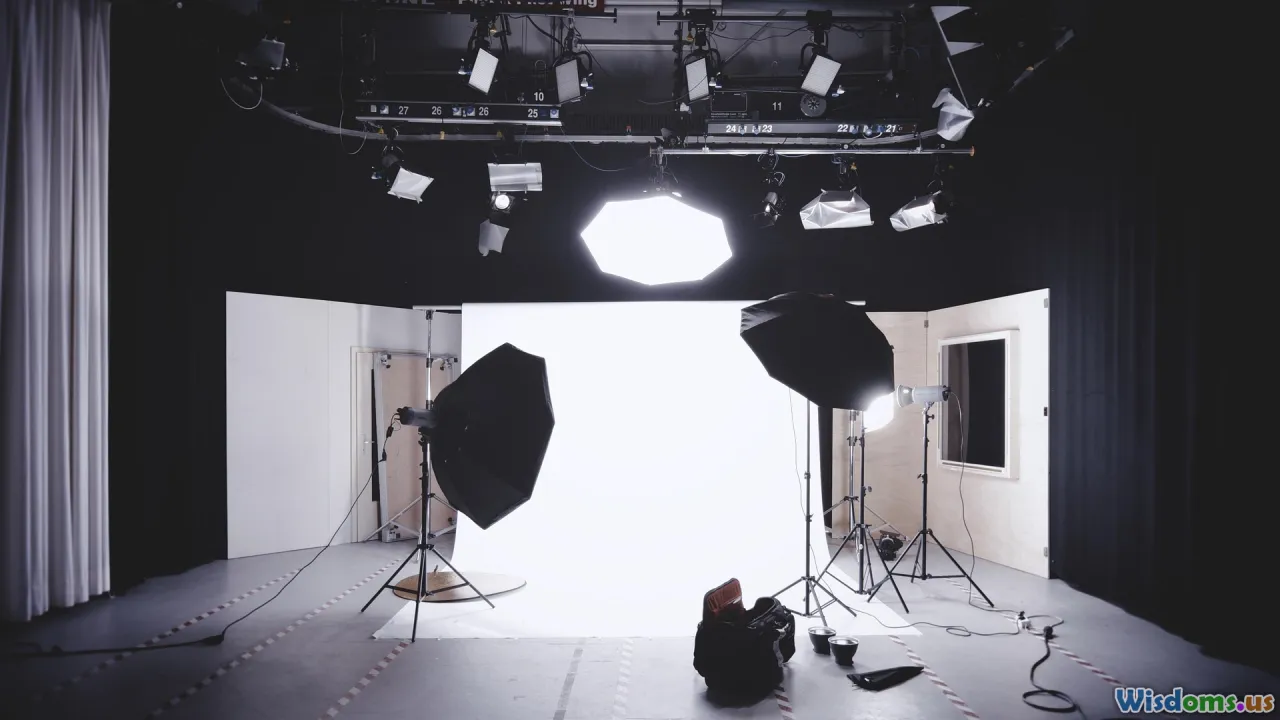
Can Lighting Transform the Mood of Your Building Photos?
Capturing a building isn’t just about documenting bricks and mortar; it’s about conveying the soul, history, and character of architecture. But have you ever wondered what makes a photo of the same building evoke completely different feelings? The secret often lies in lighting. The strategic harnessing of light can make architectural photos hop between tones of warmth, drama, tranquility, or tension, impacting how viewers interact with the built environment.
Photographers, whether aspiring or seasoned, know this intuitively: lighting isn’t just a technical factor; it’s a mood-maker. Below, we dive deep into how lighting—for both exteriors and interiors—can profoundly alter the emotional resonance of your building photographs, with expert insights, concrete examples, and actionable guidance for deliberately leveraging light.
The Fundamental Role of Lighting in Architectural Photography
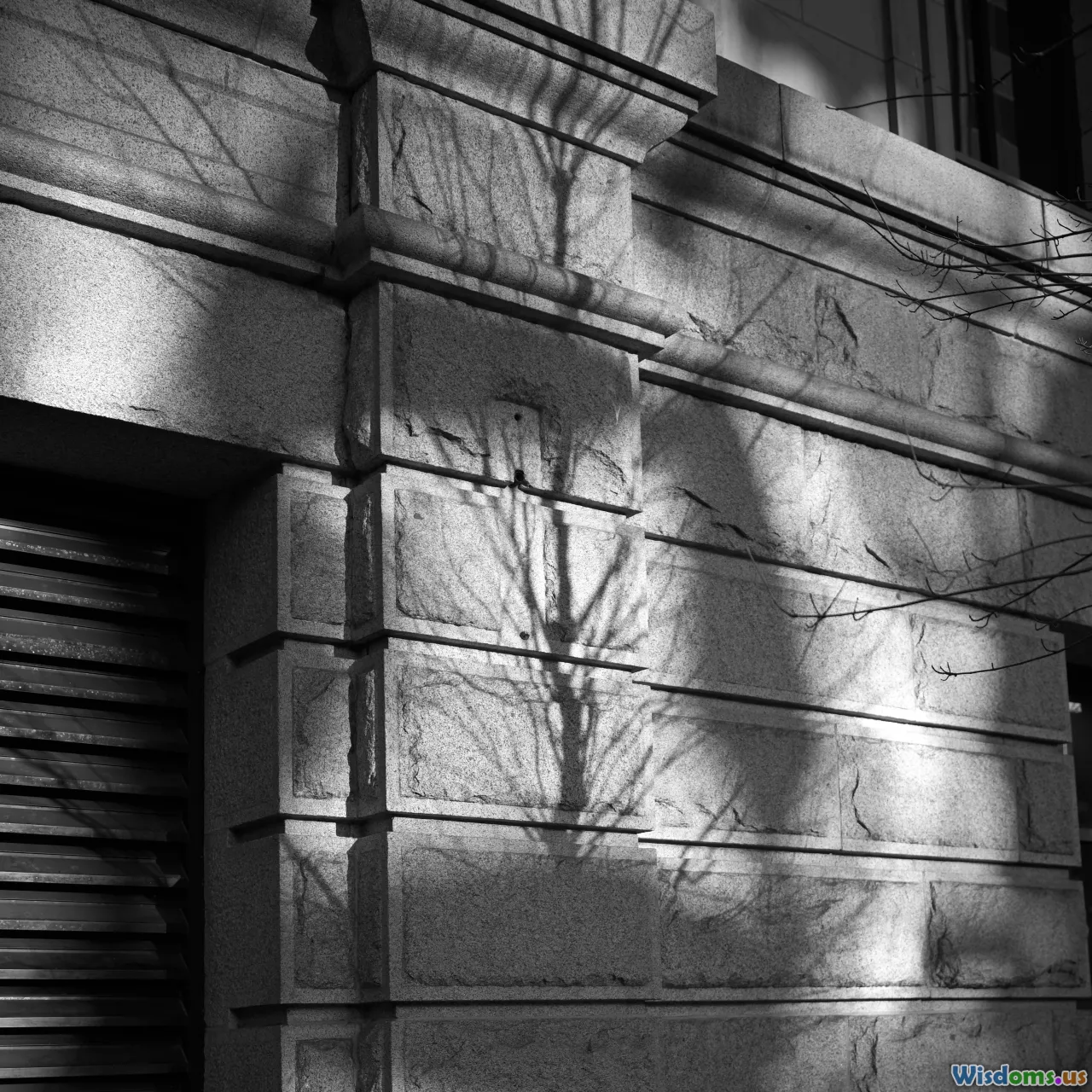
Before we explore dramatic transformations and techniques, it’s essential to ground ourselves in the fundamentals. Light defines shapes, reveals textures, sets highlights and shadows, and, crucially, communicates mood. In building photography, this isn’t simply about brightness; it’s about using light to narrate a visual story.
Take Louis Kahn’s famous Salk Institute shots as an example: sunlight streaming through narrow corridors forms stark geometric shadows, underscoring the space’s minimalist design and contemplative nature. Compare this to golden-hour photographs of Barcelona’s Casa Batlló, where the soft, diffuse glow makes Gaudi’s whimsical surface patterns feel inviting and dreamy.
How Lighting Shapes Perception
- Intensity: Harsh midday sun can flatten textures and wash out colors, giving a clinical or even hostile effect, while softer light accentuates depth and delicacy.
- Direction: Sidelighting sculpts forms and gives dimensionality, crucial for communicating the depth of a façade. Backlighting produces silhouettes, adding mystery or drama.
- Quality: Hard light (bright, directional) creates sharp shadows, excellent for high-contrast drama; soft light (diffused by clouds or time of day) paints gentle gradients suitable for calm, understated moods.
Lighting doesn’t simply illuminate; it transforms. Before you even lift your camera, notice how the direction, strength, and quality of natural or artificial light interacts with your subject.
Natural Light: Harnessing Sunlight for Emotive Impact
The Magic of Golden Hour
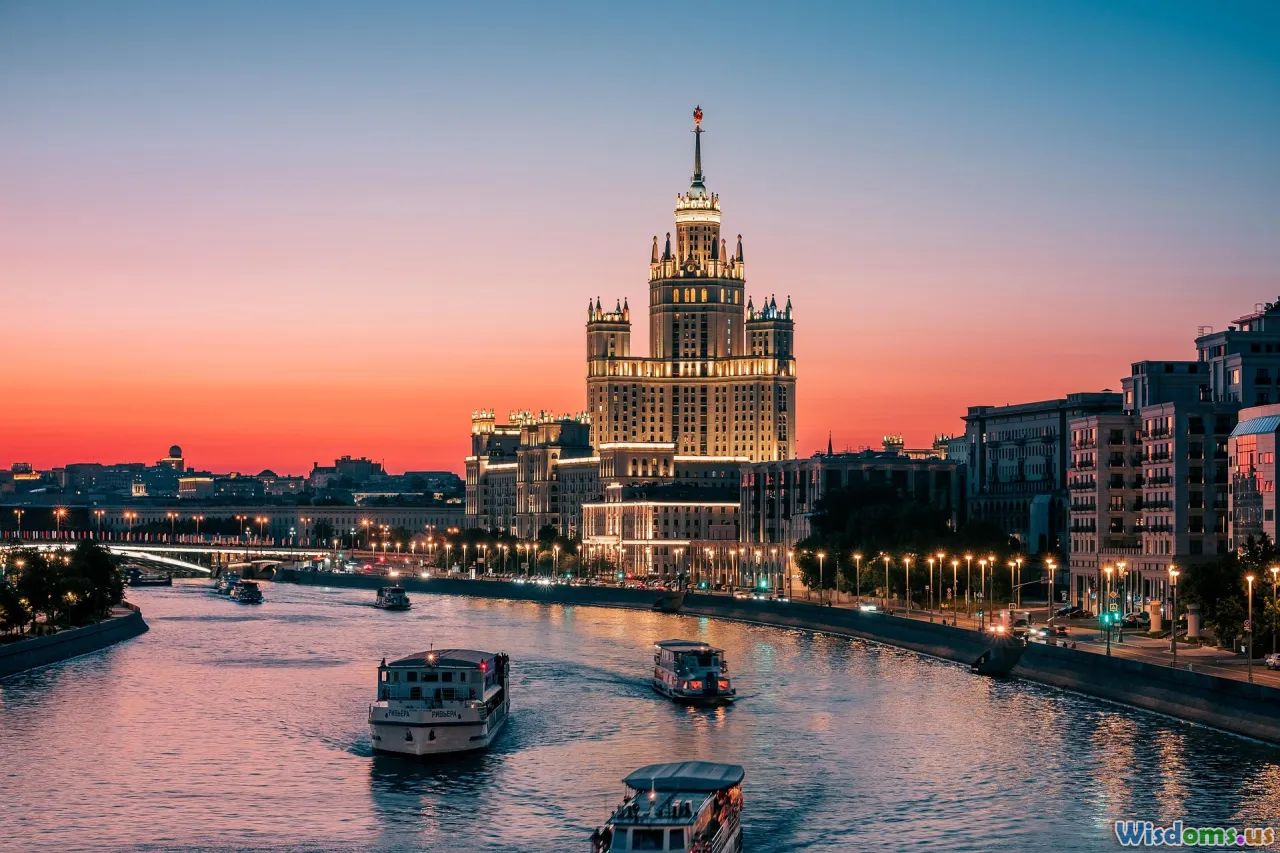
Ask any seasoned architecture photographer their favorite time of day, and the "golden hour"—that brief window after sunrise or before sunset—will almost certainly top the list. The sunlight is warmer, softer, more oblique. Shadows are elongated, adding a sense of depth and drama. Colors are richer, allowing building materials to pop subtly.
For example, photos of the Sydney Opera House at midday versus at sunset reveal this magic: morning photos can look flat and procedural, but late afternoon adds gleaming highlights to the ceramic tiles and a golden glow to the harbor, evoking feelings of romance and grandeur.
Blue Hour and Nighttime Wonder
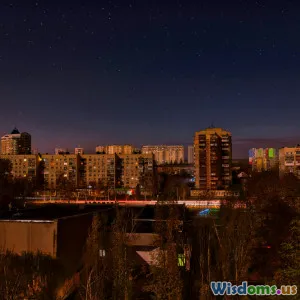
Post-sunset, you’ll encounter “blue hour,” when the sky turns rich blue and buildings’ artificial lights begin to gleam. During this time, cool ambient light pairs with warm interior glows—an alluring, almost cinematic mix often used by real-estate photographers to give buildings a sense of mystery or sophistication.
- Example: The Louvre’s glass pyramids come alive during blue hour, with glass facets reflecting the final light while interior bulbs shimmer, balancing contemporary with classical moods.
Cloud Cover and Mood
Overcast days often get a bad rap, but clouds convert direct sunlight into diffuse illumination. This soft light is perfect for removing harsh shadows, reducing contrast, and creating understated, almost meditative urban scenes. An overcast morning shot of a London Brutalist housing estate can feel far gentler and more humane than one exposed in stark midday sunlight.
Actionable Tips for Leveraging Natural Light:
- Plan ahead: Use apps like PhotoPills or SunSurveyor to determine golden/blue hour times and the sun’s direction.
- Return to locations: Photograph the same building under different light. Compare a morning, midday, and dusk shot—you’ll see entirely different sides of its character.
- Embrace imperfections: Don’t run from rain or fog; they create unique moods (moody, mysterious, serene) that might suit your narrative.
Artificial Lighting: Sculpting Mood After Sundown
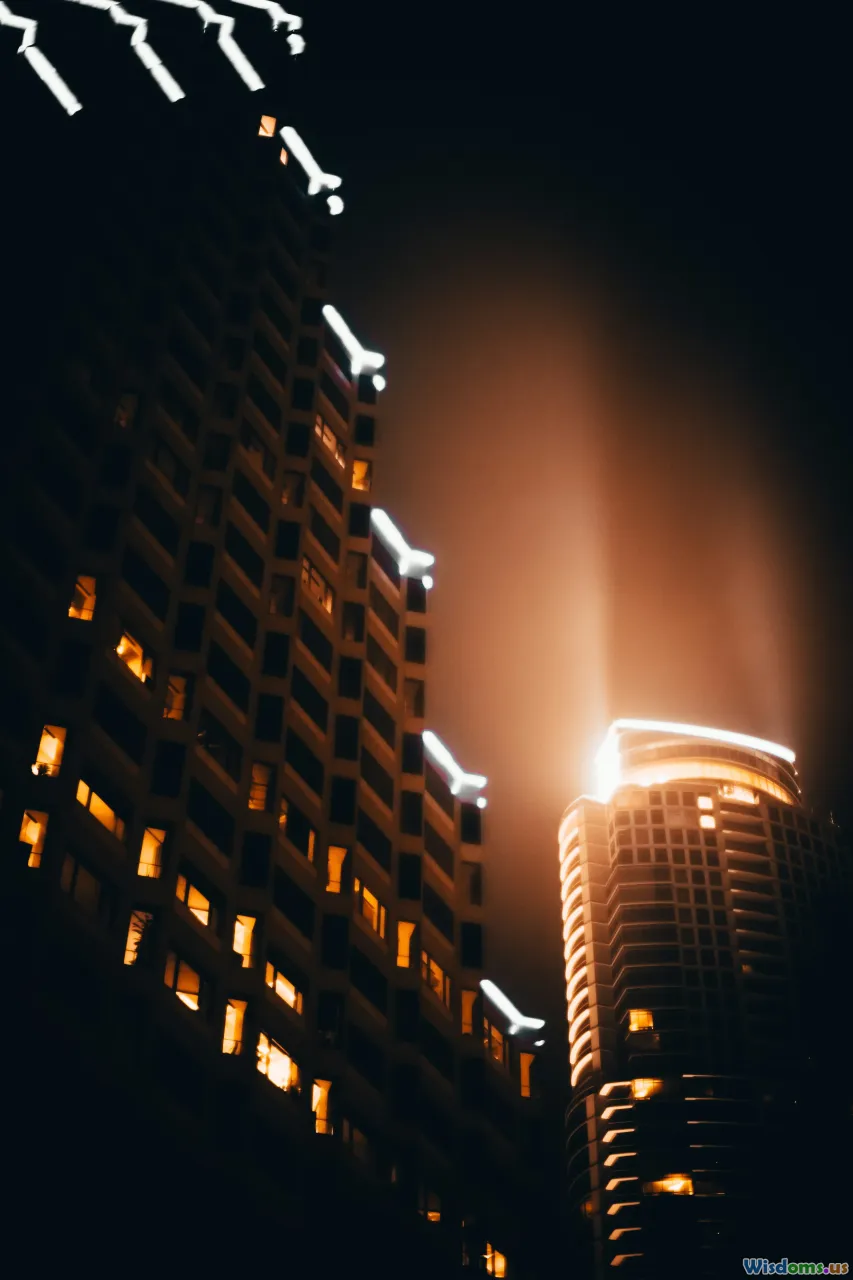
While natural light is ephemeral and sometimes unpredictable, artificial illumination offers control and creativity, especially in cityscapes or interior environments.
City Lights and Urban Drama
City skylines at night can be breathtaking. Skyscrapers compete for attention with neon, LED accents, and dynamic uplighting designs. Nighttime cityscapes—like those of New York or Shanghai—transform ordinary buildings into silhouettes of ambition, power, and modernity.
- Example: The Empire State Building’s colored floodlights, customized for holidays or causes, magically shift the emotion of Manhattan’s nightscape—pink for breast cancer awareness, green for Saint Patrick’s Day, etc.
Architectural Lighting Design
Contemporary architecture often features integrated lighting—cove lights, uplights, or facade illumination designed to emphasize form even after dark. A well-lit building after sunset tells a different story: think of the Sydney Harbour Bridge lit with a chilly blue or an Amsterdam canal house delicately outlined, radiating warmth and welcome.
Interior Artificial Light
Inside, lighting strategy distinguishes sterile offices from cozy living spaces. Warm bulbs soften hard materials, making spaces feel inviting, while cooler, bluer lights project modernity and efficiency.
- Insight: Leading hotels often use layered lighting (task plus accent) to flatter their interiors no matter the hour, ensuring a perpetual, engineered ambiance.
Tips for Artificial Lighting in Building Photography:
- Know your white balance: Adjust your camera settings to prevent artificial lights (tungsten, LED, sodium) from casting overpowering color shifts unless that’s the intended effect.
- Showcase layered illumination: Emphasize spaces where uplights and downlights interplay to draw out spatial complexity.
- Creative experiments: Use light painting (moving a light source while exposing an image) to selectively illuminate parts of a building at night—ideal for experimental or artistic shots.
The Psychology of Light, Color, and Emotional Resonance
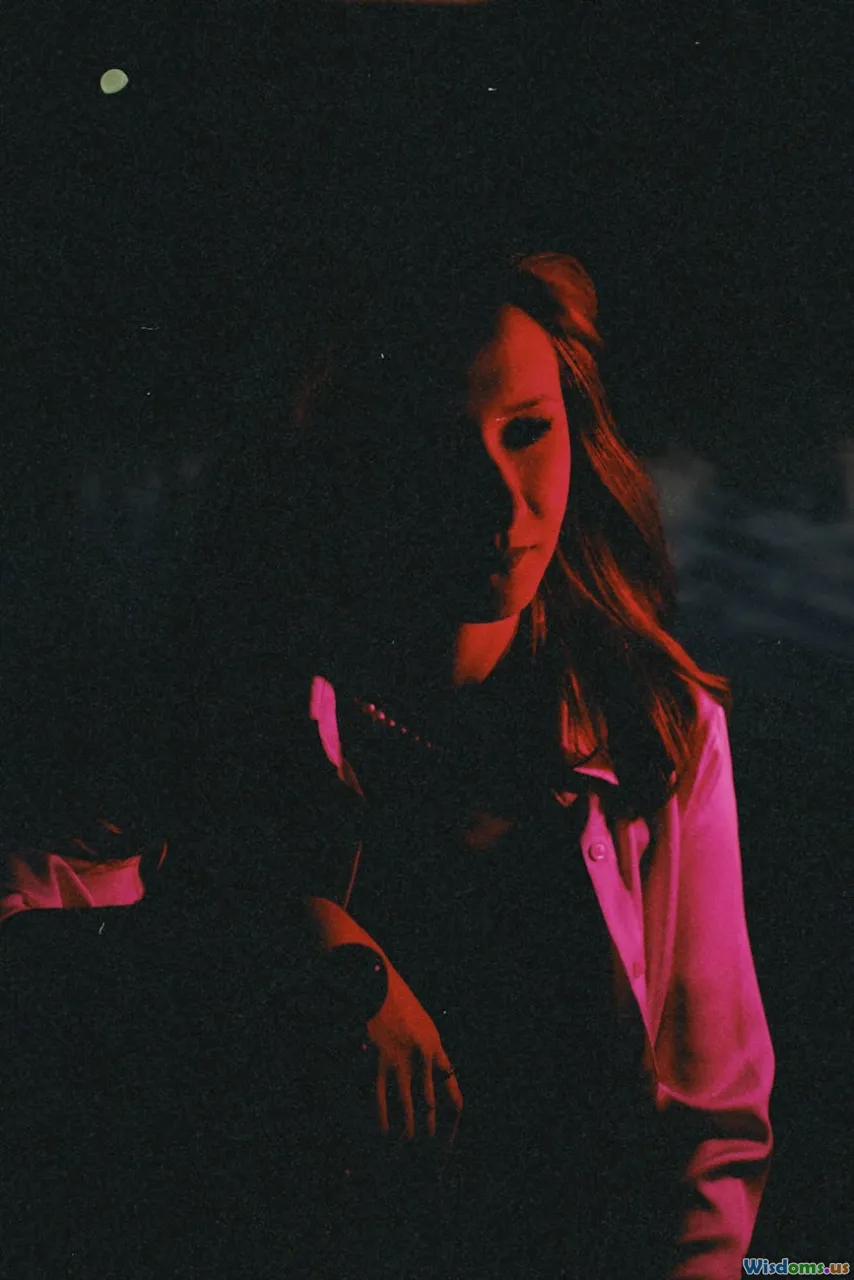
What kind of mood do you want to evoke—serenity, excitement, awe, nostalgia? Lighting is your not-so-secret weapon. Scientific studies indicate that viewers respond to luminance and color temperature in demonstrably emotional ways.
Warm vs. Cool Lighting
-
Warm light (orange/red): Evokes comfort, intimacy, and nostalgia. Used effectively, it transforms a public foyer into an inviting gathering spot or accentuates the lived-in charm of historical facades.
-
Cool light (blue): Conveys modernity, cleanliness, calmness, even melancholy. Glass towers illuminated by cool white LEDs often feel sleek, futuristic.
-
Example: The shift in mood between shots of Prague’s Old Town Square at dusk (warm lamplight, cozy, romantic) and its daylight appearance (cool, gray, and more formal) could not be more distinct.
High Contrast for Drama
Bold differences between light and shadow—think chiaroscuro in painting—can thrust attention onto dramatic forms or architectural features, lending a sense of intrigue or gravitas.
- Photographer’s choice: Sebastian Weiss famously isolates details of modern European buildings, using harsh late-afternoon light to pop sharp shadows against neutral façades.
Subtlety and Evenness for Calm
Low-contrast, evenly-lit scenes can make even a bustling plaza feel peaceful. Scandinavian designers often favor this in their marketing shots, emphasizing minimalism and a mindful atmosphere.
Actionable Insights:
- Color temperature apps/tools: Lights, both indoor and outdoor, are measured in Kelvin. Match your white balance, or deliberately mismatch to create color contrast and highlight features.
- Observe human response: When sharing your work, notice how people react. Do certain lighting conditions draw more attention, evoke warmth, or get noticed on social feeds?
Overcoming Common Lighting Challenges
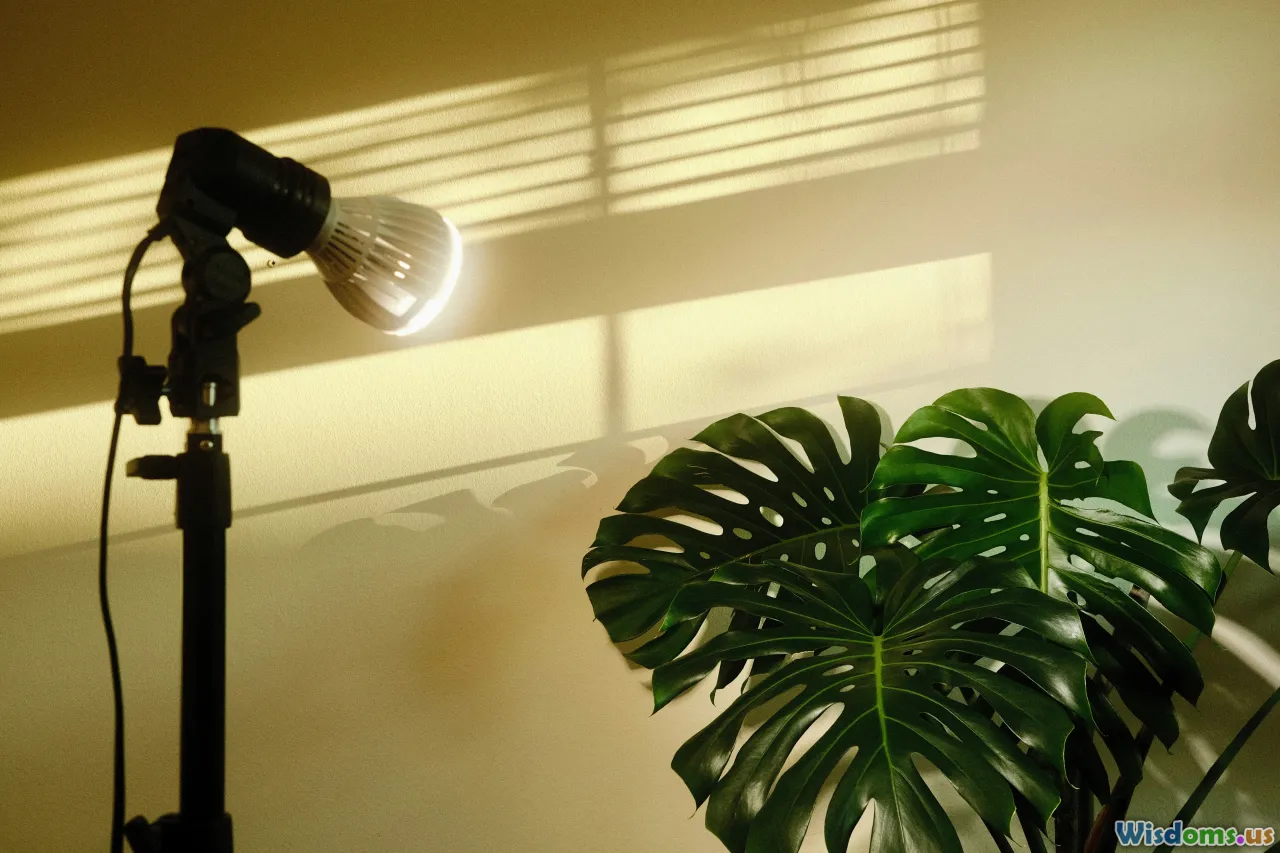
Even the best-planned shoots can be compromised by problematic lighting. Here’s how seasoned pros adapt:
Harsh Midday Sun
The worst time for most photographic endeavors may be high noon. But if you must shoot at this time:
- Use an ND (neutral density) filter to control exposure.
- Seek shade, or use architectural surfaces to reflect/soften light.
- Focus on high-contrast compositions that use the hard light for graphic effect (e.g., strong shadows on white stucco or concrete).
Interior Artificial Light Color Casts
Unmatched lamps can create color-cast chaos—some yellow, some pink, others green (from old fluorescents). Solutions:
- Shoot in RAW to adjust color temperature later.
- Add or remove bulbs to unify color temperature if possible.
- Use gels to color-correct problem lights on set.
Glare, Reflections, and Glass
Clad-glass skyscrapers look majestic in person, but can produce unwanted reflections and glare in photos.
- Use a circular polarizer filter—twist it to minimize reflections at certain angles.
- Change your shooting perspective to catch shadows and avoid front-on reflections.
- For dramatic effect, sometimes embrace the reflection: mirrored skies can augment abstract or double-exposure moods.
Lighting as a Creative Storytelling Device
The master photographers use lighting not as a passive backdrop, but as a protagonist in their compositions. Rather than merely illuminating a space, light becomes a device for visual storytelling:
- Spotlighting features: A narrow beam or window shaft can highlight a focal point—a dramatic staircase, the curvature of a roof—guiding the viewer’s eye and emotional focus.
- Creating connection: Use light as a bridge. A halo of afternoon sunlight can connect two buildings, suggesting urban unity.
- Suggesting narrative: Shadows cast by wrought iron or latticework can seem to animate a building’s exterior, hinting at stories of movement, obstruction, or the passing of time.
Example: Italian photographer Gabriele Basilico would often wait hours for the right play of shadow across Milan’s office blocks, transforming bland geometry into poetic cinematography.
Practical Lighting Setup Tips for Different Architectural Styles
Not all buildings demand the same lighting approach. Tailoring your lighting mindset elevates results.
Modern Minimalist Buildings
- Use either crisp, harsh light to highlight geometry (great for white concrete or glass) or ultra-soft light to maintain uniform surfaces and calm.
- Avoid heavy color tints; aim for natural tones unless aiming for a deliberately stylized look.
- Prioritize side lighting to exaggerate depth in sharp lines and angles.
Historical and Ornate Architecture
- Warm lighting accentuates detail: Try morning/evening sunlight or exterior warm floods.
- Low, angled sun reveals engravings and surface textures (e.g., Romanesque or Baroque facades).
- For nighttime, balance window/interior glows with subtly placed outdoor lights—too much can appear garish.
Adaptive Reuse and Industrial Style
- Expose both natural and man-made lights to tell the story of transformation: cool industrial overheads versus warm filament bulbs over social areas.
- Let some parts fall into shadow—embraces the rough, layered history of the structure.
- Use window backlight to capture silhouette of trusses and beams, invoking a sense of creative energy.
Interiors for Hospitality or Real Estate
- Combine ambient (overall room) lighting, accent lighting (spot on art or features), and task lighting (for reading/seating zones).
- Place additional lamps for balance if the built-in lighting is insufficient—avoid dark, uninviting corners unless invoking a moody atmosphere on purpose.
Essential Tools to Control and Enhance Lighting on Location
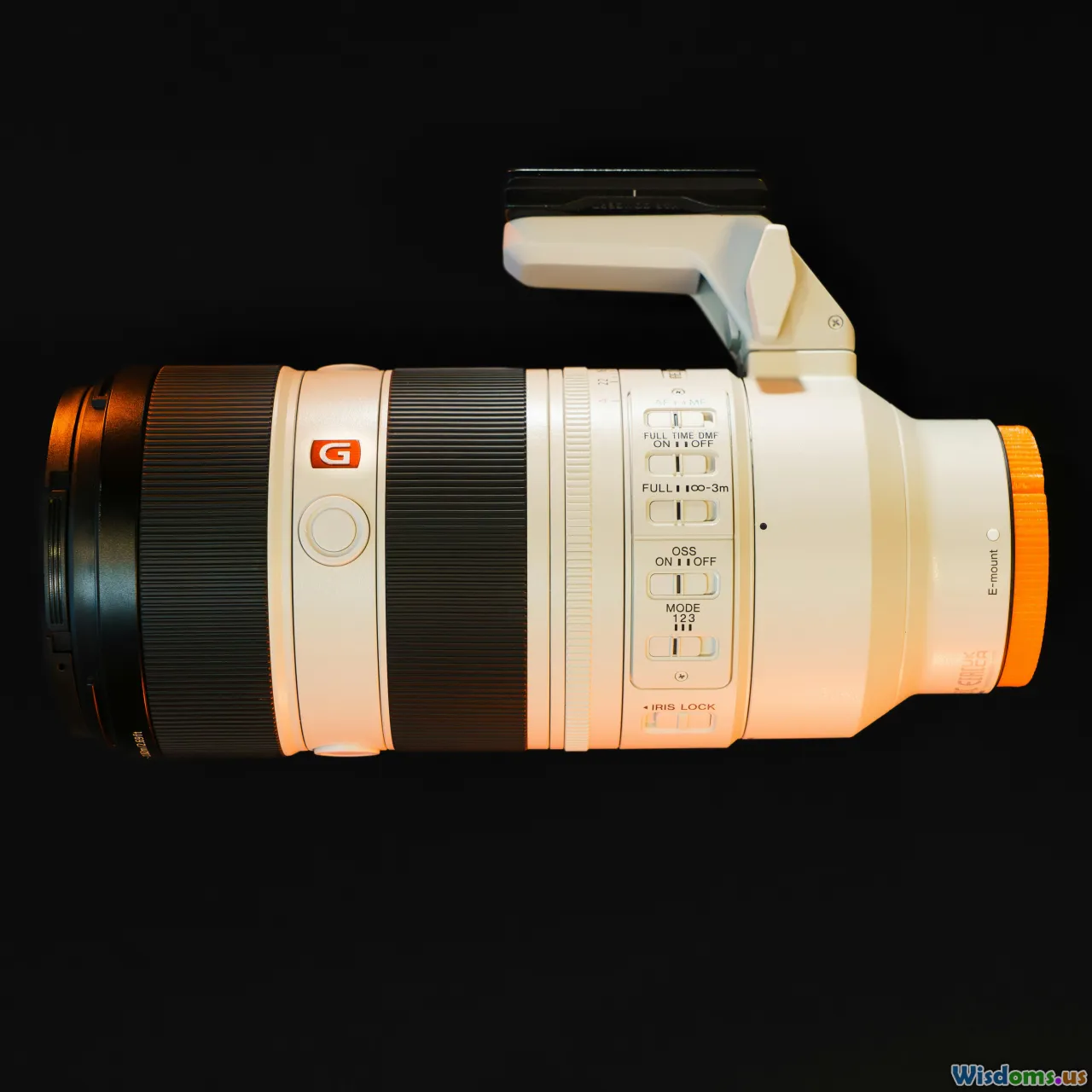
While natural and existing artificial light shape architectural photos, professional results often rely on a toolkit to fine-tune conditions.
- Tripods: Necessary for long-exposure shots under low-light or nighttime setups, ensuring crisp details.
- Reflectors and diffusers: Bounce sunlight or soften harsh shadows; affordable and portable.
- Polarizing filters: Reduce glare from windows, water, or polished stone, intensifying color saturation.
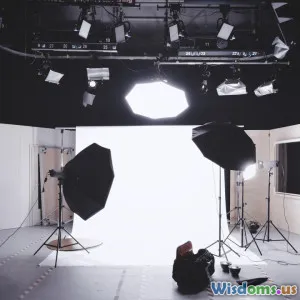
- Portable LEDs: For interiors, wireless battery-powered LED panels controllable for color and intensity are invaluable (practical for commercial or editorial work).
- Flash and strobe lights: In rare cases, adding fill with controlled flash can lift shadowy details or highlight a feature—be mindful not to flatten the scene, which counteracts architectural depth.
Curating Your Portfolio: Telling a Cohesive Lighting Story
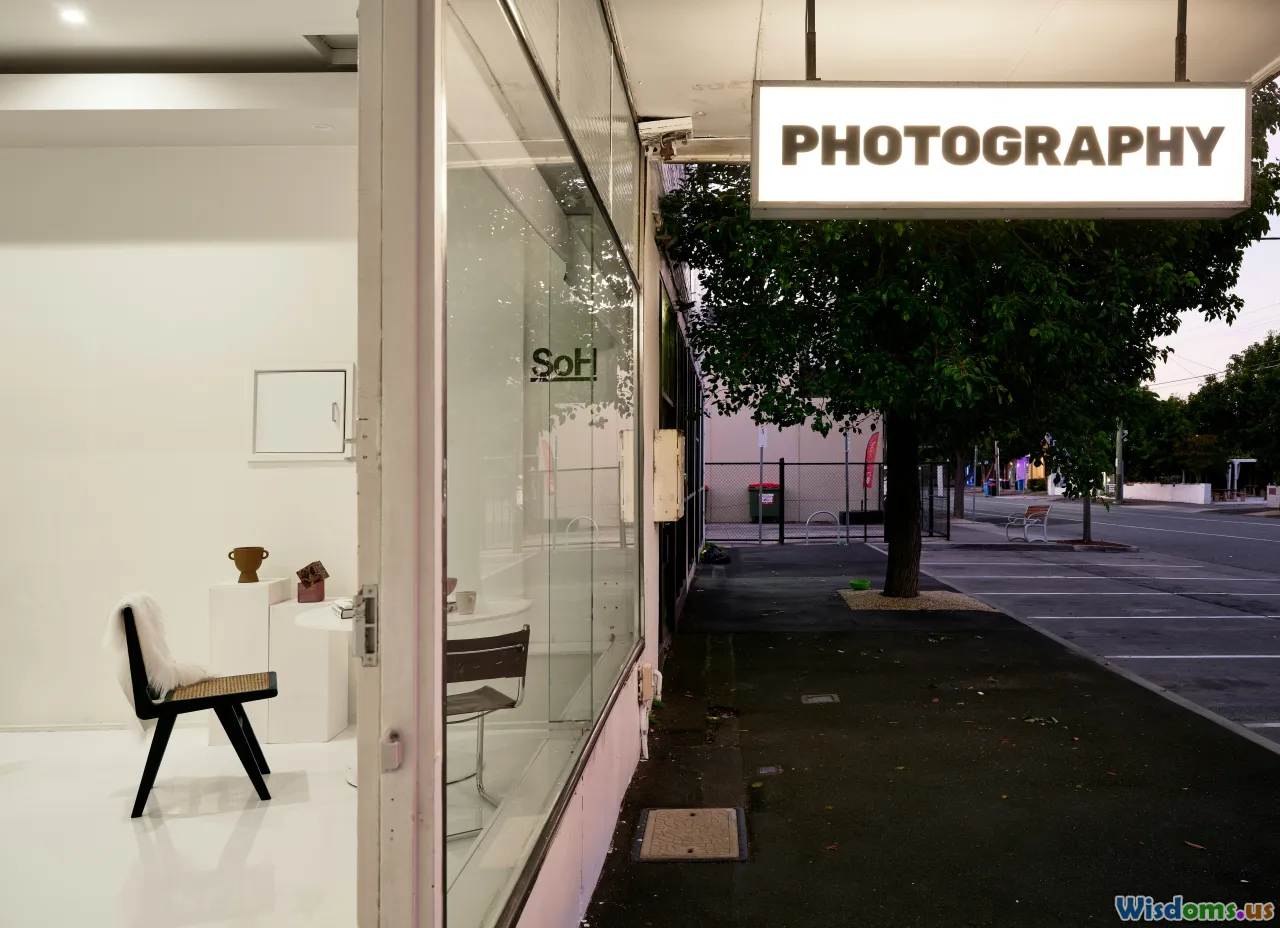
Shooting and editing with lighting in mind can make your portfolio much more compelling, not just in technical skill, but in mood and narrative continuity.
- Organize by mood: Sequence images that progress through times of day, weather conditions, or lighting intensity to evoke a journey rather than a catalog.
- Include before-and-after sets: Demonstrate transformations—a single subject, shot harshly and then atmospheric, tells more about both the building and your acumen.
- Document the unexpected: Some of your best shots may come from unpredictable lighting—fog, reflections, fleeting storms. These happy accidents show adaptation and vision.
A recent trend involves combining similar buildings across world cities—but uniting them by lighting mood, rather than architectural similarity. For example, all modernist towers aglow at blue hour, regardless of locale, pop with an electric, urban vibe across continents.
Lighting is, hands down, the most transformative element in architectural photography. Through attentive planning, creative casting of light and shadow, and strategic harnessing or modification of both natural and artificial sources, you can radically alter the emotional impact of your building photos. The next time you set out to photograph a structure, remember: the best investment you can make isn’t in more megapixels, but in becoming a sharper observer and manipulator of light. Discover your building anew, one ray at a time.
Rate the Post
User Reviews
Popular Posts