How I Turned Self Doubt Into Daily Motivation
32 min read A practical, personal framework for turning self-doubt into daily motivation through evidence-based habits, reflection prompts, and a simple progress system you can start today. (0 Reviews)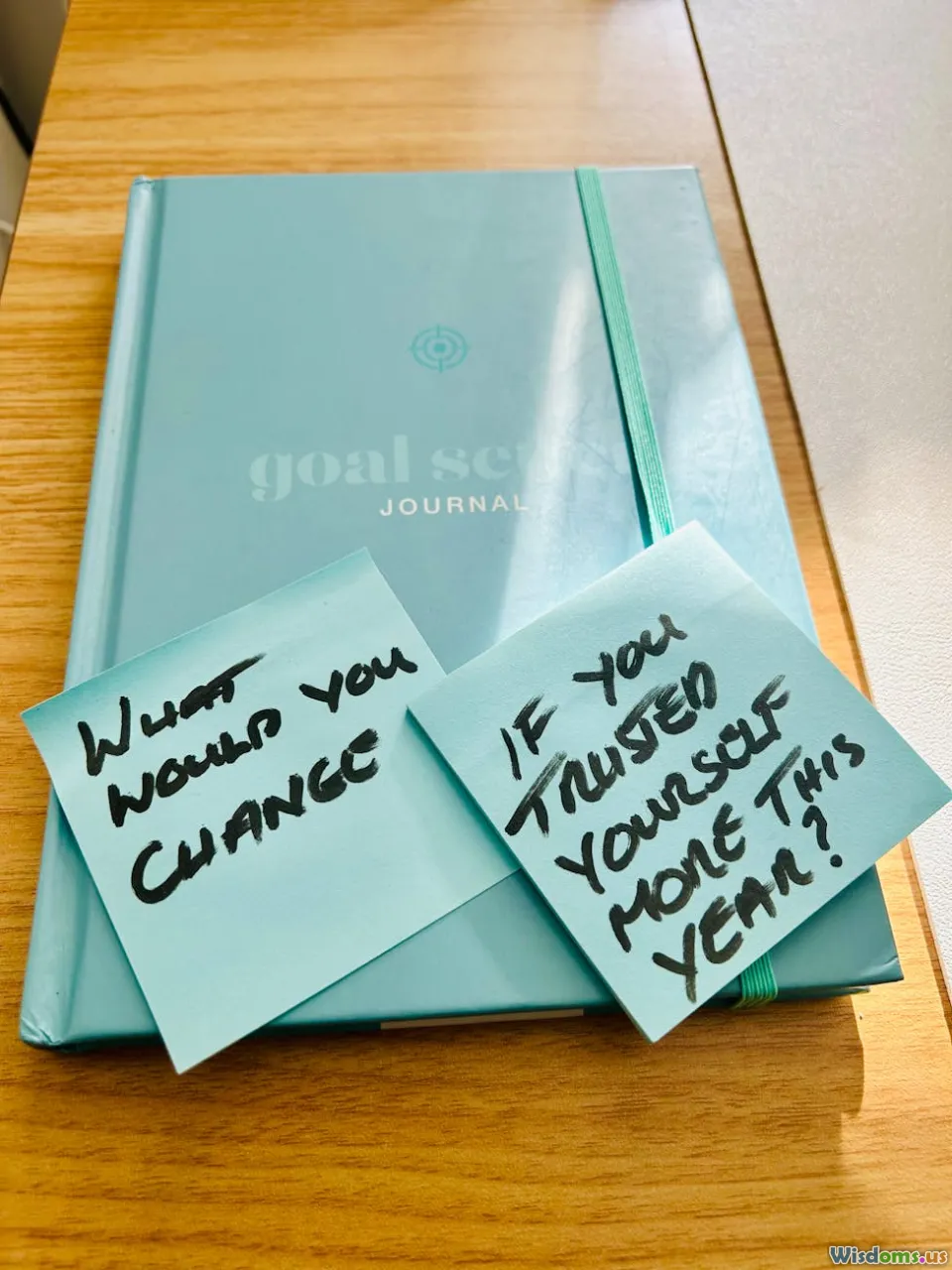
How I Turned Self Doubt Into Daily Motivation
Self doubt used to visit me like a pushy salesperson: always early, always loud, always convinced I was about to embarrass myself. It had a script for every situation. Launching a project? You are not ready. Asking for feedback? They will see you are a fraud. Even good news got discounted: You just got lucky.
One afternoon, after a particularly unproductive spiral, I wrote a single line at the top of a page: Doubt is energy with bad directions. If I could guide that energy instead of suppressing it, could I use it? The answer, it turns out, was yes. Not by wishing doubt away, but by learning to translate it into specific actions and systems.
What follows is the playbook I built to convert self doubt into daily motivation. It mixes biology, behavior design, and very practical checklists. It is not a motivational poster. It is a set of levers you can pull before, during, and after doubt shows up.
Naming the signal: what self doubt really is

Doubt feels like a mood, but under the hood it is a set of predictions and alarms. Your brain is a threat detection machine: it evolved to care more about avoiding mistakes than chasing rewards. Psychologists call this negativity bias. Behavioral research suggests we weigh potential losses roughly twice as heavily as equivalent gains. So a 10 percent chance of failing can feel bigger than a 90 percent chance of succeeding.
On stressful days, your body also adds chemistry to the mix. When you anticipate evaluation or uncertainty, the stress hormone cortisol rises; your heart rate nudges up; attention narrows. That cascade is not your enemy. It is fuel. Sprinters, surgeons, and public speakers all use that same arousal to perform. The problem is not the feeling; it is the meaning we attach to it. If you interpret the flutter as evidence you are not good enough, you withdraw. If you interpret it as a readiness signal, you engage.
One more fact helped me reframe things: impostor feelings are common. Surveys suggest most people experience them at least once in their careers. Feeling doubt does not mean you lack competence. It often means you are in a stretch zone or operating without full information. The trick is to turn the alarm into a checklist instead of a verdict.
Here is the short script I keep on a card: This feeling is a prediction, not a prophecy. Thank you, brain, for the alert. Now what exactly needs doing?
The audit: mapping triggers and patterns

Before you can redirect doubt, you need to know when and how it shows up. For two weeks, I ran a doubt audit. It took five minutes per day and paid for itself in clarity.
Use this simple template at the end of each day:
- Moment: What happened? Be specific. Example: Sent proposal to client, waited for reply.
- Doubt rating (0–10): How intense was it?
- Prediction: What did your doubt say would go wrong? Example: They will reject it because slide 8 is weak.
- Action taken: What did you do next? Example: Checked email 12 times; no revision made.
- Outcome: What actually happened?
After ten days, patterns emerge. I learned that my doubt spiked in unstructured waiting periods and near milestones. It whispered global judgments (You are not a real writer) while pointing at local details (slide 8). That combination is key: global is drama; local is data.
Make one small change based on the audit: convert global worries into local checks you can run. If your doubt says You will freeze during Q&A, your local checks might be: prepare three questions I hope they ask and three I dread; rehearse two-minute answers. If it says Your draft is messy, pick one pass to improve: verbs, transitions, or data.
The 5x5 protocol: turn anxiety into action in 25 minutes

When doubt peaks, long work sessions feel impossible. I needed a ritual that was small enough to start and strong enough to change momentum. The 5x5 protocol became my go-to.
How it works:
-
Choose one outcome that moves the project forward. Not a category like work on report, but a result like write three bullet points for the introduction.
-
Set a timer for five minutes and do a micro-task that reduces uncertainty. Examples include writing a single paragraph, outlining a slide, drafting three subject lines, or sketching a diagram.
-
When the timer ends, stand up, breathe out slowly for five seconds, and score your effort on a scale of 1–5 for focus only, not quality.
-
Repeat for five rounds, each with a tiny, specific outcome that advances the last one.
-
After round five, log: one sentence about what moved, one sentence about what still feels unclear, and one sentence on the very next five-minute task for tomorrow.
Example: I had to write a pitch email I had been avoiding for three days.
- Round 1: Drafted three possible opening lines.
- Round 2: Sketched the value proposition in one sentence.
- Round 3: Listed two social proofs and one clear ask.
- Round 4: Wrote a subject line and a P.S.
- Round 5: Proofread once, sent to friend for quick eyes.
By the end, the email existed. My doubt was still muttering, but it no longer controlled the day. The key insight: progress is a mood changer. While motivation can start work, work more often starts motivation.
Building a minimum viable win system

Grand ambitions collapse under daily doubt because they do not produce feedback fast enough. I built a system around minimum viable wins (MVWs): the smallest, objectively measurable unit of success that compounds.
Guidelines for designing your MVW:
- Make it binary. Did or did not. Example: Wrote 200 new words, not worked on my novel.
- Tie it to output you control, not outcomes you cannot. Example: Pitched one client daily, not landed a client daily.
- Keep it finishable in 30–60 minutes most days.
- Track it where you can see streaks.
My writing MVW is simple: publish one useful idea daily on a platform I control or submit one pitch. Some days that is a 400-word note, other days a deeper piece. The output is public or sent, not endlessly polished in private. Why it works: the brain loves completion. Each checkmark is a small reward that reinforces identity: I am someone who ships.
Add a weekly MVW too. For me: one long-form draft per week. If I miss a day of daily MVWs, the weekly target protects momentum. If I hit my daily streak but the weekly draft is thin, I raise the quality bar for the next cycle.
Rewriting self-talk with evidence-based scripts
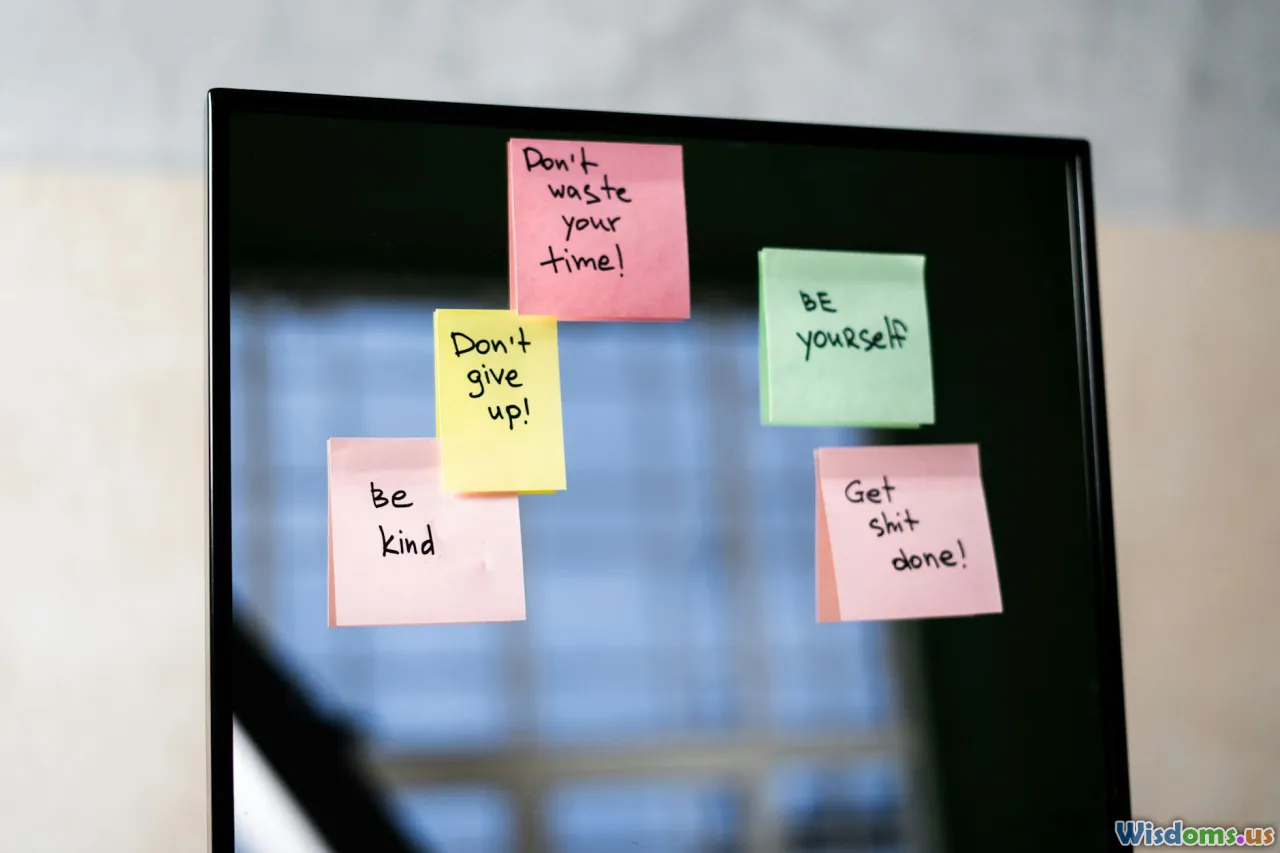
Telling yourself to be confident rarely helps. Rewriting self-talk does, especially if you use cognitive reframing and implementation intentions.
-
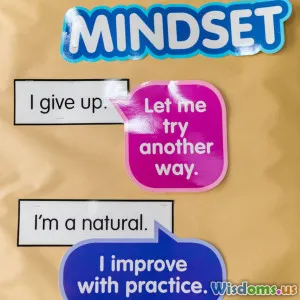
Cognitive reframing: Replace global, absolute statements with specific, testable ones. Instead of I always mess up presentations, try When I present without a structured outline and practice, I lose my place. I will create a two-page outline and rehearse twice.
-
Implementation intentions: If-then plans that connect a cue to a specific action. Research on goal attainment shows these significantly increase follow-through. Example: If I feel the urge to check email while drafting, then I will write the next two sentences first and set a 10-minute timer before checking.
I keep a list of common doubt scripts and my rewrites:
-
Doubt: You do not know enough to start.
- Rewrite: Start with what I know; list three things I do not and schedule one 20-minute research block.
-
Doubt: People will judge your voice.
- Rewrite: Some people will not like it; my job is to help the ones who do. Draft three possible tones and pick one.
-
Doubt: You are behind peers.
- Rewrite: Benchmark by time invested, not timeline. Spend 45 minutes on the next page today.
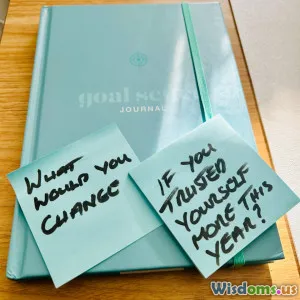
Write yours on a sticky note or in your notes app. The goal is not positive thinking; it is correct thinking attached to concrete actions.
Make feedback safe and scalable

Doubt thrives in isolation. But raw, unstructured feedback can be worse than none; it can amplify the wrong fears. I built a lightweight feedback loop with guardrails.
-
Define the question. Instead of Can you take a look?, ask three specifics: Where is this confusing? What is missing for you to say yes? What line made you want to keep reading?
-
Time-box reviews. Ask for 10-minute reads with one paragraph of notes. People will say yes more often, and you will get sharper signals quickly.
-
Use a rubric. For slides, I ask reviewers to score: clarity of main message (1–5), evidence quality (1–5), and next-step clarity (1–5). Numbers are not perfect, but they guide revisions without turning it into a referendum on me.
-
Separate creation from criticism. I do not read feedback the same hour I ship. I schedule a 20-minute review block the next day, when the emotional heat is lower.
When I sent a course outline to three peers with the rubric above, two gave me 3s on evidence quality and both flagged the same missing case study. Fixing that single hole lifted the whole product. My doubt had been focused on tone; the data redirected me to substance.
Using friction and fuel: environment design

Motivation is not only a feeling; it is a property of your environment. Design your space and tools so that movement toward your target is easy and movement toward distraction is harder.
-
Pre-load your runway. Before you end a work block, leave a one-sentence next action at the top of your document. Tomorrow's friction drops.
-
Turn off easy dopamine. Put your phone in another room during focus blocks; use website blockers for your top three time sinks. A 10-second delay to open a distracting app is often enough to break the trigger.
-
Place cues in the open. Keep your planner, outline, or sketchpad visible. Seeing the start line lowers start-up cost.
-
Curate your tools. I maintain a separate browser profile for deep work with only research tools and docs. Social feeds live elsewhere. Switching contexts now requires a deliberate step.
-
Use a threshold ritual. I light a small desk lamp only for writing; when it is on, I am in session. Your cue could be a playlist, a standing desk change, or a countdown. It is Pavlovian on purpose.
The confidence ledger: data over drama

Emotions are loud. Data whispers, but it compounds. I built a confidence ledger: a single page that tracks inputs I can control and outputs I hope to influence, so that I can calibrate effort and recognize real progress.
My ledger has three sections:
- Inputs (daily): MVW done (Y/N), deep work minutes, outreach count, learning minutes.
- Outputs (weekly): posts published, client replies, leads created, draft word count.
- Ratios (monthly): reply rate per 10 outreaches, publish streak, promise-keeping ratio (promises made vs. kept).
The promise-keeping ratio matter surprised me. It is a measure of integrity to myself. Even when outcomes lag, keeping 85–90 percent of my self-commitments builds trust in my own word, which is the substrate of confidence. If the ratio falls below 70 percent, I do not try to power through; I shrink my commitments until I can keep them again. The goal is not to impress; it is to rebuild reliability.
You do not need fancy software. A single-page spreadsheet or a simple tracking app works. Review it weekly to update goals. You are teaching your brain that your efforts produce effects, which counters learned helplessness and fuels motivation.
Recovery is a skill: sleep, nutrition, and movement

One reason doubt hijacks motivation is fatigue. When you are tired or under-fueled, your prefrontal cortex (the part that plans and regulates impulses) is less effective, and stress signals feel bigger. Treat recovery like part of the job, not a luxury.
-
Sleep: Aim for 7–9 hours per night on a regular schedule. Sleep loss impairs attention, memory, and emotional regulation. A consistent wind-down routine beats scrolling. I use a 45-minute digital sunset: messages off, lights low, paper book on the nightstand.
-
Movement: Even a 10–20 minute brisk walk can lift mood and sharpen attention. Across a week, target about 150 minutes of moderate activity and two short strength sessions. I keep a kettlebell near the desk and do three sets between meetings.
-
Nutrition: Try not to ride a blood sugar roller coaster. Build meals around protein, vegetables, and slow carbs. Keep a glass of water in reach; mild dehydration can sap energy and concentration.
-
Micro-recovery: Between intense blocks, take a 60–90 second downshift. Exhale slowly for longer than you inhale, look at something distant, and relax your shoulders. These tiny resets lower arousal without costing you momentum.
When I protect recovery, my doubt shrinks by itself because my capacity to meet challenges grows. It is not a mystery; it is biology.
The social contract: public micro-commitments

Motivation multiplies when someone expects something of you. Not harsh judgment; simple accountability. I built tiny public commitments into my week to create mild, positive pressure.
-
Weekly check-in: Every Friday, I post a short update to a small group of peers: one win, one challenge, one priority for next week. It takes five minutes. The mere act of declaring a priority makes me more likely to act on it Monday.
-
Office hours: I host a 30-minute open session once a week where I show 10 minutes of work in progress and answer questions. The date on the calendar pulls work forward.
-
Shared tracker: My friend and I maintain a shared spreadsheet with our MVWs and streaks. We do not comment, we just see each other's checkmarks. The visibility is enough.
-
Light commitment device: If I miss a public deliverable without a legitimate reason, I donate a small amount to a neutral cause. It is not punitive; it is a nudge to keep promises.
Be careful to keep the circle small and supportive. This is about shared standards, not shame.
Handling setbacks: a three-sentence postmortem

Self doubt shouts loudest after a miss. A clear, quick postmortem prevents the miss from becoming a story about your identity. I use a three-sentence rule within 24 hours of any setback.
-
What happened, precisely? No adjectives. Example: Missed Tuesday's publishing target; posted Wednesday instead.
-
What was the root cause I control? Example: Scheduled two back-to-back calls that ate my writing window; did not leave a next action ready.
-
What is the smallest fix I will test? Example: Block Tuesday 8:30–9:30 as a meeting-free writing slot; end Monday by writing the first three bullet points for Tuesday's post.
That is it. No character judgments, no sweeping vows. If it repeats, increase the weight of the fix: set a calendar rule, ask a teammate to hold you to it, or shrink the target. The point is to convert setbacks into design inputs, not self-criticism fuel.
Three comparison lenses that deflate doubt

Comparison is a prime engine of doubt. A little reframing refracts it into motivation.
-
Timeline lens: Compare today's you to last quarter's you, not to someone else's decade. Keep a list of before-and-after snapshots: first draft speed, outreach comfort, average focus time. Seeing your own curve builds patience and pride.
-
Process lens: Compare your process to a gold standard, not your outcomes to someone else's highlight reel. Ask: Have I executed the five key behaviors this week? If not, fix the process before you judge the result.
-
Constraint lens: Compare like with like. A parent writing in 45-minute blocks is playing a different game than a full-time creator. Acknowledge constraints and design within them. This is maturity, not excuse-making.
I once benchmarked my posting schedule against a creator with a team of three. My doubt called me lazy. When I shifted to the constraint lens, I realized I was shipping more per hour invested. That changed the emotion from shame to satisfaction, and paradoxically it unlocked more output.
From hesitation to habit: the one-minute doorframe rule

Starting is often the hardest part. I added a silly-sounding ritual that works: the one-minute doorframe rule. Before walking into my office each morning, I touch the doorframe and say out loud one tiny action I will complete before touching my phone. Example: Write the opening sentence for today's post. Then I do it as soon as I sit.
It takes less than 60 seconds, but it snaps me into agency. Once the first chip falls, the rest are easier. If you do not have an office, choose a threshold you cross daily: a coffee maker, a specific chair, or the end of a commute.
The daily script you can steal

Rituals beat willpower. Here is the practical script I use to transmute doubt into motion. Tweak it to taste.
Morning (15–25 minutes)
- Two-minute brain check: Name the primary doubt sentence you woke up with. Write it down.
- Translate to task: Ask, what is the local check hiding inside this global worry? Write one concrete task. Example: Select three case studies for slide 8.
- 5x5 block: Do the first five-minute chunk. No email. No polish. Just move the ball.
- Set the cue: Leave a one-sentence next action at the top of your doc. Put your phone in the other room. Turn on your focus cue (lamp, playlist, timer).
Midday (5–10 minutes)
- Micro-review: Look at your confidence ledger. Mark MVWs done; plan one more block if capacity allows.
- Fuel and move: Drink water; take a five-minute walk or stretch.
Afternoon (20–40 minutes)
- Feedback or outreach: Send one piece of work to a reviewer with three precise questions, or send one outreach message.
- Recover: Two minutes of slow breathing; close three browser tabs you do not need.
Evening (10 minutes)
- Three-sentence log: What moved? What is still unclear? What is tomorrow's first tiny action?
- Environment reset: Put your tools where tomorrow-you can see them. Turn off notifications for the night.
This script is not magic; it is a scaffold. You do not have to feel like doing it. You just have to do the first minute.
A case study: turning a launch spiral into a checklist

A recent project brought all my old doubts roaring back: launching a small course. In the past, I would obsess over perfecting modules while avoiding the announcement. This time, I applied every lever above.
-
Audit: I noticed my doubt spiked when I imagined the email replies: who are you to teach this? I wrote the local check hiding inside: Do I have three concrete outcomes learners will achieve? I wrote them and added one example to each.
-
5x5: I spent 25 minutes writing three versions of the opening paragraph and choosing one. Then I drafted three subject lines.
-
MVW: Daily, I had to publish one piece about a problem the course solves. That rhythm built an audience without hype.
-
Scripts: If I feel the urge to rebuild the landing page again, then I will send one personal invite first.
-
Feedback: I sent the sales page to two buyers from previous products with a rubric: clarity (1–5), risk reversal (1–5), and specificity of outcomes (1–5). Both flagged that the refund policy was buried. I moved it up.
-
Environment: I used a separate browser profile for launch tasks only. Social apps were walled off.
-
Ledger: I tracked inputs (pitches sent, posts shipped) and outputs (replies, preorders). Mid-week, replies lagged. Instead of spiraling, I saw that my outreach count was low. I raised it by five per day.
-
Recovery: I protected sleep, skipped late-night tweaks, and took a walk before writing copy each morning.
The result was not viral magic; it was steady progress. The launch met its modest target by day six. More importantly, I never lost the week to analysis paralysis. Doubt showed up; it just did not drive.
Why this works: aligning biology with behavior

Underneath the tactics is a simple model:
- Doubt is a prediction engine trained on threats. It narrows attention and spikes arousal.
- If you treat it as a verdict, you freeze and seek short-term relief (scrolling, over-preparing endlessly).
- If you treat it as a signal to clarify and act, you convert arousal into focus and accumulate evidence of competence.
The systems above exploit reinforcement loops. Small wins deliver dopamine that rewards the behavior of starting, not just finishing. Visible streaks leverage identity: you keep showing up because you are the kind of person who shows up. Implementation intentions reduce choice overload at the moment of friction. Environmental design reduces the cost of the right action and raises the cost of the wrong one. Data tracking teaches your nervous system that effort leads to effect, which quiets alarm bells over time.
None of this requires perfect feelings. It requires repeating small, specific actions until the shape of your day changes.
Self doubt still knocks on my door. But now, when it arrives, I hand it a clipboard: help me check the edges. Then I get on with the work. That is the quiet conversion I wish for anyone reading this: less theater, more traction; less waiting to feel ready, more designing to get ready. The feeling of motivation follows the motion you create. And you can start that motion today, in five minutes or less.
Rate the Post
User Reviews








Popular Posts