
Uncovering Hidden Biases in Data Collection Methods
28 min read A strategic guide to spotting and correcting hidden biases in data collection methods, with practical checks, examples, and tools to improve data quality, fairness, and decision-making. (0 Reviews)
Data rarely arrives as a neutral snapshot of reality. It is a reflection of who was asked, who was counted, what instruments were used, when and where they were deployed, and which incentives shaped participation. Hidden biases in data collection are often subtle—more omission than commission—but they can cascade into product misfires, unfair policies, and brittle models. The good news: with the right playbook, you can anticipate, detect, and substantially reduce these distortions before they harden into “ground truth.”
Why hidden biases start at the point of collection

When teams talk about bias, attention tends to land on modeling and algorithms. Yet the strongest predictor of downstream fairness is usually upstream design. Data collection is where assumptions crystalize: which populations are reachable, what definitions become operational, and how humans and sensors turn messy events into tidy records.
Three realities make data collection uniquely bias-prone:
- Coverage is never perfect. Any sampling frame—voter rolls, app users, store receipts, social media scraping—excludes people by design (e.g., those without smartphones). That’s a coverage bias waiting to happen.
- Incentives skew participation. People with more time, stronger opinions, or more to gain tend to respond at higher rates, driving nonresponse bias and self-selection bias.
- Instruments are not context-free. Question wording, enumerator presence, device calibration, and time-of-day all shape what gets recorded, introducing measurement error and systematic distortion.
Once these biases appear, subsequent steps (cleaning, modeling, optimization) often mask their origins. You can negotiate a better sampling plan; you cannot “optimize” your way out of a missing population.
A field guide to common collection biases

Understanding the taxonomy helps you diagnose early and respond precisely.
- Coverage bias: Your sampling frame omits parts of the target population. Example: recruiting via an iOS app excludes Android-only users and non-smartphone owners, often correlated with income, age, or geography.
- Selection bias: The process that enrolls participants is correlated with the outcome. Example: an exercise study drawing volunteers from a gym membership list.
- Nonresponse bias: Invitees differ systematically from respondents. Example: busy shift workers are less likely to answer phone surveys about transit usage, undercounting off-peak travel.
- Survivor bias: Only successful or persistent units remain observable. Example: app telemetry collected only from users who did not churn in the first week.
- Measurement bias: The instrument or question format yields systematically wrong values. Example: a food-frequency questionnaire that conflates “snacks” and “meals,” depressing reported calorie intake.
- Interviewer and social desirability effects: Respondents alter answers to look good or to please the questioner. Example: underreporting of alcohol consumption in face-to-face surveys.
- Mode effects: Web, phone, SMS, and in-person modes elicit different behaviors. Example: sensitive questions often see higher disclosure online.
- Temporal bias: The window of collection distorts behavior. Example: foot-traffic sensors during holiday season overestimate baseline retail volume.
- Geographic bias: Hotspots where collection is easier dominate the sample. Example: city service complaints cluster in neighborhoods with higher app adoption.
- Instrumentation drift: Devices or protocols change midstream. Example: a firmware update that alters sensor sampling frequency.
- Labeling bias: Annotators apply ambiguous guidelines inconsistently across subgroups. Example: offensive-language labels differing by dialect.
These biases often compound. A smartphone-based survey run during business hours (temporal) using only English (coverage) that recruits on social media (selection) will miss non-English speakers, older adults, shift workers, and people without particular platforms—all before a single model is trained.
Real-world examples you can’t ignore

- Smartphone-reported potholes in affluent areas: A widely cited municipal experiment used an app to detect potholes from accelerometer data. Reports skewed to neighborhoods with higher smartphone penetration and newer cars—creating an allocation bias in maintenance resources. The data problem was not the sensor; it was who had the sensor.
- Early pandemic COVID testing: Initial testing data reflected who had access to tests and health care, not true incidence. Affluent and urban counties were overrepresented in early counts, which complicated modeling of spread and resource planning.
- Fitness wearables and health research: Studies based on wearable data underrepresent older adults, people with certain disabilities, and lower-income populations less likely to own such devices. This skews baselines for step counts, sleep quality, and heart rate variability.
- 311 complaint data and policing: Complaint-based dispatch data can mirror reporting behavior more than underlying incidents. Neighborhoods with greater trust in authorities or better access to reporting channels generate more data, fueling feedback loops in resource allocation.
- Voice recognition underperforming on certain accents: Data sets scraped from podcasts or call centers overrepresent standard accents and underrepresent regional or non-native accents. Even with large volumes, the coverage gap leads to unequal performance.
- Telematics in auto insurance: Driving data collected via connected cars or smartphone apps often excludes older vehicles and drivers unwilling to share data. Risk estimates from such programs may not generalize to the full insured population.
Each example stems from upstream design choices: channel, instrumentation, and recruitment. The remedy is not merely to “add more data,” but to rebalance who and what gets measured.
Designing collection to minimize bias: a practical playbook

Build bias prevention into the plan, not as an afterthought.
- Define the true target population and use cases
- Write down: Who must this data represent? Specify age ranges, languages, geographies, device access, and usage contexts.
- Identify “critical minorities” whose accurate representation is business-critical (e.g., safety-critical edge cases, underserved customers, or high-risk subgroups).
- Choose a sampling strategy that reflects reality
- Stratified sampling: Partition the population into meaningful strata (region, device type, income bands, usage tiers) and sample within each. Set minimum quotas for small but crucial strata.
- Oversample rare but important cases: For safety incidents, fraud cases, or rural regions, purposefully oversample to achieve adequate power; correct later with weights.
- Multi-mode recruitment: Combine channels—app push, SMS, phone, in-person intercepts, mailers—to reduce mode-specific biases.
- Reduce barriers to participation
- Accessibility: Offer multiple languages, screen-reader compatibility, large fonts, and low-bandwidth options.
- Timing: Collect across time zones and hours, including nights/weekends, to capture shift workers and diverse routines.
- Incentives: Use equitable incentives (cash cards, data bundles, transit credits) tailored to the segment to improve response rates without skewing participation to only those motivated by high payouts.
- Standardize instruments
- Pilot test question wording across demographics; use cognitive interviews to uncover misinterpretation.
- Provide enumerator training with scenario-based practice and scripts; rotate enumerators across sites to randomize interviewer effects.
- Calibrate sensors before deployment; lock firmware versions for the study or record device metadata to adjust in analysis.
- Pre-register protocols and document deviations
- Predefine primary outcomes, sampling frames, and stopping rules. Maintain an audit trail when logistics force changes (e.g., temporary shift to online-only collection).
- Run a small, adversarial pilot
- Invite a cross-functional “red team” to try to break your design: Where would coverage fail? Which group would opt out? What failure modes could instrumentation introduce?
- Instrument the pilot to capture paradata (time to complete, breakoff points), then fix friction hotspots.
Diagnostics: quantify and surface bias while collecting

Treat bias like any other quality metric with thresholds and alerts.
- Coverage heatmaps: Compare respondent distributions to reference population benchmarks (e.g., census, customer registry) for key attributes. Visualize gaps by geography, age, device type, or language.
- Divergence scores: Compute simple measures like Population Stability Index (PSI) or Jensen–Shannon divergence between sample and reference marginals. Flag segments where divergence exceeds thresholds.
- Response propensity modeling: Build a quick model predicting response/nonresponse from available covariates. High variance across subgroups signals bias; use predicted propensities later for weighting.
- A/A tests: If you rely on sensors or platform telemetry, run parallel “A/A” cohorts to detect instrumentation drift. Unexpected differences imply hidden collection effects.
- Back-checks and recontacts: Re-interview a random 5–10% subset with a different mode or enumerator to verify consistency; discrepancies pin down interviewer or mode bias.
- Time-slice audits: Plot key metrics by hour/day/week. If nighttime responses look systematically different, you may be missing daytime populations or vice versa.
- Missingness maps: Characterize patterns of missing data by field and subgroup. Nonrandom missingness in sensitive fields (e.g., income) requires targeted follow-up or revised prompts.
Build these diagnostics into a live dashboard during collection so you can adjust recruitment and fieldwork on the fly.
Correcting what you can: reweighting, imputation, and selection models

Post-collection fixes are imperfect but valuable.
- Raking (iterative proportional fitting): Adjust sample weights so marginal distributions match known population totals (age, region, gender). Works best when key covariates are observed.
- Propensity score weighting: Use the inverse of estimated response probabilities to upweight underrepresented respondents. Stabilize weights to avoid high-variance estimates.
- Calibration with external data: Anchor to administrative records (e.g., enrollment files, store counts) when available. For IoT, calibrate outputs using lab benchmarks.
- Multiple imputation: For missing values under a Missing at Random assumption, impute multiple plausible values and pool estimates; include auxiliary variables predicting missingness.
- Selection models: When participation correlates with outcomes (Not Missing at Random), use models like Heckman selection or instrumental variables. Interpret with care and provide sensitivity bounds.
- Bounds and stress tests: Report best-case/worst-case estimates under plausible bias scenarios (Manski bounds). If findings flip under reasonable assumptions, prioritize recollection.
Correction cannot manufacture signal from an unobserved subgroup. When key segments are missing entirely, the only honest fix is more (and different) data.
Human-in-the-loop: labeling and annotation without hidden skews

Data labeling is itself a form of data collection.
- Clear, tested guidelines: Provide concrete, diverse examples and counterexamples for each label, including edge cases across dialects, cultures, and contexts.
- Diverse annotator pools: Recruit annotators across geographies, languages, and demographics that reflect users. Measure annotator coverage; don’t assume a platform’s worker pool is representative.
- Double-blind and multi-rater design: Use at least two independent labels per item; adjudicate disagreements with expert review. Track inter-rater reliability (Cohen’s kappa, Krippendorff’s alpha) by subgroup.
- Manage anchoring and drift: Randomize item order, inject gold-standard items, and provide periodic calibration tasks. Monitor bias by annotator and over time.
- Incentives and time constraints: Underpaid, rushed annotators take shortcuts. Pay fairly, cap session length, and include mandatory breaks to sustain quality.
- Active learning with guardrails: When sampling items for labeling, ensure exploration includes minority cases; avoid reinforcing prior model biases by only labeling items the model flags as uncertain within the majority distribution.
Label quality compounds or alleviates prior collection biases. Treat it with the same rigor.
Instrument and sensor bias in an IoT and mobile world
Sensors promise objectivity but bring their own skews.
- Optical bias: Devices using infrared reflectance can fail on darker skin tones without proper calibration. This was famously seen in automatic soap dispensers and can translate to face or hand tracking.
- Microphone and acoustics: Background noise, microphone quality, and room acoustics distort audio capture. Speech systems trained on studio-quality audio underperform in noisy environments.
- Sampling frequency and resolution: Lower-cost devices may downsample signals, missing short-duration events (e.g., micro-accelerations indicating potholes).
- Battery and power-saving modes: Phones under low battery throttle sensors and network activity, systematically reducing data during long days or low-resource contexts.
- Device heterogeneity: Android fragmentation, different camera sensors, and OS updates create noncomparability across devices unless you record detailed device metadata and calibrate.
- Placement effects: A pedometer in a pocket behaves differently than one on the wrist; vehicle telematics changes if the phone sits in a cup holder versus a mount.
Mitigations: run lab calibrations against references, tag and model device context, standardize firmware where feasible, and triangulate with multiple sensors (e.g., combine GPS with accelerometer and Wi-Fi signals).
A/B tests and bandits: exploration bias and peeking pitfalls

Even experiments can collect biased data if designed carelessly.
- Unequal exposure across segments: If randomization ignores key strata, minority groups may receive too few exposures for precise estimates, encouraging “one-size-fits-most” rollouts.
- Early stopping and peeking: Stopping a test when the overall average looks good can mask harms to subgroups (Simpson’s paradox). Use sequential methods with alpha spending or pre-specified decision rules.
- Bandit algorithms: While optimal for short-term reward, bandits reduce exploration in minority segments, starving you of data to assess fairness. Consider stratified bandits or constrained exploration to guarantee coverage.
- A/A/B for instrumentation: Before testing treatments, run A/A/B with identical experiences but different logging paths to detect measurement asymmetries.
- CUPED and covariate adjustment: Reduce variance by adjusting for pre-experiment covariates, but audit that covariates are measured similarly across groups.
In short, experiments are not immune to collection bias; they simply put it in a lab coat.
Governance, ethics, and transparency

Bias mitigation is as much process as it is technique.
- Consent and purpose limitation: Be explicit about what you’re collecting and why. Avoid fishing expeditions that increase privacy risk without improving quality.
- Data documentation: Publish data cards or sheets for your datasets covering origin, collection methods, known limitations, and intended use. Include sampling frames, response rates, and known undercoverage.
- Privacy and fairness trade-offs: Techniques like differential privacy add noise that can disproportionately affect small groups. Run fairness-aware privacy analyses to avoid silencing minorities.
- Access controls and audit logs: Track who can edit collection instruments and when protocols changed. Preserve immutable logs of survey versions and sensor configs.
- Review boards: For sensitive data, use internal ethics reviews or IRB-like oversight, especially when dealing with health, vulnerable populations, or consequential decisions.
- Legal compliance: Consider GDPR’s fairness and transparency principles, state-level biometric laws, and sector-specific regulations. Compliance will not guarantee fairness, but noncompliance guarantees trouble.
A 10-point bias discovery checklist teams can run this week
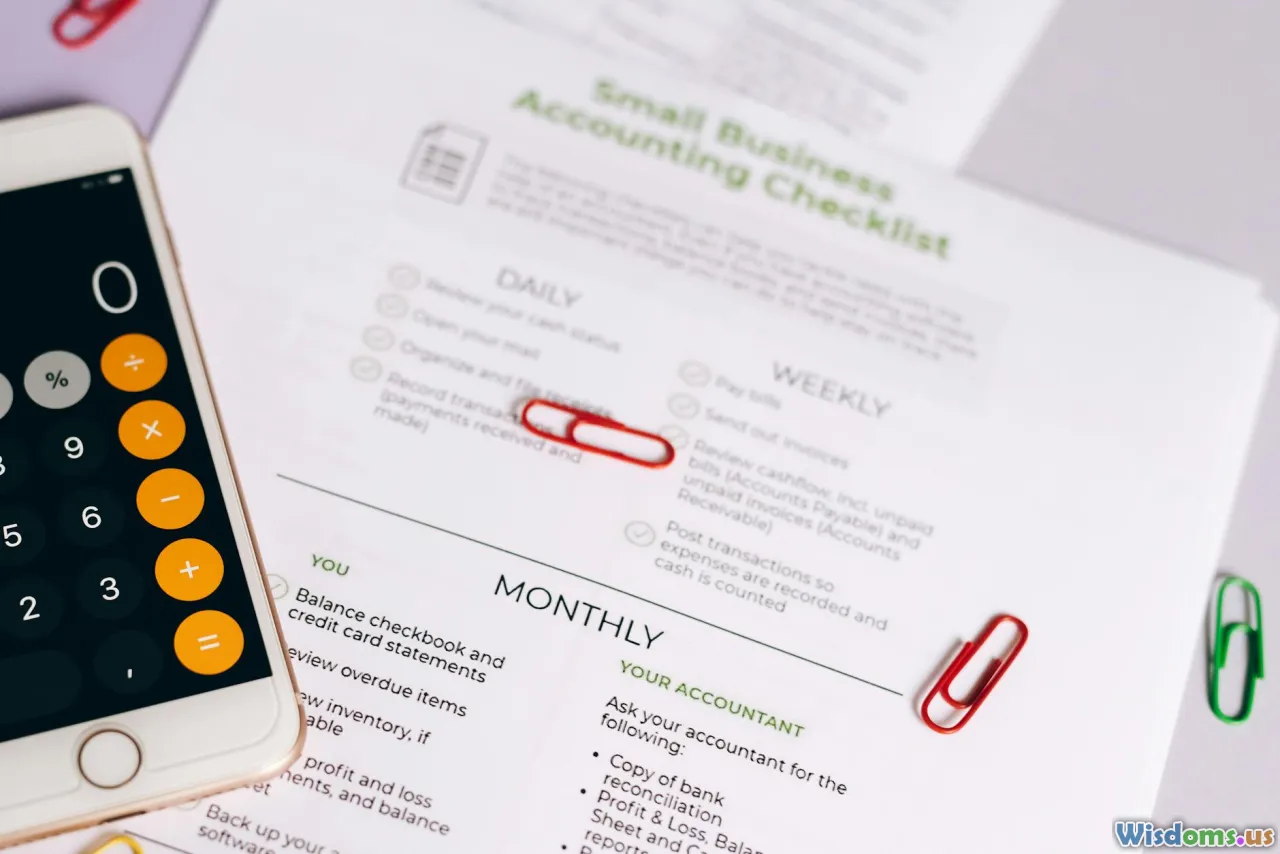
- Write a one-paragraph statement of your target population and critical minorities.
- List your sampling frame(s) and who they exclude; propose at least one complementary frame.
- Identify three potential nonresponse drivers and design countermeasures (timing, incentives, language).
- Define five baseline coverage metrics (age, gender, device, region, language) and set alert thresholds.
- Build a minimal dashboard to monitor sample vs. benchmark distributions in real time.
- Plan a 5–10% back-check or recontact with a different mode or enumerator.
- Specify sensor calibration steps and record device metadata fields.
- Draft labeling guidelines including edge cases; schedule a kappa check after the first 500 labels.
- Pre-register your primary outcomes and stopping rules; schedule a mid-collection review with a red team.
- Prepare a one-page data card template to fill as the study concludes.
Brief comparison: survey, platform telemetry, and scraped data

Different collection methods come with characteristic biases and mitigation strategies.
-
Surveys
- Typical biases: Nonresponse, social desirability, mode effects, recall bias.
- Strengths: Flexible questions, can reach non-digital populations via mail/phone/in-person, controllable sampling.
- Mitigations: Mixed-mode designs, incentives, careful wording, memory aids, interviewer training, raking.
-
Platform telemetry (app/web logs, IoT streams)
- Typical biases: Coverage (only users), survivorship (active users), device effects, time-of-day skews, firmware drift.
- Strengths: Large scale, passive capture, behavioral truth over recall.
- Mitigations: Device metadata logging, A/A tests, stratified sampling of events, cross-device validation, user consent flows that do not deter particular groups.
-
Scraped/open web data
- Typical biases: Availability bias (content that’s easy to scrape), overrepresentation of vocal communities, missing demographic ground truth, platform policy changes.
- Strengths: Breadth, organic language, fast cadence.
- Mitigations: Source diversification, deduplication, robust de-biasing with careful sampling and manual audits; avoid treating scraped content as representative of a population without explicit scope limits.
No method is bias-free. Choose on purpose, and combine methods to offset weaknesses where feasible.
What good looks like: a sample plan for an inclusive mobility study

Imagine a city wants to understand weekday mobility to redesign bus routes and bike lanes. Here’s an inclusive plan that anticipates and mitigates bias.
-
Target population: Residents aged 16+, including people without smartphones, non-English speakers, shift workers, and people with mobility impairments.
-
Sampling frames and recruitment
- Transit intercepts at major bus and train hubs during morning, midday, evening, and late night.
- Household mailers with QR codes plus phone hotline in five languages.
- App-based prompts to registered transit card users, with opt-in consent and low-data versions.
- Partnerships with community organizations (senior centers, disability advocates) to reach underrepresented groups.
-
Instrumentation and modes
- Short survey (10 minutes) covering trip purpose, modes, constraints, and alternative choices if route changes.
- Optional 48-hour GPS travel diary with a loaner device for those without smartphones; provide portable chargers to reduce battery bias.
- Enumerators trained to assist respondents with disabilities; surveys available in large print, screen-reader friendly web format, and via phone.
-
Sampling design
- Stratify by neighborhood, time-of-day block, age group, language, and disability status.
- Oversample segments with historically low response (e.g., late-night workers, residents in broadband deserts).
- Quotas: Minimum 200 completes per small neighborhood, 100 for each language group, and 150 for late-night time blocks.
-
Bias diagnostics during fielding
- Live dashboard comparing respondent distributions to census and transit cardholder data.
- PSI thresholds of 0.1 for age and 0.2 for neighborhood; alerts trigger reallocating intercept teams.
- Paradata collection: completion time, device type, breakoff location; A/A checks on GPS diary logging to catch device issues.
-
Post-collection adjustments
- Raking to align with census age, household vehicle ownership, and disability statistics.
- Propensity weighting using contact mode, time-of-day, and neighborhood amenities.
- Multiple imputation for income and trip purpose where missingness is correlated with survey length.
-
Reporting and governance
- Data card detailing sampling frames, response rates by stratum, device metadata, and known limitations (e.g., winter season effects).
- Public summary that clearly distinguishes between measured behavior and modeled estimates, with uncertainty ranges.
This plan recognizes that a bus schedule built on a commuter-only dataset fails night-shift hospital staff; a bike plan derived only from fitness app data misses low-income riders on older phones. Starting inclusive beats retrofitting fairness later.
The mindset shift: treat data collection like product design

The fastest way to reduce bias is cultural: make collection a first-class product with discovery, roadmaps, metrics, and user research. Borrow habits from great product teams:
- Define clear acceptance criteria: “At least 95% coverage of neighborhoods within ±3 percentage points of census; minimum of 150 completes in each non-English language.”
- Do pre-mortems: Ask, “A year from now, why did our results mislead us?” Then build mitigations into the plan.
- Run user tests of instruments: Watch five people from different segments complete your survey or install your app; fix the rough edges you observe, not just the ones you imagined.
- Invest in observability: Telemetry for collection itself—versioned forms, device logs, enumerator IDs—so you can trace anomalies to their source.
- Celebrate course corrections: Shifting resources mid-collection to close a gap is a win, not an admission of failure.
When you treat data collection as a designed experience for real humans using real devices in real contexts, bias becomes a measurable, manageable risk rather than a vague, post-hoc regret. The payoff is not only fairer systems but also sharper insights and sturdier decisions that stand up when the world shifts under your feet.
Rate the Post
User Reviews
Other posts in Scientific Research & Methodology






Popular Posts