Why Firearms Training is Crucial for Family Preppers
29 min read Why structured firearms training enhances safety, confidence, and legal readiness for family preppers, with best practices for storage, mindset, and scenario planning. (0 Reviews)
When people talk about preparedness, they often picture water barrels, first-aid kits, and backup power. Yet for many families, the decision to include a firearm in their plan raises the stakes in a different way: it introduces a tool that can save a life if used well or cause preventable tragedy if handled poorly. That is why firearms training is not optional for family preppers; it is the operating system for any household that chooses to include a firearm in its resilience plan. Done right, training turns fear into confidence, confusion into protocols, and isolated skills into an integrated family safety culture.
Prepared, Not Paranoid: What It Really Means for Families
Preparedness is not a bunker mentality. It is a family-centered strategy to reduce risk and recover from disruptions, whether those disruptions are as routine as a power outage or as severe as a natural disaster. A firearm can be one layer in that strategy, but it is never the only layer. Training helps you place it appropriately in the hierarchy of options:
- Avoidance: Improving lighting, trimming shrubs around windows, reinforcing doors, and using neighborhood watch groups reduce the likelihood you will ever face a violent encounter.
- Deterrence: Visible cameras, alarm signs, and a large dog may convince opportunistic criminals to move on.
- De-escalation: Verbal skills and social intelligence help turn conflicts into conversations.
- Last resort: A firearm is a tool of last resort when an immediate threat to life cannot be otherwise stopped.
Training reframes a firearm from a talisman to a responsibility. Families who build a training plan acknowledge that simply owning a tool is not readiness. Readiness is the ability to manage it safely, legally, and ethically under stress.
Consider a common prepping scenario: a prolonged storm knocks out power for days, communications are spotty, and police response times are stretched. A well-trained family does not become a vigilante team. Instead, they follow pre-discussed protocols: doors remain locked, everyone knows who handles what, flashlights are staged, the safe remains secured but accessible, and any potential threat is first handled with communication, observation, and restraint. The firearm is part of a disciplined plan, not a substitute for one.
The Case for Training: Evidence, Laws, and Real Outcomes

Training is not about bravado; it is about reducing foreseeable harm. National injury surveillance data consistently show that unintentional firearm injuries send thousands of people to emergency departments in the United States each year. Public health research has also found that safe-storage practices are associated with lower rates of unintentional injuries and youth suicides. In short, the way people handle and store firearms matters.
From a legal standpoint, many jurisdictions require training to obtain a permit to carry or to purchase certain types of firearms. These requirements are not obstacles; they are baselines. A quality course covers state statutes on use of force, transport laws, and child access prevention rules. Knowing this material protects your family from both tragedies and legal pitfalls. Traveling across state lines without understanding reciprocity or safe-transport rules, for example, can turn a well-intentioned trip into a legal emergency.
Real outcomes are shaped by decisions made long before a crisis. Consider two households that both experience an attempted break-in. In one home, the firearm is unsecured, a family member panics, and the situation spirals with accidental muzzle flagging and poor communication. In the other home, the gun remains secured until a legitimate threat is identified; their training kicks in with verbal commands, safe muzzle discipline, and a call to 911. The difference is not luck. It is preparation.
Safety Fundamentals Every Family Should Master
Any discussion of firearms training must begin with safety. The following principles are widely taught across reputable programs and form the non-negotiable core of responsible ownership:
- Treat every firearm as if it is loaded at all times.
- Never allow the muzzle to point at anything you are not willing to risk harming.
- Keep your finger off the trigger until your sights are on a verified target and you have made a conscious decision to fire.
- Be sure of your target, its surroundings, and what lies beyond and around it.
These rules are deliberately redundant. If one fails, the others still prevent catastrophe. Families should rehearse them until they become habit, especially for the designated adult(s) who handle the firearm.
Equally crucial is safe storage. Options include lockable cases, rapid-access safes, and full-size safes rated for fire and theft. The right choice balances speed of access for responsible adults with absolute denial of access to unauthorized users, especially children and visitors. Use both a locked container and a locking device that disables the firearm when practical. Ammunition should be stored separately according to manufacturer guidance and local law. Adopt a closed-loop habit: when the firearm leaves the safe, announce it to the household adults as part of a two-person accountability check, and when it returns, confirm that it is secured.
Families should also learn how to verify that a firearm is unloaded safely, using a method taught in a certified class and appropriate to the specific design. This is not something to guess at or improvise. Learn it in person, demonstrate it under instructor supervision, and practice it routinely with the magazine and chamber visually and physically checked in a controlled environment.
Age-Appropriate Education: Talking to Kids About Firearms
Children are curious. Pretending firearms do not exist is not a safety plan. Age-appropriate education reduces risk and demystifies the unknown.
- Early childhood: Teach the safety mantra in simple steps. If a child encounters a firearm at a friend’s house or in any unsupervised setting, they should stop, do not touch, leave the area, and tell a trusted adult. Practice these steps like a fire drill so they become automatic.
- School-age children: Reinforce boundary-setting and the reasons behind house rules. Emphasize that rules apply everywhere, not just at home. Role-play what to do if a peer pressures them to break those rules.
- Teenagers: As maturity and judgment develop, carefully introduce supervised education that emphasizes the same core safety rules adults use. Even if a teen will never handle a firearm, walk them through safe behavior if they are ever in a room where one is present: do not touch, create distance, and call an adult.
Parents should also have frank conversations with other parents before playdates. Ask politely about the presence and storage of firearms in the home. This is no different from asking about swimming pools, allergies, or media rules. If the answer is vague or uncomfortable, change the plan. A confident, unapologetic safety culture prioritizes children over awkwardness.
Building a Responsible Training Plan

A solid plan is structured, progressive, and realistic. Think in phases and integrate legal, medical, and communication skills alongside technical firearms handling.
- Baseline legal knowledge: Start with a state-specific course on self-defense law, transport, storage, and reporting requirements. Laws change; set a calendar reminder to review updates annually.
- Medical competence: Enroll in a Stop the Bleed class or equivalent first-aid training that covers hemorrhage control and trauma response. A tourniquet and pressure bandages are as essential as the safe itself.
- Technical orientation: Take a certified firearms safety and handling course that fits your chosen platform. Ensure the class includes range time, instructor-supervised manipulation, and a strong safety culture.
- Family protocols: Document roles, communication plans, and safe word or phrase conventions for emergencies. Decide who does what and who does not do what.
- Practice cadence: Plan short, regular refreshers rather than rare marathons. A 30-minute session every other week is more effective for skill retention than a single annual range trip.
Avoid online-only shortcuts. Video content can supplement but not replace in-person coaching from a qualified instructor who can correct unsafe habits on the spot. Aim for courses with low student-to-instructor ratios and clear safety briefings. If a class normalizes shortcuts or jokes about safety, find another.
Scenario Thinking Without the Hollywood Tactics

You do not need to train like a movie character to be prepared. Instead, focus on practical decision-making and communication under stress.
- Decision tree: Write down criteria for what constitutes an immediate threat to life. Agree on steps to verify identity before reacting. In a power outage, for example, assume that a noise could be a family member returning late. Use voice first: Who is there? Identify yourself. Flip on lights.
- Distance and barriers: Learn to use time and space to your advantage without seeking confrontation. Lock a bedroom door, rally family members to a designated safer room, and call 911 from a position of cover. None of these require advanced tactics; they require foresight.
- Communication with responders: Practice what to say when calling 911 and, if appropriate in your jurisdiction, what to do when officers arrive. Clear, calm information reduces confusion and risk. For example, plan to say that you are the homeowner, wearing specific clothing, and that you will follow all instructions. If a firearm is involved, be prepared to state where it is secured and comply fully.
- Emotional control: Breathing exercises and basic stress-management techniques reduce tunnel vision and help you access your training. The best tool in a crisis may be calm thinking.
This kind of scenario planning raises the floor of competence without turning your home into a training ground for confrontation.
Legal and Ethical Boundaries for Family Defenders

Carrying or staging a firearm for defense is as much a legal responsibility as a practical one. Know these pillars:
- Use-of-force laws: Learn how your state defines reasonable fear, imminence, proportionality, and duty to retreat. Stand-your-ground and castle doctrine provisions vary widely. A good class will cover not only black-letter law but also how prosecutors and juries think about these issues.
- Brandishing and threats: Understand that displaying a firearm to intimidate can be a crime in many jurisdictions unless justified under very specific circumstances.
- Child access prevention: Many states impose criminal penalties if a child gains access to an improperly stored firearm. Separate from the letter of the law, an ethical duty exists to prevent unauthorized handling.
- Reporting and aftermath: If a defensive incident occurs, know the process for calling 911, interacting with law enforcement, and contacting legal counsel. Families should pre-identify an attorney or legal resource familiar with self-defense cases.
Ethics matter too. Even if a use of force might be lawful, it could still be unwise or unsafe given bystanders, uncertainty, or potential misidentification. Training helps you build the judgment to say not today when avoidance or retreat is a safer choice.
Equipment Choices and Upkeep for Non-enthusiasts
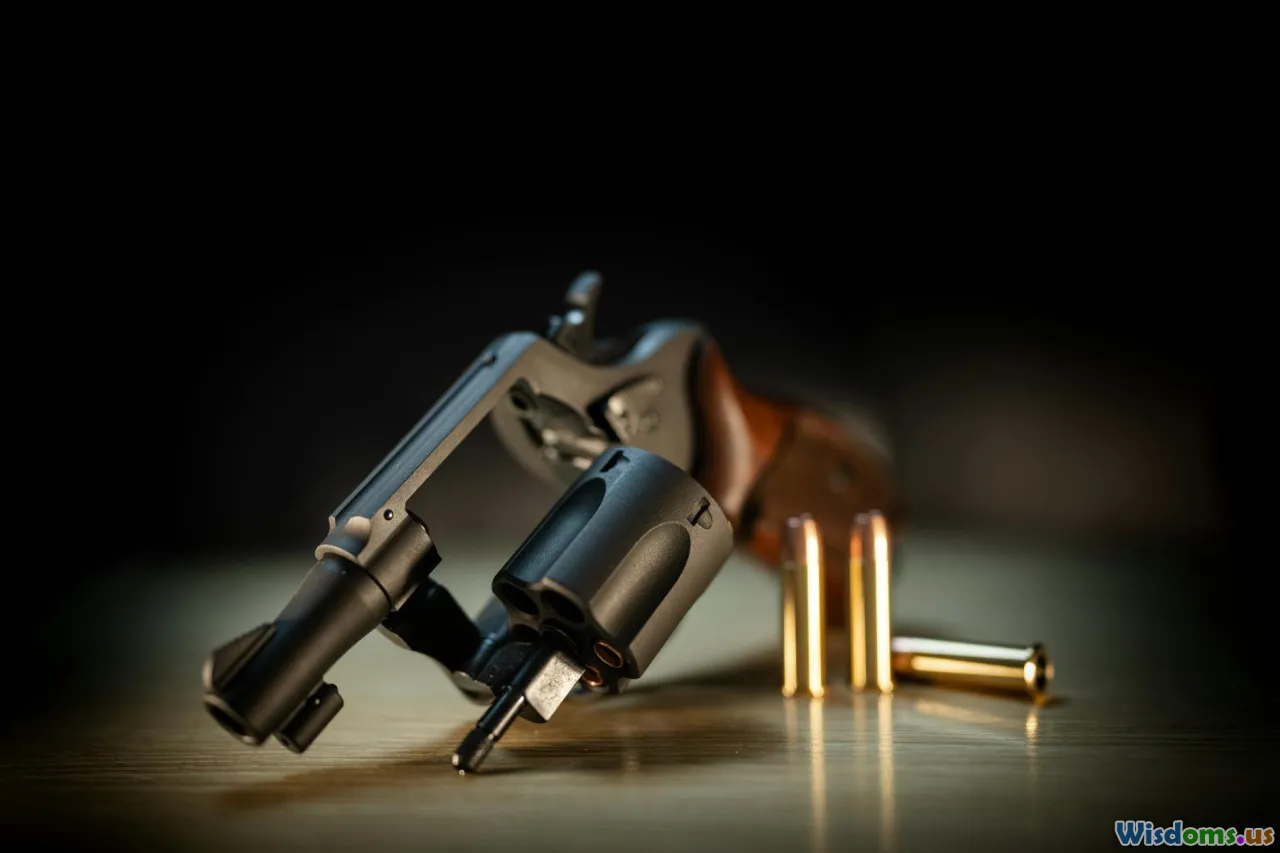
If you include a firearm in your plan, choose with humility and simplicity. Your goal is reliability, ease of use under stress, and compatibility with training.
- Fit and ergonomics: Select a platform that household adults can manipulate safely and consistently, including racking, loading, and managing recoil under instruction. Comfort and control beat trendiness.
- Reliability and support: Favor widely supported, reputable manufacturers with abundant training resources and service options. Replacement parts, magazines, and holsters should be easy to find.
- Sights and lighting: A quality white light for identifying what you are looking at can be more important than aesthetic upgrades. Never shoot at shadows.
- Storage and quick access: Invest in a rapid-access safe that you can reliably open under stress, even in the dark. Train to lock the firearm immediately after any non-emergency handling.
- Maintenance: Build a simple schedule—quick wipe and function check after handling or practice, and a more thorough cleaning at regular intervals. Keep a log of dates, round counts if you practice live fire, and any malfunctions to discuss with an instructor or gunsmith.
Resist the gadget spiral. Training, not accessories, makes the difference.
Integrating Medical Preparedness With Firearms Training
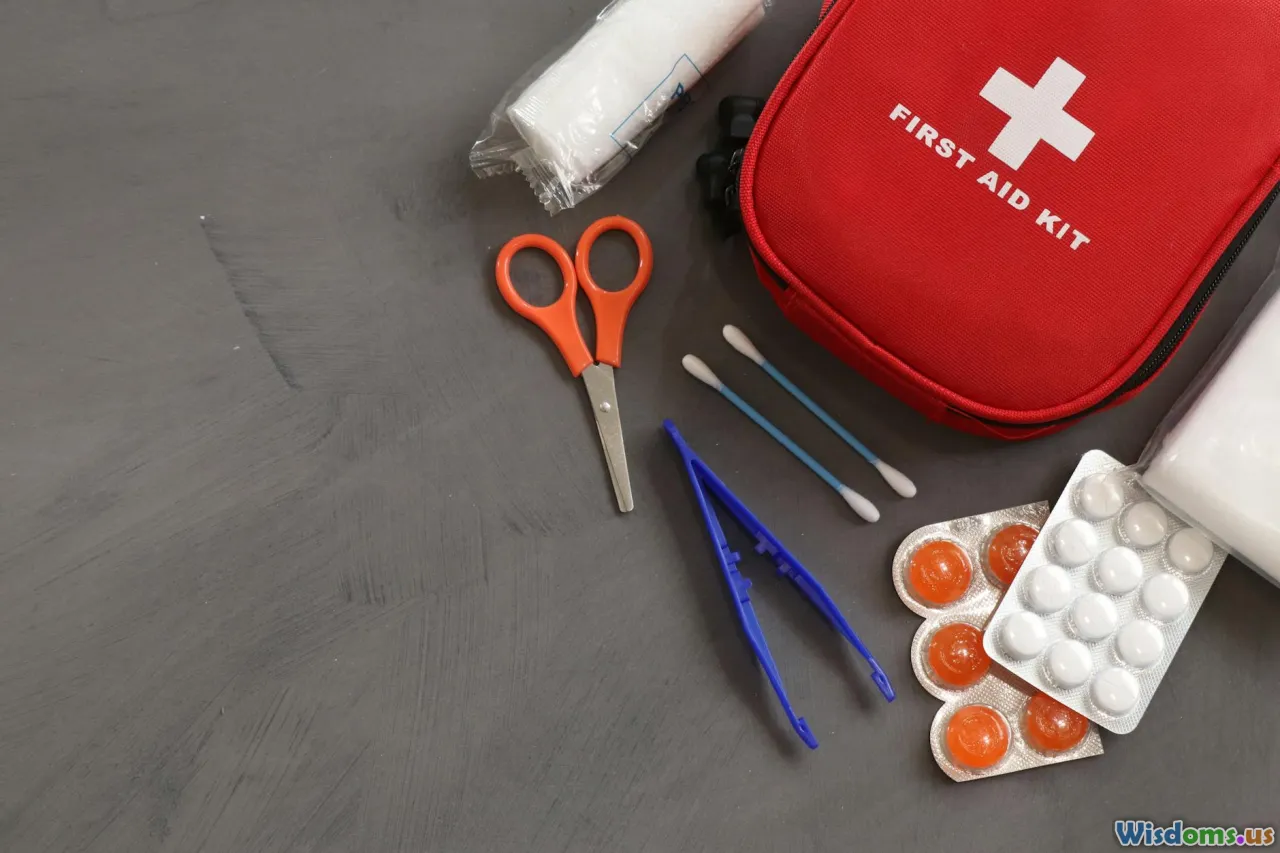
Trauma care belongs in every family prep plan. If you prepare for low-probability, high-consequence events, you should also prepare to render aid.
- Skills to prioritize: Direct pressure, tourniquet application for severe limb bleeding, and wound packing for junctional bleeds are the core competencies taught in mainstream courses like Stop the Bleed. These skills are evidence-based and widely endorsed.
- Equipment: Maintain a small trauma kit near your safe and in your range bag. Include at least a commercial tourniquet approved by medical bodies, pressure bandages, gauze for wound packing, gloves, and a marker to note time of tourniquet application. Check expiration dates and replace used or outdated items.
- Drills and placement: Practice deploying your kit quickly and one-handed. Store kits in consistent, clearly labeled locations. All responsible adults and older teens in the household should know where kits are and how to use them.
Medical training does not encourage risky behavior; it mitigates risk everywhere—home, road, playground, or trail.
Drills That Build Safety and Confidence (Without the Tacticool)

Focus on drills that reinforce judgment, safety, and consistency. Keep them deliberate, brief, and supervised where appropriate.
- Safety check routine: Before any handling session, rehearse a no-ammunition protocol in a separate, well-lit space. Confirm a clean area, remove distractions, and run a verbal checklist. End each session by securing the firearm immediately.
- Inert training tools: Use dedicated inert training devices or snap caps for any manipulation practice. Clearly mark them and store them away from live ammunition. This allows you to practice safe handling without risk.
- Staging discipline: Practice accessing and locking the safe with a timer to measure repeatable, calm movements. You are not racing; you are building reliable access under pressure.
- Communication drill: Pair with another adult to practice verbal commands and 911 call scripts. Rotate roles so everyone gets comfortable speaking clearly and listening under mild stress.
- Safe movement at home: Walk your typical nighttime route with a flashlight to identify trip hazards and improve light-switch placement. The goal is safer movement, not confrontation.
Log your sessions. Short, consistent practice engrains safe habits more effectively than occasional marathons.
Prepping Is a Team Sport: Roles, Checklists, and Communication
Clarity under calm conditions creates safety under stress. Treat your family like a crew with defined roles and checklists.
- Roles: Decide who handles what in emergencies. One adult may focus on gathering children to the safer room, another on communication with 911, and another on securing the home. Avoid overlapping roles that cause confusion.
- Code words and signals: Choose a simple phrase that signals lock doors and rally quietly. Pick a different phrase that means all clear. Rehearse these quarterly.
- House rules: No surprises. If an adult plans to clean or handle a firearm, they announce it to other adults. Visitors are told the house does not handle or display firearms casually.
- After-action reviews: When a storm or alarm event passes, hold a short family debrief. What went well? What needs to change? Treat it like maintaining a car—routine, matter-of-fact, and focused on improvement.
Families that practice clear communication rarely need heroics.
Budgeting and Measuring the ROI on Training

A common objection is cost. But compared to the investment in food storage, generators, or home upgrades, smart training is relatively affordable—and it pays dividends across multiple risk categories.
- Costs to expect: A basic safety course, a legal seminar, and a medical class might collectively cost less than a weekend trip. A quality rapid-access safe is a one-time purchase that protects for years.
- Smart allocation: Prioritize education and storage over accessories. Spend first on safe storage, then on training, then on modest maintenance supplies. Resist rare-use gadgets.
- Measuring value: Track near-misses you prevent—like identifying a false alarm before it escalates—and the confidence your family reports. Skills in communication, first aid, and decision-making translate to everyday life, from car accidents to natural disasters.
- Ongoing maintenance: Set aside a small monthly line item for training refreshers, range fees if applicable, and medical kit replenishment. Predictable, modest expenses are easier to sustain than sporadic splurges.
Your return on investment shows up in competence, not in clever gear.
Finding Quality Instruction and Community Support

Not all training is created equal. Vet instructors and communities with the same rigor you apply to child care or medical providers.
- Credentials and reputation: Look for instructors certified by recognized organizations, with transparent bios and references. A good instructor emphasizes safety, law, and judgment as much as mechanics.
- Class structure: Favor courses with written safety procedures, a clear curriculum, and realistic student-to-instructor ratios. Observe a class if possible before enrolling.
- Culture fit: Seek communities—ranges, clubs, or preparedness groups—that are inclusive, safety-focused, and open to families. You should feel comfortable asking questions without being mocked or rushed.
- Continuing education: Combine firearms training with broader resilience skills such as CPR, disaster psychology, and emergency communications. A well-rounded preparedness community cross-trains.
If training becomes a chance to collect selfie-worthy moments instead of building judgment, it is the wrong fit. Keep the mission clear: protect life and reduce risk.
Common Myths That Training Debunks
- Myth: Owning a firearm automatically makes a household safer. Reality: Safety hinges on storage, handling, and decision-making. Without training, risk can increase.
- Myth: Training creates a warrior mentality. Reality: Quality training emphasizes avoidance, de-escalation, and legal limits. It tempers ego rather than feeds it.
- Myth: A single course is enough. Reality: Skills decay. Regular refreshers maintain competence and judgment.
- Myth: Talking to kids about guns encourages interest. Reality: Clear, age-appropriate rules reduce curiosity-driven handling and improve safety.
- Myth: Accessories solve problems. Reality: People solve problems through preparation, practice, and restraint. Gadgets cannot replace judgment.
By challenging myths, families shift from assumption-based safety to evidence-based safety.
A Practical Roadmap to Start This Month

Week 1
- Research state laws on storage, transport, and use of force from official sources. Make a one-page household summary.
- Price and select a rapid-access safe appropriate to your home and living situation.
Week 2
- Enroll in a certified firearms safety course and a Stop the Bleed or equivalent medical class.
- Draft simple family roles, code words, and an emergency contact card for wallets and backpacks.
Week 3
- Receive your safe, mount it per manufacturer guidance, and stage your trauma kit nearby.
- Conduct a household lighting walk-through. Fix burned-out bulbs and identify dark corners.
Week 4
- Attend your courses. Schedule a 30-minute practice block on your calendar for the same day and time every two weeks.
- Hold a family safety talk. Rehearse kid rules, adult roles, and 911 call scripts.
By month’s end, you will not only own equipment—you will own a plan.
Preparedness is about caring for the people you love when the world gets messy. If your family includes a firearm in that mission, training is the bridge between intent and outcomes. It aligns your tools with your values, gives you language for hard moments, and keeps safety at the center of your plan. When storms pass and lights come back on, you will remember not dramatic scenes but calm voices, clear steps, and a family that practiced readiness together. That is what it means to be prepared, not paranoid—and it is a legacy worth building.
Rate the Post
User Reviews




Popular Posts