Why Indian Families Prioritize Extended Family in Child Rearing
27 min read Explore cultural, economic, and practical reasons Indian families involve extended kin in child rearing, with examples of joint families, caregiving by grandparents, and evolving urban trends. (0 Reviews)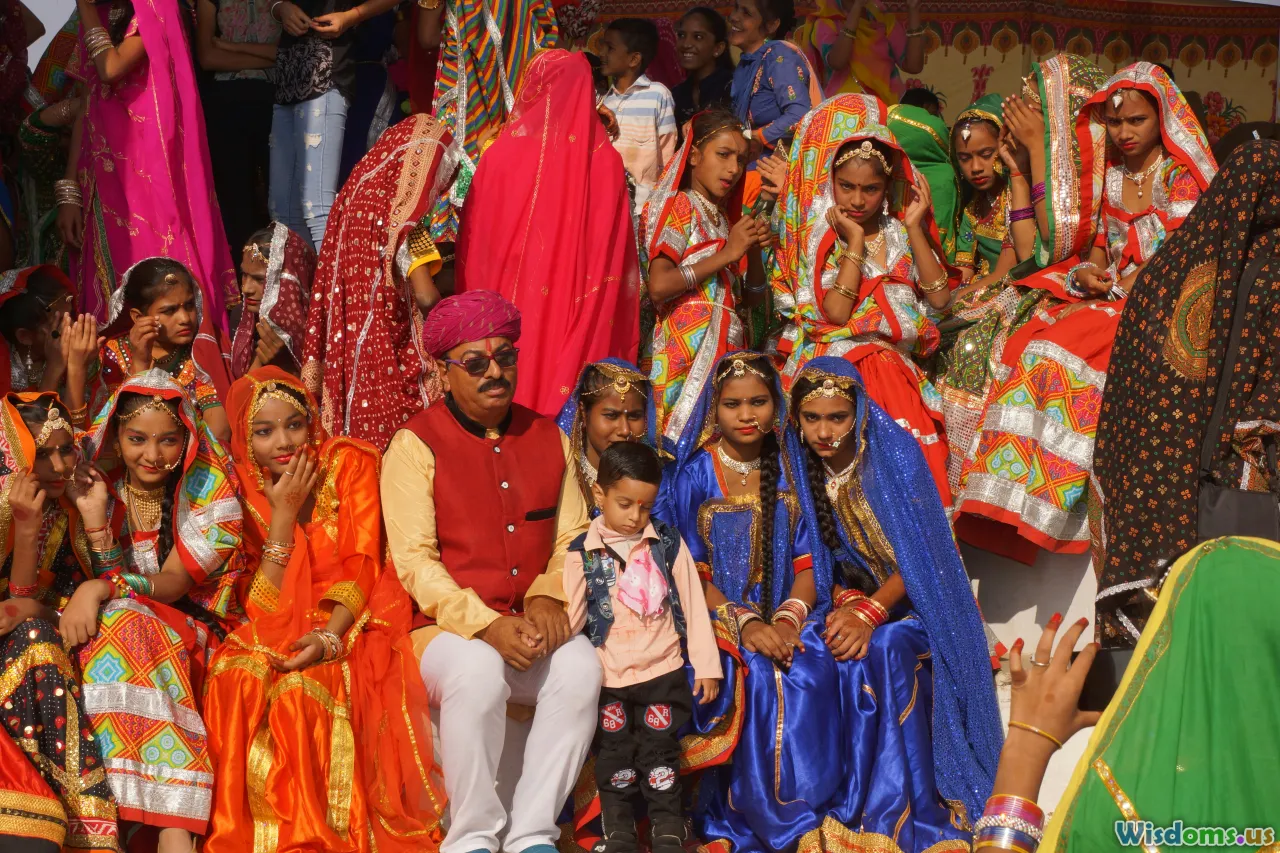
Families across India often describe child rearing not as the job of two parents but as a project for many hands and many hearts. Grandparents, aunts, uncles, older cousins, and close family friends form a dense support web that shapes everything from the baby’s feeding schedule to exam prep and festival rituals. Far from being a quaint tradition, this prioritization of extended family is a living, adaptive system that continues to evolve alongside urbanization, migration, and the digital age. Below, we explore why this model persists, where it shines, where it strains, and how families can make it work thoughtfully in modern life.
The Many Hands Model: What It Is and Why It Persists

The Indian approach to child rearing often looks like a relay race: parents may handle the commute and late-night soothing, while grandparents supervise afternoons, and an aunt coordinates homework or takes children to after-school activities. This isn’t simply about convenience; it’s about embedding children in a community of care and values.
Key drivers include:
- Interdependence as a cultural norm: Indian society traditionally privileges collective responsibility. Children are seen as belonging to the family (and often the community) rather than solely to parents.
- Practical childcare coverage: Where formal daycare is scarce, costly, or hard to trust, extended family fills the gap.
- Emotional buffering: Multiple caregivers can cushion children through stress, exam seasons, and illness, while giving parents a lifeline during career crunches.
- Knowledge continuity: Elder caregivers provide a living link to language, rituals, and local know-how that would otherwise be hard to replicate.
Consider a typical weekday in a multigenerational Mumbai apartment: the grandfather escorts a child to the school bus, the grandmother cooks an early lunch suited to the child’s tastes, a parent returns for a short break to coordinate a tuition schedule, and an uncle handles the evening cricket coaching pickup. The net result is fewer points of failure and a richer social fabric for the child.
Deep Roots: History, Kinship, and the Joint Family Ethos

The joint family system—multiple generations under one roof or in close proximity—emerged in agrarian settings where land, labor, and caregiving were shared. While formal surveys show an increase in nuclear households over recent decades (especially in urban India), co-residence with grandparents or close proximity remains common. Even when families do not live together full-time, seasonal and life-stage cohabitation (for example, postpartum periods or exam years) persists.
Cultural frameworks reinforce this. Many Indian languages contain highly specific kinship terms (for maternal uncle, paternal aunt, older vs. younger siblings, and more), reflecting nuanced expectations of care and authority. The emphasis on sanskaar—shaping character through daily habits and rituals—elevates elders as active mentors. Instead of one parenting manual, a child receives a chorus of micro-lessons: how to greet elders, share food, manage money, or pray during festivals. The joint family ethos transfers accountability horizontally across relatives and vertically across generations.
Economics and Policy: Why Family Is the Default Safety Net

In many Indian cities, full-day daycare and after-school care can take a meaningful bite out of a household budget. Monthly fees that range from a few thousand to over ten thousand rupees may be unaffordable for families with tight margins or multiple children. The formal sector’s Maternity Benefit (Amendment) Act extended paid leave for some mothers, but coverage is limited to a minority of workers in the organized sector, leaving many without reliable, subsidized childcare options. Paternity leave remains inconsistent across employers, narrowing the window for fathers to take early caregiving roles.
Enter grandparents and relatives. Their presence reduces direct childcare expenditure and, just as importantly, transaction costs (finding, vetting, and monitoring caregivers). In many middle-class households, grandparents relocate temporarily to metros for a baby’s first year, a practical strategy when housing is scarce and daycare waitlists are long. When parents work non-standard hours—IT support, healthcare, retail—extended family can flex to meet early-morning school drops, late-night pickups, or school holiday coverage.
The extended family also functions as informal insurance. Without universal long-term care or widely accessible mental health support, relatives often absorb caregiving shocks like a parent’s illness, job loss, or relocation for a project. During the pandemic, for instance, multigenerational homes shouldered remote schooling and meal logistics—though not without risk and strain—demonstrating how quickly families fall back on kin networks when public services wobble.
How It Works in Practice: From Postpartum to Primary School

-
Postpartum and newborn care: Many families observe a 40-day rest period for the mother with tailored diets, massages, and household help coordinated by older women in the family. Regional practices vary, but the logic is consistent: protect infant and mother, rebuild strength, and share infant-care skills. Grandmothers teach soothing techniques, burping, and swaddling; grandfathers manage errands and paperwork.
-
Toddlerhood: When mobility and curiosity spike, an aunt or grandparent becomes the household’s risk manager, baby-proofing spaces and structuring naps and outdoor time. A common routine includes a mid-morning park visit with a small circle of grandparent-led playgroups—valuable for socialization and language exposure.
-
Early school years: Extended family coordinates tuition, hobby classes (dance, music, coding, sports), and festival obligations. During exam season, an older cousin might handle math drills while a grandmother helps with reading in the child’s mother tongue.
-
Health and nutrition: Grandparents often navigate trusted local vendors for produce, prepare comfort foods when a child is ill, and monitor adherence to doctors’ instructions. In households where both parents work late, this dependable health stewardship is invaluable.
At each stage, caregiving is held together by small systems: a fridge calendar for immunizations, a rotating school pickup chart, a spice box labeled with allergen notes for visiting relatives who cook. These details allow the village to function smoothly.
Lessons and Language: The Extended Family as a Values Classroom

Children raised with grandparents or in close proximity to relatives often grow up bilingual or multilingual—switching among Hindi, Marathi, Tamil, Bengali, or other mother tongues, plus English or a regional lingua franca. This language proficiency is not just practical; it anchors identity and extends the child’s network across cousins and older generations.
Values education, or sanskaar, operates through example: sharing food, greeting visitors, contributing to chores, caring for pets, and navigating rituals respectfully. Consider common teaching moments:
- Money sense: A grandfather sets up a small piggy bank and matches the child’s savings rupee-for-rupee, turning weekly allowance into a lesson on compounding.
- Patience and empathy: An aunt invites the child to help cook a family recipe, explaining why it takes time to slow-cook dal and how everyone’s preferences are accommodated.
- Perspective-taking: Cousins from different cities spend vacations together, comparing school routines and sports fandoms, broadening horizons informally.
In aggregate, the extended family provides multiple role models, exposing a child to diverse temperaments and careers—teachers, small-business owners, civil servants, farmers. This real-life gallery helps children imagine more futures and calibrate their aspirations.
Rituals, Festivals, and the Calendar of Belonging

Indian child rearing is braided into ceremonies that mark growth: naming rituals, first-solids ceremonies, hair-cutting milestones, and school-entry pujas. Festivals like Diwali, Eid, Pongal, Onam, Durga Puja, and Christmas become immersive classrooms—children learn to draw rangoli, light diyas safely, tie torans, or prepare sweets. Extended family orchestrates logistics (who hosts, who cooks what, which grandparents teach a particular ritual) and protects continuity across moves and job transfers.
These events also reinforce intergenerational memory. Story time might include wartime ration tales, migration journeys, or how a great-grandmother started a small savings circle that financed cousins’ educations. Children absorb resilience and family identity through these narratives. The payoff is a sense of rootedness that can buffer the inevitable disruptions of modern life.
Gender, Work, and the Rebalancing of Roles

Historically, the burden of daily childcare and housework fell disproportionately on women—mothers and grandmothers in particular. Extended family support made it easier for mothers to manage postnatal recovery and return to work, but it also risked cementing uneven expectations. Today, many families are renegotiating these roles:
- Fathers taking school runs or bedtime routines when grandparents handle afternoons.
- Grandfathers supervising homework or music practice, normalizing male caregiving.
- Daughters-in-law and mothers-in-law setting up rotating cooking schedules or outsourcing repetitive tasks to shared domestic help.
Working mothers often cite grandparents as the single biggest enabler of career continuity. Yet the flip side is caregiver burnout among elders, especially when support is taken for granted or when health needs grow. Thoughtful families build formal rest days for grandparents, pay for part-time help, and plan respite—recognizing that sustainability matters.
Migration and Mobility: Care That Travels

India’s urbanization brings churn: people relocate for work, and families stretch across cities and borders. The extended family adapts:
- Commuter grandparents: Retired parents rotate between adult children’s homes in Bengaluru, Pune, and Hyderabad, staying a few months in each to help with childcare and school transitions.
- Skip-generation households: In some rural areas, parents migrate seasonally to cities for work while children live with grandparents during school terms. The arrangement ensures continuity of education and stable caregiving.
- Diaspora solutions: Families abroad coordinate grandparent visits around newborn care, visa windows, and school breaks. WhatsApp groups bridge distance, with grandparents reading bedtime stories via video calls or supervising homework remotely.
Mobility has also sparked a hybrid: joint family 2.0, where relatives live in the same apartment complex or in separate units of an independent house. Everyone gains proximity without losing privacy.
Comparison Corner: India and Western Nuclear Norms

While generalizations have limits, some differences stand out:
- Availability of formal childcare: In many Western cities, regulated daycare and after-school programs are abundant (though often expensive). In India, supply is uneven and trust can be a hurdle; family fills gaps more readily.
- Ideals of autonomy vs. interdependence: Western norms often emphasize individual independence earlier; Indian styles lean into guided interdependence for longer, with extended family offering guardrails well into adolescence.
- Holiday rhythms: Indian school calendars align with major festivals, enabling extended family gatherings to serve as childcare and cultural immersion.
Neither approach is categorically superior; both balance trade-offs. A nuclear family may offer clearer boundaries and faster decision-making, while a multigenerational setup can deliver redundancy, cultural richness, and lower childcare costs. Savvy parents borrow from both: they preserve privacy through explicit rules while leveraging relatives for flexible, trusted care.
Common Tensions—and How Families Resolve Them

-
Undermining parents: A grandparent overrules bedtime routines or screen-time limits, causing confusion. Remedy: a written family charter that codifies non-negotiables (health, safety, school commitments) and negotiables (dessert rules, weekend bedtimes). Place it on the fridge.
-
Discipline styles: Harsher traditional discipline clashing with positive reinforcement methods. Remedy: a quick masterclass for elders on modern discipline: use of natural consequences, praising effort, and avoiding public shaming. Parents reciprocate by explaining the rationale, not issuing blanket vetoes.
-
Privacy and space: Adolescents feeling observed by multiple adults. Remedy: earmark private zones and solo time. For instance, the teenager’s room is a no-knock, no-teach zone after 9 p.m., except in emergencies.
-
Caregiver overload: Grandparents silently absorb too much. Remedy: a monthly care council—30 minutes to review schedules, redistribute tasks, and add help where needed. Build a small caregiving budget to outsource repetitive chores.
-
Cultural vs. medical advice: Home remedies vs. pediatrician guidance. Remedy: a shared medical card with allergies, meds, the pediatrician’s notes, and emergency contacts. Make this the single source of truth in disagreements.
A Practical Playbook: Making Extended Family Care Work

Use these steps to harness extended family support without friction.
- Define decision rights
- Parents: health, school enrollment, discipline philosophy, digital/media rules.
- Grandparents: daily routines, meal planning, homework timing within agreed limits.
- Shared: festival schedules, travel plans, big-ticket purchases for the child.
- Create a care calendar
- Map school timings, tuition, activities, and doctor appointments.
- Assign backups for each task—two names per responsibility to handle hiccups.
- Standardize safety
- One emergency sheet at home and one in each caregiver’s phone: blood group, allergies, key contacts, nearest hospital, and insurance details.
- A go-bag near the door: thermometer, basic meds, sanitizer, ID copies, snacks.
- Build caregiver capacity
- Run mini workshops: car-seat installation, CPR basics, reading modern report cards, navigating online school portals.
- Share a list of trusted pediatric websites or helplines.
- Protect relationships
- Schedule gratitude rituals—notes from kids to grandparents, or a monthly treat night where kids cook simple dishes. Recognition wards off resentment.
- Invest in tech
- A shared family WhatsApp group or calendar app with color-coded tasks.
- Photo and document folders for report cards, art, and vaccination records.
- Review and refresh
- Quarterly check-ins to adjust roles during exams, sports seasons, or when a caregiver’s health changes.
Case Vignettes: What It Looks Like on the Ground

-
Mumbai, dual-career parents: With both parents in finance, a grandmother handles after-school hours and cooking on weekdays; a grandfather attends parent-teacher meetings to ensure continuity. The parents outsource weekly deep cleaning and keep Saturdays tech-free for joint outings. During bonus season crunch, an aunt steps in for bedtime reading. The child has steady routines despite unpredictable work demands.
-
Rural Bihar, seasonal migration: Parents work in a metro nine months a year; children live with grandparents to maintain schooling. Grandparents manage attendance, nutrition, and festival observances. Parents visit during peak agriculture cycles and school vacations. While emotionally challenging, this structure prevents disruptive school transfers and maintains village ties.
-
Chennai, joint family 2.0: Two brothers own adjacent flats on the same floor. Kitchens are separate; a balcony gate allows easy crossover. Grandparents rotate lunch supervision and evening prayers; a cousin carpool handles tennis practice. Conflicts are managed through a Sunday chai meeting where the week’s logistics are finalized.
-
Dubai, visiting grandparents: A new mother invites her parents for six months post-delivery. Grandparents master the stroller-friendly routes and maintain an Indian-language day for the baby. Remote cousins join bedtime via video calls once a week, preserving bonds until the next India visit.
The Tech Layer: Coordinating Care Across Time and Space

Digital tools make modern kin-care nimble:
- WhatsApp family hubs: Pin critical messages (medicine dosages, school bus changes) and mute non-urgent chatter during work hours. Use list-based broadcasts for tuition updates.
- Shared calendars: Color-code tasks by caregiver. Set alerts for vaccination, fee payments, and exam timetables.
- Photo archives: Maintain a shared album for school events so grandparents who cannot attend feel included.
- Telehealth: Quick pediatric follow-ups reduce disagreements about minor ailments; share doctor summaries with all active caregivers.
These light systems prevent confusion, reduce repetitive calls, and build trust by making information visible to all.
If You Lack Nearby Kin: Building a Surrogate Village

Not everyone has extended family close by. You can still build a care web:
- Neighborhood swaps: Team up with two or three families for rotating playdates and emergency pickups.
- Cooperative childcare: Hire a caregiver jointly with a neighbor for afternoon hours; keep written agreements and shared logs.
- Retired mentors: Engage a retired teacher or neighbor for homework supervision; invite them to festivals to deepen bonds.
- School-based micro-communities: Form a class-level WhatsApp group with a clear, respectful code of conduct for quick coordination.
- Ritual continuity: Schedule video calls with distant grandparents for key rituals; record recipes and stories to replay later.
The core principle remains the same: diversify support, codify expectations, and nurture relationships.
Tips for Grandparents: Care That Empowers Parents and Kids

- Ask before advising: Frame input as options, not verdicts. Parents are the final decision-makers on health and discipline.
- Align on non-negotiables: Know allergy lists, screen-time limits, and sleep routines. Consistency is a gift.
- Protect your energy: Take scheduled breaks; decline tasks you cannot sustain. Your well-being is a family priority.
- Learn the new: Modern syllabi, digital classrooms, and consent-oriented parenting styles evolve; staying updated preserves influence and harmony.
- Celebrate openly: Praise parents’ choices in front of kids. Unity reinforces the child’s sense of security.
Tips for Parents: Partnering Well with Your Extended Family

- Start with respect: Treat elder caregivers as partners, not domestic help. Gratitude opens doors that instructions cannot.
- Delegate outcomes, not just tasks: Instead of micromanaging snack times, share goals (balanced diet, less sugar) and let caregivers use their strengths.
- Give authority with boundaries: If grandparents supervise afternoons, they can set reasonable quiet hours or homework slots within agreed limits.
- Share wins: Update everyone on milestones—a new word, a good test score, a medical improvement. Inclusion maintains motivation.
- Keep a conflict ladder: Small disagreements get handled on the spot; bigger ones move to the monthly family council. Prevent daily friction.
Policy and Future Directions: Why the Village Still Matters

Even as India expands formal childcare, parental leave, and social protections, the extended family will remain central. Reasons include scale, cultural affinity, and the desire for trusted, flexible care that aligns with family values. Sensible policy can complement—not replace—kin caregiving:
- Support community childcare hubs in residential complexes with safety standards and subsidies.
- Incentivize flexible work for caregivers, including elders who may want part-time roles.
- Equip schools to coordinate better with multiple caregivers (authorized pickup lists, dual-parent portals).
- Expand caregiver education: free CPR and child-safety workshops at primary health centers.
Families themselves will continue to innovate: co-living designs for privacy, intercity rotations, and digital platforms that turn the old village into a coordinated, contemporary care network.
When many hands lift together, children feel both held and free—held by love, free to explore. That is the quiet genius of India’s extended-family approach: it transforms child rearing from a private struggle into a shared craft, preserving heritage while adapting to the rush of modern life. With clarity, respect, and a touch of planning, the village not only raises a child; it also sustains the adults who love them.
Parenting Child Development Family Life Culture & Society Parenting in Different Cultures Family Studies South Asia extended family Indian parenting joint family system grandparent caregiving intergenerational support kinship networks urbanization in India work-life balance India women’s workforce participation
Rate the Post
User Reviews
Other posts in Parenting in Different Cultures






Popular Posts