
Will Artificial Wreaths Replace Fresh Ones In Holiday Crafts
36 min read Compare artificial versus fresh wreaths for holiday crafts, covering realism, scent, cost, sustainability, allergies, and crafting techniques to decide what fits your decor, budget, and values. (0 Reviews)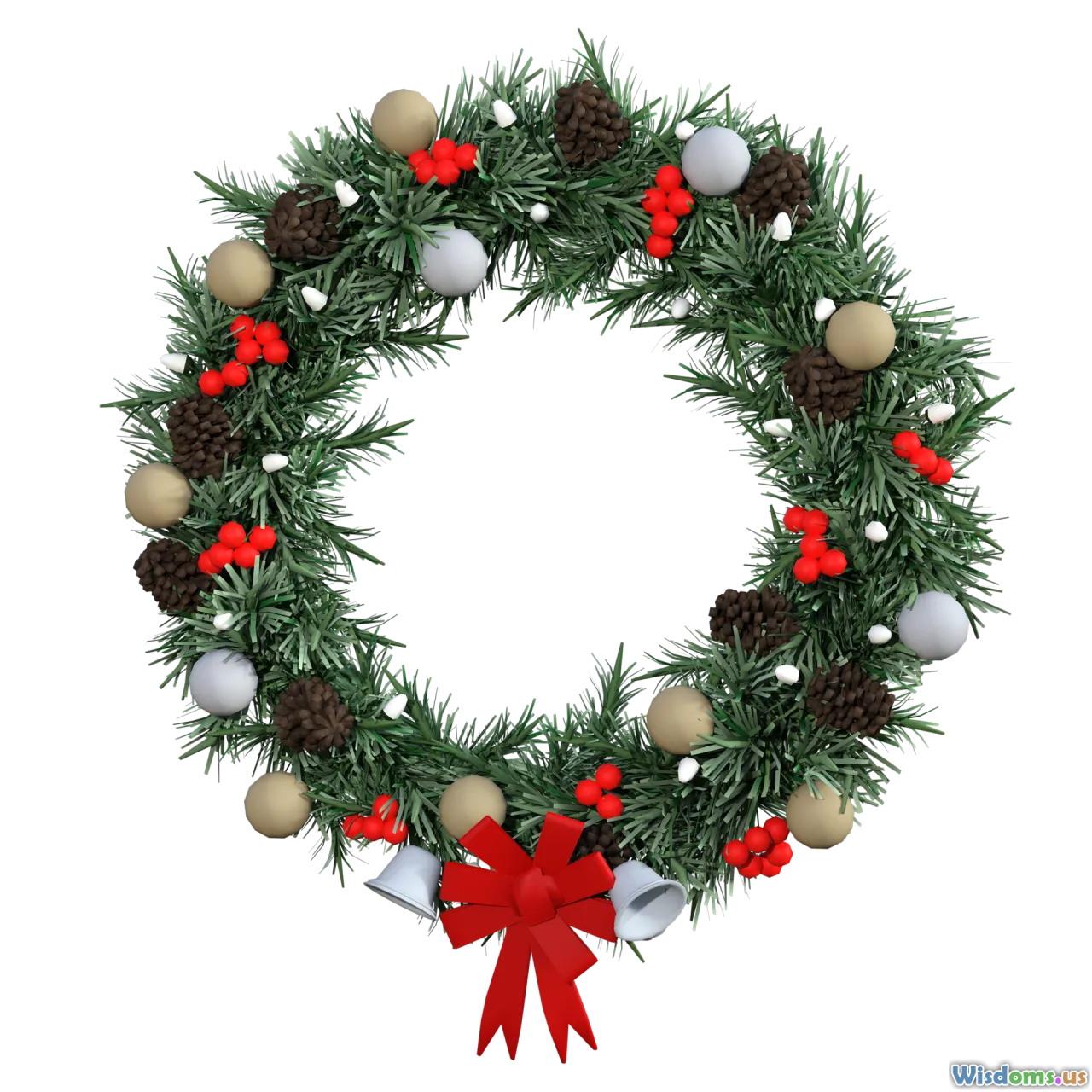
Evergreen boughs on a front door are among the simplest, most evocative signals that the holidays have arrived. The scent, the texture, the quiet ritual of hanging and refreshing a wreath—these traditions carry memory as much as decoration. At the same time, artificial wreaths keep getting better: more lifelike, less maintenance, and bolder in design. The question many crafters and decorators are asking is not just which to buy this year, but whether artificial wreaths are poised to replace fresh ones in holiday crafts altogether.
That question reaches beyond aesthetics. It touches durability, environmental impact, cost, craft technique, safety, and even how we use time during the busiest stretch of the year. This guide navigates each of those angles with concrete tips and examples, then closes with a practical answer for different kinds of makers.
The Holiday Wreath Is Evolving

The modern wreath has many lives. It can be a classic citrus-studded circle of cedar and fir on a front door, a minimalist brass hoop draped with eucalyptus on a gallery wall, or a dense ring of white berries and velvet ribbon around a candle centerpiece. In craft communities and retail alike, two material categories dominate: fresh botanical wreaths and artificial or permanent botanical wreaths. The shift in the last decade has not been from one to the other outright, but toward specialization.
A few useful distinctions:
- Fresh wreaths are woven from real plant material—typically clipped evergreens like noble fir, Fraser fir, cedar, pine, juniper, and fir tips—then embellished with cones, fruit, ribbon, and natural accents. They showcase fragrance and organic, irregular texture.
- Artificial wreaths are built on wire, rattan, grapevine, or molded plastic frames with PVC or PE needles, faux foliage and berries, sometimes flocking, and often integrated LEDs. Modern versions use molded PE tips that mimic the taper, sheen, and two-tone striation of real needles.
- Hybrids and refills bridge the two: a reusable base dressed with seasonal trimmings that can be refreshed annually.
In practice, fresh wreaths still dominate farm stands and local markets, while artificial wreaths excel in big-box retail and e-commerce because they ship well and photograph consistently. Among craftspeople, the split tends to follow purpose: if scent, sensory appeal, and organic variation are priorities, fresh wins. If convenience, reusability, and exact color matching are priorities, artificial leads.
What Artificial Wreaths Are Made Of
Understanding artificial construction helps you judge quality and plan craft upgrades.
- Needles: Most mass-market artificial needles are PVC (polyvinyl chloride). They come as flat strips cut into bristle-like fringes. Premium brands incorporate PE (polyethylene) molded needles that are injection-formed in three dimensions; they mimic real needle taper and occasional bent tips. Many wreaths mix PE on the outer layer and PVC deeper in the form for fullness.
- Frames: You will see double-wire rings, welded steel hoops, grapevine circles, and molded plastic rings. Wire frames are easy to add picks and ribbons to; grapevine allows you to weave sprigs directly into the twigs.
- Foliage and accents: EVA foam is common for delicate leaves. Faux berries may be polystyrene coated with lacquer; UV-resistant coatings help slow fading outdoors. For winter aesthetics, manufacturers use flocking (adhesive plus fine fibers) to simulate snow; it can shed, so it is better for sheltered spots.
- Lighting: Battery-powered LEDs dominate, often on flexible copper wire with a discreet battery pack. For safety, look for UL or ETL markings on wired units. Warm-white LEDs around 2700–3000K look most like candlelight.
Signs of quality:
- Higher PE needle ratio, especially on the outer tips.
- Staggered needle lengths and two-tone greens for depth.
- Wrapped wire branches (rather than exposed single wires) for strength.
- Accents attached with floral wire rather than hot glue alone.
For crafters, a good artificial base is a canvas. You can deconstruct and recompose it: remove surplus ornaments, reposition branches, and add natural elements.
What Fresh Wreaths Offer

Fresh wreaths showcase qualities artificial cannot fully replicate—at least not yet.
- Fragrance: Cedar’s clean resin, fir’s citrusy spice, pine’s sap—these scents anchor holiday memory. Some makers layer in rosemary, bay, or eucalyptus for a culinary note.
- Seasonal authenticity: Many wreath greens are byproducts of sustainable pruning at tree farms or forest management. Buying local often means fewer transport miles and supports small growers.
- Organic detail: Fresh greens exhibit mottled color, buds, cones, and the random variation that human eyes read as real. A cedar bough drapes and curls in a way no wire can fully imitate.
Species matter:
- Noble fir and Fraser fir have excellent needle retention and maintain color well.
- Western red cedar offers graceful drape and aroma but can dry quicker without proper care.
- Incense cedar adds golden berries; juniper contributes blue-gray berries and distinctive scent.
- Mixed greens—fir for structure, cedar for drape, pine for texture—perform well.
Care basics:
- Hydration: Soak a fresh wreath face down in cool water for a few hours before hanging, then drip-dry. This saturates the stems and buys you time.
- Anti-desiccant sprays: Products formulated for live greens (for example, often sold under names like anti-desiccant or anti-transpirant) create a moisture barrier on leaves and needles. Apply outdoors and let dry fully.
- Placement: The cooler the better. Direct sun, heat vents, and storm doors that trap heat will accelerate drying.
A well-made fresh wreath maintained in cool conditions can look vibrant for 3–6 weeks, sometimes longer in cold climates.
How Realistic Can Artificial Get?
Realism in artificial greenery has improved dramatically. Three key innovations matter most:
- PE molded tips: Instead of ribbon-cut PVC, PE tips are injection-molded from casts of real needles. You will see knuckled branch joints, tapered needle ends, and even occasional kinks. A mix of PE and PVC gives body without spiking cost.
- Branch architecture: High-quality wreaths vary branch length and pitch, creating visual voids where light can pass, similar to real boughs. They also use two-tone material—dark green cores, lighter tips—to simulate seasonal growth.
- Matte finishes: Early artificial greens were too glossy. Modern materials adopt a soft matte to avoid the plastic gleam.
From three feet away, a premium artificial wreath can pass the eye test, especially in evening light outdoors. Up close, the nose gives it away. That is why many designers use a hybrid approach: tuck a small bundle of real cedar or a sprig of eucalyptus into an artificial base. The nose detects the fresh element and infers the rest.
Price and Total Cost of Ownership

Price varies widely, so think in terms of total cost over several seasons.
Typical retail ranges:
- Fresh wreaths: Often 30–80 USD depending on size, species, and embellishment. Farm markets and fundraisers cluster in the 35–60 USD band for standard 22–26 inch door wreaths.
- Artificial wreaths: Entry-level starts around 25–40 USD. Realistic PE-heavy versions with good fullness run 60–150 USD. Designer or pre-lit wreaths can exceed 200 USD.
Ownership math example:
- Scenario A: You buy a 60 USD mixed-greens fresh wreath each year and spend 10 USD on ribbon and picks you reuse or refresh. Over five years: 60 x 5 + 10 = 310 USD.
- Scenario B: You buy a 120 USD PE-heavy artificial wreath once, plus 15 USD in craft upgrades (better ribbon, a few durable picks) and 10 USD for a breathable storage bag. Replace two AA batteries annually at roughly 2 USD. Over five years: 120 + 15 + 10 + (2 x 5) = 155 USD.
The break-even point for a quality artificial wreath often falls around year two or three, assuming you would otherwise purchase a mid-range fresh wreath annually. However, if you source fresh greens cheaply or make your own from clippings, fresh can be more economical.
Hidden costs and savings:
- Storage: Artificial wreaths need cool, dry storage space. If storage is scarce, that is a real cost in small apartments.
- Time: Fresh wreaths demand care; artificial wreaths demand periodic dusting and fluffing. Choose based on the kind of time you enjoy spending.
- Replacement: Artificial wreaths can last 5–10 seasons or more if stored well; fresh wreaths are a recurring seasonal expense with compostable value at the end.
The Environmental Equation
There is no universal winner; environmental outcomes depend on materials, distance, and habits.
Fresh wreaths:
- Inputs and sourcing: Many greens come from pruning of Christmas trees or forest management. If you buy local, transport emissions are low and the product is biodegradable.
- End-of-life: Remove wire, ribbon, and ornaments. Chop the greens and add to compost or municipal yard waste. Avoid landfill where organic matter can produce methane.
- Caveats: Some commercial wreaths use floral foam or heavy adhesives; avoid these or separate them before composting. Choose wire and natural twine when possible.
Artificial wreaths:
- Materials: PVC and PE are petroleum-derived plastics. Production has an upfront footprint, and end-of-life recycling is limited. However, long lives and reuse can offset the manufacturing impact.
- Durability: A well-made artificial wreath can last a decade. Storing out of heat reduces off-gassing and material degradation.
- Microplastics and shedding: Flocking and brittle PVC can shed particles over time. Avoid heavily flocked options outdoors in windy areas.
How to improve impact regardless of type:
- Buy better, less often. One durable artificial wreath reused for years or one fresh wreath made of local clippings beats frequent replacements.
- Choose natural embellishments: dried citrus, cinnamon sticks, cones, seed pods, and cotton ribbon are compostable.
- Build a reusable base: A grapevine or wire ring can live for years while you swap seasonal materials.
If your climate is cold and you compost, fresh wreaths can be very low impact. If you live in a warm region where fresh dries quickly and you favor long-term reuse, a quality artificial wreath might be greener over time.
Safety, Durability, and Care

Safety varies with placement and materials.
Fire considerations:
- Fresh wreaths are safer than a dried-out Christmas tree because they are more compact and often outdoors, but desiccated greens can still be flammable. Keep away from candles, heat vents, and fireplaces.
- Never use real candles near either fresh or artificial wreaths. If you want that look, choose battery-operated flameless candles and set them at a safe distance.
Electrical safety for artificial wreaths:
- Look for UL/ETL markings on plug-in versions. Inspect wires annually for nicks. Keep battery packs dry and out of direct sun.
- Replace batteries before they leak; alkaline leakage can corrode battery housings. Consider rechargeable NiMH cells if compatible.
Hanging and hardware:
- Over-the-door hooks are quick; check for door clearance to avoid scratching paint.
- Magnetic wreath hangers work on steel doors but not aluminum; confirm with a magnet.
- Adhesive hooks rated for outdoor use can be convenient; choose a rating that exceeds the wreath weight. Cold can weaken adhesives, so test before storms.
Maintenance routines:
- Fresh: Mist lightly every few days in dry indoor air. If stems are accessible, insert floral water tubes for roses or other fresh cuts. Remove any mushy berries or fruit to prevent mold.
- Artificial: Dust with a soft brush or a hair dryer on cool. For creases in ribbon, use a garment steamer held at a distance. Refluff branches each season by bending needles outward and staggering tips.
Storage tips for artificial:
- Avoid hot attics; heat accelerates plastic degradation. A closet or under-bed storage in a breathable bag is better than an airtight plastic bin for recently used flocked items.
- Label the storage bag with a photo. Tuck silica gel packets nearby to reduce humidity.
How to Craft a Fresh Wreath at Home
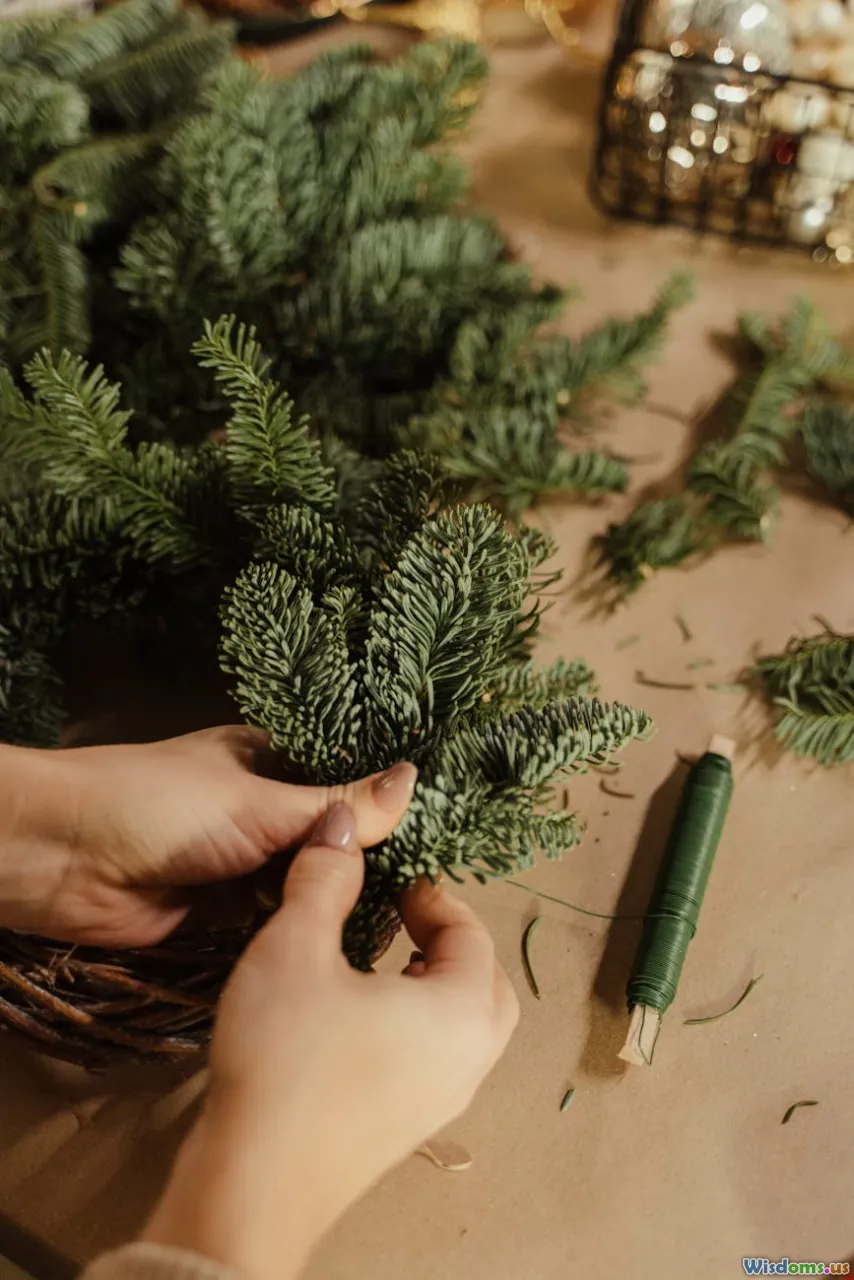
Making a fresh wreath is straightforward once you grasp the rhythm of bundling and wiring. Here is a reliable method.
Tools and materials:
- 12–18 inch wire wreath ring (double-rail)
- Paddle wire (22- or 24-gauge for general greens; 18-gauge for heavier accents)
- Pruners or floral snips
- A mix of greens: fir, cedar, pine, and textural fillers like seeded eucalyptus or juniper
- Optional: anti-desiccant spray, ribbon, cones, dried orange slices, cinnamon sticks
Steps:
- Prep the greens: Cut into 6–8 inch pieces. Strip needles from the lowest inch of stem so wire has something to grip. Group a variety of textures into small bundles—think one fir piece for structure, one cedar for drape, one pine for length.
- Attach the wire: Secure paddle wire to the wreath ring. Do not cut it; you will keep wrapping continuously.
- Lay the first bundle: Place the stems on the ring at a slight angle, facing the direction you want the wreath to flow (usually clockwise). Wrap the wire around the stems and ring 2–3 times, pulling snugly.
- Overlap and repeat: Place the next bundle so it covers the previous stems and wire. Continue around, maintaining consistent thickness. Vary the ingredients of each bundle for a natural look.
- Close the circle: Tuck the last bundle under the tips of the first, then secure tightly. Twist and tuck the wire end into the back.
- Dress and balance: Add cones by wiring them in clusters of three. Thread ribbon or tie a bow on the bottom third. Add dried citrus or cinnamon by wiring through the peel or binding sticks with twine.
- Hydrate and finish: Soak or mist lightly and let dry before hanging. If using anti-desiccant spray, apply outdoors and allow to cure.
Troubleshooting:
- Flat spots: You may be using bundles that are too large. Switch to smaller, tighter bundles and add more of them.
- Gaps: Turn the wreath and look from different angles. Fill gaps with small wired sprigs slipped under existing wraps.
- Shape drift: Use a table edge as a reference for the circle; adjust bundle angle to correct the outline.
How to Upgrade an Artificial Wreath
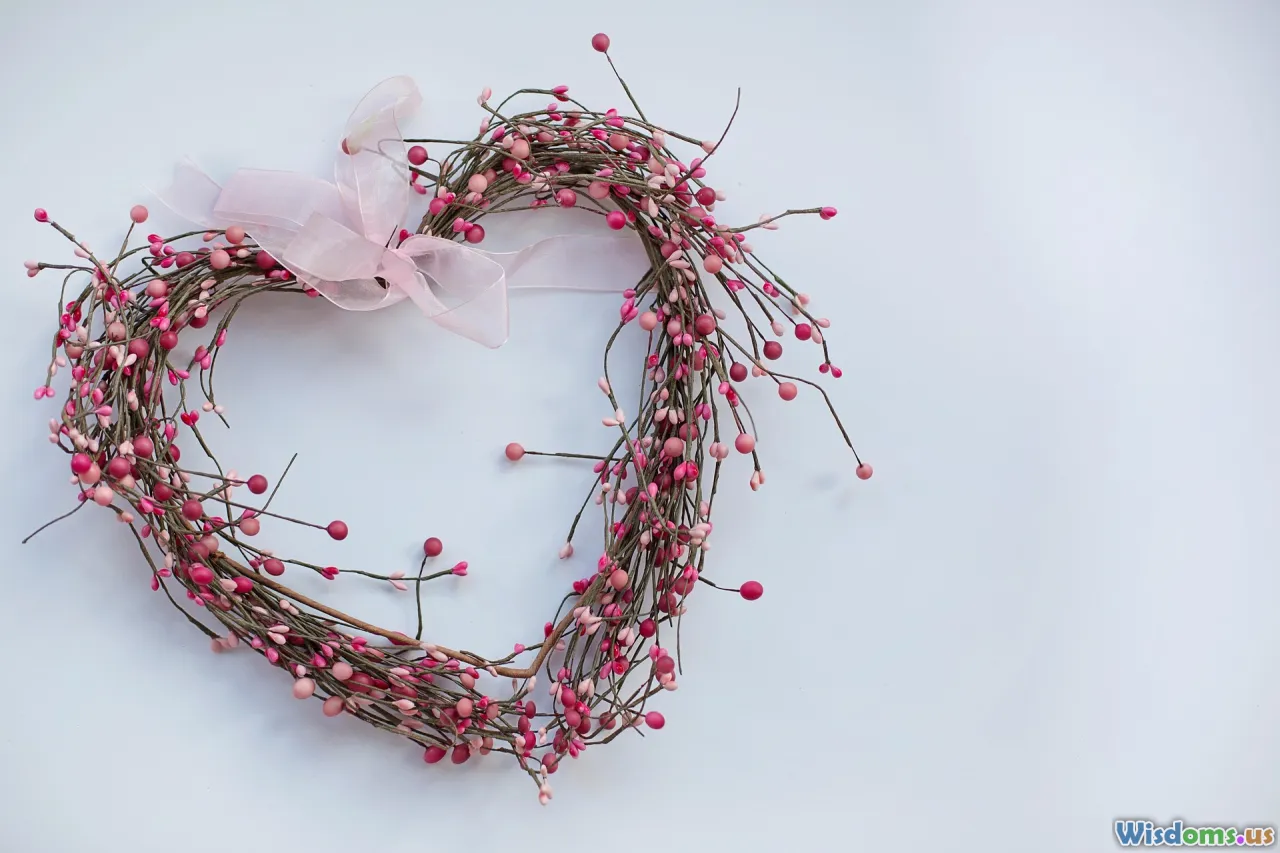
If an artificial wreath looks mass-produced, a few techniques can add personality and realism.
- Fluff strategically: Work from the back forward. Pull inner branches toward the ring to create depth, then splay outer tips. Avoid symmetry so no two branch tips point the same way.
- Mix in natural accents: Wire in small bundles of real cedar, eucalyptus, or juniper. Keep the stems short and hydrate with floral tubes if needed for indoor displays.
- Swap the ribbon: Replace shiny synthetic ribbon with cotton, linen, or velvet. Pick ribbon 1.5–2.5 inches wide; wired edges help structure bows.
- Add dimensional picks: Use pinecone clusters, dried orange slices, or quality faux berries with matte finishes. Attach with 22-gauge wire or green floral tape plus wire for added security.
- Tone down shine: If PVC sheen is distracting, a light pass of matte clear spray labeled for plastics can reduce glare. Test on the back first.
- Illuminate thoughtfully: Add a micro LED strand woven deep into the branches, hiding the wire. Warm white yields a cozy glow; keep battery packs accessible for changes.
Pro tip: Edit. Removing half the factory ornaments on a pre-decorated wreath often makes it feel more expensive. Less clutter, more deliberate placement.
The Hybrid Strategy: Best of Both
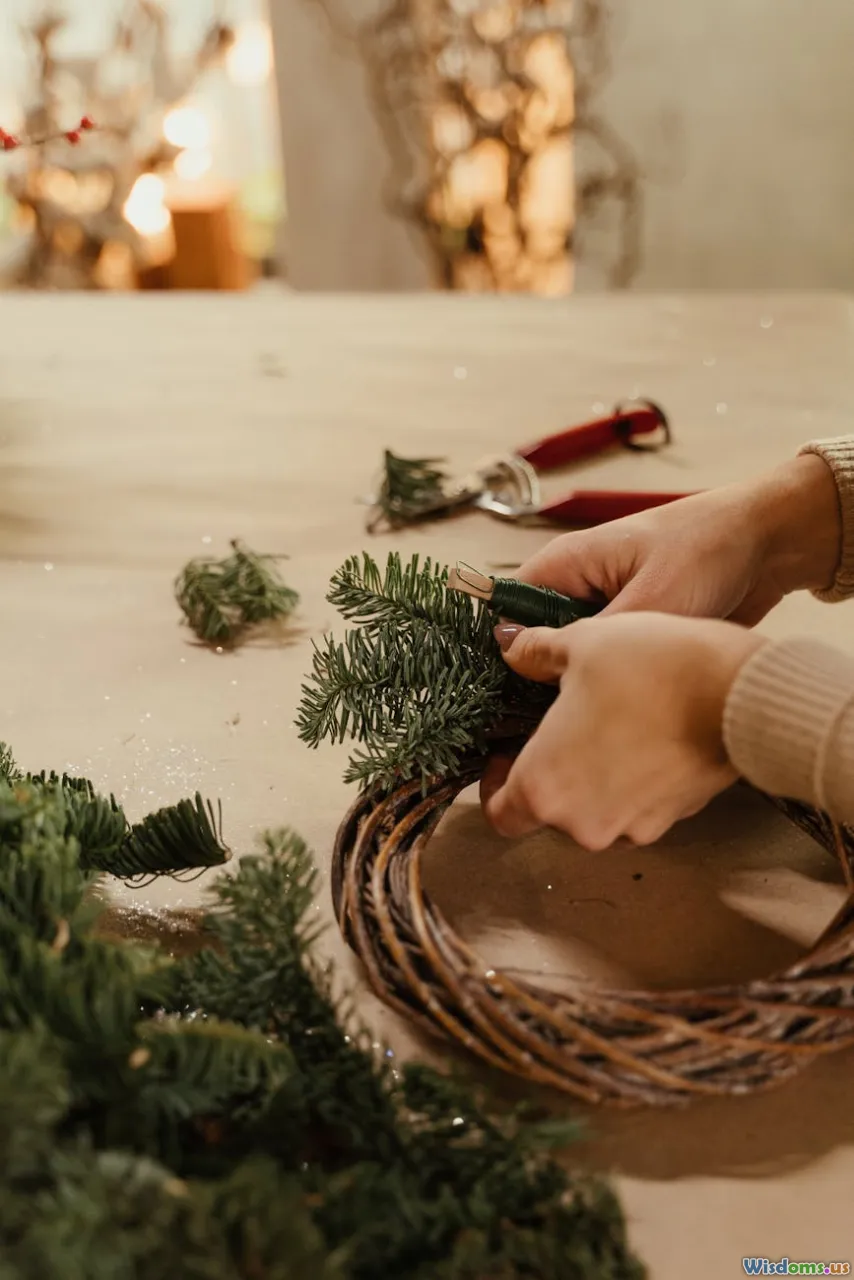
Hybrid wreaths combine a durable base with seasonal freshness—a practical middle path for many crafters.
How to build a hybrid:
- Start with a neutral artificial base heavy on PE tips. Choose one with realistic greenery but minimal embellishment.
- Create fresh mini-bundles of cedar, fir, or eucalyptus. Wrap stems with short lengths of floral wire, leaving tails to attach.
- Attach bundles at 10–2–6 o’clock positions to establish a visual triangle. Add smaller sprigs to balance, following the wreath’s existing flow.
- Add natural accents: cones, dried citrus, or cinnamon. Keep it light to maintain contrast between fresh and artificial.
- Refresh as needed. Remove and replace fresh pieces after two weeks; the base remains intact.
Why it works:
- Scent without a full fresh build
- Lower waste and cost than a fully fresh wreath each year
- Quicker assembly with a consistent shape and size
This approach is popular in commercial spaces too. A property manager can store the base wreaths and send a florist to refresh the live components seasonally.
Style Trends to Watch
Trends move in cycles, but certain looks have staying power because they are adaptable and resource-efficient.
- Asymmetrical composition: Greens cluster on one side of a hoop or frame, leaving negative space. Works well with fresh eucalyptus or artificial magnolia.
- Grapevine bases: Rustic and reusable. Fresh or faux stems can be woven without much wire. After the season, pull pieces and keep the base.
- Dried accents: Orange wheels, lemon slices, cinnamon sticks, star anise, and seed pods add color and scent. They are compostable and easy to store.
- Monochrome palettes: Shades of green with subtle scale variations read sophisticated and pair well with matte black doors or natural wood.
- Velvet ribbon tails: A deep burgundy or forest green velvet with long tails instantly elevates both fresh and artificial bases.
- Metallic hoops and minimal rings: A single brass or black ring with a small spray of greens and one statement bloom looks modern and uses fewer materials.
Craft idea: For a weekend project, dry citrus slices in a low oven (approximate guidance: 150–170 F for 2–3 hours), flipping halfway until translucent. Thread with jute twine and cluster on the lower left of a wreath for a fresh, classic accent.
Allergies, Accessibility, and Sensitivities

Sometimes the choice is about comfort and health.
- Resin sensitivity: Pine and fir sap can irritate skin. Wear gloves when crafting fresh; wipe pruners to remove resin.
- Pollen and fragrance: While winter evergreens are not heavy pollen producers, their scent can bother sensitive individuals. In offices or clinics, an unscented artificial wreath is considerate.
- Dust: Artificial wreaths collect dust season to season. Store covered and dust before hanging. If someone at home has respiratory sensitivities, a quick rinse and thorough dry for plastic components can help.
- Pets: Avoid fresh ingredients that may be toxic to pets if ingested, such as some decorative berries. Also watch for ribbon tails that cats may chew.
Accessibility of craft time matters too. If hands tire easily or dexterity is limited, an artificial base that needs only light decorating is more manageable than wiring dozens of fresh bundles.
Matching Wreath Type to Location

Different settings favor different materials.
- Front door in cold climate: Fresh performs beautifully; low temperatures slow desiccation and can keep greens vivid through the new year.
- Front door in warm or sunny climate: Artificial often wins. UV-rated materials resist fading; fresh greens may brown quickly in heat or afternoon sun.
- Indoor mantel above a fireplace: If the fireplace is in frequent use, artificial is the safer choice due to dry heated air. Keep lights battery-powered and avoid heat exposure.
- Kitchen: Fresh greens are aromatic but watch grease and heat. Keep away from the stove. Artificial with washable components is easier to clean.
- Commercial lobbies: Artificial is pragmatic for property management. A florist can layer fresh sprigs weekly for scent if desired.
- Apartments with limited storage: Fresh or hybrid minimizes off-season storage needs. Alternatively, choose a slim artificial wreath that fits in a shallow box.
Pro tip: Measure door clearance and storm door spacing. Full, fluffy fresh wreaths can compress in a tight storm door, shortening life. A lower profile artificial wreath or a flat-style cedar swag may fit better.
Tricks for Longer Life and Better Realism

For fresh wreaths:
- Hydrate deeply: Soak on arrival. If the wreath has long stems at the back, recut ends at an angle to open capillaries before soaking.
- Mist strategically: Light misting helps, but do not saturate ribbon or glued elements. Focus on the back where stems are exposed.
- Cool placement: Even moving a fresh wreath from a south-facing door to a shaded porch can add a week of life.
- Anti-desiccants: Apply before decorating. Follow product directions and avoid overspray on windows or floors.
For artificial wreaths:
- Steam fluff: A garment steamer at a distance relaxes plastic memory. Shape branches with hands immediately after steaming.
- Matte correction: Use a light dusting of matte clear spray formulated for plastics if shine is excessive. Always test first.
- Layer textures: Combine different needle styles—flat PVC deeper in, molded PE on top—and add one or two contrasting leaf types like faux magnolia or eucalyptus.
- Real-scent hack: If scent matters, use a discreet essential-oil diffuser nearby rather than applying oils directly to materials. Test for sensitivities in your household.
For both types:
- Ribbon discipline: Cut ends at a 45-degree angle or in a swallowtail to avoid fraying. Seal synthetic ribbon edges quickly with a lighter held at a distance or a fabric sealant.
- Weight balance: Heavy accents should be wired at two points to prevent sagging. Keep heavier items in the lower half to resist gravity.
A Practical Buying Checklist

When shopping, quick inspections can save money and frustration.
For artificial wreaths:
- Needle quality: Look for a high percentage of PE tips and variation in length and color.
- Branch strength: Bend a tip gently; it should hold shape without exposing bare wire.
- Attachment method: Accents secured with wire are sturdier than hot glue. Give a gentle tug; if pieces pop off easily, pass.
- Lighting: If pre-lit, ask to see it powered. Check for even light distribution and warm color. Confirm safety markings for plug-in sets.
- Outdoor suitability: Packaging should specify UV resistance and whether it is intended for outdoor use.
For fresh wreaths:
- Freshness: Needles should be flexible, not brittle. Shake gently; heavy shedding is a warning sign.
- Color: Look for deep green without brown patches. Cedar should be supple.
- Moisture: A slightly damp feel is good. Overly dry greens will not revive.
- Construction: Flip the wreath. Bundles should be tightly wired, not loosely tied. The ring should feel rigid, not floppy.
- Scent: It should smell resinous and clean, not musty.
Accessories and hardware:
- Choose ribbon widths appropriate to wreath size—wider for larger diameters.
- Pick hanging hardware appropriate to weight and door type.
- If buying embellishments, favor natural, reusable, or recyclable materials.
Will Artificial Wreaths Replace Fresh Ones In Holiday Crafts?

In craft terms, replace is the wrong verb. The two categories are diverging into clear roles that will likely coexist and cross-pollinate rather than cancel each other.
Where artificial will dominate:
- High-traffic, long-duration displays that need to look consistent for weeks or months.
- Warm climates and sun-exposed locations where fresh dries quickly.
- Retail and hospitality, where storage and standardized branding matter and maintenance time is tight.
Where fresh will remain irreplaceable:
- Ritual, scent, and tactile experiences—hands-on workshops, family crafting days, or that moment when guests catch the cedar aroma entering your home.
- Hyperlocal craft markets and farms where greens are a byproduct of pruning and sustainability and community are part of the purchase.
- Short-season installations—pop-up dinners, photoshoots, or a single holiday week—where natural beauty and compostable cleanup make sense.
What is growing fast is the hybrid space: durable bases refreshed with live accents. This approach delivers the sensory benefits of fresh while reducing waste and total cost. It is also a satisfying compromise for crafters who want a canvas they can evolve yearly without starting from zero.
If you are choosing for your own space, consider this simple decision flow:
- Do you value scent and are you willing to do light maintenance? Choose fresh or hybrid.
- Do you need a design that looks perfect without tending? Choose artificial and layer in a few real sprigs for scent.
- Is storage a problem? Go fresh or choose a slim, compressible artificial wreath.
- Is sustainability your top priority? Buy local fresh greens, compost after use, or invest in one high-quality artificial wreath you will love and use for a decade.
The craft community thrives on options, and both categories continue to improve. Artificial wreaths will not eliminate fresh ones, but they will keep expanding into places and use cases where reliability, customization, and longevity matter most. Fresh wreaths will continue to crown doors where scent and seasonality are nonnegotiable. For many of us, the future looks like a well-chosen artificial foundation enlivened with a handful of fragrant greens—less either-or, more and-then.
As you plan your holiday projects, use the season to experiment. Try wiring a fresh bundle onto an existing base, or give a plain artificial ring a restrained asymmetrical makeover. The perfect wreath is not the one that wins an argument between real and faux; it is the one that greets you at the door and makes you pause, breathe in, and feel at home.
Rate the Post
User Reviews




Popular Posts