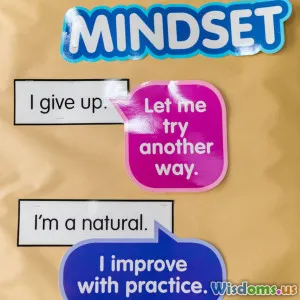
Adapting teaching methods for diverse classrooms made simple
35 min read Practical, research-backed tactics to adapt instruction for diverse classrooms—covering differentiation, UDL, cultural responsiveness, assessment, and technology—with ready-to-use examples, checklists, and metrics. (0 Reviews)
Every teacher eventually discovers the quiet truth of modern classrooms: diversity is the norm, not the exception. Differences in language, culture, neurotype, prior knowledge, interests, and life experience aren’t outliers to accommodate at the last minute; they are the starting point for effective planning. The good news is you don’t need 30 separate lesson plans to teach 30 different learners. With a few high-leverage moves, you can make learning more accessible, rigorous, and engaging for everyone while simplifying your own workflow.
What a diverse classroom really looks like today

Diversity encompasses far more than visible demographics. In a single class period you might find:
- Multilingual learners across proficiency levels (in the United States, more than 10% of K–12 students are identified as English learners, and many more speak another language at home).
- Students with identified disabilities (around 15% in the U.S. receive special education services) and those who are neurodivergent but not formally identified.
- A range of socioeconomic backgrounds that affect access to technology, time for homework, and familiarity with academic language.
- Varied prior knowledge and gaps caused by school mobility or interrupted schooling.
- Students managing stress, trauma, or responsibilities outside school that influence attention and executive function.
Practical implication: the same assignment can present wildly different levels of challenge for students. For example, a 700-word science article with domain-specific vocabulary might be accessible for a few, overwhelming for others, and unchallenging for a handful. Instead of writing three articles, you can design a single experience with options for input (text, audio, visuals), processing (discussion, sketching, graphic organizers), and output (written explanation, model, recorded summary). This is the essence of adapting without multiplying your workload.
A simple mental model: UDL + MTSS + culturally responsive teaching

Three complementary frameworks simplify adaptation:
- Universal Design for Learning (UDL): Plan lessons with multiple means of engagement, representation, and action/expression from the start. Think of UDL as building ramps into your instruction rather than adding accommodations later.
- Multi-Tiered System of Supports (MTSS): Provide layers of support. Tier 1 is what every student receives; Tier 2 is targeted small-group support; Tier 3 is intensive, individualized intervention. MTSS makes sure students don’t fall through the cracks.
- Culturally responsive teaching (CRT): Connect content to students’ identities, languages, and community knowledge. Expect high intellectual demand while affirming and leveraging cultural assets.
Quick formula to remember: design with UDL, monitor and adjust with MTSS, and build meaning with CRT. For example, in a Grade 8 history lesson on industrialization, you might use multiple representations (UDL), pre-teach vocabulary to a small group needing it (MTSS Tier 2), and analyze local family histories of work or migration (CRT) to make the unit authentic.
Quick-start audit: 30 minutes to understand your learners

Before changing how you teach, take stock of who is in front of you. A brief audit can be done in under 30 minutes:
- Gather essential data
- Language proficiency: Identify levels (e.g., WIDA levels 1–6). If you lack formal levels, estimate based on a short writing sample and your observations.
- IEP/504 at-a-glance: List accommodations like extended time, preferential seating, or reduced distractions. Highlight the top 2 that matter during instruction and assessment.
- Recent assessment results: Look for patterns, not perfection. Group students into ‘secure’, ‘developing’, and ‘emerging’ for the current unit’s prerequisite skills.
- Student voice snapshot
- Launch an interest survey with 5 questions: favorite ways to learn; topics they care about; areas they want to improve; when they feel most/least confident; preferred output formats.
- Invite one sentence on a card: ‘One thing I wish my teacher knew about how I learn…’
- Environment scan
- Note sightlines, noise sources, and transitions. Identify one spot to convert into a quiet focus area and one into a collaboration zone.
Output: a one-page class profile with three small groups for targeted support, a list of 5 students to ‘check-in daily’, and the top three accommodations to implement consistently. This powers differentiated decisions without drowning in data.
Multi-modal instruction without doubling workload

Learning improves when students can access ideas through multiple channels. You can add variety without adding hours of prep.
- Dual coding: Pair visuals with concise verbal explanations. For example, when teaching photosynthesis, show a simple diagram with arrows while saying fewer words. Research on cognitive load suggests that well-aligned visuals reduce processing demands.
- Think-alouds: Model how you solve problems or annotate a text. Keep it to 90–120 seconds and make your assumptions explicit.
- Choice boards: Offer 3 outputs for the same standard: write a two-paragraph explanation, create a labeled diagram, or record a 60-second audio summary. Assess all with the same rubric.
- Learning stations: Rotate through three stations: direct instruction (teacher-led mini-lesson), practice (manipulatives or guided problems), and application (real-world or open-ended prompt). Each station runs 12–15 minutes. This structure naturally differentiates pacing and support.
Concrete example: Grade 6 math on ratios
- Connect (5 minutes): Show two snack mixes and ask which is ‘snackier’ using an image and quick poll.
- Model (10 minutes): Think-aloud on one worked example. Use color coding for each step.
- Active practice (20 minutes): Station A, guided problems with sentence frames; Station B, build a mix with measuring cups and record ratio statements; Station C, create a digital or paper poster explaining your mix’s ratio relationships.
- Check for understanding (5 minutes): Hinge question projected with A–D options; students hold up cards or use a quick poll.
This multi-modal flow addresses diverse processing preferences while keeping teacher prep manageable.
Language-inclusive teaching for multilingual and mainstream learners
Language is the currency of school success. What helps English learners often helps everyone.
- Pre-teach and revisit key vocabulary: Distinguish between everyday and academic terms. Introduce 6–8 Tier 2/3 words per unit using student-friendly definitions and a Frayer model. Revisit words in multiple contexts.
- Sentence frames and starters: Offer stems for speaking and writing such as ‘The data suggest… because…’ or ‘One similarity is… while a difference is…’. Fade supports as fluency increases.
- Visual scaffolds: Use labeled diagrams, timelines, and icons. Pair steps with images on task cards. Captions on videos benefit all students.
- Structured talk: Use protocols like think-pair-share or four corners with a prompt. Set a 90-second timer and assign roles (speaker, listener, summarizer) to ensure equity of voice.
- Translanguaging: Encourage students to brainstorm or annotate in home languages, then summarize in the language of instruction. Allow bilingual glossaries. Leverage bilingual peers as language buddies with clear roles.
Example: Grade 9 biology lab report
- Provide a model paragraph annotated for structure (claim, evidence, reasoning) and a sentence frame for each section.
- Supply a word bank grouped by function: cause and effect, comparison, uncertainty.
- Accept a voice-note draft that the student later transcribes and edits, developing both oral and written proficiency.
Differentiation vs personalization vs individualization: choose the right lever

These terms often blur together, but using them precisely helps you avoid overwork:
- Differentiation: Adjust content, process, or product for groups based on readiness, interests, or learning profile. Example: offer tiered reading texts at different Lexile levels while maintaining the same essential question and standards.
- Personalization: Align goals and pathways with student interests and agency. Example: students select a phenomenon to investigate in a science unit and choose how to present findings.
- Individualization: Tailor pacing and supports to an individual student’s needs, often in intervention. Example: a student receives 1:1 decoding support with a specific phonics sequence.
Right lever, right time:
- Tier 1 core instruction: mostly differentiation and light personalization.
- Tier 2 targeted groups: more differentiation with some individualization for specific skills.
- Tier 3 intensive supports: individualized plans with frequent progress monitoring.
Pro tip: avoid creating completely separate assignments. Instead, build tiered tasks around a single rubric. For instance, in history, all students answer the same inquiry question, but sources vary in complexity, and the product may be a written essay, audio essay, or exhibit board.
Scaffolding and cognitive load: make rigor accessible

Rigor is not the amount of text or the length of a problem; it’s the level of cognitive demand. Effective scaffolding preserves rigor while reducing unnecessary cognitive load.
- Worked examples: Provide a fully solved problem with annotations. Ask students to identify the step that applies a key principle. Then assign a similar problem with one changed variable.
- Faded support: Move from guided practice with cues to independent practice without cues. For example, in paragraph writing, offer a paragraph frame for the first two attempts, then remove parts progressively.
- Goal-free problems: Occasionally remove the explicit question to encourage exploring relationships. In geometry, present a figure with known measurements and ask, ‘What can you deduce?’ This reduces split attention and fosters reasoning.
- Chunking and pacing: Break tasks into 10–15 minute chunks with brief summaries. Keep your input concise; aim for a teacher talk ratio under 50% in most lessons.
- Spaced retrieval: Replace massed practice with short, frequent retrieval tasks. Start class with two review questions from last lesson and one from last week. This strengthens memory without re-teaching everything.
Example: High school chemistry mole conversions
- Start with two annotated worked examples.
- Give a partially completed example for students to finish in pairs.
- Follow with two independent problems and a self-check key.
- End with an exit ticket that targets the step most likely to cause errors (e.g., unit conversion setup).
Assessment that guides next steps (not just grades)
Assessment should inform instruction, not just record it.
- Formative checks: Use hinge questions mid-lesson. A strong hinge question has plausible distractors tied to common misconceptions. Example in algebra: Which equation represents the line passing through (2, 3) with slope 2? The wrong answers each reflect a typical slope-intercept error.
- Exit tickets: Two or three targeted items that match your learning goal. Sort responses into ‘got it’, ‘almost’, ‘not yet’ within 5 minutes after class and plan the next day’s warm-up accordingly.
- Rubrics and single-point rubrics: Clarify success criteria with concrete descriptors. For example, ‘Uses at least two pieces of evidence and explains how each supports the claim.’
- Feedback that moves learning: Keep comments task-focused, specific, and forward-looking. Research on feedback suggests large positive effects when students know what to do next. Use codes like VF (verify facts), CE (connect evidence), and Q (clarify) to save time.
- Mastery and retakes: Allow revision cycles on major tasks with a clear policy (e.g., one retake within a week after a revision plan). Emphasize learning over point-chasing.
Short cycle example: After a quiz shows that 40% misapplied the distributive property, run a 10-minute mini-lesson for that group the next day while others tackle extension problems. Document the regrouping as a Tier 2 support under MTSS.
Behavior, belonging, and classroom culture

Academic success sits on a foundation of belonging and predictable routines.
- Teach routines like content: model, practice, get feedback. Practice transitions, materials distribution, and how to ask for help. Time a transition and set a class goal to beat by 10 seconds next time.
- Warm demander stance: Combine warmth and high expectations. Example script: ‘I know you can do this level of analysis. I’m here to support you, and I expect your best thinking for the next 8 minutes.’
- Restorative conversations: When harm occurs, use prompts: What happened? Who was affected? What needs to be done to make things right? Keep it brief (3–5 minutes) and specific.
- Wise feedback: Pair critique with affirmation of ability and high standards. For instance: ‘I’m giving you this feedback because I have high expectations and know you can meet them. Strengthen your reasoning by explaining how evidence B supports your claim.’ This approach has been shown to reduce stereotype threat effects.
- Predictable consequences and choices: Offer two acceptable options to de-escalate: ‘You can work at the collaboration table or the quiet area. Which works for you right now?’
Consistency, not complexity, is the secret. A few routines, taught well, handle most variability in behavior and ensure instructional time is protected.
Technology that actually simplifies adaptation

Use tech to remove barriers, not add new ones.
- Accessibility-first tools: Turn on captions for videos; provide slide decks with alt text for images; enable text-to-speech and speech-to-text options. Many devices have built-in features.
- LMS checklists: Post weekly learning goals and a checklist of tasks. This supports executive function and transparency for families.
- Low-prep engagement: Use quick polls or response apps to run hinge questions. Export results to group students instantly.
- Translation and collaboration: Provide bilingual glossaries and enable comments for students to ask questions asynchronously. Use translation thoughtfully to support comprehension without replacing reasoned use of academic language.
No-tech alternatives: If devices are limited, print a one-page ‘lesson hub’ with objectives, key vocabulary, and a QR code linking to optional resources. Use colored cards for quick checks instead of digital polls.
Co-teaching and paraeducator coordination

When more than one adult is in the room, coordination unlocks adaptation.
Co-teaching models:
- One teach, one observe: Gather targeted data on a handful of students. Switch roles next class.
- Station teaching: Each teacher leads a station; a third station is independent. Ideal for differentiation.
- Parallel teaching: Split the class in half and teach the same content with more interaction.
- Alternative teaching: One teacher works with a small group on pre-teach or reteach while the other leads the main group.
- Teaming: Both teachers share whole-group instruction like a dialogue.
10-minute daily huddle:
- Identify the day’s must-have accommodations and who ensures them.
- Name 3 students for targeted praise and 3 for targeted support.
- Agree on a signal for switching roles mid-lesson if a group needs extra time.
Paraeducators: Provide a simple cue card with today’s learning goal, success criteria, and the top two prompts to use with students. This aligns adult support with the academic target, not just behavior management.
Special education and 504 accommodations made practical

Accommodations change how students access content; modifications change what they are expected to learn. Knowing the difference keeps your expectations appropriately high.
Common accommodations and how to implement them efficiently:
- Extended time: Build in a catch-up block or provide an alternative slot rather than letting work spill indefinitely. For in-class tasks, rotate to a quiet zone where extended-time students finish with minimal distraction.
- Reduced distractions: Offer noise-reducing options (headphones without audio), a defined quiet area, and task cards with step-by-step instructions.
- Preferential seating: Seat near peers who model focus and near teacher sightlines, but also confirm the student’s preference and sensory needs.
- Simplified directions: Provide a numbered checklist with icons. Read aloud once, then have a student paraphrase to the group.
- Alternative response modes: Accept oral responses, sketches, or manipulatives where appropriate, aligned to the same learning target.
Documentation tip: Keep a simple accommodation tracker with columns for date, accommodation provided, and notes on impact. This supports IEP meetings and MTSS reviews and ensures consistency across classes.
Data cycles you can keep up with

A lightweight progress loop prevents surprises.
- Every 2 weeks: Select a skill to monitor (e.g., citing textual evidence). Give a 5-minute common probe (two questions) across classes.
- Sort results: Green (mastery), yellow (partial), red (needs support). Adjust groups for the next two weeks accordingly.
- Plan: One targeted mini-lesson per yellow group; two 15-minute sessions per week for red group (Tier 2); log plans in your MTSS tracker.
- Review: After two weeks, compare to prior data. Adjust supports and celebrate gains.
Keep visuals simple: a bar chart of class proficiency levels and a list of students moving from red to yellow or yellow to green. The goal is not perfect data but actionable insight.
Family and community partnership: assets first

Families are essential partners, not just recipients of information.
- Two-way communication: Use tools that allow families to reply in their preferred language. Send a brief weekly plan with goals and upcoming assessments.
- Funds of knowledge: Invite students to connect content to family experiences. In economics, discuss household budgeting practices; in science, investigate local environmental questions.
- Accessible events: Host short virtual or in-person curriculum previews with translated materials and a sample learning activity that families can try.
- Homework policy: Consider constraints like work schedules, caring for siblings, or limited internet. Offer high-impact, low-burden practice like spaced retrieval instead of long projects requiring adult help.
A 10-minute phone call or message to celebrate growth can dramatically shift family-school trust, especially for students who have previously struggled.
Ready-to-use lesson planning template
Steal this skeleton and adapt it to any subject:
- Learning goal: One clear, student-friendly objective tied to a standard.
- Success criteria: 2–3 observable behaviors or products that show mastery.
- Engage and connect (5 minutes): Activate prior knowledge with a question, image, or quick demo.
- Model (10 minutes): Short, focused demonstration or think-aloud with a visual.
- Guided practice (10–15 minutes): Students practice with supports; teacher circulates to confer.
- Choice-based application (15–20 minutes): Students choose between two or three output modes aligned to the same rubric.
- Check for understanding (5 minutes): Hinge question or mini-assessment.
- Supports: Sentence frames, word bank, graphic organizer, manipulatives.
- Extension: One challenge prompt for early finishers.
- Reflection: 2-minute exit ticket or self-assessment.
Example week at a glance: Monday pre-teach vocabulary and foundational concept; Tuesday and Wednesday stations for practice and application; Thursday small-group reteach and extension; Friday synthesis and performance task with revision time.
Avoid these common pitfalls

- Over-scaffolding: Supports that never fade can cap growth. Plan a fade schedule at the outset.
- New tech for its own sake: Every tool should remove a barrier. If it adds steps with no clear benefit, drop it.
- One-size-fits-all pacing: Build pauses for quick checks and regrouping. Rushing through content without feedback wastes time.
- Ignoring background knowledge: Pre-assess prerequisite skills. A 3-question warm-up can prevent a week of confusion.
- Punitive responses to executive function gaps: Replace late penalties with planning support—checklists, chunked deadlines, and a ‘work recovery’ block.
The fix for most pitfalls is clarity: clear goals, clear routines, clear feedback, and clear pathways to success that students can actually see and use.
Mini case studies: adaptation in action

Elementary literacy: Grade 3 reading groups
- Challenge: Wide spread in decoding and comprehension.
- Moves: UDL station rotation with decodable texts at one station, read-aloud and discussion at another, and a vocabulary game at a third. Visual schedules and hand signals for transitions.
- Outcome: Over six weeks, running records showed 70% moved up at least one level; behavior referrals dropped as engagement rose.
Middle school science: Inquiry on ecosystems
- Challenge: Complex academic language and abstract concepts.
- Moves: Co-created word wall with visual icons; sentence frames for cause-effect reasoning; local park data collection; multilingual glossary; alternative outputs (infographic or podcast).
- Outcome: On a common assessment, constructed responses improved in evidence use and clarity. English learners showed the strongest gains.
High school algebra: Quadratics
- Challenge: Many students stuck on factoring; anxiety about word problems.
- Moves: Worked examples with color-coded steps; manipulatives for area models; mixed practice with spaced retrieval; small-group Tier 2 sessions on factoring patterns.
- Outcome: Unit test retakes showed an average 18-point increase for Tier 2 students; overall homework completion rose with shorter, targeted assignments.
Alternative program: Project-based civics
- Challenge: Low attendance and inconsistent engagement.
- Moves: Personalization via community-chosen issues; flexible deadlines with progress checkpoints; public product (town hall presentation); co-teaching with a counselor focusing on executive skills.
- Outcome: Attendance improved on project days; students reported increased sense of purpose; products met rubric expectations for evidence and reasoning.
A 30-day action plan to make adaptation stick

Week 1: Clarity and routines
- Draft a one-sentence learning goal and success criteria for the next unit.
- Teach and practice two high-leverage routines (e.g., think-pair-share and exit tickets).
- Create a one-page class profile with groups for targeted support.
Week 2: Multimodal inputs and outputs
- Add one visual support or manipulative to your core lesson.
- Introduce a choice of output formats with a single rubric.
- Pilot a hinge question and regroup the next day.
Week 3: Language scaffolds and small groups
- Build a word bank and two sentence frames for the unit’s toughest task.
- Run two short small-group sessions for students who need pre-teach or reteach.
- Invite a colleague to observe for 10 minutes and give feedback on talk ratios and student voice.
Week 4: Progress and partnership
- Give a 5-minute common probe; sort results; adjust groups.
- Send a short family update in accessible language about what the class is learning and how to support practice at home.
- Identify one scaffold to fade and one independence strategy to teach.
Metrics to watch: percent of students meeting success criteria on first attempt; number of students moving from ‘not yet’ to ‘almost’ on exit tickets; student self-reports of confidence; decrease in off-task behavior during group work.
Measuring impact and celebrating growth

Sustained change requires visible wins.
- Track small wins: Keep a simple chart of exit ticket mastery rates each week. Share a snapshot with students to show collective growth.
- Student voice: Ask two questions every two weeks: ‘What helped you learn this week?’ and ‘What would make next week’s work clearer?’ Use the responses to adjust.
- Efficiency: Note one practice that saved you time (e.g., a reusable rubric) and one that wasn’t worth it (and drop it).
- Equity lens: Disaggregate quick data by subgroup when possible to ensure gains are widespread. If a group lags, revisit the match between supports and barriers.
Celebrate growth publicly and specifically: ‘This week, our class improved at supporting claims with two pieces of evidence. I noticed strong use of the word bank and clearer explanations. Next, we’ll focus on connecting evidence back to the claim.’
Keep learning: bite-sized PD and peer observation

Simplicity thrives in community. Build a low-lift professional growth loop:
- Micro-PD: 10-minute sessions at the start of team meetings—one person shares a strategy (e.g., hinge questions), one example, one pitfall, one tool.
- Peer observation: Use a 15-minute script with look-fors: clarity of goal, student talk ratio, evidence of language supports, and how feedback is used. Focus on description, not evaluation.
- Video reflection: Record a mini-lesson on your phone. Watch for transitions, clarity of modeling, and who is doing the cognitive heavy lifting.
- Research touchpoints: Explore summaries of UDL guidelines from CAST, principles of explicit instruction and worked examples, and resources on formative assessment strategies. Discuss how to adapt one idea next week rather than trying to overhaul everything.
Small cycles of trying, observing, and refining will beat large-scale reforms every time. The aim isn’t to become a different teacher overnight; it’s to become a more intentionally adaptive one, one routine at a time.
Adapting teaching for diverse classrooms doesn’t require heroic reinvention. It asks for clarity about goals, smart scaffolds that fade, multiple pathways for students to show understanding, and a steady feedback loop with students and colleagues. When you design with diversity in mind from the outset, you not only simplify your planning—you also multiply the chances that every learner sees themselves as capable, challenged, and welcome in your classroom.
Student Engagement Education Teaching Strategies Inclusive Education Classroom Management Formative Assessment Differentiated Instruction culturally responsive teaching Learning Styles & Approaches Assistive Technology universal design for learning Adapting teaching methods Diverse classrooms English language learners (ELL) Neurodiversity and SEN
Rate the Post
User Reviews








Popular Posts