
Famous Exorcism Rituals And Their Chilling Outcomes
14 min read Explore famous exorcism rituals from history and their chilling, often tragic, outcomes. (0 Reviews)
Famous Exorcism Rituals And Their Chilling Outcomes
With whispers of evil spirits, tormented souls, and forbidden rites, exorcism has cast a long and eerie shadow through history. From ancient temples in Mesopotamia to modern apartments in America, the world has watched helplessly as priests, shamans, and healers have waged spiritual warfare. But what really happens behind closed doors? Here, we journey into real-life exorcisms, exploring not only the rituals themselves but also the unnerving outcomes that have shocked societies and left investigators with more questions than answers.
The Earliest Exorcisms: Ancient Roots and Evidence

Exorcisms did not begin with Christianity. Thousands of years before biblical accounts, civilizations like the Sumerians, Babylonians, and ancient Egyptians developed elaborate rituals for ridding individuals of "evil spirits."
Sumerian Cuneiform Spells
The earliest surviving evidence comes from Sumerian cuneiform tablets (circa 2000 BCE), depicting priests called ašipu chanting complex incantations. Common tools included:
- Clay amulets: Purpose-crafted with specific protective symbols.
- Burning herbs and resins: Believed to purify air and drive out negative entities.
- Invocation of gods: The goddess Gula, for instance, was asked to intervene against illness-causing demons.
Notable Example: The Pazuzu Demon
The infamous demon king Pazuzu, familiar to many from "The Exorcist," first appeared in Assyrian lore. Priests would perform multi-day exorcisms, placing Pazuzu statuettes to turn evil spirits against each other—a unique tactic blending psychology with supernatural belief.
Archaeologists have uncovered ritual implements and instructional texts that document these early rites, revealing a fascinating continuity with practices seen millennia later.
Demonic Possession and Catholic Ritual: The Roman Rite Explored
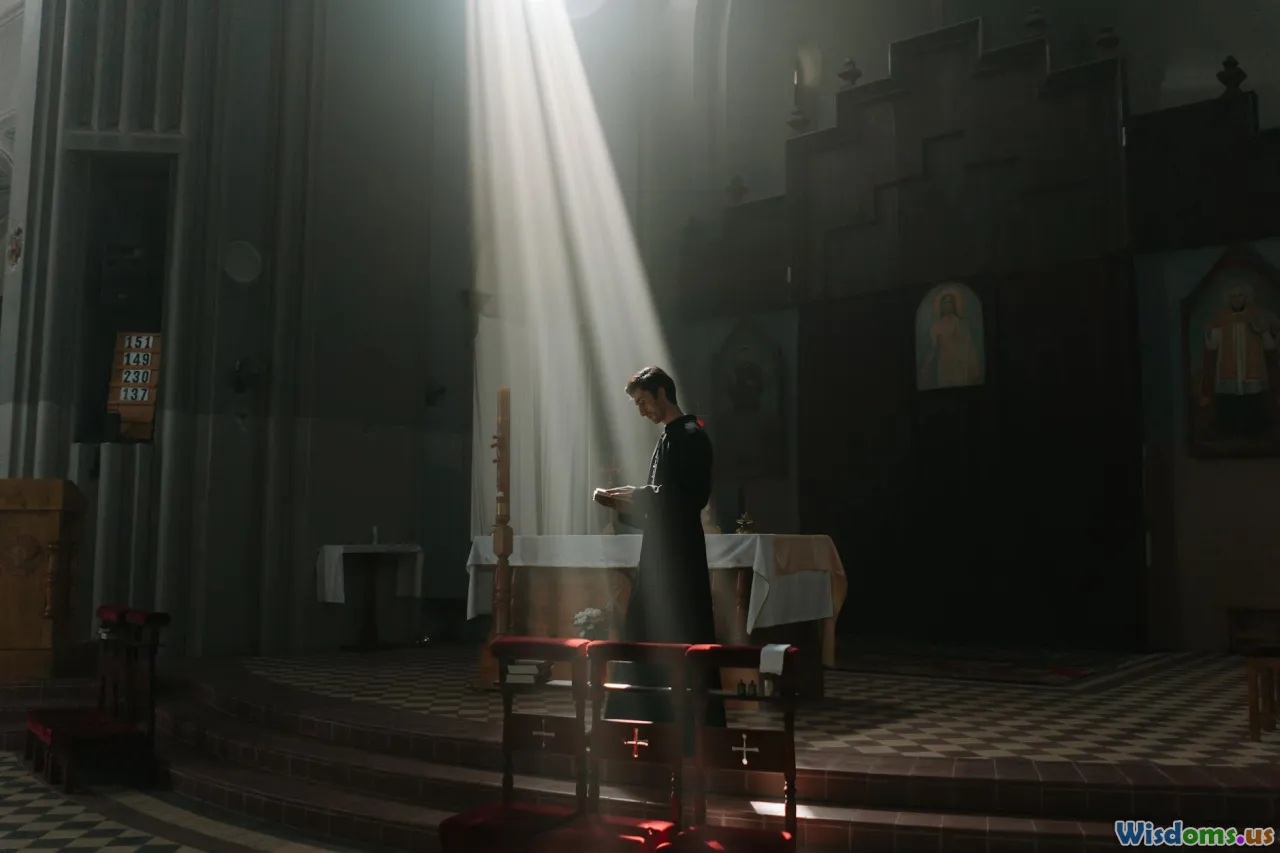
By the Middle Ages, exorcism was formalized through the Roman Catholic Church. The Rituale Romanum, established in 1614, became Christianity's gold standard for casting out demons. While the church rarely discusses details, documented cases and the rituals' structure have entered public consciousness.
Classic Catholic Exorcism Procedure
A typical exorcism, according to church canon, involves:
- Preparation: Fasting, confessions, and the spiritual safeguarding of everyone involved.
- Invocation: Repetitive prayers, Latin incantations, and recitation of Gospel passages.
- Forcible Commands: Like, "I command you, unclean spirit... depart from this servant of God!"
- Use of sacred objects: Holy water, crucifixes, relics, and icons.
- Observation of Responses: Change in the subject’s voice, strength, physical reaction, and uncanny statements—often interpreted as symptoms of possession.
Father Gabriele Amorth: The Vatican's Chief Exorcist
Among the most famous Catholic exorcists was Father Gabriele Amorth. He reportedly performed over 70,000 exorcisms, meticulously distinguishing genuine cases (which he claimed numbered in the "few dozens") from ones rooted in psychological or medical disorders.
One chilling case involved a young Italian man who shattered his own teeth by biting the exorcist’s crucifix—yet displayed no pain or fear afterward.
Amorth’s legacy endures in ongoing debates about distinguishing possession from mental illness, with the Church itself now requiring medical evaluations before rituals are authorized.
Notorious Cases in Modern History

The most harrowing exorcisms are those that left indelible marks on society, stirring controversy, skepticism, and fear that haunts the public imagination.
The Exorcism of Anneliese Michel
Perhaps the most tragic and influential modern case is that of Anneliese Michel, a German university student who, between 1975 and 1976, underwent 67 exorcism sessions, each lasting up to four hours. Her symptoms included convulsions, refusal to eat, and screaming in guttural voices.
Her Catholic parents, believing demons like Lucifer himself had possessed her, finally turned to two priests. The endless sessions took a tragic turn when Anneliese died of malnutrition and dehydration at only 23. The priests and parents were later convicted of manslaughter, sparking global debate over faith, mental illness, and the ethical limits of religious intervention.
The Michel case directly inspired the 2005 film, “The Exorcism of Emily Rose," and remains a touchstone in exorcism literature.
The Smurl Haunting
In the 1980s, the Smurl family of West Pittston, Pennsylvania, reported relentless supernatural torment: levitating beds, foul smells, icy blasts of air, and sexual assaults by an invisible force. Ed and Lorraine Warren, famous American demonologists, investigated and attested to the haunting's authenticity.
Catholic exorcism rituals were reportedly performed several times, but the Smurls claimed only temporary relief. While skeptics described the events as hallucinations or fabrication, the haunting remains one of the most-read accounts in American supernatural history.
Exorcism In Eastern Traditions: Between Fear and Reverence

Exorcism is not confined to the West. From China to India, traditions developed deeply nuanced approaches to spiritual cleansing.
Chinese Taoist Rituals
In Taoism, exorcists known as daoshi employ ancient scripts, ritual swords, and symbolic drawings. A common method involves fu talismans—yellow papers covered in red ink—that are burned and their ashes mixed with water, to be consumed by the affected person. Incantations often invoke the Heavenly Marshal to drive away the ghostly offender.
Contrary to popular Western imagery, Taoist exorcisms usually occur in daylight and in communal temple contexts, prioritizing harmony over dramatics. Despite this, outcomes can be intense, with trembling, fainting, and, occasionally, miraculous "cures."
Tibetan Buddhist Chöd Rituals
In Tibetan Buddhism, negative spirit possession is seen as spiritual disharmony. The chöd ritual involves lamas using drums and thigh-bone trumpets, visualizing offering their body to spirits—a symbolical act meant to remove fear and attachment. These deeply psychological ceremonies are reported to result in dramatic emotional releases but, unlike in the West, rarely feature violence or confrontation.
Hollywood And Frenzied Exorcist Culture: How Fiction Amplifies Fear

Since William Peter Blatty’s “The Exorcist” (1973) chilled audiences, the horror genre has fed on and inflated the mythology of exorcism. Many now associate possession with the extraordinary: spinning heads, supernatural strength, and projectile vomiting. But reality is often stranger—and in many cases, more tragic—than fiction.
Real-Life Impact of Screen Imagery
Following “The Exorcist” release, priests worldwide reported a surge in exorcism requests. Mental health crises were often reframed as spiritual afflictions, and families bypassed medical advice in favor of religious intervention. This has drawn criticism from psychiatrists, who cite cultural suggestions inducing or worsening symptoms:
- Cases in Latin America and Africa reveal exorcisms leading to severe injury and, in rare cases, death.
- Rituals performed by untrained practitioners often result in trauma, scarring, or psychological breakdowns.
Hollywood adaptations inspire a feedback loop: media amplifies fear, which then influences real-world events—sometimes with chilling outcomes.
Exorcisms in the Age of Science: Medicine or Mystery?

The perennial debate centers on a stubborn question: are exorcisms targeting disease, delusion, or something paranormal?
Diagnosing the "Possessed"
Common symptoms in exorcism cases—rage, dissociative episodes, language changes, seizures—align closely with known psychological or neurological disorders:
- Dissociative Identity Disorder: Alters, or distinct personalities, might manifest as "demonic voices."
- Temporal Lobe Epilepsy: Episodes can cause hallucinations and religious experiences.
- Schizophrenia: Auditory hallucinations and paranoia often mimic possession scenarios.
Yet, despite progress, many families choose spiritual avenues, especially when medical treatments fail or cultural beliefs dominate decision-making.
The Church's Evolving Role
Recognizing the risk of confusing illness with possession, the Vatican now strictly limits authorized exorcists, requires pre-approval and psychiatric evaluation, and often coordinates with medical teams. Nonetheless, demand remains high: Italy alone claims over half a million annual exorcism requests.
Exorcism Outcomes: Chilling Results and Cautionary Tales
A review of high-profile cases offers a sobering reminder: exorcisms are not always successful and may come with unintended, sometimes fatal, consequences. But the outcomes are diverse and often unpredictable:
Cases with Deadly Ends
- Johanne Birkerod, Denmark, 1997: After hours of being restrained during an improvised exorcism, she died from asphyxiation. The participants were later convicted for negligent manslaughter.
- Child Exorcism in New Zealand, 2007: Two parents drowned their daughter, believing she was possessed, sparking national outrage and legal reform.
Surprising Recoveries and Resilience
There are also cases in which exorcisms—when performed within psychological and spiritual boundaries—reportedly helped individuals overcome intractable symptoms.
- In some Philippine and West African cases, ritual healing coincided with relief from trauma, avoiding pharmaceuticals. Sociologists suggest the shared belief in healing may produce powerful placebo effects.
Still, expert consensus is clear: dangerous exorcism rituals threaten vulnerable populations, and any suspected case requires multi-disciplinary oversight.
Lessons and Modern Perspectives: Respect, Science, and Cultural Sensitivity

The enduring allure of exorcism rituals speaks to humanity’s age-old struggle to explain the unexplained—granting hope but too often inviting harm. A few guiding lessons emerge from these chilling stories:
- Prioritize Medical Review: Any behavior linked to possession must be assessed by qualified health professionals before ritual action.
- Respect Cultural Context: Ancient techniques have deep roots; informed dialogue, not dismissal, encourages the safest possible outcomes.
- Demand Accountability: Rituals should be transparent, overseen by ethical authorities, and sensitive to the rights of vulnerable individuals—especially children and those with mental illness.
The world still craves answers to the mysteries labeled as "possession"; science, faith, and culture each offer vital pieces to the puzzle. One certainty remains: exorcism, in legend and practice, has shaped humanity’s darkest fears and continues to inspire both awe and caution as the veil between faith and reason is drawn ever more thinly.
Rate the Post
User Reviews
Other posts in Demonic Possessions and Exorcisms




Popular Posts