Lessons from the Creation Myth of Ancient China
28 min read Actionable leadership, ethics, and resilience insights drawn from Pangu, Nuwa, and yin–yang themes in Ancient China’s creation myth, connecting cosmology to modern life, culture, sustainability, and innovation. (0 Reviews)
Creation myths are not museum pieces; they are instruction manuals written in metaphor. Ancient China’s cosmogonies—of a world hatched from an egg, a giant who holds the sky apart from the earth, a craftswoman who molds people from clay and patches a torn firmament—encode practical wisdom about work, leadership, design, and ecological humility. If you listen closely, they offer not just explanations for stars and rivers but blueprints for how to build teams, repair institutions, and make meaning under pressure.
The world as an egg: incubating possibility before action

The earliest Chinese creation images begin in undifferentiated chaos, often compared to a sealed egg. Inside, everything exists but nothing is distinct: light and heavy, clear and turbid, potential and form. The egg eventually cracks; the clear rises to become heaven, the heavy settles into earth. This is less a tale of magic than a pattern you can use.
Actionable insight:
- Protect incubation. Like a startup in stealth mode or a lab prototype shielded from quarterly metrics, a project sometimes needs a sealed shell. Too much scrutiny too soon hardens fragile insights into brittle dogma.
- Time the crack. When data cohere, you must break the egg. In product terms, this means releasing a minimum viable framing—something that separates the “clear” (the principles that guide) from the “heavy” (the constraints you accept). A policy reform, for instance, gains traction once its values (clear) are non-negotiable while its implementation (heavy) remains adjustable.
Concrete example: A city incubating a climate plan can host closed expert workshops (the egg), then publish a short set of guiding principles—equity, resilience, decarbonization—before debating the long list of zoning changes and incentives. The shell cracks once there is enough clarity to orient the messy work ahead.
Pangu’s daily labor: separating what must be kept apart

In one influential version recorded in late antiquity, a giant named Pangu wakes inside the cosmic egg and, with an axe, separates heaven from earth. He works for thousands of years, pushing the sky higher as he grows. When he dies, his body becomes the world: breath into wind, voice into thunder, eyes into sun and moon, blood into rivers, bones into mountains. The lesson isn’t brute strength; it’s separation as craft.
Analysis for modern work:
- Name the cut. Pangu’s axe reminds us that hard problems demand decisive distinctions. In organizational design, carving clear decision rights—what belongs to product versus compliance, what must be centralized versus federated—prevents endless re-litigations.
- Expect compounding. The myth says heaven rose a little each day. Long arcs of small, aligned moves create irreversible separation. In software, daily refactors to isolate modules mean fewer catastrophic rewrites later.
- Design for legacy. Pangu’s body becomes infrastructure. Leaders should assume their habits will fossilize into organizational geology. If you regularly skip documentation “just this sprint,” expect future rivers to flood.
How-to: Use a Separation Map.
- List a messy domain—say, customer data use.
- Draw two columns: Clear (heaven) and Heavy (earth).
- Place non-negotiable principles in Clear: customer consent, data minimization.
- Place trade spaces in Heavy: retention periods, anonymization techniques.
- Commit to never moving items from Clear to Heavy without executive review. This habitual separation, like Pangu’s daily lift, prevents values from collapsing back into chaos.
The cost of creation: what you build will outlive you

Pangu’s transformation into landscape dramatizes a sober truth: builders become the terrain others must traverse. That fact cuts both ways.
Concrete examples:
- Technical debt as geology. A monolith rushed to market can harden into a mountain no team can tunnel without risk. Conversely, well-documented interfaces become rivers that carry value long after originators leave.
- Public institutions. A regulator’s early rulemaking style—open comment cycles or closed-door decrees—turns into public expectations. Decades later, trying to shift that riverbed is costly.
Actionable advice:
- Leave cartography, not just artifacts. For every major decision, write a one-page decision log with context, options considered, trade-offs, and why you chose. Publish it. Future teams can navigate your mountains.
- Ritualize stewardship. Quarterly “geology days” audit what has ossified. Ask: Which processes are mountains we should respect? Which are sand dunes that we can reshape?
Nüwa’s clay: building people with care and scale in tension
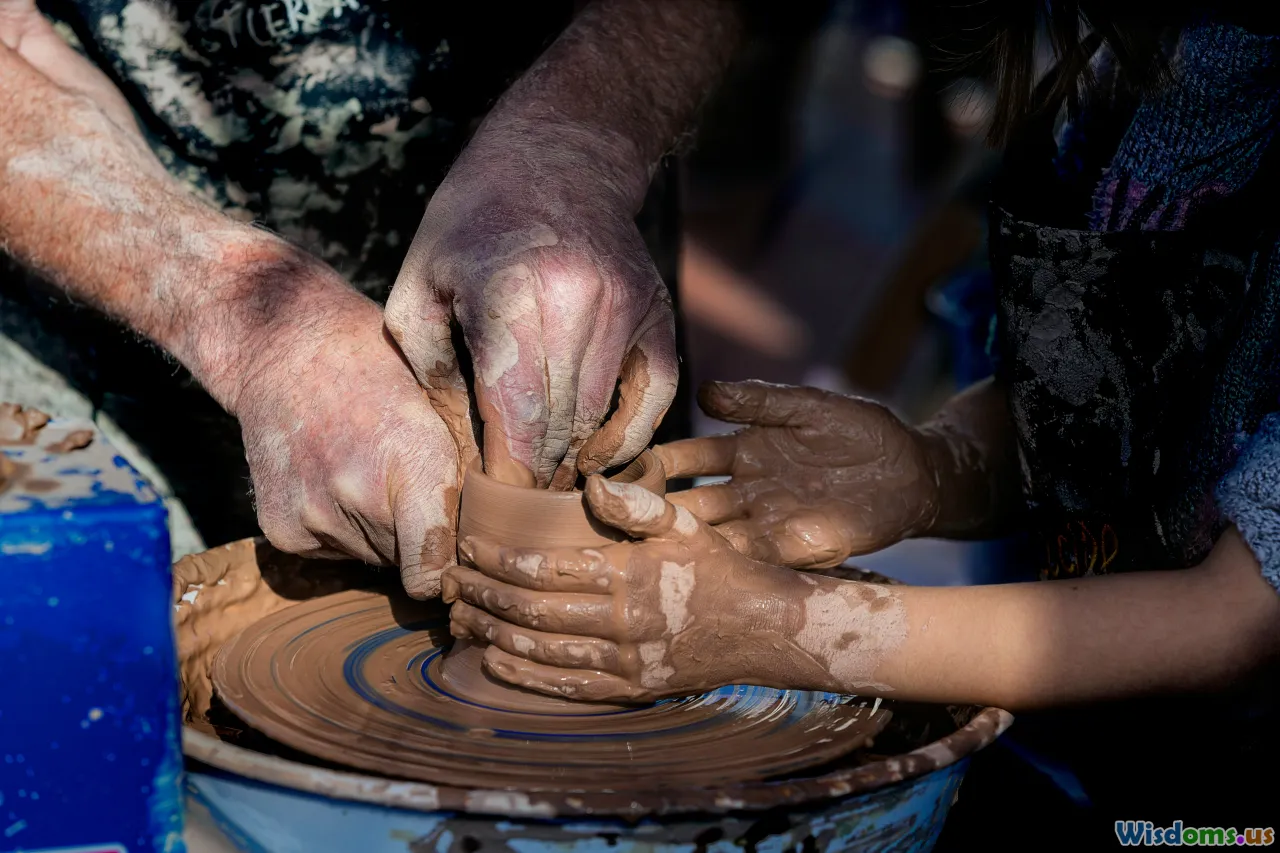
Nüwa (Nügua), the craftswoman-deity, is said to have molded the first humans from yellow clay. Some versions say she hand-shaped the first figures, then, to make more, dragged a rope through mud, splattering droplets that became common folk. Later readers saw a hierarchy in this, but another lesson is more useful: the tension between bespoke care and scalable processes.
Practical applications:
- Product and service design. Hand-built onboarding (white-glove support calls) creates deep empathy and surfaces edge cases. The rope method (self-serve tutorials and templates) brings inclusion at scale. Mature organizations do both: they handcraft the first 10 customers to learn, then publish playbooks to reach the next 10,000.
- Education. A professor’s office hour (hand-shaped) and a well-structured online forum (rope-splatter) together serve diverse learners. Dropping either degrades the human texture of learning.
Tip: Stage your human-building.
- Handcraft Phase: personally interview 20 users, shadow them, and build three tiny, bespoke solutions.
- Pattern Phase: document recurring needs; design checklists and templates.
- Scale Phase: automate enrollment, but keep a 5 percent capacity for custom exceptions, preserving Nüwa’s artisan touch.
Patching the sky: crisis response as craft, not heroism
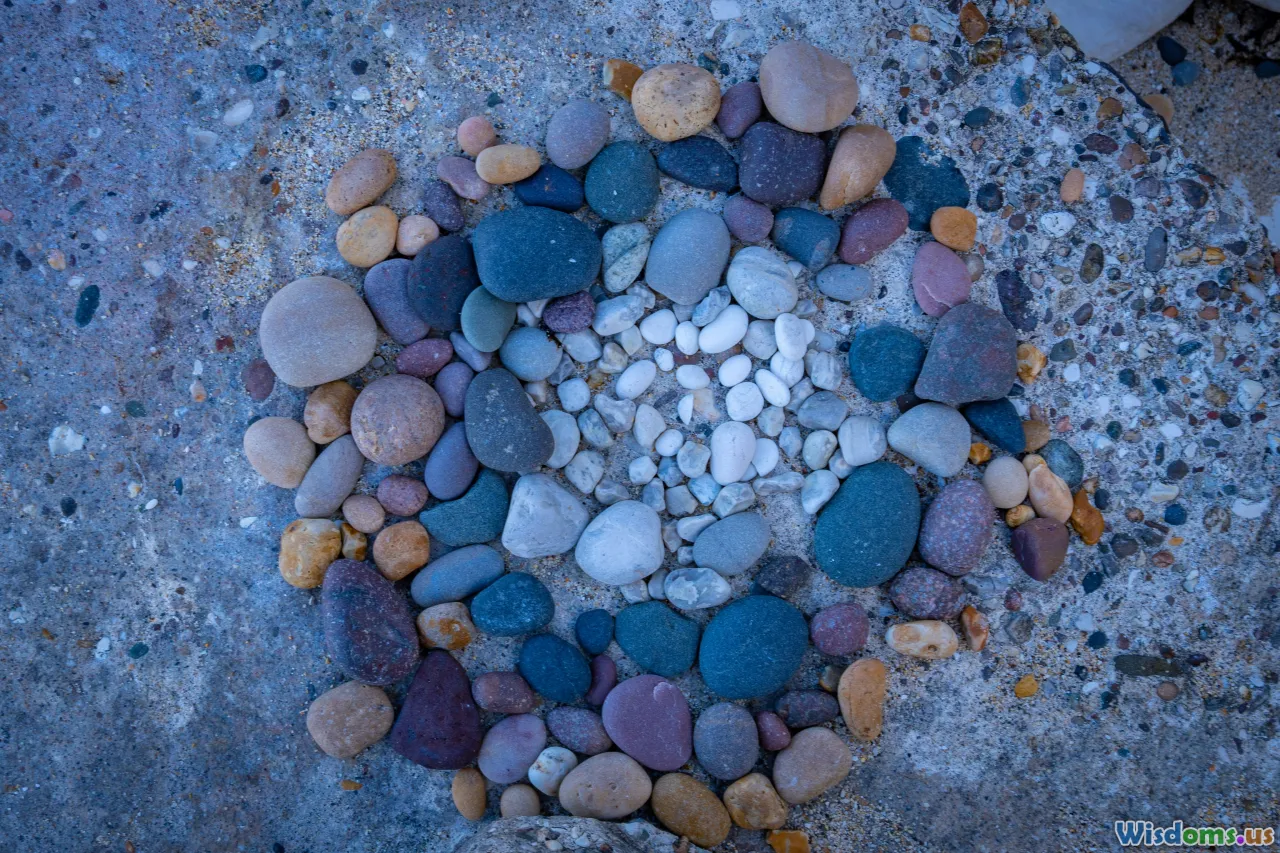
One famous episode tells of a cosmic disaster: a reckless god (Gong Gong) rams a mountain pillar; the sky tilts, earth cracks, fires rage, floods surge. Nüwa responds methodically. She smelts five-colored stones to mend the torn sky. She cuts the legs of a giant turtle to serve as new pillars. She slays a black dragon to calm chaos, then uses reeds’ ashes to dam floods. The cosmos persists, albeit tilted—rivers flow east, the sun sets west.
Crisis management lessons:
- Diverse materials for a multi-cause failure. Five-colored stones suggest multiplex solutions. In an outage with security, reliability, and comms failures, you need different patches: a hotfix, a key rotation, and a narrative for stakeholders—not one silver bullet.
- Repurpose resilient components. Turtle legs as pillars are repurposing, not reinventing. In emergencies, borrow robust capabilities—e.g., route traffic through a proven payments gateway while your new system is down.
- Accept imperfect equilibrium. The sky remains slightly tilted. After crisis, document residual risks and adapt. Think of partial outages in distributed systems; aiming for absolute zero downtime may be wasteful compared to graceful degradation.
How-to: A Sky-Patching Playbook.
- Diagnose causes in different colors: security (red), infrastructure (blue), data integrity (green), human process (yellow), external dependencies (white). Assign each a lead.
- Prepare a kit of “turtle legs”: three proven fallback options you can deploy within an hour—manual runbooks, vendor alliances, feature flags to darken non-critical paths.
- Slay the dragon last. Tackle the obvious, dramatic failure only after shoring up pillars. In practice: stop data loss and stabilize services before the public statement.
- Publish a tilt map. After resolution, write what changed and what remains bent. Plan retraining or compensation for those who must now work on a slope.
Example: A fintech faces a fraud surge plus API instability. Teams split the problem: risk clamps (red), traffic throttles (blue), ledger audits (green), Ops escalation (yellow), and partner bank coordination (white). They darken new account features (turtle leg: feature flag), hand-verify high-risk applicants (second leg), and route payments through a legacy rails provider (third leg) while resolving the dragon—root-cause in the risk model.
Patterns from Fuxi: draw systems before you build them

Fuxi, another culture hero often paired with Nüwa, is credited with revealing the bagua—the eight trigrams later elaborated in the Yijing (Book of Changes). Whether or not you believe in divination, the design move is striking: capture states and transitions as simple, combinable symbols. Before tools, draw the grammar.
Actionable design move:
- Map your state space. For a customer journey, define eight canonical states—discovering, trying, onboarding, paying, using lightly, using deeply, advocating, leaving. Then sketch permissible transitions. This pre-architecture prevents needless complexity.
- Use minimal expressive units. Like yin and yang lines forming trigrams, encode complexity with a few primitives: request, response, error; create, read, update, delete. Teams that agree on primitives can improvise safely.
Example: A health app draws its own trigrams—body (physiological), mind (psychological), social (context)—each with on/off lines (urgent vs. routine). Intersecting them yields eight common user states; interventions are matched accordingly. Instead of dozens of ad hoc flows, the system speaks a small, consistent language.
Yin-yang and the Five Phases: balancing opposites in motion

Chinese cosmology emphasizes dynamic balance, not static endpoints. Yin and yang are complementary oscillations; the Five Phases (wood, fire, earth, metal, water) describe generating and overcoming cycles in nature and society. Translating this into management shifts your horizon from “best practice” to “fit for now.”
Practical frameworks:
- Portfolio rhythms. Map projects to phases: wood (initiation), fire (growth), earth (stabilization), metal (optimization), water (reflection/retirement). Each quarter, ensure your portfolio contains all five. A company with all fire and no water burns out.
- Decision hygiene. Pair yin moves (listening, observation, incubation) with yang moves (commitment, launch). Put them on calendars: for every decision meeting, schedule a pre-meeting for silent reading and a post-decision check-in two weeks later to sense side effects.
- Conflict as cycle, not failure. If a sales leader (fire) clashes with a risk officer (water), name the cycle. Design a meeting that lets fire present opportunities first, then water outlines constraints, then earth proposes an integrative plan, and metal crafts metrics. Don’t seek a winner; seek the next phase.
Example: A nonprofit maps its annual plan: Q1 wood (field listening, small pilots), Q2 fire (public campaigns), Q3 earth (consolidate partnerships), Q4 metal (audit impact, prune programs) with water woven monthly (well-being days, reflective workshops). Staff turnover drops; output becomes steadier.
Hundun and the trap of premature clarity

A Daoist parable tells of Hundun, a being of pure chaos and kindness with no orifices. Two neighboring rulers, grateful yet discomforted, carve seven holes into Hundun—eyes, ears, nostrils, mouth—so he can be like them. Hundun dies. The parable warns against imposing your structure on a system that thrives in formlessness.
Team-level takeaways:
- Don’t over-instrument the proto-idea. Early brainstorming sessions die under the weight of templates, KPIs, and ticketing. Keep a season of hole-less Hundun where you play with materials and metaphors without slotting them into roadmaps.
- Time-box the chaos. Creative formlessness is a phase, not a lifestyle. Set a one-week or one-sprint Hundun window, then choose what to formalize.
Exercise: The Seven-Hole Guardrail.
- Before a new initiative, list seven ways you could prematurely impose form: naming, budgeting, OKRs, tool selection, compliance review, timelines, stakeholder briefings.
- For the first week, forbid five of them. Permit two light-touch forms only (e.g., naming and a loose time window). Debrief at week’s end: what emerged that would have died under a full cage?
Repair, not supremacy: how Chinese cosmogony differs from others
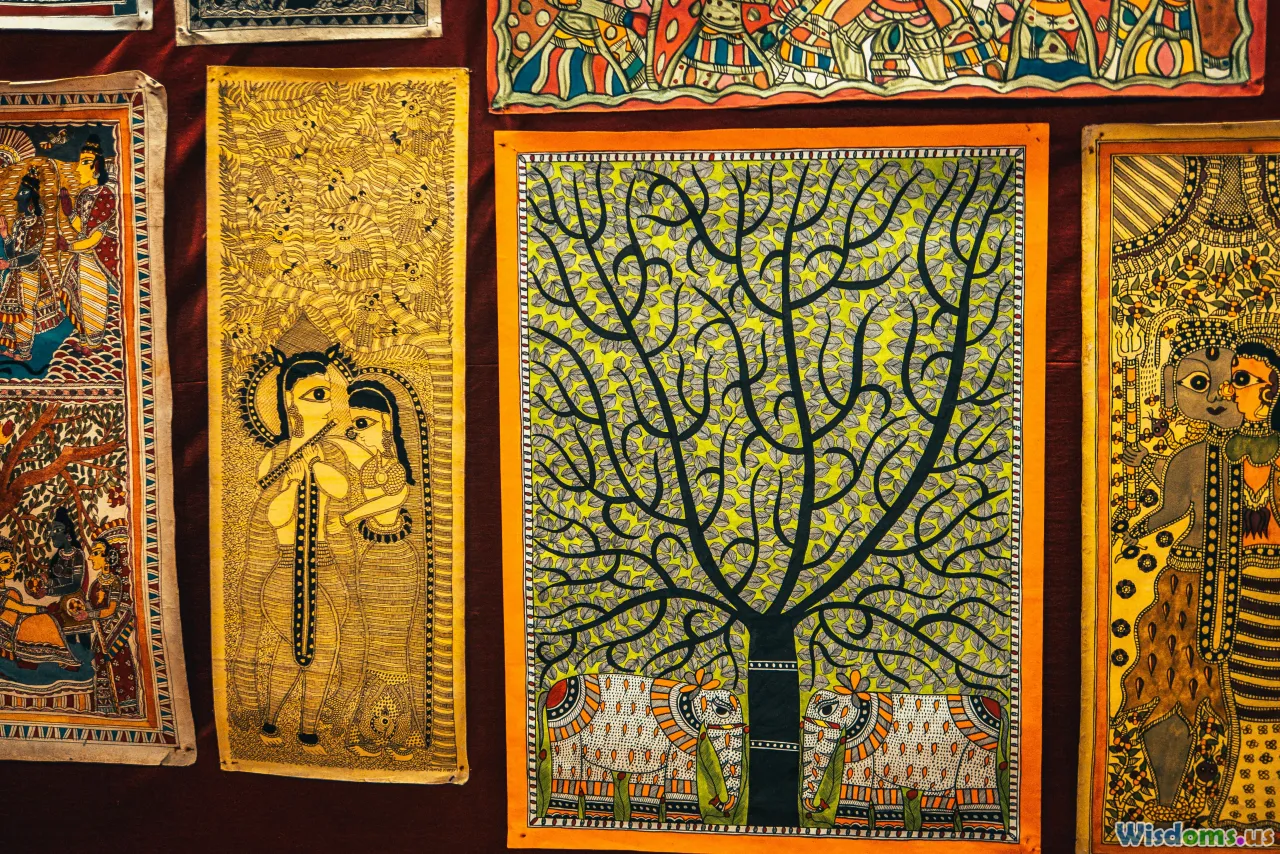
Many traditions begin with combat or a decree. In Mesopotamian myth, Marduk slays Tiamat and fashions the cosmos from her body. In Genesis, God speaks order into being. Greek stories pivot on violent succession among sky and earth gods. Chinese myths do feature conflict (Gong Gong’s rage), yet their center of gravity often lies in craft and repair: Pangu’s labor, Nüwa’s mending, Fuxi’s diagrams.
Comparative lessons:
- Work over word. Instead of creation by fiat, we see creation by effort and maintenance. Organizations that prize maintenance talent—site reliability engineers, policy implementers, teachers—align with this ethos and tend to be more stable.
- Cooperative cosmos. Even when heroes act alone, their actions enable a livable world for others rather than enthroned glory. Translate this into leadership that builds platforms rather than spotlights.
- Non-final endings. The tilted sky acknowledges irreducible imperfections. Systems thinking embraces trade-offs openly rather than promising final solutions.
Concrete contrast: When a retail chain scales, a decree-first culture might centralize all decisions to ensure consistency. A repair-first culture empowers local managers to mend gaps with context-specific fixes, while headquarters maintains shared pillars—payments, HR, brand safety. The latter tends to adapt better across regions.
Living with the tilt: embracing asymmetry and constraint

The mythic sky, once patched, leans northwest; the earth slopes southeast. Hence, ancient storytellers explained why celestial bodies drift westward and why great rivers flow east. The philosophical payload is acceptance that constraints and asymmetries are part of reality, not bugs to eradicate.
Applications:
- Urban planning. Rather than fighting every flood with taller walls, redesign for the tilt: create floodplains, elevate critical infrastructure, and program parks to absorb overflow. Many East Asian cities now use sponge-city concepts—embracing water rather than pretending land is flat.
- Product defaults. If most users skim help docs, design help in-line rather than lamenting the tilt. Tooltips, example-filled templates, and safe defaults meet the slope where it is.
- Career design. A manager whose week tilts toward meetings can protect a 90-minute daily craft block rather than dreaming of a perfectly flat calendar.
Checklist for tilt-aware design:
- Name the tilt (structural force you cannot remove in the next year).
- Redesign surfaces (interfaces, schedules) to guide flow safely.
- Add early-warning markers (dashboards, water level sensors) near steep edges.
- Educate users or citizens about the slope and how to move on it.
Stories as standards: how myths encode governance
In pre-literate or semi-literate eras, stories carried norms. The tale that Nüwa smelts five-colored stones is also an instruction: diversify materials; prepare a kit. Fuxi’s trigrams are visual standards that make coordination possible across distance and time.
Organizational practice:
- Narrative runbooks. For recurring events—on-call rotations, public health drills—write short narrative scenarios with characters, tensions, and choices. People remember stories under stress better than checklists alone. Pair them with crisp checklists for action.
- Shared symbols. Create a compact set of icons or tags that encode priority, risk, or phase. Teach them until everyone can read them like road signs.
Example: A hospital emergency department codifies four icons: flame (acute), cascade (multi-patient event), shield (infection risk), hourglass (time-sensitive diagnostic). Shift leads post the icons at the top of boards. The shared semiotics reduce chatter; responses become uniform without coercive scripts.
Ethical echoes: the maker as caretaker

If a creator’s body becomes the environment, then making is inseparable from caretaking. The myths caution that shortcuts ripple outward.
Ethical practices:
- Environmental accounting. A factory’s “blood” will become a river in somebody’s story. Price water, air, and soil realistically. Publish emissions and remediation plans. Choose five-colored stones—diverse, repairable materials—over exotic composites that cannot be mended.
- Humane scaling. The rope-in-mud image is a warning. Processes that splatter people—hiring sprees with weak onboarding, gig models without safety nets—erode trust. Reserve capacity to hand-shape those most affected by your decisions: frontline workers, small suppliers, vulnerable customers.
Case insight: A tech firm rolling out AI-assisted support tools trained only on neat tickets (the rope droplets) missed elderly and disabled users’ needs. After shadowing calls and hand-crafting solutions—bigger type, slower speech options, callbacks—they rebuilt the model with inclusive data. CSAT rose; compliance issues ebbed.
Teaching with myths: exercises to make the lessons stick
Using these stories is not antiquarianism; it is pedagogy for complex times.
Three ready-to-run activities:
- Patch the Sky Workshop (90 minutes)
- Prompt: A broken process—e.g., onboarding churn at 35 percent. Teams list five colored causes, then propose five matching patches. They must include one repurposed component (turtle leg), one partial acceptance (tilt), and one narrative patch (how they will explain the repair).
- Outcome: A concrete, sequenced plan and a residual risk statement.
- Pangu’s Separation Map (60 minutes)
- Prompt: A cross-functional tangle—marketing promises versus delivery capacity. Participants draw Clear/Heavy columns, lock values in Clear, negotiate trade in Heavy. Total decisions are logged for posterity.
- Outcome: Reduced thrash and a portable doctrine.
- Hundun Sprint (1 week)
- Prompt: Explore a new service line. For five days, teams ban budgeting, tool commitments, and briefs. They must only build low-fidelity artifacts: sketches, storyboards, paper prototypes. On day six, they pick two artifacts to formalize.
- Outcome: More surprising options, less premature constraint.
Common misreadings and how to avoid them

Ancient Chinese creation stories are plural, layered across regions and centuries. Avoid these pitfalls:
- Treating one version as canonical. Pangu’s tale is late compared to other materials and varies across sources; Nüwa’s deeds show up in texts like the Huainanzi and the Classic of Mountains and Seas with differences in detail. Read them as evolving conversations.
- Reading hierarchy into clay. The rope-versus-hand contrast has been used to justify class distinctions. A healthier reading sees it as a commentary on process design: scale versus care.
- Forcing modern binaries. Yin-yang is not good versus evil; it is polarity and transformation. Five Phases are not elements in the periodic sense but phases of change.
- Ignoring humor and play. Daoist texts wink at certainty. If your takeaway is rigid recipe rather than flexible posture, you have missed the tone.
Practical guardrail: When teaching or leading with these myths, preface with, Our goal is not to prove historic facts but to borrow patterns that help us act wisely in uncertain systems.
A field guide to applying the myths this quarter

If you want to operationalize the lessons right away, try this quarter-long cadence.
Month 1: Incubate and Separate
- Hold a two-week Hundun window for your thorniest question. Produce five sketches, no commitments.
- Run a Pangu Separation Map for one domain. Publish the Clear/Heavy doctrine.
Month 2: Pattern and Repair
- Draft a Fuxi-style state diagram for a customer or policy journey. Reduce needless transitions.
- Identify one crisis-prone process. Assemble a five-colored patch kit and three turtle-leg fallbacks. Run a tabletop exercise.
Month 3: Balance and Steward
- Audit your portfolio across Five Phases; rebalance to include water and metal.
- Choose one environmental or human externality of your work. Price it, measure it, and publish a stewardship plan.
Metrics to watch:
- Thrash rate: number of reopened decisions per month (should fall).
- Patch time: hours from incident start to stable tilt map publication (should shrink without sacrificing quality).
- Phase balance: distribution of projects across wood/fire/earth/metal/water (should diversify).
- Stewardship score: percentage of major initiatives with published externality accounting (should rise).
When you feel friction, ask which story you are in—egg, axe, rope, or stones—and act accordingly.
The creation myths of ancient China do not close the book with a perfect world; they end with a world worth tending. An egg breaks only when what grows inside is ready. The axe is heavy, but even heavier is confusion uncut. Clay dries, yet hands can shape anew. The sky tears; we patch it with color, courage, and whatever sturdy legs we can borrow. And if, after all this, the horizon still tilts, we learn to walk with grace on a slant, carrying our tools, telling our stories, and leaving good mountains in our wake.
Rate the Post
User Reviews


Popular Posts