Unicorns and Their Surprising Links to Ancient Cultures
29 min read Track unicorn lore across civilizations—Indus seals, Greek monoceros, Chinese qilin, and Persian karkadann—and see how real animals and trade forged Europe's medieval unicorn and narwhal-tusk myth. (0 Reviews)
Most of us meet unicorns in picture books, pop culture, or finance headlines, where they stand in for whimsy or rare success. But the idea of a one-horned, extraordinary creature long predates medieval tapestries and modern brand mascots. Across continents and millennia, people recorded encounters, traded horns, argued over translations, and built entire moral lessons on the back of this animal-that-wasn’t. If you follow the trail of hoofprints through old texts, trade routes, and museum collections, unicorns reveal a surprising map of ancient connections—between South Asia and the Mediterranean, between China and East Africa, between Arctic seas and European courts.
The First "Unicorns" on Clay and Stone

The oldest widely cited “unicorn” is not a horse at all. It appears on small, baked clay seals from the Indus Valley Civilization (ca. 2600–1900 BCE), found at sites like Harappa and Mohenjo-daro. These seals show a profile of an animal with a tall, single horn projecting forward from the forehead—archaeologists often call it the “unicorn bull.” The image is precise: neatly trimmed mane, muscular body, ritual stands or “feeders” before the animal, and a line of still-undeciphered Indus script above.
What exactly the Harappan engravers had in mind is debated. Many scholars suspect the horn marks a ceremonial headdress attached to a domesticated bovine, not a biological horn. Others see a symbolic composite, a visual shorthand for power or authority—especially since seals likely functioned as merchant marks or administrative stamps. Concrete details help here: the motif repeats with striking consistency across hundreds of seals, and impressions show they were actively used, not just decorative trinkets.
Here’s the surprising link. Indus seals (including the unicorn type) have been recovered at sites in Mesopotamia, such as Susa, indicating long-distance trade. In other words, the one-horned Indus animal crossed cultural frontiers in the Bronze Age. Whether Mesopotamian viewers saw the image as a sacred bovine, an exotic beast, or just a merchant’s logo, the visual motif entered a broader ancient marketplace of symbols. A single horn, carved sharply in profile, had become a transregional sign long before Greek authors wrote about “unicorns.”
Tip if you’re traveling: The British Museum and the National Museum in New Delhi both hold Indus “unicorn” seals on display. When you look closely, notice the regular groove along the horn—more like a staff or headdress than a natural horn.
When Greeks Met the East: Ctesias, Megasthenes, and a Colorful Horn
By the time Greek writers described a unicorn-like animal, they placed it not in mythic forests but in their natural histories. Around 400 BCE, Ctesias of Cnidus—who worked at the Persian court—wrote the Indica, a compendium on India assembled from travelers’ and officials’ reports. He claimed India had “wild asses” larger than horses with a single horn, ringed in colored bands: white at the base, black in the middle, and crimson at the tip. Their horns, Ctesias wrote, could neutralize poison if used to drink.
This account matters for three reasons.
- Genre: Ctesias filed unicorns under zoology, not fable. Medieval writers would later turn this into moral allegory, but for Ctesias it was (purported) natural fact.
- Trade ecology: The antidote claim foreshadows centuries of “alicorn” (unicorn horn) commerce across the Mediterranean and Europe.
- Real animal candidates: The Indian rhinoceros fits many details—a single horn, formidable size—and the oryx can appear one-horned in profile. Aristotle later observed that some animals (like the oryx) look one-horned when seen from the side, a perceptive note that hints at how distant reports become “unicorns.”
Megasthenes, an ambassador to the Mauryan court around the 3rd century BCE, also described exotic Indian fauna and mentioned one-horned creatures, likely drawing on the same pool of sightings and stories. Greek and Roman writers then repeated and embellished the theme. The bigger historical lesson is this: the unicorn entered European thought through cross-cultural contact, not homegrown myth.
Research hack: When you see a dazzling detail—like Ctesias’s tricolor horn—ask what could have sparked it. A narwhal tusk has natural spiral grooves; a rhino horn can be carved and dyed in bands; and storytellers often add color to tilt a traveler’s tale from plausible to unforgettable.
The Qilin and East Asia’s Gentle Unicorns
China’s qilin (Japanese kirin, Korean girin) is often called an “Eastern unicorn,” but it carries a different moral charge. Classic texts such as the Book of Rites list the qilin among the four benevolent creatures (with the dragon, phoenix, and tortoise). A famous passage in the Spring and Autumn Annals’ later commentaries records the capture of a qilin in the state of Lu around 481 BCE; Confucius is said to have wept, interpreting its appearance as an omen tied to the fate of sages and rulers.
Unlike a purely horse-like unicorn, the qilin is a composite: a deer-like body, ox tail, fish scales, cloven hooves, and sometimes one horn (sometimes two). It is temperamentally gentle, stepping carefully to avoid crushing even a blade of grass. Its presence signals righteous government and auspicious times; it breathes goodness rather than hunting maidens.
Maritime links complicate this picture in the most delightful way. In 1414, envoys from the kingdom of Malindi (on Africa’s Swahili Coast) presented a giraffe to the Ming court, where it was interpreted in courtly art as a qilin—a diplomatic masterstroke. The long-necked giraffe, arriving through Indian Ocean trade fostered by the voyages often associated with Zheng He, visually matched an omen-beast of good rule. Even the Japanese word for giraffe today is kirin.
Comparison takeaway: West Asian and Mediterranean sources emphasize dangerous, rare, and pharmacologically potent unicorns; East Asian traditions frame the one-horned or antlered qilin as auspicious order incarnate. The single-horn motif unites them, but the ethical software they run is radically different.
Persia and the Karkadann: From Rhinoceros to Romance

In Persian and Arabic texts, a creature called the karkadann (or kargadan) strides in and out of bestiaries, poetry, and travelogues. Etymologies likely reach back to Sanskrit roots for rhinoceros (khadga, “sword,” and danta, “tooth”), and many descriptions fit the Indian rhinoceros—single horn, thick hide, a habit of grazing near waterways.
Yet medieval and early modern writers also embroidered wilder claims onto this canvas. Some accounts describe the karkadann as fiercely territorial, capable of killing elephants by goring their bellies. Others grant the horn potent antidotal powers, mirroring the Greco-Roman alicorn trade. Persian miniature paintings occasionally depict slender, horse-like versions with a single horn—a visual translation that pushes the rhinoceros into unicorn territory.
These shape-shifts are not random. The Persianate world sat astride trade networks stretching from India to the Levant and beyond. Rhinoceros horn objects traveled with spices and textiles; stories traveled with them. The karkadann thus acts as a linguistic and artistic hinge, swinging between plausible natural history and moralized creature. Seen this way, the “unicorn” is not a single animal but a field of negotiation between direct observation, imported objects, and cultural expectation.
Field method: If you encounter a “unicorn” in a Persian or Arabic source, check for details like hide texture, ear shape, and habitat. Swampy riverine settings and armored skin point to rhinos. Pastoral meadows and delicate manes suggest a symbolic, horse-leaning reinterpretation.
The Bible’s Unicorn: A Translation Journey
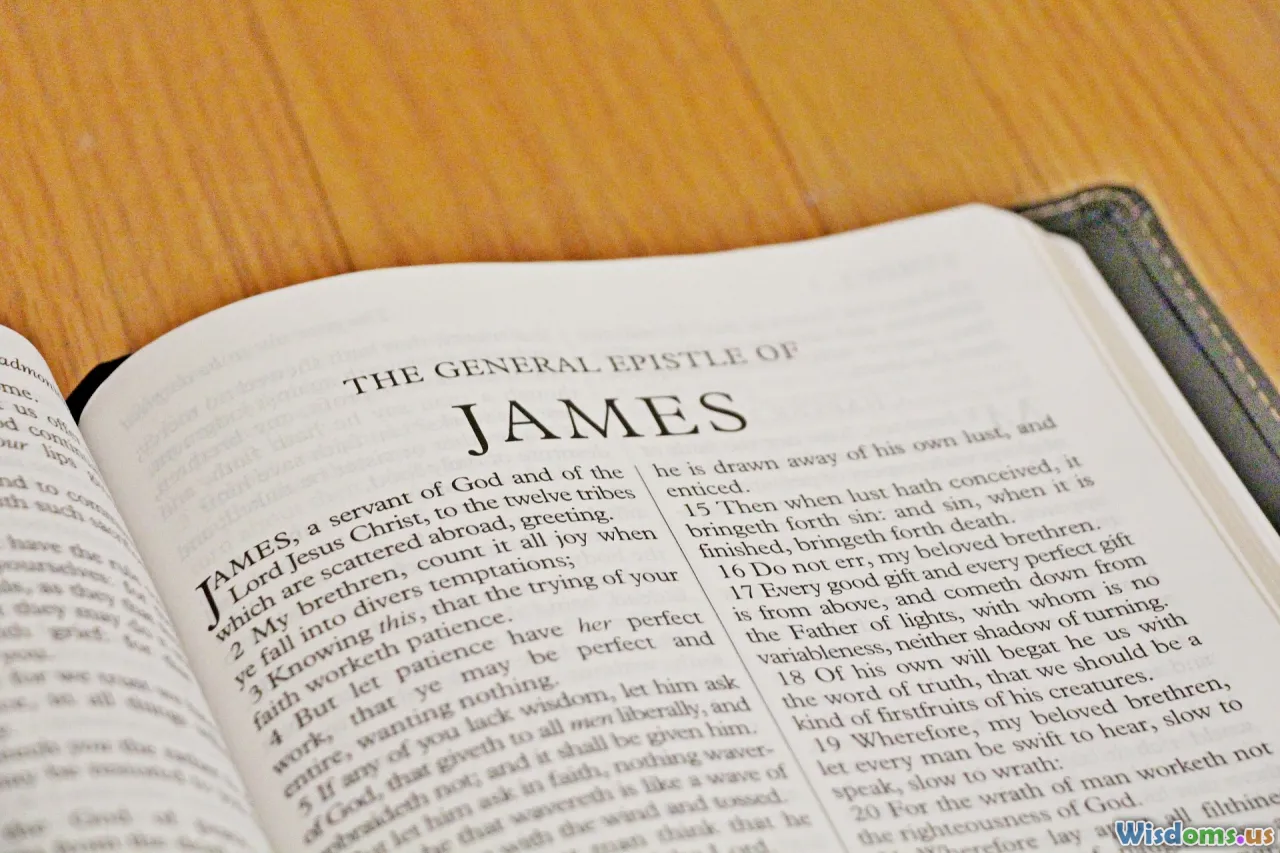
The Bible’s unicorn is a story of words, not wildlife. The Hebrew term re’em, found in books like Numbers (23:22; 24:8), Deuteronomy (33:17), Job (39:9–10), and Psalms (e.g., 92:10), probably refers to the aurochs, a now-extinct wild ox with impressive horns. When Jewish scholars in Hellenistic Egypt translated the Hebrew scriptures into Greek (the Septuagint), they rendered re’em as monokeros—literally “one-horned.” The Latin Vulgate and later English translations, including the 1611 King James Version, carried forward “unicorn.”
Two facts expose the mismatch:
- Several passages speak of the re’em’s “horns” in the plural (e.g., Deuteronomy 33:17), which strains a one-horn reading.
- Archaeology confirms the aurochs’ prominence in the ancient Near East as a symbol of wild power; it appears on seals, stelae, and reliefs with two horns.
But once “unicorn” entered the biblical lexicon, it shaped centuries of European imagination. Bestiaries and preachers linked it to Christian virtue and Christological allegory. The translation journey shows how a single term—lifted from one language into another—can re-tint an entire canon of art and thought.
Practical reading tip: When a translation offers a marvelous creature, peek at a modern critical edition or footnote. Many contemporary Bibles now render re’em as “wild ox,” restoring zoological sanity while preserving the passage’s poetic force.
Medieval Europe: Alicorns, Narwhals, and Northern Seas
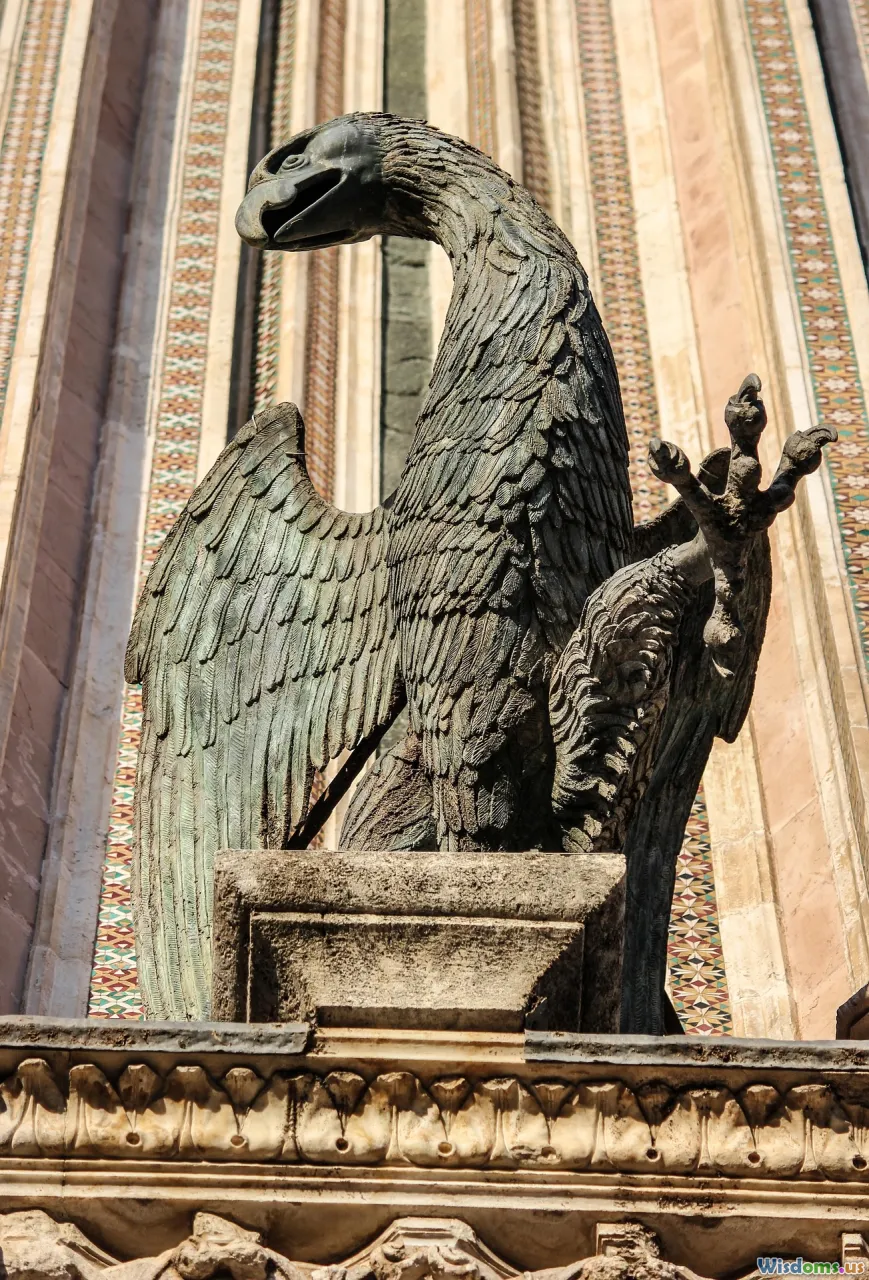
If the Greeks imagined unicorns and the Bible named them, medieval Europe built a market around them. “Alicorn” became the term of art for unicorn horn, and from the 12th century onward, courts and apothecaries paid enormous sums for it. Kings and bishops displayed long, spiraled “horns” as diplomatic showpieces and antidotal devices.
Where did these horns come from? In many cases, from narwhals, the Arctic whales whose males grow a spiraling left-twisting tusk up to three meters long. Norse traders, and later merchants connected to Greenland and Iceland, ferried tusks southward. By the Renaissance, the Danish crown assembled the famed “unicorn throne” in Copenhagen using narwhal tusks. One oft-repeated anecdote says a “unicorn horn” presented to Elizabeth I was valued at the price of a castle—whether the number is exact or not, the inflationary hype is the point.
Bestiaries like the Physiologus and later medieval compilations folded the unicorn into moral allegory: a fierce creature that could be tamed only by a virgin maiden, a parable read through a Christian lens. The beloved late-15th-century Unicorn Tapestries (today at The Met Cloisters in New York) show a hunt culminating in a unicorn’s capture within a circular fence, its neck encircled by a collar and chain—a cycle of violence, domestication, and ambiguity.
Actionable authenticity checks:
- Look for the spiral: Narwhal tusks have a distinctive counterclockwise spiral, with subtle ridges you can feel. Rhino horn is made of compressed keratin fibers and lacks that regular external twist.
- Material tests: UV light and density measurements can help distinguish ivory sources; museums increasingly label historical “unicorn horns” as narwhal.
- Context clues: Arctic trade routes exploded after the Viking Age; horns appearing in Europe in this window are likely maritime imports.
Across the Steppe: Scythians, Elasmotherium, and Bones that Tell Stories

Long before medieval hunters chased unicorns in tapestries, Ice Age megafauna left fossils across Eurasia. Among the most dramatic is Elasmotherium sibiricum, the “Siberian unicorn,” a giant rhinoceros that likely carried a massive nasal horn. For decades it was thought to have gone extinct far earlier, but a 2016 radiocarbon study suggested some populations survived in Central Eurasia as recently as about 29,000 years ago.
Does this explain the unicorn? Not directly. There’s a yawning gap between the Pleistocene and the historical period. But the steppe has long been a corridor for movement and memory, and human communities have collected large bones and horns from riverbanks since antiquity. Scythians, Sarmatians, and later nomads might have encountered weathered skulls and spun tales of colossal, horned beasts. Fossils have a way of seeding myth: griffins have been tied (speculatively) to Protoceratops skulls on Silk Road caravan routes; a similar process could have framed one-horn lore on the Eurasian steppe.
Why this matters is methodological. Rather than insisting on a single origin, we can see the unicorn as a palimpsest—rhinos and oryx observed firsthand, narwhal tusks sailing into courtly inventories, translation quirks canonized in scripture, and Ice Age bones whispering through campfire stories.
Why Do Unicorns Recur? A Comparative Analysis
A single horn is a simple, potent visual motif. It lends itself to recurrence across cultures, for reasons both psychological and practical.
- Cognitive salience: Humans gravitate to anomalies. A single horn violates animal “templates” much like a four-leaf clover violates plant expectations; rarity becomes memorability.
- Moral coding: The horn becomes a vector of meaning. In West Asia and Europe, it absorbs pharmacological power (antidotes to poison), reflecting royal anxieties about assassination. In East Asia, the horn fits into an auspicious ecosystem of omen-beasts, embodying legitimacy and restraint.
- Visual illusion: Herd animals viewed in profile (oryx, addax, gemsbok) read as one-horned in silhouette. Ancient artists often drew animals in profile; the medium reinforces the motif.
- Trade artifacts: Narwhal tusks and rhino horns are portable, valuable, and strange. They anchor stories with tangible objects, turning hearsay into held-in-the-hand “proof.”
- Translation slippage: Monokeros entering the Septuagint shows how a single lexical choice can cascade into centuries of iconography and faith.
Pattern spotting: If a culture puts a premium on purity or courtly ethics, its unicorn likely becomes gentle and sanctified. If it prizes martial power or antidotes, expect a fierce beast whose horn cures, kills, or both. The same motif maps onto different cultural anxieties and ideals.
How to Trace a Unicorn: A Practical Method for Curious Readers

You don’t need a university library card to investigate unicorn claims with rigor. Try this four-step method the next time you see a marvelous horn in a display case or a quote flying around online.
- Source the story.
- Ask: Who wrote this, and when? Ctesias (ca. 400 BCE) is not Pliny (1st century CE), who is not a 13th-century bestiary compiler. A later retelling can smuggle in new morals.
- Tip: Search for translations with footnotes. If you see “monokeros,” “Ainkhürn,” or “karkadann,” you’re close to a primary thread.
- Check the ecology.
- What animals live (or lived) in the region? India has the one-horned rhino; Arabia has oryx; Arctic waters have narwhals—but not in the Mediterranean.
- Are there geological reasons for fossils to surface? River erosion along steppe systems can expose Ice Age bones.
- Follow the objects.
- Can you trace a horn’s path? Provenance records, shipping logs, and gift registries (courts kept them) often name donors and dates.
- Quick test in museums: Narwhal tusks twist; rhino horn objects look laminated on cross-section; bovine horns curve and hollow differently.
- Watch for translation traps.
- Does the text mention plural “horns” elsewhere for the same creature? Is the translator imposing a mythic reading? Compare multiple translations of the same verse or passage.
Bonus: Build a photo folder. Snap labels and objects during museum visits. Over time, patterns emerge—the same donor names, the same trade routes, the same spiral.
Objects You Can See Today: A Traveler’s Mini-Guide

Want to connect ancient unicorn stories to real artifacts? Here are concrete stops and what to look for.
- The Met Cloisters (New York): The Unicorn Tapestries. These seven late-15th-century panels narrate a unicorn hunt with exquisite botanical detail. Look for the millefleurs backgrounds and the final “Unicorn in Captivity” panel—scholars still debate whether the imagery celebrates love, domestication, or both.
- Rosenborg Castle (Copenhagen): The “Unicorn Throne” of the Danish monarchy, constructed with narwhal tusks and silver. It’s a masterclass in how Arctic trade was reframed as mythical proof.
- British Museum (London): Indus “unicorn” seals. Note the consistency of the horn device and the way it interacts with the undeciphered script—this is administrative art, not fantasy illustration.
- National Museum, New Delhi (or site museums in Harappa and Mohenjo-daro): Additional Indus seals and related artifacts contextualizing the unicorn motif within a broader urban civilization.
- Kunstkammer displays (Vienna, Dresden, and elsewhere): Many early modern “unicorn horns” now labeled as narwhal tusks in cabinets of curiosities. Read the placards; the re-labeling itself tells a science-in-progress story.
Before you go: Check current exhibitions online. Some objects rotate or travel. And bring a small ruler or use your phone’s measure tool—recording spiral direction or diameter can make a nice comparative dataset later.
Teaching and Storytelling Tips: Keeping the Wonder, Adding the Facts

Unicorns are irresistible to students and family audiences. The challenge is to keep the sparkle while threading in method and care.
- Map the motif: Print a blank map and plot points—Harappa seals, the Persian court of Ctesias, ancient Israelite kingdoms (re’em), medieval European ports, the Ming court giraffe. Seeing the route turns myth into a geography lesson.
- Side-by-side images: Compare an oryx in profile, a rhinoceros, a narwhal tusk, and the qilin from a Chinese scroll. Ask which features recur and which are culture-specific.
- Primary-source theater: Let students read a short Ctesias excerpt, a KJV verse with “unicorn,” and a bestiary entry. Debate what counts as observation versus moralizing.
- Material science demo: If you have access to legal samples or replicas, compare textures—ivory, bone, keratin. Explain why keratin’s structure makes rhino horn carvable but non-spiraled.
- Conservation bridge: Use the session to discuss rhino poaching and the myths of medicinal horns. Emphasize that historic beliefs are part of human culture, but modern science and ethics guide today’s choices.
For storytellers: Keep the unicorn’s emotional core alive—a symbol of rarity, goodness, or the liminal—while anchoring each flourish in a verifiable thread. “Once upon a time, a horn set sail from ice-bright seas and fetched a king’s ransom…” is both true to history and rich with wonder.
Modern Echoes: Science, Branding, and the "Unicorn" Idea

In 2013, venture capitalist Aileen Lee popularized “unicorn” for privately held startups valued at $1 billion or more. The metaphor landed because rarity and desirability remain baked into the horned silhouette. Beyond finance, “unicorn” labels any improbable find—a job candidate with conflicting skill sets, a hard-to-match medical phenotype, even rare reproductive anatomies like a “unicornuate uterus” in clinical contexts. None of these uses directly tie to ancient myths, but all borrow the same mental shortcut: one horn equals one-in-a-million.
There’s a cautionary angle, too. In medicine and policy, chasing “unicorns” can distort priorities—funding moonshots while neglecting basics. Ancient unicorn lore offers a quiet counter-lesson: ask where the horn came from, who’s selling it, and whether the story outpaces the specimen.
Actionable communication tips for modern pros:
- Be explicit about rarity: If a product or case is truly “unicorn-grade,” define the denominator (one in how many?).
- Show your artifacts: In a pitch or report, share the datapoints or prototypes—the modern equivalent of a tusk on the table.
- Credit the route: Weave in the supply chain. Investors and readers alike trust narratives that honor how marvels actually move through the world.
Threads That Bind the Horn
Follow the horn and you follow human connection. The Indus “unicorn” traveled on seals pressed into clay tablets bound for distant ports. Greek doctors at Persian courts stitched gossip into zoology. Hebrew poets praised a wild strength that centuries of translators recast as a unicorn. Chinese scholars folded a deer-scaled omen-beast into the ethics of rule, and a giraffe from Africa briefly wore its name. Arctic mariners pulled spiraled tusks from icy waters and, together with merchants and monarchs, transmuted them into alicorns that guarded thrones and chalices.
What makes unicorns so enduring is not just the delight of impossibility. It’s how well they carry our concerns. They purify wine and signal just kings, win hunts and heal wounds, sanctify maidens and sell startups. The horn is a tuning fork for our hopes and fears, ringing differently in each culture’s hand.
If you want to keep exploring, pick a single thread and pull: the Septuagint’s monokeros, the Ming giraffe, the narwhal trade, the Harappan seal. You’ll find that unicorns are not escapes from history. They are its souvenirs—tangible reminders that even our most fantastical creatures gallop along very real roads.
Rate the Post
User Reviews


Popular Posts