Why Two Week Programs are Gaining Popularity in Fitness Circles
28 min read Why two-week fitness programs are surging: fast feedback, measurable progress, flexible scheduling, and psychology-backed adherence—plus sample structures, evidence, and tips to maximize results safely. (0 Reviews)
Two-week fitness programs are cropping up everywhere: in boutique studios, on trainer apps, and across social media challenges. They promise momentum, visible progress, and a clear end date. Are they just repackaged hype—or is there something uniquely effective about 14 days? The truth sits in the middle: a two-week block isn’t a miracle cure, but it can be a surprisingly powerful way to kickstart change, consolidate skills, or test-drive a new training focus without overhauling your life.
This article unpacks why two-week programs are gaining traction, what you can realistically expect, and how to design or choose a two-week plan that actually delivers. We’ll blend psychology, physiology, and practical programming—backed by real-world examples—so you can use 14 days as a lever, not a loophole.
Why 14 Days Feels Different: The Psychology Driving Short Blocks

A two-week window occupies a sweet spot in human motivation. It’s long enough to matter, but short enough to feel urgent. Several psychological principles help explain why this format resonates:
- Fresh-start effect: Research by Hengchen Dai and colleagues has shown that temporal landmarks (a new month, a birthday, a holiday) create psychological separation from past failures, boosting motivation to pursue goals. A 14-day window can be anchored to an event (e.g., “the two weeks before my vacation”) to harness that fresh-start surge.
- Planning fallacy defense: We’re notorious for underestimating time and effort. A two-week block forces specificity: you can visualize your calendar, pre-commit workouts, and set realistic constraints. It’s harder to be vague when you only have 14 slots.
- Immediate feedback loop: Momentum thrives on quick metrics. Two weeks gives you enough repetitions (8–12 training sessions) to see short-term improvements—like better technique or faster transitions—without the discouragement that can plague longer horizons.
- Implementation intentions: If-then planning (“If it’s 5:30 p.m., I change and walk to the gym”) is more likely to stick when parameters are tight. Two weeks reduces wiggle room and decision fatigue.
- Loss aversion framing: Missing a single day in a 90-day program feels like a rounding error. In a 14-day program, each day counts—and that perceived weight can boost adherence.
In short, the structure invites precision and commitment. You can hold the plan in your head, see the finish line, and care about every decision along the way.
What Can Actually Change in Two Weeks: The Physiology

Physiology doesn’t care about marketing cycles. Some adaptations simply require time. However, notable changes do occur in two weeks:
- Neuromuscular efficiency: Early strength gains often come from improved motor unit recruitment and coordination rather than muscle size. Within 10–14 days, many people can add reps or lift slightly more, primarily by getting better at the movement.
- Mitochondrial and enzymatic response: High-intensity interval training (HIIT) can stimulate mitochondrial biogenesis markers within days. Studies led by Martin Gibala and others have shown increases in oxidative enzymes and endurance capacity with brief, repeated intervals over 1–2 weeks.
- Cardiovascular markers: Regular moderate-to-vigorous activity over two weeks can reduce resting heart rate and improve submaximal exercise heart rate. Blood pressure responses vary by individual, but some see modest improvements in this timeframe when previously sedentary.
- Glycogen handling and pacing: As you practice, your body learns to fuel and pace better. Even a fortnight of consistent cardio or circuit training can improve energy management and perceived exertion at a given workload.
- Movement economy: Technique work—breathing patterns, bracing, stride efficiency, kettlebell swing timing—can tighten up quickly with frequent practice and feedback.
- DOMS and resilience: The repeated bout effect means your muscles become less sore after a few exposures to the same stimulus. Two weeks is enough to adapt to a new regimen so it stops feeling punishing.
What probably won’t change dramatically in 14 days: large increases in muscle size, big shifts in body composition, and advanced performance capacities. But you can establish momentum, measurably improve how you perform submax sets, and set up a bigger future win.
Microcycles, Mesocycles, and the Logic of a Two-Week Block

Classic strength and conditioning uses microcycles (typically one week) and mesocycles (multi-week blocks). A two-week plan functions as either a stretched microcycle (build + deload inside 14 days) or a mini-mesocycle.
Common structures include:
- 7 + 7: One week of progressive loading, followed by a lighter consolidation/deload week. Great for beginners or when integrating a new skill.
- 5 + 2 + 5 + 2: Two five-day training clusters separated by two rest or active recovery days. Helpful for travel or work sprints.
- Alternating density: Same exercises across the two weeks with micro-progressions (time caps, rest reductions, rep targets) to sharpen quality.
Why it works: it decouples progress from the arbitrary “weekly” grid and embraces a slightly longer rhythm where you can accumulate work, observe responses, and then adjust. Two weeks also allows for built-in assessments (Day 1 and Day 14), which fit neatly around busy schedules.
Adherence Data: Beating the Drop-Off

Most people don’t quit on Day 1. They quit on Days 10–20, when novelty wears off and delayed rewards feel distant. Behavioral economists and fitness platforms have observed this pattern for years. For example, Strava and other activity tracking platforms highlight a mid-January dip—sometimes dubbed “Quitter’s Day”—roughly in the second week of the year.
A two-week program’s finish line lands precisely where adherence typically falters. That’s not a coincidence—it’s a design advantage. By promising results you can feel (not necessarily see) in under 14 days, these programs help you cross the motivational valley. Once you’ve finished a two-week block, you’re much more likely to commit to the next rational step: repeat, expand, or specialize.
Key adherence levers built into two-week formats:
- High frequency, low friction: Short, well-defined sessions that slide onto a calendar without major life disruption.
- Visible milestones: Every other day can be a mini-test (e.g., faster circuit completion, steadier pacing, better technique on video).
- Compressed accountability: It’s easier to recruit a friend or coworker for 14 days than 12 weeks.
How to Build a High-Impact Two-Week Program (Step by Step)
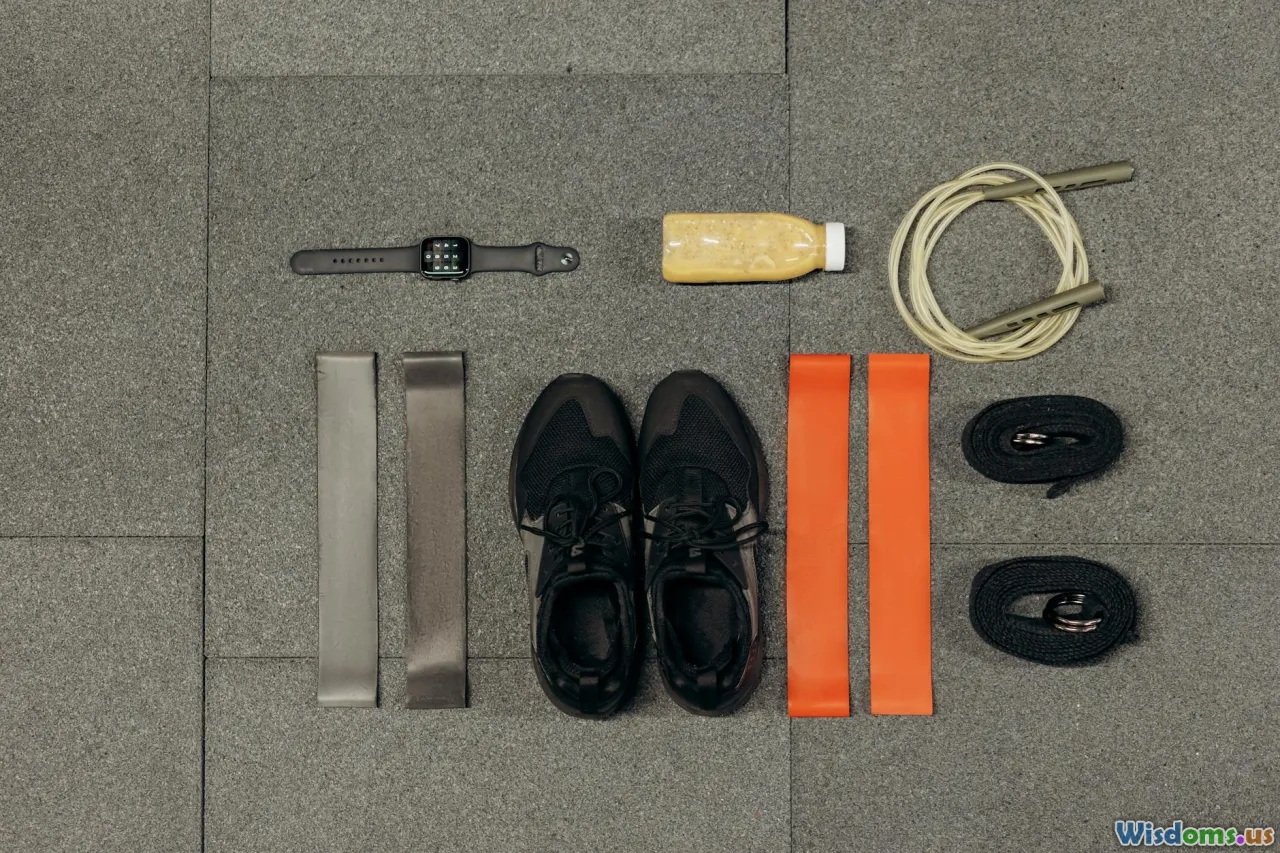
Use this template to design a credible, effective 14-day plan.
- Define one primary objective
- Examples: “Improve 1-mile time by 2–5%,” “Add 2–3 reps to push-ups at strict form,” “Reduce average RPE on a 20-minute circuit,” “Resolve hip stiffness and improve deep squat comfort.”
- Keep secondary goals light (e.g., 10k steps/day, 2 mobility drills).
- Choose a narrow set of movements
- Stick to 4–6 primary patterns you can repeat and refine: squat/hinge, push/pull, gait/carry, trunk bracing.
- Example stack: goblet squat, Romanian deadlift, push-up, one-arm row, loaded carry, bike intervals.
- Set a progression scheme you can feel in a week
- Volume: Add 1–2 reps per set or one extra set on Day 5/6 and Day 12/13.
- Density: Keep weight constant but reduce rest by 10–15% in week two.
- Pace: For running/rowing, maintain distance but aim for equal or better time at lower RPE by the end.
- Schedule the 14 days
- Example schedule (strength + conditioning):
- Day 1: Full-body strength (technique emphasis) + 8-min moderate finisher
- Day 2: Intervals (6 x 1-minute hard, 1-minute easy) + mobility
- Day 3: Full-body strength (same moves, small progression) + core
- Day 4: Active recovery (walk 30–45 min, hips/shoulders)
- Day 5: Strength density circuit (time-capped) + short sprints
- Day 6: Zone 2 cardio 40–50 min
- Day 7: Rest or gentle yoga
- Day 8: Reassess technique + add reps/light load increase
- Day 9: Intervals (8 x 45 seconds hard, 75 seconds easy)
- Day 10: Strength (same moves) + carries
- Day 11: Active recovery
- Day 12: Density circuit repeat (beat prior score by 1–2%)
- Day 13: Zone 2 cardio 40–60 min
- Day 14: Test day: submax test(s) and skill video check
- Define success metrics on Day 1 and Day 14
- Time a fixed circuit, not a variable one.
- Count strict-form reps (tempo-controlled push-ups, chin-up hangs).
- Record 12-minute distance or a 3-minute step test heart rate recovery.
- Bake in safety and realism
- Use RPE (rate of perceived exertion) caps: most days at 6–7/10, only 1–2 days at 8–9/10.
- Pre-plan substitutions: If knees ache on squats, switch to box squats or split squats; for runners, have a bike or rower fallback.
Who Should Choose a Two-Week Program—and Who Shouldn’t

Great candidates:
- Busy professionals who can commit in sprints.
- Beginners seeking structure without a long-term contract.
- Intermediates returning from a break and wanting a controlled re-entry.
- Travelers with limited equipment and a defined window (hotel gyms, bands).
- Specialists testing a single quality (e.g., 14 days of mobility to unlock overhead range).
Use caution or consult a professional first:
- Individuals with unresolved pain or acute injuries.
- Those managing complex conditions (cardiovascular, metabolic) without medical clearance.
- Highly advanced athletes peaking for competition; two weeks is too short for major performance peaking unless it’s a taper.
Proven Formats and Real-World Case Studies

Format 1: The 14-Day Mobility Reset
- Goal: Reduce stiffness and improve comfort in deep squat and overhead reach.
- Structure: Daily 15–25 minutes; emphasis on hips, T-spine, ankles, and shoulders.
- Tools: Foam roller, lacrosse ball, band, dowel.
- Progression: Day 1 baseline photos + 60-second deep squat sit; Day 14 retest. Gradually add controlled articular rotations, loaded stretches (goblet prayer squat), and breathing drills.
- Expected outcome: Better depth, smoother motion, lower discomfort ratings. People often report carryover to pain-free squats and more stable overhead positions.
Format 2: Two-Week Engine Builder (Low-Impact)
- Goal: Boost aerobic base and pace control without high pounding.
- Structure: 4 Zone 2 sessions (40–60 minutes) + 3 interval sessions (e.g., 8 x 45 seconds on/75 seconds off) across each week.
- Progression: Hold Zone 2 heart rate steady (e.g., 120–140 bpm depending on age/fitness); aim for a slightly faster pace by Day 14 at the same HR.
- Expected outcome: Lower perceived exertion at a given output, improved HR recovery after intervals.
Format 3: Strength Skill Intensive—Push-Up and Row
- Goal: Clean, repeatable technique and +2–4 reps in push-ups while balancing with rows.
- Structure: Alternate A (push-up ladders) and B (row ladders) days with core and carries.
- Progression: Tempo-controlled reps (2 seconds down, 1 second up), reduce assistance over time (higher to lower incline), and introduce paused reps.
- Expected outcome: Noticeably cleaner lines in video, more reps before form breaks, less shoulder discomfort.
Mini case: “Travel Block” in a hotel gym
- Equipment: Dumbbells up to 50 lbs, cable stack, treadmill.
- Schedule: 5 x 30-minute sessions/week for two weeks.
- Approach: Full-body tri-sets (push, hinge, row) plus a 10-minute treadmill incline walk. Simplify to a single dumbbell weight you can use for multiple moves to minimize setup.
- Outcome: Maintain strength, avoid stiffness from flights, and return home ready to resume your main program without a “restart.”
Nutrition, Hydration, and Recovery for a Two-Week Sprint

Short doesn’t mean sloppy. Use these focused adjustments for 14 days:
- Protein target: Aim for roughly 1.6–2.2 g/kg/day if your goal includes strength or body recomp. For many, that’s 20–40 g per meal, 3–4 times daily.
- Carbohydrate timing: Keep carbs around training windows to support intervals and strength sessions. Even a simple 25–40 g dose pre-workout can boost output.
- Creatine: If you choose to use it, a loading phase (e.g., ~20 g/day split over 5–7 days) saturates stores quickly; otherwise, 3–5 g/day works steadily. Expect some water retention; the performance benefit can appear within the two-week window.
- Hydration and electrolytes: Increase fluid on training days and consider sodium (especially if you sweat heavily). A simple rule: 500–700 ml of fluid in the hour before training; add electrolytes if sessions run long or heat is high.
- Micronutrient basics: Prioritize produce, dairy/fortified alternatives, and fish or omega-3 sources. In a two-week push, comfort and consistency matter more than perfection.
- Sleep: Treat 7–9 hours as non-negotiable. Use wind-down cues: lights dimmed, screens off 30–60 minutes before bed, and a consistent bedtime.
- Recovery inserts: On non-training days, include light mobility and walking. Consider a 5-minute breathwork sequence to downshift.
Measuring What Matters in 14 Days

You won’t transform everything in two weeks, so pick metrics that move quickly and matter to your goal.
Simple, effective measures:
- Resting heart rate (RHR): Track morning RHR; a small drop can reflect improved recovery or aerobic capacity.
- HR recovery: After a 3-minute brisk step test, measure how quickly heart rate drops in the first minute.
- Submax strength markers: AMRAP sets with strict form at a fixed load (e.g., bodyweight push-ups with tempo, goblet squat at a set weight).
- Movement quality: Video two angles of your key lifts on Day 1 and Day 14; score yourself on depth, control, breathing, and joint alignment.
- Perceived exertion: Keep a short log—session RPE, energy, and sleep. In two weeks, you should see smoother RPE for the same work.
- Habit consistency: A simple “no-zero days” streak (mobility, walk, or core for 5 minutes minimum) protects momentum.
Pro tip: Lock in your Day 1 test before your first workout. Repeat the same test on Day 14, under similar conditions (time of day, nutrition, footwear).
Common Pitfalls and How to Avoid Them

- Doing too much, too soon: Two weeks is not a license to max out daily. Most sessions should feel purposeful, not punishing.
- Chasing scale weight: Body mass can fluctuate for many reasons. Use performance and fit metrics instead.
- Ignoring technique: Short timelines tempt you to “just get it done.” Film a set; review range, tempo, and alignment.
- Skipping rest: Cramming 14 straight days of intensity is a fast track to burnout. Schedule at least two low-intensity days.
- No exit plan: Don’t finish Day 14 and fall into a void. Know what Day 15–28 looks like before you start.
What to Do on Day 15: Extend, Pivot, or Deload

Your Day 14 reassessment should guide your next move:
- Extend (repeat): If your progress is steady and you feel fresh, repeat the block with slight progressions: +1 set on a key lift, +5% more interval volume, or tighter rest periods.
- Pivot (shift focus): If you improved but a bottleneck emerged (tight hips, weak grip, poor breathing), pivot to a two-week block targeting that constraint.
- Deload (pull back): If fatigue is high or niggles appear, keep movement but reduce intensity/volume by ~30–40% for 5–7 days before building again.
Combine these across a quarter: Two or three 14-day blocks can form a focused 6–8 week phase with built-in variety and testing.
Two Weeks vs. 30 Days vs. 12 Weeks: When to Use Each

- Two weeks: Best for kickstarts, skill intensives, travel windows, or testing a new approach (e.g., zone 2 focus, mobility reset). Expect improvements in efficiency, confidence, pacing, and early performance markers.
- 30 days: Good for habit establishment and initial body composition changes. You can build more volume, refine nutrition routines, and reinforce behaviors.
- 12 weeks: Ideal for meaningful body recomposition, measurable strength increases, and endurance development with periodized progression.
Think of two-week programs as the minimum effective block to create traction. If it works for you, chain a few together with planned variation.
Community and Motivation: Making Two Weeks Social

Social features propel two-week challenges:
- Micro accountability: Pair with a buddy for daily check-ins (photo of completed session, heart rate graph, or a simple thumbs-up).
- Small group cadence: A workplace or family challenge where everyone shares a daily “win” (walk, mobility, water intake) lowers the barrier and builds momentum.
- Public start and finish: Announce your Day 1 and Day 14 test on social or within an app community. People support what they see.
- Coach touchpoints: Two short coaching messages per week (form cue, mindset reframe) can dramatically improve adherence.
Tip: Keep leaderboards to effort-based metrics (consistency streaks, RPE honesty) not just performance, to make it inclusive.
For Coaches and Creators: Designing Ethical Two-Week Challenges

Two-week programs are easy to market—and easy to oversell. Build trust with transparent, inclusive design:
- Make claims you can defend: Promise momentum, not miracles. Focus on performance and habit metrics.
- Offer progressions and regressions: Provide options for equipment (dumbbells, bands, bodyweight), joint constraints, and fitness levels.
- Screen briefly: A one-minute readiness questionnaire (recent injuries, pain, medical clearance) shows you care about safety.
- State time and equipment clearly: “12 sessions, 30–40 minutes each, dumbbells up to 35 lbs, a step or box, and floor space.”
- Coach the why: Include a 2–3 sentence rationale for each session. Adults stick with programs they understand.
- Close with a roadmap: Give participants a Day 15–28 next step—repeat, change focus, or deload—based on common outcomes.
Quick FAQ: Your Top Two-Week Questions Answered

- Can I lose a lot of fat in two weeks? Significant fat loss requires more time. You may see slight scale changes (often water or glycogen). Focus on performance, energy, and consistency.
- Are two-week programs safe for beginners? Generally, yes—with appropriate exercise selection, conservative progressions, and rest days. When in doubt, get medical clearance.
- How often should I train? Most two-week plans work well with 4–6 sessions per week, mixing intensities.
- Do I need a deload afterward? Not always. If you feel fresh and metrics improve, you can roll into another block. If you’re sore or fatigued, deload for a few days.
- What if I miss a day? Don’t double up high-intensity sessions. Slide the plan by a day or convert the missed session to an easy movement day.
- What equipment do I need? Many effective two-week programs can be done with bodyweight and a single dumbbell or kettlebell. Cardio options are flexible: brisk walking, cycling, rowing, or running.
Two-week fitness programs aren’t a shortcut—they’re a strategic container. They compress decision-making, clarify goals, and let your body and brain collect quick wins. When done well, 14 days can flip your internal narrative from “I should” to “I am.” Use the format to test a focus, build a habit, or regain momentum—then stack blocks thoughtfully to create meaningful, lasting change. As you stand on Day 1, pick a clear metric, protect your recovery, and commit to showing up. By Day 14, you’ll have the data and confidence to decide where to press forward next.
Rate the Post
User Reviews
Other posts in Health & Wellness




Popular Posts