Will We Solve the Problem of Matter and Antimatter
33 min read A clear, expert guide to the matter–antimatter problem: why the universe favors matter, the leading explanations, and what new experiments may reveal in the next decade. (0 Reviews)
Will We Solve the Problem of Matter and Antimatter?
On the grandest scales of the universe, the stars look symmetrical and serene. Yet the most unsettling imbalance lies at the heart of everything we see: why is the cosmos made of matter and not an equal mix of matter and antimatter that should have annihilated into light long ago? This “matter–antimatter problem,” or baryon asymmetry, is one of the most pressing open questions in physics. It links the tiniest quantum flickers to the largest cosmic structures and guides billion-dollar experiments across the globe.
Here’s the honest, optimistic outlook: we are very likely to solve this problem—if by “solve” we mean pinning down a cohesive, testable mechanism that explains how a tiny excess of matter survived during the universe’s first split-second. The solution won’t be a single eureka moment. It will be a tapestry woven from precise measurements, deep theory, and surprising cross-checks between laboratories and the sky. This article lays out how we’ll get there, what would count as a real answer, and how to read the clues as they come.
What Exactly Is the Problem?
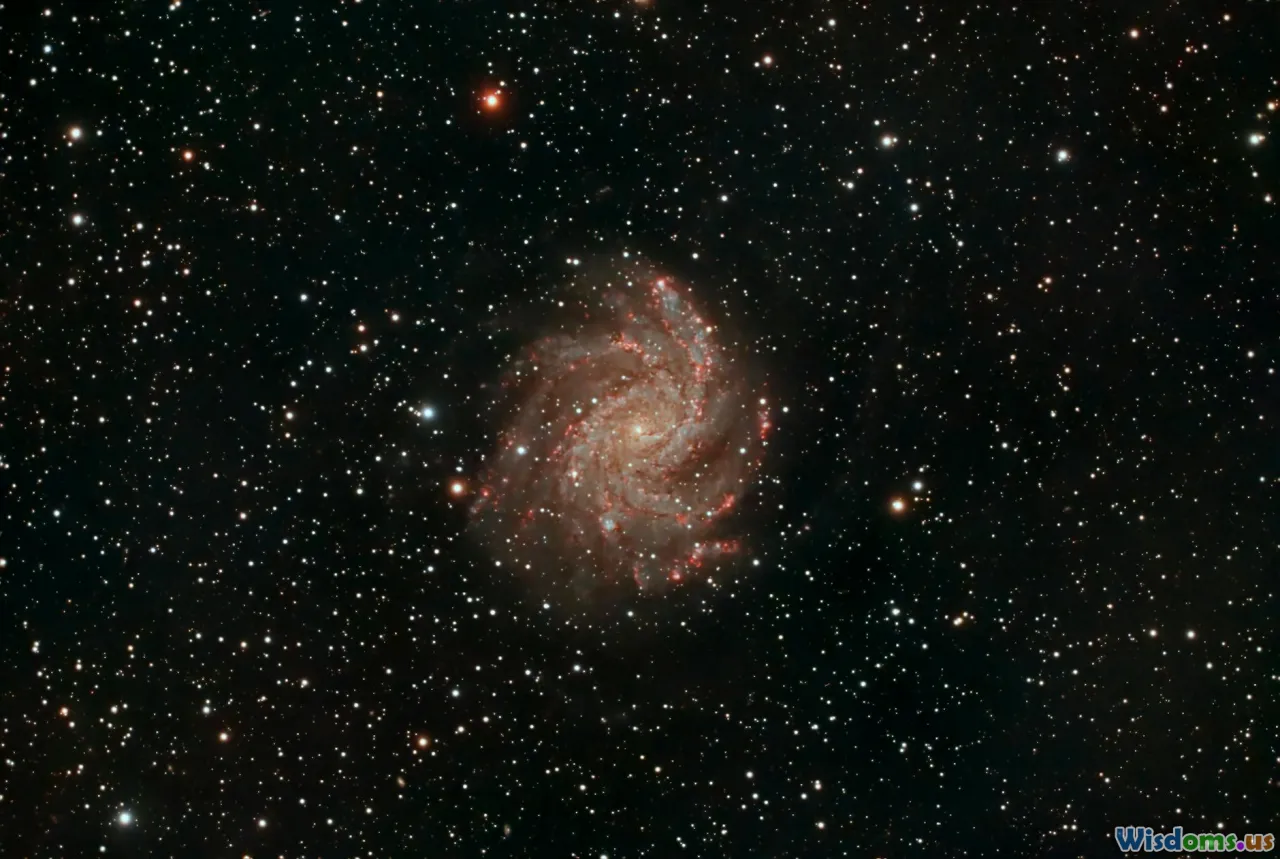
If the laws of physics treated matter and antimatter perfectly symmetrically at the Big Bang, we’d expect them to have been created in exactly equal amounts. Each matter particle would annihilate with its antimatter partner, leaving behind a bath of photons and—crucially—almost no matter to build galaxies, stars, and us. But the cosmos plainly exists. That means something favored matter just a little.
Observations from the cosmic microwave background (CMB) and the abundances of light elements formed in the first few minutes (Big Bang nucleosynthesis, BBN) pin down how lopsided things were. The baryon-to-photon ratio, often denoted η, is about 6 × 10^-10. In plain terms, for every billion pairs of matter and antimatter particles in the early universe, there was an extra one matter particle left over after annihilations. That tiny mismatch seeded everything.
So the core question is: what physical process in the early universe generated this 1-in-a-billion bias in favor of matter?
What Would Count as a Real Solution?

Andrei Sakharov formalized what any successful explanation must accomplish. A theory has to satisfy three conditions in the early universe:
- Baryon number violation: reactions that can produce a net number of baryons (protons and neutrons) must occur.
- C and CP violation: the laws must distinguish between matter and antimatter sufficiently; otherwise, any attempt to make more matter would be undone by an equally likely antimatter channel.
- Departure from thermal equilibrium: processes need an arrow of time in the microphysics—typically provided by cosmic expansion, phase transitions, or decays out of equilibrium—so that forward and backward reactions don’t cancel exactly.
A “solution” should do more than tick these boxes conceptually. The gold standard is:
- It quantitatively generates η ≈ 6 × 10^-10 in a realistic cosmological timeline.
- It identifies concrete new particles or interactions (or uses known ones in a nontrivial way) and makes predictions testable in laboratories or observations.
- It survives all existing constraints (collider bounds, cosmology, flavor physics) and can be falsified by upcoming data.
The Standard Model: Beautiful, But Not Enough
The Standard Model (SM) of particle physics includes ingredients that almost solve the puzzle. It has CP violation in the quark sector (through the CKM matrix) and nonperturbative electroweak processes that violate baryon number (sphalerons) at high temperatures. Unfortunately, two problems thwart the SM-only route:
- The electroweak phase transition is not first-order for the measured Higgs mass (~125 GeV); it’s a smooth crossover. That blunts the out-of-equilibrium physics needed for efficient baryogenesis.
- The SM’s built-in CP violation is far too feeble to produce the observed asymmetry. Detailed calculations show it falls many orders of magnitude short.
These facts all but guarantee new physics played a role in baryogenesis. That doesn’t mean the SM is silent on antimatter. It predicts an exquisite set of near-symmetries between matter and antimatter (CPT symmetry) that experiments keep probing with insane precision. For example, measurements of the charge-to-mass ratio of protons and antiprotons agree at parts-per-trillion levels, and magnetic moments are likewise exquisitely matched. These checks reinforce that the asymmetry didn’t arise from gross violations of fundamental symmetries today; instead, it was sculpted by rare early-universe conditions or subtle new physics yet to be found.
There’s also the “strong CP problem”: quantum chromodynamics allows a CP-violating parameter that, if large, would give the neutron a measurable electric dipole moment (EDM). Experiments find it vanishingly small, implying new symmetry or dynamics (like axions). While strong CP suppression isn’t the main driver of matter’s excess, its resolution may tie into the bigger story.
Competing Pathways to the Answer

Physicists have proposed several viable mechanisms that extend or repurpose known physics to meet Sakharov’s conditions. Think of these as rival blueprints, each with strengths, risks, and distinct experimental fingerprints.
- Leptogenesis
- Big idea: Heavy right-handed neutrinos (predicted in seesaw models that explain tiny neutrino masses) decay in the early universe. Their CP-violating decays create a lepton asymmetry that electroweak sphalerons partially convert into a baryon asymmetry.
- Why it’s popular: It elegantly connects neutrino masses, a well-established puzzle, to the cosmic matter surplus. It also explains why neutrinos are so light without contrived fine-tuning.
- What it predicts: Neutrinos may be Majorana particles (their own antiparticles), enabling neutrinoless double beta decay. The scheme tolerates a wide range of mass scales for the heavy neutrinos—from the TeV scale up to much higher energies—so experimental access varies.
- How we’ll test it: Searches for neutrinoless double beta decay, measurements of CP violation in neutrino oscillations, and (if accessible) direct or indirect signs of sterile/heavy neutrinos at colliders or beam experiments. If neutrinoless double beta decay is observed, it would be a huge green light.
- Electroweak baryogenesis
- Big idea: The baryon asymmetry forms during a strongly first-order electroweak phase transition as bubbles of the true vacuum nucleate and expand, with CP-violating interactions at the bubble walls biasing particle transport.
- Why the SM fails here: The Higgs mass makes the SM transition a smooth crossover, not the needed first-order jump, and the SM’s CP-violation is too small.
- How to fix it: Add new fields that couple to the Higgs—extra Higgs doublets (2HDM), singlet scalars, or supersymmetric partners—to make the transition first-order and boost CP violation.
- Experimental fingerprints: Stronger Higgs self-coupling or exotic Higgs decays at colliders, electric dipole moments at detectable levels, and a stochastic gravitational-wave background from the phase transition in a frequency band future space detectors (like LISA) could probe.
- Affleck–Dine baryogenesis and related early-universe dynamics
- Big idea: In theories with extended scalar sectors (as in some supersymmetric models), fields can develop large “flat-direction” values in the early universe and later relax in ways that generate a baryon asymmetry.
- Strengths: Can naturally produce large asymmetries; flexible parameter space.
- Trade-offs: Concrete, testable predictions are model-dependent; connecting to near-term experiments is trickier.
- Asymmetric dark matter
- Big idea: The dark matter abundance arises from an asymmetry analogous to the baryon asymmetry, and the two are linked through interactions or common origins.
- Why it’s compelling: The cosmic coincidence that dark matter is about five times more abundant than normal matter might be no coincidence at all.
- Signals to watch: Suppressed dark-matter annihilation signals (since the symmetric component annihilated away), possible mass scales in the few-GeV range, and portals between visible and dark sectors testable at accelerators and beam-dump experiments.
These are not mutually exclusive. For example, leptogenesis could occur alongside an asymmetric dark sector, or the same new CP-violating physics that drives electroweak baryogenesis might leave EDM footprints.
Clues from the Lab: Antimatter Under the Microscope

An asymmetry born 13.8 billion years ago is surprisingly testable today. The strategy is to hammer at symmetries and processes that any successful theory inevitably touches.
-
Trapped antimatter and gravity: Experiments at CERN’s Antimatter Factory have produced and confined antihydrogen atoms, comparing their spectral lines to hydrogen at high precision. In 2023, the ALPHA collaboration reported the first direct measurement of how antihydrogen responds to Earth’s gravity, finding that it falls downward with an acceleration consistent with ordinary gravity within their current uncertainties (on the order of tens of percent). This supports CPT and the equivalence principle for antimatter, boxing out exotic ideas that antimatter “falls up.” Further upgrades aim to sharpen this test.
-
CPT and fundamental properties: The BASE collaboration and others have compared properties of protons and antiprotons with breathtaking precision—charge-to-mass ratios and magnetic moments match to better than a part in a trillion in some cases. These results don’t solve baryogenesis directly, but they clear the underbrush: the asymmetry didn’t arise from obvious CPT-violating cracks in today’s low-energy physics.
-
CP violation in mesons: Experiments such as LHCb at CERN and Belle II in Japan map out CP violation in decays of kaons, B mesons, and charm. They refine the Standard Model’s picture and hunt for deviations. Notably, LHCb observed CP violation in charm decays for the first time, and Belle II is ramping up to immense datasets. Even small discrepancies from SM expectations could point to new CP-violating phases relevant to baryogenesis.
-
Electric dipole moments (EDMs): A permanent EDM in a fundamental particle is a smoking gun for new CP violation. The best current limits are astonishingly tight: for the electron, experiments using molecules (like thorium monoxide) have pushed the bound near the 10^-29 e·cm level; for the neutron, the limit is around the 10^-26 e·cm scale. Many baryogenesis models naturally predict EDMs within reach of the next generation of experiments. A nonzero EDM detection would be seismic, immediately winnowing the landscape of mechanisms.
-
Neutrinoless double beta decay: If observed, this rare nuclear process would show that neutrinos are Majorana particles and that lepton number is violated—precisely the ingredients that make leptogenesis compelling. Multiple experiments (such as LEGEND, nEXO, and CUPID) are scaling up detector masses and background rejection. A positive signal would dramatically tilt the odds toward leptogenesis-like stories.
-
Neutrino CP violation: Long-baseline experiments (T2K, NOvA) are homing in on the neutrino sector’s CP-violating phase, with next-generation detectors (DUNE in the U.S. and Hyper-Kamiokande in Japan) poised to make precision measurements. While the direct link between this low-energy phase and high-scale leptogenesis is model-dependent, seeing large CP violation in neutrinos strengthens the plausibility that leptonic CP phases are cosmologically relevant.
-
Proton decay searches: Some grand-unified theories that can accommodate baryogenesis also predict proton decay. No decays have been seen, with lifetimes exceeding 10^34 years for leading channels. Future detectors will push this frontier, providing either constraints or dramatic discovery potential.
Together, these experiments slice the parameter space from different angles. Null results are powerful: every constraint on EDMs, on Higgs couplings, and on rare decays chisels away at models until only a few coherent narratives remain.
What the Sky Can Tell Us
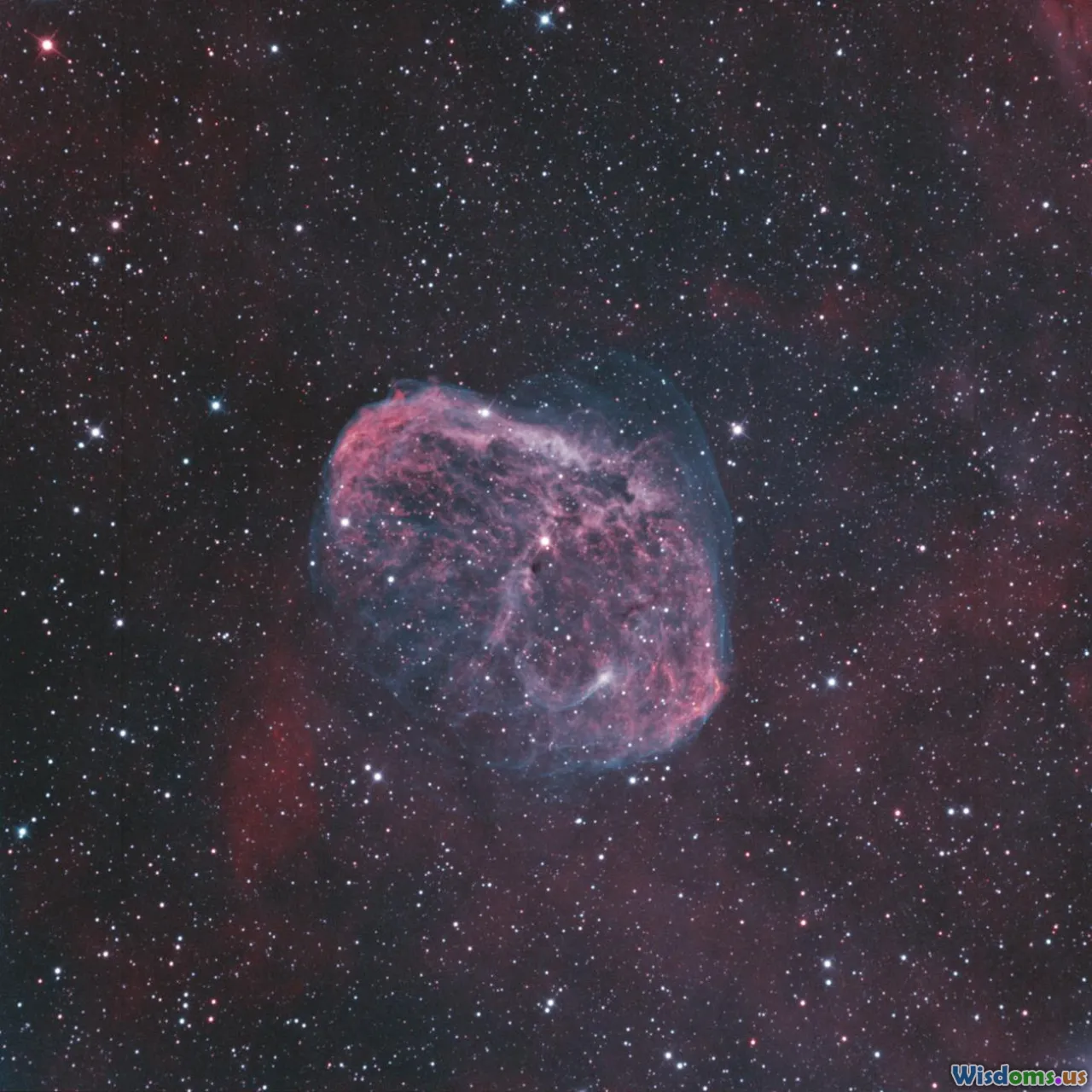
Cosmology is not just a backdrop; it’s a precision laboratory spanning 46 billion light-years.
-
CMB and BBN: These set the target—η ≈ 6 × 10^-10—and constrain when and how baryogenesis could occur. Any proposed mechanism must play nicely with the thermal history before and during nucleosynthesis.
-
High-energy cosmic rays and antinuclei: The AMS-02 detector on the International Space Station has catalogued cosmic antimatter (positrons and antiprotons) produced in astrophysical interactions. The headline-grabbing possibility is the detection of heavy antinuclei like antihelium. While there have been reports of candidate events under analysis, no confirmed antihelium detection has been announced. A confirmed antihelium nucleus in cosmic rays would be extraordinary, potentially pointing to regions of primordial antimatter or exotic dark-sector physics. For now, the absence of heavy antinuclei at expected levels supports the consensus that the universe is overwhelmingly matter-dominated on large scales.
-
Antistars and gamma rays: Some studies have searched for spectral signatures from hypothetical antistars—objects made of antimatter—that would produce distinctive gamma-ray lines when their outer layers interact with normal interstellar gas. A handful of intriguing candidates have been proposed using Fermi-LAT data, but none are confirmed. The lack of widespread signatures places limits on any surviving antimatter domains in our Galaxy.
-
Gravitational waves from phase transitions: A strong first-order electroweak phase transition—needed in many electroweak baryogenesis models—would shake spacetime, leaving a stochastic gravitational-wave background. Space-based interferometers like LISA (planned for the 2030s) and follow-ons could detect such a background. A detection with the right spectral shape would be an astonishing cross-check of baryogenesis physics; a null result would squeeze many models hard.
-
Large-scale structure and reionization: While less direct, precision mapping of structure growth and reionization history constrains exotic energy injections and particle decays in the early universe that could accompany or conflict with baryogenesis scenarios.
The sky’s greatest virtue is that it tests whole-universe consistency. Mechanisms that seem viable in a vacuum can run afoul of cosmological timing, entropy, or relic constraints; the cosmos keeps score.
A Decision Tree for the Next Decade

Here’s a practical way to think about how the puzzle might resolve, depending on which experimental dominoes fall. None of these outcomes is guaranteed, and several could happen together.
-
If neutrinoless double beta decay is observed soon:
- Likely implication: Neutrinos are Majorana, lending strong support to leptogenesis.
- Next steps: Pin down the effective mass scale, compare with cosmological limits on neutrino masses, and build out models of heavy-neutrino dynamics consistent with collider and flavor data.
- What to watch: DUNE and Hyper-K for leptonic CP phase; rare lepton-number violating signals at colliders or fixed-target experiments.
-
If a nonzero EDM is detected (electron, neutron, or nucleus):
- Likely implication: New CP-violating physics at or near accessible energy scales.
- Next steps: Correlate the EDM size and pattern (electron vs neutron vs diamagnetic atoms) with candidate models—2HDM, supersymmetry, or other extensions enabling electroweak baryogenesis.
- What to watch: Collider anomalies in Higgs couplings, possible gravitational-wave signatures from a first-order electroweak transition.
-
If LISA (or a successor) observes a stochastic gravitational-wave background compatible with an electroweak-scale first-order transition:
- Likely implication: A major boost for electroweak baryogenesis models.
- Next steps: Cross-check with EDM searches and precision Higgs measurements at the HL-LHC and possible future colliders.
-
If AMS-02 or a follow-on confirms antihelium in cosmic rays:
- Likely implication: An astrophysical revolution. Viable scenarios might include rare antistellar remnants, local antimatter domains, or exotic dark-sector processes; straightforward cosmological survival of antimatter regions is hard to reconcile with current constraints but would demand fresh thinking.
- Next steps: Multi-wavelength follow-up (gamma rays, X-rays), refined propagation models, and searches for correlated antinuclei.
-
If none of the above produces a signal in the next 10–15 years, and constraints continue to tighten:
- Likely implication: Baryogenesis occurred at high scales (e.g., high-scale leptogenesis) with low-energy footprints too subtle for current experiments.
- Next steps: Leverage cosmology (CMB-S4, large-scale structure surveys) and creative probes of heavy neutrinos or feeble couplings; refine theory to a razor’s edge of minimality.
The good news is that in every branch of this tree, we learn something definitive.
Comparing Leading Mechanisms: A Practical Checklist

When you encounter a new claim about matter–antimatter asymmetry, ask these questions:
- Does it specify where the CP violation comes from, beyond the SM? Are there phases or couplings the model can point to with calculable consequences?
- What sets the relevant energy scale? Is it electroweak-scale (testable at colliders and EDMs) or very high-scale (testable indirectly via neutrino physics and cosmology)?
- Can it produce the right magnitude η ≈ 6 × 10^-10 robustly across reasonable parameter ranges, not just in a fine-tuned corner?
- What are the minimal, crisp experimental predictions in the next five years? Examples: an EDM above 10^-30 e·cm, a deviation in Higgs self-coupling, a rate target for neutrinoless double beta decay, a gravitational-wave signal band.
- Does it respect existing constraints (flavor-changing processes, proton decay bounds, CMB/BBN, collider null results)?
Mechanisms that survive this gauntlet earn seriousness points. Those that also tie together multiple puzzles—like neutrino masses or dark matter—deserve extra attention.
Tips for Reading Headlines Without Getting Lost

- A “5-sigma” detection is the gold standard for particle physics. Anything less should be considered provisional, particularly for rare processes with complex backgrounds.
- Null results can be breakthroughs. When an EDM bound improves by an order of magnitude, it can exclude vast swaths of theory space.
- Watch for correlated signals. A reported EDM should trigger questions about related collider and astrophysical signatures; a gravitational-wave hint should be checked against Higgs-coupling constraints.
- Be wary of single-experiment surprises. Independent replication is essential, especially for subtle effects.
- Numbers matter. When a press release mentions an improvement, look for the actual limit or central value and its uncertainty; compare to previous best results.
What Antimatter Experiments Have Already Taught Us

- Antihydrogen spectroscopy confirms that matter and antimatter energy levels match within tight uncertainties, supporting CPT symmetry at unprecedented precision.
- ALPHA’s 2023 gravity measurement shows antihydrogen falls down under Earth’s gravity, consistent with general relativity’s expectations. While the precision is still evolving, it closes the door on fanciful “antigravity” scenarios and tightens the theoretical corral.
- High-precision comparisons of protons and antiprotons, and of other particle–antiparticle pairs, repeatedly show mirror-like agreement in mass, charge magnitude, and magnetic properties. These demonstrate that the asymmetry is not due to a present-day, low-energy asymmetry in known properties but to early-universe dynamics.
- In medicine and technology, antimatter is an everyday tool: positron emission tomography (PET) uses positrons to image metabolic activity, illustrating that antimatter is not purely an esoteric lab curiosity.
These achievements don’t yet answer “why more matter than antimatter?” but they narrow the field, sharpen our instruments, and provide a hard floor of empirical sanity for bold theories to stand on.
Realistic Timelines: How and When We Might Know

Over the next 5–15 years, several milestones could decisively tilt the landscape:
- EDM searches: Multiple collaborations are scaling up sensitivity by an order of magnitude or more. If electroweak baryogenesis is correct in many popular incarnations, an EDM at the edge of current reach is plausible. A non-detection will prune those models severely.
- Neutrinoless double beta decay: Next-generation detectors (e.g., LEGEND-1000, nEXO) are designed to probe effective mass regimes that would either reveal or strongly constrain Majorana neutrinos tied to leptogenesis. Even a strong null result would set powerful guardrails on the mechanism’s parameter space.
- DUNE and Hyper-Kamiokande: Precision measurements of the neutrino CP phase and mass ordering will inform viable leptogenesis models and sharpen targets for double beta decay.
- HL-LHC and future colliders: Higgs self-coupling measurements, searches for additional Higgs bosons or scalar singlets, and anomalies in flavor observables will test electroweak baryogenesis ingredients.
- LISA and gravitational-wave astronomy: A detection compatible with an electroweak-scale first-order transition would be a watershed moment for baryogenesis via bubble nucleation.
- Cosmic-ray antinuclei: Continued AMS-02 exposure and potential next-generation instruments will clarify hints and set stricter bounds (or deliver a spectacular discovery).
Put together, this timeline makes a persuasive case that within two experimental cycles—roughly the 2030s—we will either have a convergent narrative supported by multiple lines of evidence or a sharply constrained landscape pointing to high-scale, elusive origins.
How Theory and Computation Are Quietly Making This Possible

Behind every headline is a web of theory and simulation that turns raw data into answers:
- Lattice QCD and finite-temperature field theory refine our understanding of phase transitions, sphaleron rates, and transport coefficients relevant to baryogenesis.
- Effective field theory (EFT) frameworks translate collider and EDM constraints into model-agnostic bounds on CP-violating operators, making different experiments comparable.
- Cosmological simulations track how hypothetical new particles affect the early universe’s expansion, relic densities, and structure formation.
- Global fits combine EDMs, flavor observables, Higgs couplings, and cosmology into coherent likelihoods, ranking models by viability.
These tools reduce theoretical uncertainties that could otherwise blur the meaning of experimental advances, lifting our confidence when multiple clues align.
Where My Bets Lie—and What Would Change My Mind

A reasonable, mainstream forecast looks like this:
- Leptogenesis is the leading contender on naturalness and economy, especially if neutrinoless double beta decay shows up. Even if the heavy-neutrino mass scale is beyond direct reach, a combination of 0νββ observation, neutrino CP violation, and cosmological consistency could amount to a satisfying, testable story.
- Electroweak baryogenesis remains extremely appealing because it lives near energies we can probe. It demands new CP-violating sources and a first-order electroweak transition—both of which will be confronted by EDMs, collider Higgs measurements, and gravitational-wave observatories. A confluence of an EDM signal plus a LISA detection with compatible features would be a showstopper.
- Asymmetric dark matter could be the thematic glue between ordinary matter’s survival and the dark sector. A breakthrough here would likely come from accelerator-based “portal” searches or astrophysical clues that break the degeneracy of models.
What would change my mind quickly:
- A confirmed antihelium detection in cosmic rays with a spectrum pointing to primordial or stellar-scale antimatter would force a radical re-evaluation of baryogenesis and cosmic evolution.
- A sizable EDM with no supporting collider anomalies might still be consistent with certain baryogenesis frameworks but would complicate the model landscape; conversely, sharp Higgs anomalies without EDMs would steer us toward more cunning CP structures.
- A null sweep across EDMs, 0νββ, Higgs deviations, and gravitational waves over the next 15 years would strengthen the case for high-scale leptogenesis with limited low-energy imprints, pushing the focus to cosmology and neutrino sectors for definitive closure.
The prize is within reach, not because we can choose a favorite, but because the next wave of experiments covers complementary failure modes: if one path is wrong, we will know; if one path is right, multiple instruments will sing the same tune.
We began with a cosmic imbalance—the extra matter that lets us ask questions at all. Solving this problem won’t be a single dramatic headline but a measured crescendo: the first clear EDM, or a quiet but unmistakable 0νββ excess; a modest deviation in Higgs self-coupling, then a hum of gravitational waves mapped across the sky. Piece by piece, the early universe’s ledger will balance in our equations. And when it does, the answer won’t just explain why we’re here; it will show, in exquisite detail, how a perfectly symmetric beginning learned to prefer us by one part in a billion, and how that tiny preference wrote the story of everything that followed.
Rate the Post
User Reviews










Popular Posts