
Can Repurposed Buildings Outperform New Sustainable Designs
28 min read Can adaptive reuse beat new green builds? Compare lifecycle carbon, cost, performance, and place-based benefits with data-backed benchmarks and case studies. (0 Reviews)
On many city blocks, a familiar dilemma plays out behind the developer’s pro forma and the architect’s sketches: keep a sturdy-but-dated structure and transform it, or clear the slate and commission a gleaming net‑zero showpiece? The decision looks technical—HVAC, envelope, codes—but it’s also cultural, financial, and planetary. Repurposed buildings are not just quaint; they can outperform new sustainable designs on carbon, speed, and, increasingly, energy performance. The question is when and how.
Why this debate matters: carbon, code, capital

Three forces shape the choice to renovate or rebuild:
- Carbon: Buildings and construction account for an estimated 37–39% of global energy-related carbon emissions. Roughly a quarter to a third of that is “embodied” in materials and construction, not operations. When you demolish and rebuild, you trigger a fresh carbon bill—concrete, steel, glass, transport, and site work—before the lights ever turn on.
- Code and performance: New codes push higher energy performance, airtightness, and resilience. Many assume older structures can’t meet these bars. Yet envelope overcladding, heat pumps, and controls can narrow or erase the gap.
- Capital and time: Time kills deals. A repurpose can often shave months off a schedule because the structure and foundations exist, and the entitlement path may be simpler if the building envelope is largely maintained. That saved time can translate into significant interest savings and earlier revenue.
This trifecta explains why adaptive reuse has surged in many markets—office-to-resi conversions, warehouses to labs, schools to community hubs. But “often” isn’t “always.” To know whether reuse truly outperforms a new sustainable build, you need to quantify tradeoffs, not rely on nostalgia or a single metric.
The carbon math: embodied vs. operational

Operational carbon is the emissions from running a building—heating, cooling, hot water, plug loads. Embodied carbon is the emissions locked into materials and construction processes. Historically, we prioritized operations because energy was cheap and codes were lax. As grids decarbonize, operational carbon declines, and embodied carbon dominates the next 20–30 years—the period most relevant to climate goals.
A few grounded numbers:
- A typical new office or multifamily building’s structure and envelope can carry 500–1,000 kg CO2e per square meter of gross floor area, depending on materials and design (concrete and steel on the higher end, mass timber on the lower). Add interiors and MEP and that number climbs.
- Deep retrofits that retain 60–80% of the structure and envelope regularly avoid 50–75% of the embodied carbon compared to a similar new build. A well-cited study from preservation and sustainability groups found reusing buildings typically offers immediate carbon savings that can take decades for a new high-performance building to “pay back” through operational efficiency alone.
- “Carbon payback” time—the years needed for a more efficient new building to offset the upfront emissions of demolition and reconstruction—often ranges from 10 to 40+ years, depending on grid carbon intensity and end uses. As grids get cleaner, payback gets longer because the operational savings are smaller in carbon terms.
Two implications:
- If your climate target is 2030 or 2040, the upfront carbon of new builds looms large. Reuse has a first-mover advantage on emissions.
- Operations still matter—especially in cold climates or high-usage programs like labs or hospitals—but you can often get reuse within striking distance of Passive House-level energy intensity with enough envelope and systems upgrades.
In short, if you’re chasing near-term climate alignment, repurposing often wins the carbon sprint. For a multi-decade marathon, the race is tighter and hinges on program, grid trajectory, and retrofit depth.
Cost, schedule, and financing realities

Money is messy, and so are buildings. Adaptive reuse can deliver value, but surprises lurk.
- Hard costs: On average, reuse projects that retain primary structure and envelope can come in 10–20% below comparable new construction in certain markets. But hazardous materials abatement, seismic upgrades, and bespoke detailing can erase that edge.
- Soft costs: Detailed existing-conditions surveys, energy modeling, and selective demolition add preconstruction effort. The payback is fewer change orders later.
- Schedule: Retaining the frame and foundations can save 6–12 months, especially where deep foundations or major shoring would be required in new builds. Faster occupancy drives stronger returns, particularly in markets with high carrying costs.
- Financing: Some lenders still see reuse as riskier because of unknowns. Counter with robust due diligence: intrusive probes, structural capacity assessments, thermal imaging, whole-building LCA, and a contingency budget commensurate with building age and prior use.
Pro tip for pro formas: Model two scenarios through to net operating income and internal rate of return, not just capex. Include schedule-driven revenue and the potential for incentives (historic tax credits, embodied carbon rebates, electrification grants). The path with the lower total risk-adjusted cost of carbon and capital usually emerges clearly when you include time.
Performance potential: can old bones hit new standards?

Short answer: Yes, in many cases—but it requires surgical design.
- Envelope: Overclad systems (insulated rainscreens, exterior insulation and finish systems, panelized high-R facades) can deliver R-20 to R-40 walls even on heavy masonry. Triple-glazed retrofit sashes or interior storm systems can push window U-values below 0.20 Btu/h·ft²·°F (~1.14 W/m²·K).
- Airtightness: Air leakage is often the Achilles’ heel. Blower-door guided sealing, continuous air barriers at transitions, and pre-construction mockups can get large retrofits down to 0.6–1.0 ACH50—roughly Passive House territory—if details are coordinated.
- HVAC and electrification: Heat pumps make reuse competitive. Variable refrigerant flow (VRF), air-to-water heat pumps with hydronic distribution, or water-source heat pumps tied to heat-recovery chillers can decarbonize heating and tap heat recycling. Dedicated outdoor air systems (DOAS) with energy recovery (70–90% effectiveness) reduce ventilation loads.
- Controls and submetering: Analytics platforms, CO2-based demand control ventilation, and granular submetering can squeeze another 10–20% energy savings without major hardware changes.
The biggest retrofit constraint is often floorplate depth and glazing. Deep, dark floorplates benefit from light wells, skylights, or strategic atriums. If these moves are off the table, you may struggle to meet aggressive daylight and plug-load reduction targets.
Case studies: repurposed winners
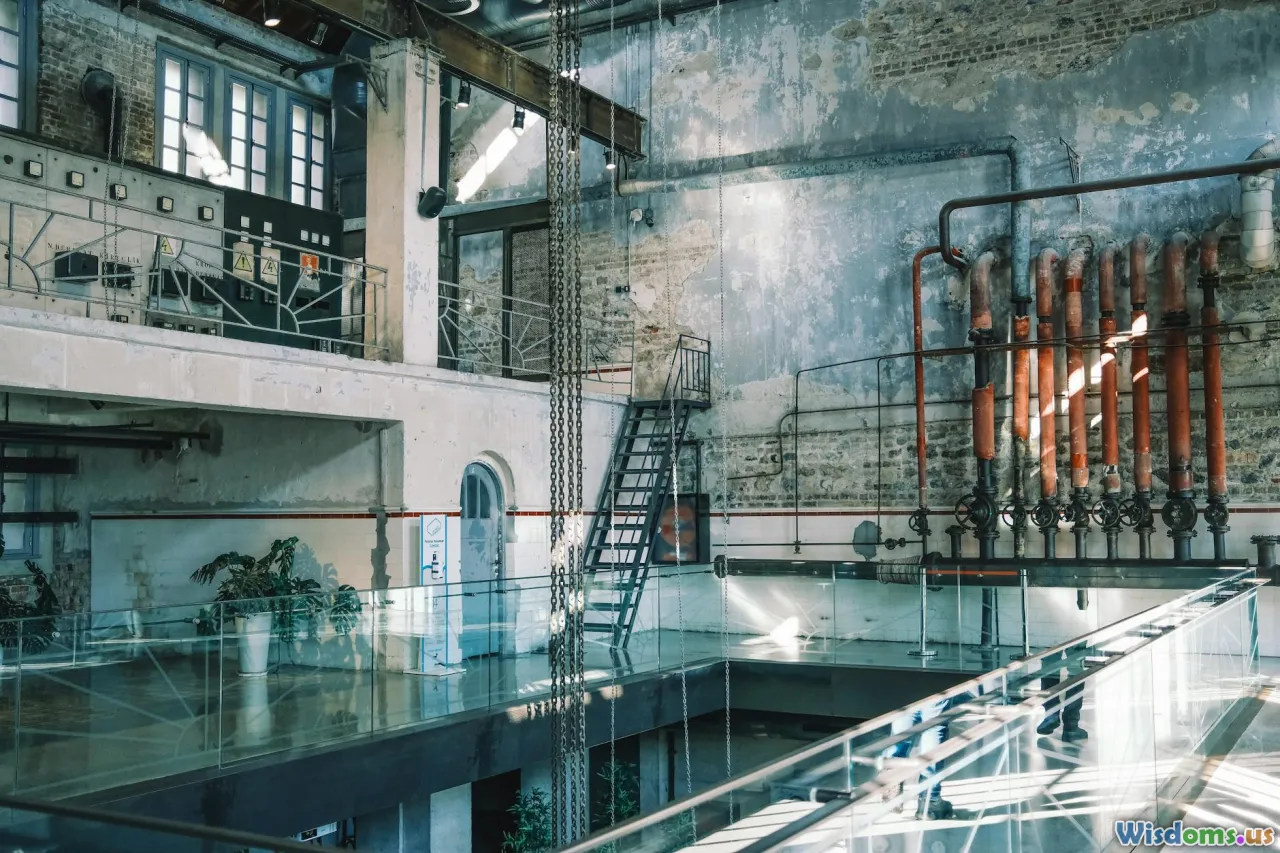
- Empire State Building, New York: A comprehensive retrofit—including window refurbishments, chiller plant overhaul, and building-wide controls—cut energy use by roughly 38% and paid back within a few years. While not a full structural reuse story, it demonstrates the scale of operational gains possible without new construction.
- Tate Modern, London: Bankside Power Station’s conversion preserved an iconic shell and turbine hall, leveraging embodied carbon already spent while creating a cultural anchor. Operational efficiency measures and combined heat and power integration supported performance within a complex urban fabric.
- Ponce City Market, Atlanta: A former Sears distribution center transformed into a mixed-use magnet. Retaining the concrete frame and much of the envelope avoided massive material emissions and enabled phased occupancy, which is hard to replicate in ground-up megaprojects.
- Warehouse-to-lab conversions: Across research clusters, developers are turning single-story warehouses into biotech labs. The structural grids often support heavier loads with modest strengthening, and rooftop mechanical zones easily accommodate high outdoor air systems with heat recovery. Reuse saves months of sitework, and electrified systems plus heat recovery can meet stringent energy targets.
- Schools into housing and community centers: Mid‑20th-century schools offer generous floor-to-floor heights and durable structures. Reuse pairs well with high-performance exterior insulation, rooftop heat pumps, and daylighting retrofits, yielding low operating costs for community organizations with tight budgets.
These projects highlight a pattern: keep the heavy stuff (foundations, structure), reinvent the envelope and systems, and focus on building performance outcomes rather than replicating past aesthetics.
Case studies: new sustainable standouts

New construction shines when program, site, or performance demands exceed what reuse can deliver.
- Bullitt Center, Seattle: Designed as a “living building,” it achieves net-positive energy with a large photovoltaic array, aggressive daylighting, and a high-performance envelope. The program, site, and stakeholder vision aligned around deep sustainability that would be difficult to retrofit into a small existing shell.
- Passive House multifamily, various cities: New mid-rise housing built to Passive House often hits 60–80% reductions in heating energy. Simple, compact forms, thermal-bridge-free details, and integrated ventilation/heat recovery are easiest to optimize from scratch.
- Mass timber offices: New timber structures can cut embodied carbon dramatically compared to conventional steel/concrete. Combined with electric heat pumps and high-performance facades, they can deliver both low embodied and low operational emissions, with biophilic benefits and fast erection schedules.
The lesson: When floorplate, spans, vibration criteria (for labs), or extreme airtightness targets are non-negotiable—and the site lacks a suitable structure—new sustainable designs may outperform even excellent reuse in total performance per square meter.
Urban regeneration and social value

Adaptive reuse punches above its weight in neighborhood economics and identity.
- Place continuity: Preserving recognizable facades and volumes maintains mental maps residents rely on, strengthening attachment and reducing displacement shocks.
- Mixed-use catalysts: Converting industrial relics into markets, studios, and housing often triggers small-business formation. The incremental approach of reuse supports varied tenant sizes and budgets.
- Reduced construction disruption: Fewer heavy truck trips and shorter schedules mean less dust, noise, and traffic, which matters politically and socially.
- Heritage and tourism: Character-rich buildings become destinations, anchoring foot traffic that sustains local retail.
While hard to quantify in a spreadsheet, these factors influence leasing velocity, rent premiums, and community support during approvals.
When new beats reuse (and vice versa)
Choose new construction when:
- The existing structure cannot meet seismic, wind, or vibration criteria economically.
- Floorplate depth or grid makes daylight, airflow, or planning efficiency unworkable, even with cuts or atria.
- Hazardous materials remediation is extreme (e.g., pervasive PCBs, asbestos in hard-to-access assemblies) or soils are contaminated in ways that require deep excavation anyway.
- Program requires tall clear heights, long spans, or highly specialized MEP (e.g., high-containment labs) that conflict with the existing frame.
Choose reuse when:
- The structure has sufficient capacity or can be strengthened surgically.
- Site constraints (historic district, tight urban lot) favor working within an existing envelope.
- Speed to market is critical, and phased occupancy is viable.
- Embodied carbon targets or policy incentives reward retention, and you can electrify operations.
Edge cases exist. A hybrid approach—partial demolition, selective rebuild, mass-timber additions atop a retained podium—often unlocks the best of both worlds.
How-to: a decision framework for owners

Use a staged, evidence-based process and greenlight the option that wins on total value, not just first cost.
-
Quick scan (2–3 weeks):
- Structural: Review drawings, probe columns/slabs, test cores, check rebar and concrete strengths.
- Envelope: Infrared scan for thermal bridges and leaks; sample window conditions.
- Hazmat: Prelim hazardous materials survey.
- Planning: Assess floorplate daylight potential, egress, MEP zones.
- Carbon: Run a high-level embodied carbon comparison using benchmarks for new vs. retained structure.
-
Concept design + modeling (6–8 weeks):
- Energy model both scenarios; include electrification, heat recovery, and envelope upgrades for reuse.
- Whole-building LCA for both paths, with sensitivity to grid carbon trajectory.
- Cost and schedule ranges with risk-adjusted contingencies.
- Code strategy: Identify compliance paths (e.g., IEBC for existing buildings) and performance tradeoffs.
-
Validation (4–6 weeks):
- Intrusive probes at critical details (window-to-wall, parapets, slab edges).
- Early contractor involvement to price key unknowns.
- Financing dialogue: incentives, tax credits, green bonds eligibility.
Make a go/no-go on the path that wins across four weighted scores: total carbon to 2040, NPV/IRR, schedule certainty, and community value.
Technical playbook for high-performance reuse

-
Envelope strategy:
- Exterior insulation is usually superior: it reduces thermal bridging and keeps existing mass inside the thermal boundary.
- Address slab edges, balconies, and parapets with thermal break details or continuous overcladding.
- Consider vacuum insulated panels or aerogel blankets for tight conditions (e.g., historic setbacks).
-
Windows and shading:
- Retrofit sashes with low-e coatings and warm-edge spacers; use interior secondary glazing where exterior changes are restricted.
- External shading or dynamic glazing on solar-exposed facades can cut cooling loads 15–30%.
-
HVAC and electrification:
- Pair air-to-water heat pumps with low-temperature hydronics (radiant panels, fan coils) and a DOAS for efficient latent/sensible management.
- Use heat-recovery chillers to capture internal gains (server rooms, retail refrigeration) as a heating source.
- Thermal storage (water tanks or phase-change materials) flattens peaks and helps manage tariff structures.
-
Ventilation and IAQ:
- High-effectiveness ERVs, demand control using CO2/VOC sensing, and MERV 13+ filtration keep energy and health aligned.
-
Controls and metering:
- Submeter by tenant and end use; expose real-time data to operators and occupants.
- Fault detection and diagnostics can catch stuck dampers, valve hunting, and sensor drift—often 5–10% savings for minimal cost.
-
Onsite renewables:
- Max roof PV; add canopy PV on parking where available. For constrained roofs, evaluate community solar PPAs.
Regulatory and certification pathways

- Codes for existing buildings: Many jurisdictions adopt an International Existing Building Code (IEBC) or similar, with compliance paths that recognize partial retrofits, performance-based approaches, and alternative methods for historic fabric. Leverage these to upgrade performance without triggering full new-build requirements unnecessarily.
- Energy codes: Alterations often require bringing affected systems up to current code; plan phased work to optimize scope and avoid piecemeal inefficiencies.
- Certifications:
- LEED, BREEAM, Green Star, and others have credits for building reuse and material conservation. LEED’s Building Life-Cycle Impact Reduction can materially boost scores for adaptive reuse.
- Passive House EnerPHit is tailored for retrofits, with realistic airtightness and thermal bridge allowances compared to new-build Passive House.
- Zero-carbon or net-zero operational labels often focus on metered performance and renewable sourcing—achievable in retrofits with robust electrification.
- Incentives: Historic tax credits, embodied carbon rebates, and utility electrification programs can tilt economics decisively toward reuse.
Future-proofing: flexibility, circularity, and digital twins

- Flexible grids and spans: Within constraints, carve flexible bays and demountable partitions. In reuse, clarifying structural capacity early lets you design for future load growth (e.g., tenant labs) or conversion (office to residential, residential to senior living).
- Material passports: Catalog what stays and what is newly added, including product EPDs (environmental product declarations). This sets the stage for future disassembly and reuse.
- Prefab and modular interiors: Use kit-of-parts MEP risers and ceiling cassettes to simplify future fit-outs without major downtime.
- Digital twins: Build a calibrated energy model from metered data and maintain a living BIM model with asset tags and maintenance history. Operators then use the twin for continuous commissioning and scenario testing (e.g., rate changes, occupancy shifts).
Circular thinking doesn’t end when construction does. Designing for updates and disassembly turns today’s retrofit into tomorrow’s material bank.
Common pitfalls and how to avoid them
- Hidden moisture and mold: Use moisture mapping and borescope inspections; specify robust air/vapor control layers and pressure management to avoid interstitial condensation after adding insulation.
- Thermal bridges: Balconies, slab edges, and shelf angles often sabotage modeled performance. Detail thermal breaks or overclad continuously.
- Asbestos/lead/PCBs: Budget for abatement contingencies; early sampling can save months later.
- Acoustics: Old structures can be lively. Add floating floors or resilient channels, and decouple mechanical equipment.
- MEP fit: Existing shafts may be undersized. Consider distributed heat pump systems or fan-coil/hydronic risers to reduce duct sizes.
- Fire and egress: Changes of occupancy trigger stricter life-safety requirements. Coordinate fire rating upgrades and stair pressurization early.
- Operator handover: Performance drifts without training and clear O&M. Provide manuals, trend logs, and a 12-month tune-up contract.
Checklist: quick indicators reuse will outperform

- Structure is sound with minimal corrosion or carbonation, and strengthening options are straightforward.
- Floor-to-floor heights ≥ 11–12 feet (3.4–3.7 m), enabling efficient HVAC distribution and daylighting.
- Regular structural grid (e.g., 20–30 feet/6–9 m bays) with headroom for ducts or hydronics.
- Envelope lends itself to exterior insulation without severe historic restrictions.
- Roof area is sufficient for PV or there’s access to community renewable options.
- Local grid is decarbonizing and supports beneficial electrification.
- Policy incentives or credits are available for reuse, electrification, or embodied carbon reductions.
- Market favors speed to occupancy and phased delivery.
A balanced comparison: head-to-head metrics

Think in comparable, project-specific numbers rather than slogans.
- Embodied carbon: Reuse often wins by 40–70% on upfront emissions by retaining structure and envelope.
- Operational energy: New can edge out reuse by 5–20% in many climates due to optimized form and airtightness—but deep retrofits can erase most of the gap.
- Schedule: Reuse can save 6–12 months if major substructure work is avoided.
- Cost: Reuse may be 0–20% cheaper, but high-unknown projects can swing above new build; proactive risk management is key.
- Financing: Certifications and ESG goals can unlock green financing; both paths can qualify, but reuse often tells a stronger carbon story.
- Social value: Reuse typically scores higher on heritage, placemaking, and construction impact.
If your carbon goal is front-loaded (e.g., 50% reductions by 2030), reuse is frequently the stronger lever. If your program demands extreme specialization or pristine efficiency at any cost, new sustainable design may be the cleaner path.
Practical tips to make either path excel

- Start with outcomes: Define energy use intensity (EUI), carbon targets to 2030/2040, indoor air quality, and resilience goals before sketching.
- Commit to electrification: Whether new or reuse, eliminate onsite combustion where feasible; it future-proofs against carbon policies and aligns with renewable grids.
- Do the LCA early: Don’t bolt on embodied carbon analysis. Let it influence structural choices, facade systems, and interior finish strategies.
- Align contract incentives: Use performance-aligned contracts (e.g., shared savings for commissioning) to keep teams focused on outcomes, not only first cost.
- Measure and verify: Calibrate models with post-occupancy data. Lessons learned compound across a portfolio.
A building that proves its worth in use—not just on paper—will weather market swings and policy shifts better than any design rhetoric.
The simple version of the headline question—can repurposed buildings outperform new sustainable designs?—invites a binary answer. The honest version is more useful: repurposed buildings often lead on the metrics that matter most in the next two decades—upfront carbon, speed, and community value—while new sustainable designs can win when the program demands a fresh canvas for extreme performance or specialized use. The smartest developers and cities don’t pledge allegiance to one camp; they build a repeatable, rigorous process to reveal the winner on each site. Do that, and you’ll find many more old bones becoming tomorrow’s best-performing, most-loved places.
Architecture & Urban Design Sustainable Architecture Urban Planning Urban Sustainability Green Building Heritage Conservation Circular Economy Real Estate Development Construction & Engineering adaptive reuse Embodied Carbon cost-benefit analysis Life Cycle Assessment (LCA) Retrofit vs Rebuild LEED and BREEAM EnerPHit Operational Energy Carbon Payback Brownfield Redevelopment
Rate the Post
User Reviews









Popular Posts