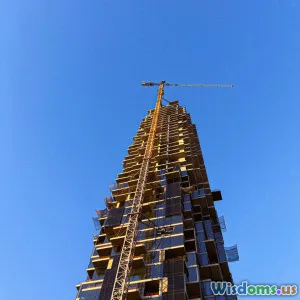
Why Cross Laminated Timber Is Disrupting Skyscraper Design
29 min read How cross laminated timber reshapes skyscraper design: carbon cuts, speed, strength, and code breakthroughs with real-world towers and cost data. (0 Reviews)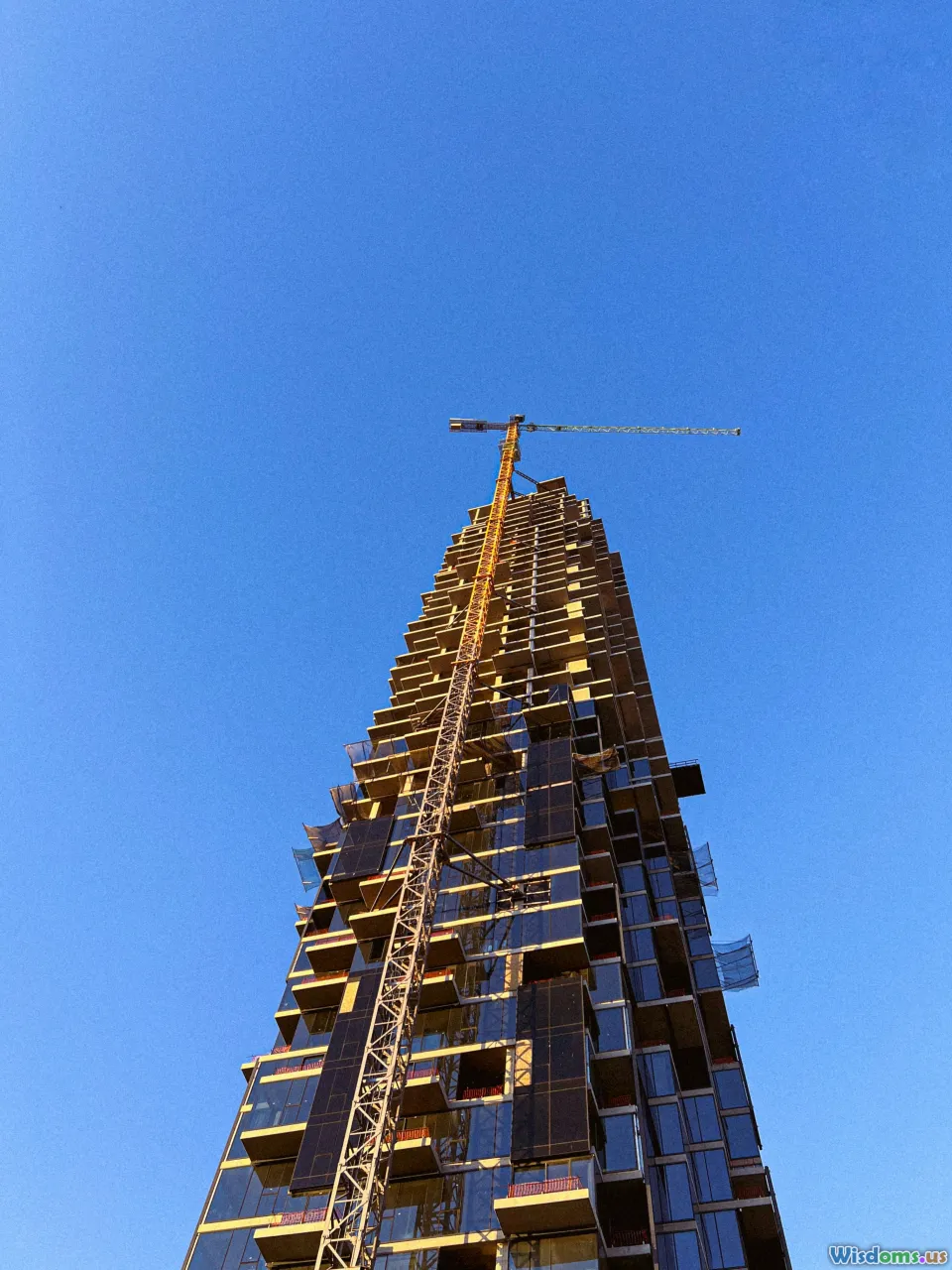
A decade ago, the idea of a timber skyscraper sounded more like an architectural provocation than a market-ready solution. Today, cranes are lifting factory-cut timber panels into skyline-defining towers on several continents. Developers are hitting pro formas thanks to faster schedules, tenants are paying premiums for daylight and warmth only wood can offer, and cities see a direct path to lower embodied carbon without sacrificing safety or performance. Cross laminated timber (CLT) is not merely another material option—it’s changing how tall buildings are conceived, financed, and delivered.
What Exactly Is Cross Laminated Timber (CLT)?

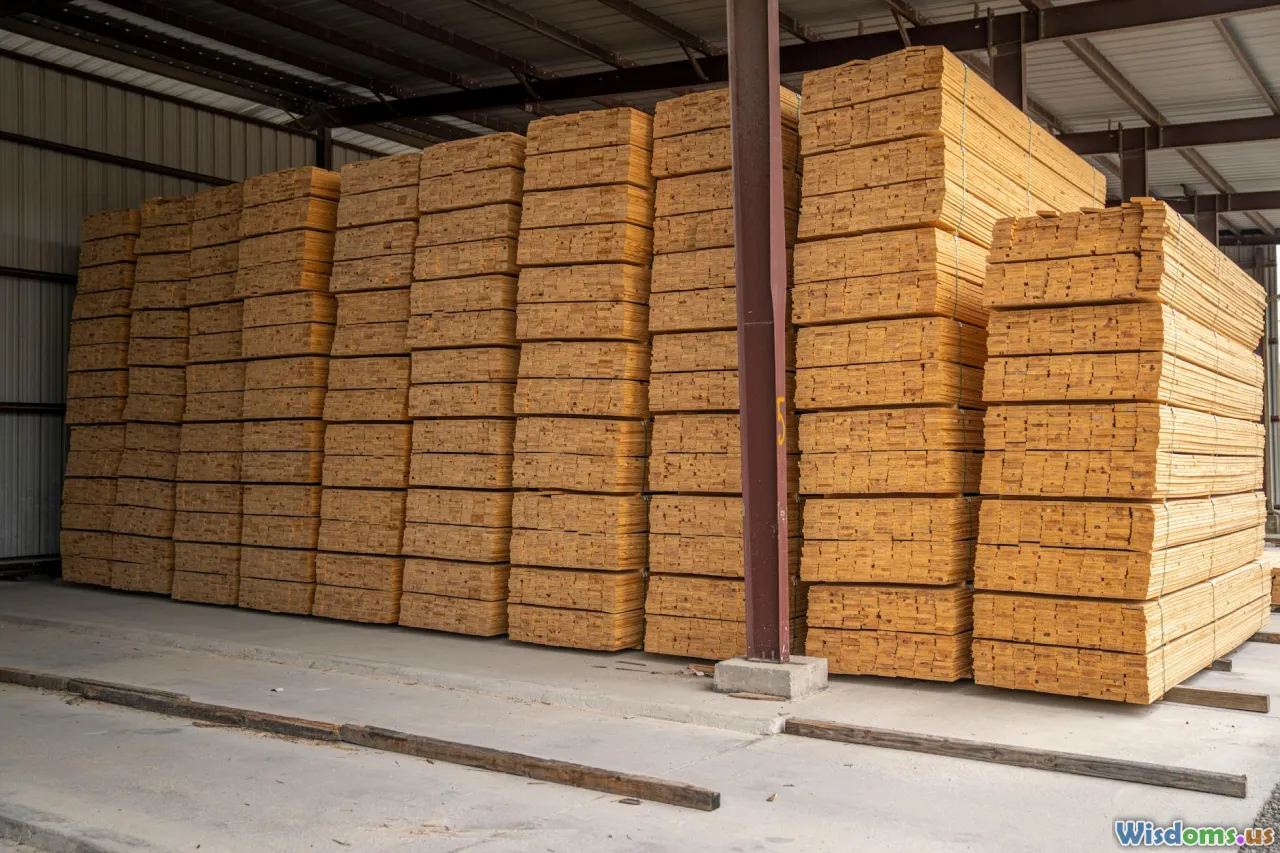
CLT is a mass timber product made by layering boards (lamellas) at right angles—usually in 3, 5, 7, or 9 plies—and bonding them under pressure with structural adhesives. The cross-lamination creates plate-like panels that are strong in two directions, dimensionally stable, and suitable for floors, walls, and roofs. In tall buildings, CLT typically teams up with glulam (glue-laminated timber) beams and columns to form the primary frame.
Key properties and why they matter for high-rises:
- Strength-to-weight ratio: Wood’s density (~400–500 kg/m³ for softwoods) compared to concrete (~2,400 kg/m³) slashes structural dead load. That opens site options with poor soils and reduces foundation size—and cost.
- Precision: Panels are CNC-machined with millimeter-level tolerances. Openings for services, windows, and connectors are cut in the factory, trimming on-site rework.
- Thermal behavior: Wood’s thermal conductivity (~0.12 W/m·K) is far lower than concrete or steel, improving envelope performance and reducing thermal bridging.
- Panel sizes: CLT panels can reach 3 by 12–16 meters, arriving as flat-pack elements labeled for rapid assembly.
Standards and approvals are mature. North America uses ANSI/APA PRG 320 for CLT; Europe references EN 16351. Adhesives are typically polyurethane (PUR) or emulsion polymer isocyanate (EPI) with low emissions. Most reputable manufacturers have FSC or PEFC chain-of-custody certification available.
Why CLT Changes the Skyline Economics

Timber’s headline benefit—lower carbon—tends to overshadow the hard-nosed economics driving adoption. In dense markets, schedule is king, and CLT can pull weeks, even months, off the critical path.
- Speed of erection: Teams routinely install 6–10 panels per crane hour in repeatable bays. Full floors can fly in days, not weeks. Many projects report 20–30% program savings compared to concrete.
- Lighter foundations: Taking 20–30% of building mass out of the equation (versus concrete alternatives) can trim substructure costs and mitigate risk on problematic soils or with adjacent heritage structures.
- Smaller crews, less disruption: Fewer wet trades, lower noise, and diminished site logistics headaches matter on tight urban sites. That translates into fewer neighbors’ complaints and better odds of permit goodwill.
- Earlier interiors and revenue: With dry construction, interiors can begin sooner. Simple arithmetic: if a 24-story tower opens three months earlier, the net present value of lease income can eclipse small material premiums.
Several developers now report near cost-parity for tall mass timber shells versus concrete once repeatability, time savings, and smaller foundations are priced in. Where labor is expensive and cranes are constrained, the advantage often flips decisively to CLT.
Structural Logic of Timber Skyscrapers

There isn’t one “right” timber skyscraper; there is a family of hybrid solutions. Common archetypes include:
- Glulam post-and-beam with CLT floors: The workhorse system for 8–30 stories. Columns and beams in glulam carry gravity loads; CLT acts as a two-way slab spanning between beams. Typical grids range 3.0–4.5 meters; larger spans use composite strategies.
- Hybrid cores: For heights beyond ~12–18 stories (subject to code and performance goals), many teams deploy concrete or steel cores for lateral stiffness and egress robustness, while keeping timber floor plates. Ascent in Milwaukee (86.6 m, completed 2022) uses a concrete core paired with glulam/CLT floors.
- Timber-concrete composites (TCC): A thin concrete topping (e.g., 60–100 mm) over CLT, connected with shear connectors, improves acoustics, vibration, and fire performance while increasing span. This is common in Europe to reach 6–8 m grids.
- Exoskeletons and outriggers: Atlassian’s Sydney headquarters (under construction, slated around 180 m) pairs a steel exoskeleton with timber floor decks, unlocking large, column-free interiors while keeping carbon down.
Practical design notes:
- Floor thickness: A 5-ply CLT floor might be 160–200 mm; with TCC topping it may reach 220–260 mm but still weigh a fraction of concrete.
- Connections: Hidden steel plates and self-tapping screws enable rapid, repeatable joints. Pre-tensioned rods can introduce self-centering behavior in lateral systems.
- Services integration: Plan penetrations at the model stage—think bath “wet walls,” stacked risers, and factory-cut MEP openings. You design it once; you cut it thousands of times—with precision.
Fire Safety: Counterintuitive Strength In Slow Burning

Timber’s greatest public-relations hurdle is also its best-understood engineering reality. Mass timber chars on the surface during a fire, creating an insulating layer that protects the structural core. Unlike light wood framing, heavy sections don’t flash over or collapse quickly.
- Predictable charring: Design codes use conservative char rates, around 0.65 mm/min (roughly 1.5 in/hour). Engineers add a sacrificial layer to members so the load-bearing core survives the fire duration.
- Fire resistance ratings: Two-hour ratings for columns, beams, and floors are achievable by sizing members and detailing encapsulation (gypsum or concrete toppings) where required.
- Self-extinguishment: Well-detailed mass timber tends to self-extinguish once fuel (contents) is depleted, as char starves the core of oxygen. Modern adhesives must pass heat-delamination tests to prevent lamella fall-off.
Codes have caught up. The 2021 International Building Code created three “tall wood” categories: Type IV-A (up to 18 stories, generally more encapsulation), IV-B (up to 12), and IV-C (up to 9, with more exposed timber). Numerous jurisdictions have adopted or piloted these provisions. Meanwhile, exhaustive full-scale burn tests—on compartments with exposed timber—have informed engineering and insurer confidence.
Seismic and Wind: Light, Ductile, and Smart Connections
For seismic zones, lighter structures attract less base shear. Combined with ductile connection design, timber can perform exceptionally well.
- Rocking wall systems: Post-tensioned CLT or LVL walls rock on their base during an earthquake and re-center via tendons. Replaceable fuses (steel plates or energy-dissipating devices) yield and are swapped post-event.
- Full-scale validation: In 2023, a 10-story mass timber test building at UC San Diego’s shake table endured a suite of major quakes, including motions equivalent to magnitude 7.7, with minimal residual drift—proof for performance-based design approaches.
- Wind behavior: Lower mass reduces inertial loads, but accelerations still matter for occupant comfort. Tuned mass dampers and outrigger levels can be integrated; timber diaphragms distribute wind forces efficiently when detailed for diaphragm shear.
The bottom line: With the right detailing—hold-downs, overstrength factors, and connection redundancy—tall timber can meet or exceed seismic and wind performance expectations.
Comfort: Acoustics, Vibration, and Thermal Performance
Critics sometimes cite acoustics and vibration as timber’s Achilles’ heel. The reality: those are design choices, not material limitations.
- Acoustics: Bare CLT transmits impact noise; that’s why assemblies matter. A common solution pairs a resiliently mounted (floating) topping slab, acoustic underlayment, and ceiling layers to achieve STC/IIC ratings comparable to concrete. Walls use double-stud or decoupled leaf systems.
- Vibration: For office spans near 6–8 m, aim for fundamental frequencies above 8–10 Hz and limit acceleration under walking loads. Composite toppings and strategic beam sizing move the needle substantially. Analytical models are validated with mock-ups or on-site tests.
- Thermal and comfort: Timber’s warmer surface temperature reduces radiant asymmetry and “cold-surface” discomfort common with concrete slabs. Plus, the hygroscopic nature of wood can buffer indoor humidity peaks, improving perceived air quality.
Occupant satisfaction data from early towers indicate higher comfort scores and lower complaints about noise and draft—particularly in spaces with a balance of exposed timber and acoustic treatments.
Case Studies That Prove the Point
- Ascent, Milwaukee, USA (2022): At about 86.6 meters and 25 stories, Ascent is among the tallest mass timber hybrid towers in the world. It uses a concrete core with glulam columns and CLT floors. The developer cited a faster schedule and tenant demand for biophilic interiors as drivers.
- Mjøstårnet, Brumunddal, Norway (2019): Standing approximately 85.4 meters, this mostly timber tower uses glulam trusses and CLT floor slabs. Built with local spruce and on a riverside site, it showcases how reduced weight simplifies foundations.
- Sara Cultural Centre, Skellefteå, Sweden (2021): Reaching around 75 meters, the complex includes a hotel and cultural facilities constructed primarily with timber, including trussed cores, and has become a benchmark for all-timber high-rise design.
- Brock Commons Tallwood House, Vancouver, Canada (2017): At 18 stories and 53 meters, Brock Commons used prefabricated CLT floors and glulam columns around a concrete core. The superstructure went up in about 70 days—a case study in speed.
- Atlassian Central, Sydney, Australia (under construction): Projected around 180 meters, it pairs a steel exoskeleton with timber floor plates, setting a new ambition for hybrid timber’s role in very tall towers.
Examples across Europe (HoHo Wien, HAUT Amsterdam, Dalston Works London), North America, and Australia illustrate that tall timber is no longer theoretical—it’s operational, rentable, and insurable.
Designing a Tall Timber Tower: Step-by-Step Playbook

Consider this as a pragmatic, repeatable approach for your next tower:
- Define performance early
- Carbon targets: Set embodied carbon budgets for structure, core, and envelope (e.g., <500 kg CO2e/m² A1–A3 as a stretch goal). Decide how much exposed wood you want to balance aesthetics and fire/acoustic needs.
- Height and lateral system: Decide if you’re using a concrete/steel core or an all-timber rocking wall solution. Then pick your grid to suit the use case (residential vs. office).
- Lock in the structural grid and massing
- Typical residential: 3.0–3.6 m grid, 5-ply or 7-ply CLT floors, glulam columns.
- Typical office: 4.0–8.0 m spans using TCC floors or secondary beams; check vibration early.
- Integrate MEP in the model
- Reserve trunk risers and vertical shafts. Use factory-cut openings to avoid site drilling, which is slow and risks compromising fire protection.
- Consider radiant systems in toppings or underfloor air to maintain exposed timber ceilings.
- Engineer for fire, acoustics, vibration
- Fire: Size sacrificial char layers, choose encapsulation zones (e.g., in egress routes), and coordinate with code officials.
- Acoustics: Test assemblies. Floating floor toppings and resilient mounts are your friends.
- Vibration: Use serviceability criteria specific to the program—office, lab, or residential—and test a full mock-up if pushing spans.
- Plan moisture management like a critical path
- Temporary roofs, panel edge sealing, and sequencing reduce the risk of wetting. Aim to keep timber moisture content below ~20% during construction.
- Specify vapor-open membranes and detail for drying. Timber can tolerate brief wetting, but trapped moisture is the enemy.
- Procure smartly
- Engage a capable mass timber fabricator early. Lock panel schedules well ahead of site needs; factory slots are precious.
- Align shipping sizes with local roads and crane capacity; fewer lifts equal faster schedules.
- Measure what matters
- Instrument key connections. Consider embedding sensors for moisture and movement. Data beats assumptions for commissioning and long-term performance.
Costing and Procurement: Avoiding the Learning Curve Tax

Early adopters sometimes overpay because teams treat timber like concrete with a different color. Avoid that by:
- Designing for fabrication: Standardize panel sizes and bay types. Three to five repeating panel types across dozens of floors is both realistic and cost-effective.
- Minimizing custom connectors: Use cataloged steel plates and long self-tapping screws. Reserve bespoke components for special conditions.
- Booking the factory window: Lock production months before delivery. Panel production, shipping, and erection must align; a missed crane slot can erase material savings.
- Pricing the schedule: Include finance and lease-up gains in your business case. A two-month earlier opening can outweigh a few percent material premium.
- Training the site crew: A brief boot camp on lifting points, panel sequencing, and screw installation angles pays for itself in the first week.
As a rule of thumb, overall project costs can land at parity when you capture the trifecta of repeatable bays, reduced foundation scope, and a compressed program. If none of those apply, reconsider your approach or escalate hybridization (e.g., a steel core to extend spans and simplify vibration control).
Sustainability With Nuance
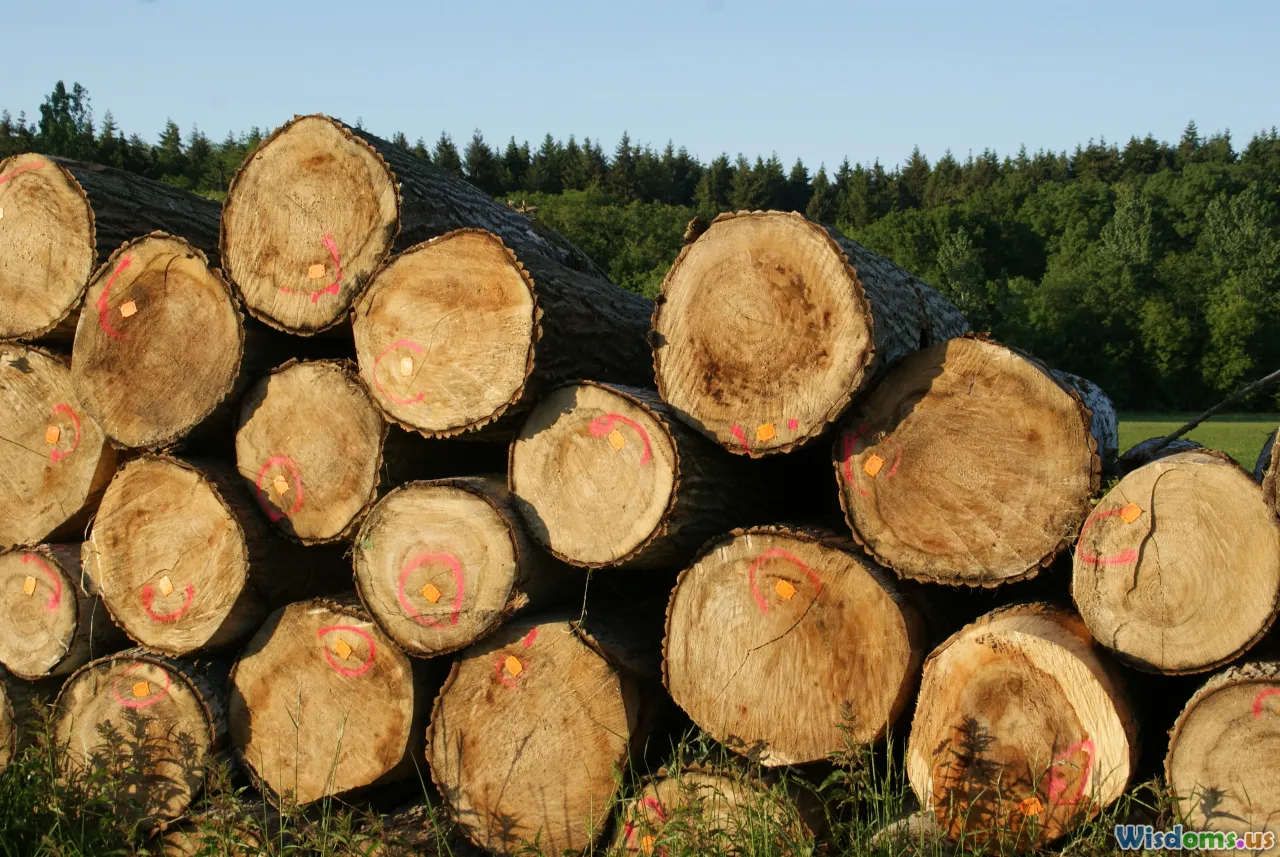
CLT’s sustainability case is strong—but it’s not magic. Smart teams make it real with data.
- Embodied carbon: Wood stores biogenic carbon absorbed during tree growth—roughly 0.8–1.0 tonnes of CO₂ per cubic meter of wood. When you factor in avoided emissions from concrete and steel (the “substitution effect”), the structure’s net impact can drop substantially.
- LCA discipline: Use EN 15978 or comparable frameworks to capture A1–A3 (manufacture), A4–A5 (transport/construction), B stages (use), and C/D (end-of-life/benefits). Avoid crediting permanent sequestration unless end-of-life pathways ensure reuse or long-lived products.
- Responsible forestry: Demand FSC or PEFC. Prefer regional supply where feasible to cut transport emissions and support local forestry economies.
- Adhesives and IAQ: Specify low-emission adhesives; most modern CLT is well below E1 formaldehyde thresholds. Coordinate with mechanical design so exposed wood does not conflict with IAQ goals.
- End-of-life and circularity: Design for disassembly—mechanical fasteners, accessible connections, and panelized grids. Reuse beats recycle; recycle beats energy recovery.
When scrutinized with full life-cycle boundaries, a timber hybrid tower typically outperforms its concrete/steel counterpart on embodied carbon by tens of percent, often more than half for the superstructure.
Navigating Codes, Insurance, and Risk

Regulatory acceptance has accelerated, but you still need a strategy.
- Codes: 2021 IBC introduced Type IV-A (up to 18 stories, more encapsulation), IV-B (up to 12), and IV-C (up to 9) for mass timber. Canada’s NBCC has provisions up to 12 stories, with pathways for taller via performance-based design. Europe relies on Eurocodes and national annexes; tall timber is increasingly routine there. In the UK, combustible-material restrictions in certain residential uses require performance paths and careful scoping; non-residential programs are more flexible.
- Performance-based design: For very tall or novel systems, a PBD approach—grounded in testing and advanced modeling—builds confidence with officials and insurers.
- Insurance: Bring underwriters in early. Share test data, detail fire compartments, and clarify sprinklers, detection, and fire brigade access. Some carriers now have specific products for mass timber once they see the package.
- Quality control: Factory audits, moisture management plans, and third-party special inspections help de-risk construction and operations.
The message to authorities and insurers is simple: mass timber is engineered wood, not stick framing. Show the math and the mock-ups.
Digital Fabrication and On-Site Realities
CLT thrives on design-for-manufacture-and-assembly (DfMA).
- Tolerances: Expect ±2–3 mm on panel cuts from the factory. Coordinate this with glazing, façade anchors, and MEP penetrations. Small mistakes multiply across 30 floors; clash detection is non-negotiable.
- Logistics: Label panels by floor and sequence them in trucks for just-in-time delivery. Plan staging areas; urban sites benefit from smaller, more frequent deliveries synchronized with crane availability.
- Weather: Use temporary membranes and taped seams. If panels get wet, allow for drying before encapsulation. Moisture sensors at sample locations provide proof-of-condition for owners and insurers.
- Safety: Lighter elements mean smaller cranes and reduced lifting risk. But train crews on working-at-heights with large, flat elements—tag lines and lift points matter.
With well-managed DfMA, timber assemblies feel like kit-of-parts construction. The line between the factory and the jobsite blurs—and that’s the point.
Common Myths and How to Address Them

-
“Timber burns; therefore, it’s unsafe.” Fact: Mass timber’s char layer insulates the load-bearing core. Fire-resistance ratings are achieved through sizing and encapsulation where required. Modern adhesives prevent delamination.
-
“You can’t build tall because of sway and vibration.” Fact: Hybrid cores, outriggers, and TCC floors control lateral and floor dynamics. Very tall hybrids under construction today demonstrate feasibility well beyond 18 stories.
-
“Timber rots.” Fact: Moisture is a design and construction management issue. With membranes, edge sealing, and drying pathways, long-service timber structures are routine—even in wet climates.
-
“It’s too expensive.” Fact: When you add time savings, foundation reductions, and tenant premiums, total development costs can meet or beat concrete. The trick is to design for repeatability and lock procurement early.
-
“There isn’t enough sustainable wood.” Fact: In many regions, forest growth outpaces harvest. Responsible sourcing and local supply chains are essential, but scalable capacity exists and is expanding as demand grows.
CLT Versus Concrete and Steel: A Clear-Eyed Comparison
-
Weight and foundations
- Timber: ~20–30% of the mass of concrete solutions; smaller footings, easier retrofits over transit lines or tunnels.
- Concrete/steel: Heavier, sometimes advantageous for dynamic damping but costly on poor soils.
-
Schedule and labor
- Timber: Faster dry-in, fewer wet trades, smaller on-site workforce.
- Concrete/steel: Well-known workflows but weather-sensitive and rebar/formwork intensive.
-
Carbon footprint (A1–A3)
- Timber: Typically lowest; stores biogenic carbon and can avoid high-temperature kilns and furnaces.
- Concrete/steel: Higher embodied emissions; decarbonizing but not yet at scale globally.
-
Fire and code
- Timber: Performance proven with testing; encapsulation and char design are central.
- Concrete/steel: Familiar to AHJs; still require robust fireproofing (sprays, intumescent coatings) and careful QA/QC.
-
Aesthetics and wellness
- Timber: Exposed wood boosts biophilic appeal; research links it to reduced stress and higher satisfaction.
- Concrete/steel: Flexible finishes but often require added materials to achieve similar warmth.
Developer and Design Team Tips That Save Months

- Lock a target exposure strategy: Decide which surfaces stay exposed and where encapsulation is required. This avoids late finish changes that threaten fire/acoustic performance.
- Solve vibration by intent, not accident: Set a frequency target, pick TCC where spans demand it, and prove it with models and mock-ups.
- Commission the façade early: Coordinate anchors and penetration positions in the panel model. Timber tolerances require precise façade interfaces.
- Write a moisture playbook: Include temporary roofs, panel edge sealant, dehumidifiers, and a go/no-go moisture threshold before closing cavities.
- Bring insurers and AHJs into design workshops: Treat them as partners; share test data and run tabletop fire and water-ingress scenarios.
- Pilot a bay: Build a full-scale slice (structure + MEP + finishes). It’s the fastest way to de-risk sequencing and connection details.
Where CLT Skyscrapers Go Next

Several trajectories are clear:
- Taller and more hybrid: Expect more 30–40+ story hybrids pairing timber floors with steel or concrete cores and exoskeletons. Ultra-tall timber will be hybrid by necessity for stiffness and egress.
- Smarter products: Mass plywood panels (MPP), laminated veneer lumber (LVL), and bio-based fire-protective coatings expand options and performance. Prefab MEP cassettes will snap into panel cut-outs.
- Verified carbon: Third-party, cradle-to-grave LCAs and digital material passports will become table stakes for financing and incentives.
- Circular design: Bolted, accessible connections will enable component reuse after decades of service, turning towers into material banks.
- Policy tailwinds: More cities now factor embodied carbon into approvals and incentives, boosting timber’s competitive edge.
The skyline is a ledger of what cities value. For a century, concrete and steel captured our ambition to build higher and faster. CLT’s disruption is different: it couples speed and performance with a material logic aligned to climate goals and human comfort. As more teams master the playbook—standardized bays, hybrid cores where needed, rigorous fire and moisture detailing—timber will stop being the alternative and start being the default question at the outset: why not wood?
Architecture & Urban Design Architecture supply chain Prefabrication Building Materials Building Technology Fire Safety Sustainable Construction Embodied Carbon Cross Laminated Timber (CLT) Mass Timber Tall Timber Buildings Skyscraper Design Seismic Performance Hybrid Structures Building Codes Life-Cycle Assessment
Rate the Post
User Reviews






Popular Posts