
Five Corporate Secrecy Loopholes Companies Hope You Miss
26 min read Expose five corporate secrecy loopholes with detection tips, red flags, and real-world examples for investigators, journalists, and compliance teams. (0 Reviews)
The most effective forms of corporate secrecy rarely look like secrecy. They look like ordinary paperwork, routine contracts, or innocuous memberships in industry groups. Yet behind these everyday fixtures sit powerful loopholes that keep the public, employees, and even investors in the dark. If you know where to look, you can spot the red flags and pry open the narrative companies would rather you miss.
Below are five of the most persistent corporate secrecy loopholes, how they work, and what you can do to cut through the fog.
1. The Subsidiary Maze: Beneficial Ownership Blind Spots

A corporation’s org chart can be a tidy pyramid in the annual report—and a tangled forest in reality. The classic play is simple: layer subsidiaries across jurisdictions with different disclosure standards, then shift assets, profits, or liabilities through the structure until the trail goes cold.
How the loophole works
- Strategic jurisdictions: U.S. states like Delaware, Nevada, and Wyoming offer easy incorporation, minimal public ownership disclosure, and fast filings. Internationally, the British Virgin Islands, Cayman Islands, Luxembourg, and the Netherlands are well-worn routes. Each adds a layer of opacity.
- Nominee directors and trusts: Instead of naming the real decision-maker, companies can appoint nominee directors or set ownership within trusts that shield the ultimate beneficiaries. Even when ownership must be reported to a regulator, it may not be public.
- Exemptions with ripple effects: The United States began requiring many companies to report beneficial owners to FinCEN in 2024. But exemptions—public companies, large operating companies meeting specific thresholds, many banks and insurers—mean subsidiaries of exempt entities can still be hard to trace. A single exemption high up the chain can create a cascade of non-disclosure below.
Why it matters
- Risk buffering: High-risk operations (from data harvesting to hazardous manufacturing) can be parked in thinly capitalized subsidiaries. If something goes wrong, the parent touts distance.
- Profit shifting: Profits can be routed through low-tax affiliates via intercompany loans and intellectual property royalties, reducing the consolidated tax bill while leaving customers and resident taxpayers to fill the gap.
- Accountability gap: When regulators, journalists, or civil society follow the money, they hit clerical dead ends: post office box addresses, registered agents, and holding firms with no staff.
Real-world signposts
- A single address, many companies: Thousands of entities share famous registered-agent locations (for example, beyond Wilmington’s well-known corporate services hubs, many jurisdictions have streets where one mailroom hosts entire transnational webs). If a “headquarters” looks like a mail drop, assume there’s more structure than meets the eye.
- “Other subsidiaries” footnotes: U.S. companies list significant subsidiaries in Exhibit 21 of the 10-K. If a complex multinational lists only a handful, or stops short of listing second- or third-tier entities, that’s a hint to dig deeper.
- Names that rhyme: Affiliates with near-identical names in different jurisdictions—Acme Holdings BV, Acme IP Ltd., Acme Services LLC—are often the pipes through which profits and obligations flow.
How to pierce the veil (actionable steps)
- Start with Exhibit 21 (10-K) or equivalent: Map all named subsidiaries. Flag those in tax-favored or secrecy jurisdictions.
- Cross-check identifiers: Use the Global Legal Entity Identifier Foundation (GLEIF) database to find LEIs and related entities; match names and addresses on OpenCorporates.
- Chase the contracts: Look for intercompany agreements described in 10-K “Related Party” notes; these often reveal IP licensing and service-fee arrangements used for profit shifting.
- Follow the money across borders: Scan transfer pricing and tax footnotes for phrases like “indefinite reinvestment assertion” or “uncertain tax positions” that signal aggressive structuring.
- Triangulate with public filings abroad: Many countries publish searchable company registries. Even a single director name or registration number can unlock further links.
Pro tip: If a company claims it cannot easily deliver a comprehensive subsidiary list or beneficial owners for all significant affiliates, that’s not a limitation—it’s a strategy.
2. Quiet Contracts: NDAs, Forced Arbitration, and Non-Disparagement

If the subsidiary maze hides structure, hush clauses hide stories. Confidentiality terms are standard, but the way they’re deployed can stifle warnings before they reach regulators or the press.
How the loophole works
- Forced arbitration: Many employment and consumer contracts push disputes into private arbitration instead of court. Arbitration filings and outcomes often remain confidential, preventing public scrutiny and case law from building. In the U.S., recent reforms ended forced arbitration for sexual assault and harassment claims, but the vast landscape of wage, discrimination, and consumer disputes still frequently detours into private forums.
- Overbroad NDAs and non-disparagement: Confidentiality language that purports to cover “any information learned while employed” can chill whistleblowing even when the law protects it. Employees often don’t know that communications with regulators (like the SEC or OSHA) are protected and cannot be barred by contract.
- Protective orders and sealed settlements: Even when a case enters court, defendants commonly seek protective orders that keep discovery materials sealed, then settle with confidentiality terms. Patterns of harm or defect stay hidden from customers and investors.
Why it matters
- Pattern detection is blocked: When similar claims resolve in private, no one connects the dots. Defects repeat, harassment cycles continue, and misleading sales practices persist.
- Investor blind spots: Shareholders rely on public signals—litigation dockets, regulatory actions—to assess risk. Systemically silenced disputes translate into surprise write-downs.
Real-world signposts
- Arbitration-first HR playbooks: Companies with glossy internal resolution processes that culminate in private arbitration often emphasize “efficiency” and “respectful resolution”—both good things in theory, but also indicators that disputes will not see daylight.
- Severance agreements heavy with hush terms: Clauses restricting “any statement that could harm the reputation of the company” are common. The U.S. National Labor Relations Board’s 2023 guidance warned that overly broad non-disparagement and confidentiality clauses for many workers are unlawful, yet such terms still appear and still chill speech.
- Compliance posters with gaps: If an employer fails to mention protected reporting channels (e.g., SEC whistleblower program) or overstates the scope of their confidentiality policies, take note.
How to push back and surface facts (actionable steps)
- Employees: Before signing, ask for carve-outs that preserve your right to speak to regulators, law enforcement, or to discuss workplace conditions as protected by labor law. If you’ve already signed, remember many laws nullify contract terms that restrict protected reporting.
- Investors and analysts: Scrutinize the “Legal Proceedings” section of the 10-K/20-F and the “Contingencies” footnotes. Compare disclosures year-over-year. A rising legal reserve paired with stagnant public case counts often signals private settlements or arbitration backlogs.
- Researchers: Check the American Arbitration Association’s Consumer Clause Registry and public award databases where available. They can reveal the volume and type of disputes a company funnels off the public stage.
Pro tip: When a company touts a “world-class speak-up culture” but fights to keep NDAs maximal and employee forums non-collective, trust behavior, not branding.
3. Supply Chains in Shadow: Tier-2 and Tier-3 Obscurity

Many companies now publish supplier codes of conduct and sustainability reports. What’s missing is usually the depth: public lists of tier-1 suppliers tell you where the final stitching happens, but not whose hands milled the fabric, refined the metal, or harvested the raw material.
How the loophole works
- Subcontracting by stealth: A brand audits factory A, which then quietly outsources to unvetted factory B during high season. Paper compliance survives; real conditions change.
- Certification sleight-of-hand: Mass-balance or “book-and-claim” models for commodities like palm oil and cocoa allow credits to be purchased even when the physical product is not certified at origin. Traceability claims sound strong but can be accounting fictions.
- Patchwork laws and audits: Social audits catch what they’re designed to catch—often scheduled visits announced in advance. Forced labor, wage theft, and safety hazards are easy to hide for 24 hours. Due diligence laws are strengthening in some countries, but enforcement is uneven, and few regimes require full public traceability to raw materials.
Why it matters
- Human rights risk: Well-publicized tragedies—from building collapses to forced labor allegations—rarely originate at the glossy tier-1 supplier.
- Reputational whiplash: A company may genuinely believe it’s compliant up top while weak controls below lead to sudden product bans, seizures, or consumer boycotts.
- Climate and deforestation: Scope 3 emissions and land-use change risks mostly sit deep in the chain. Without visibility to farms and smelters, climate claims are guesses.
Real-world signposts
- Perfect audit scores: A file of glowing audit reports without granular remediation plans is a red flag. Real supplier improvement leaves a paper trail of problems identified, time-bound corrective actions, and follow-ups.
- Vague traceability numbers: “95% traceable” without a denominator (“traceable to what level?”) is marketing, not measurement.
- Commodity contradictions: Companies claiming zero-deforestation palm oil or fully traceable cocoa while sourcing from complex aggregators should explain whether they rely on mass-balance, segregated supply, or credits—and how they verify.
How to trace what they don’t publish (actionable steps)
- Look for public supplier lists: Some apparel and electronics brands share factory lists. Cross-reference with independent databases like the Open Apparel Registry.
- Follow the shipments: Trade databases (e.g., Panjiva, ImportGenius) and customs records in some jurisdictions allow you to see shipments tied to specific suppliers.
- Track enforcement: Monitor seizure lists and withhold release orders from customs agencies focused on forced labor; match them to brand portfolios.
- Use satellite and NGO data: Deforestation tracking projects and watchdog reports can reveal whether suppliers are linked to land clearing, even when paperwork says otherwise.
- Ask for depth: If you’re a buyer or investor, require tier-2/3 disclosure and independent, unannounced audit protocols. Tie payment terms or procurement awards to verifiable traceability milestones.
Pro tip: A credible program publishes not just suppliers, but grievances and outcomes. Silence in the grievance log is rarely a sign that nothing is wrong; it’s a sign the line is not being used or not being trusted.
4. Financial Reporting Fog: Segments, “Adjusted” Metrics, and Off-Balance Tricks
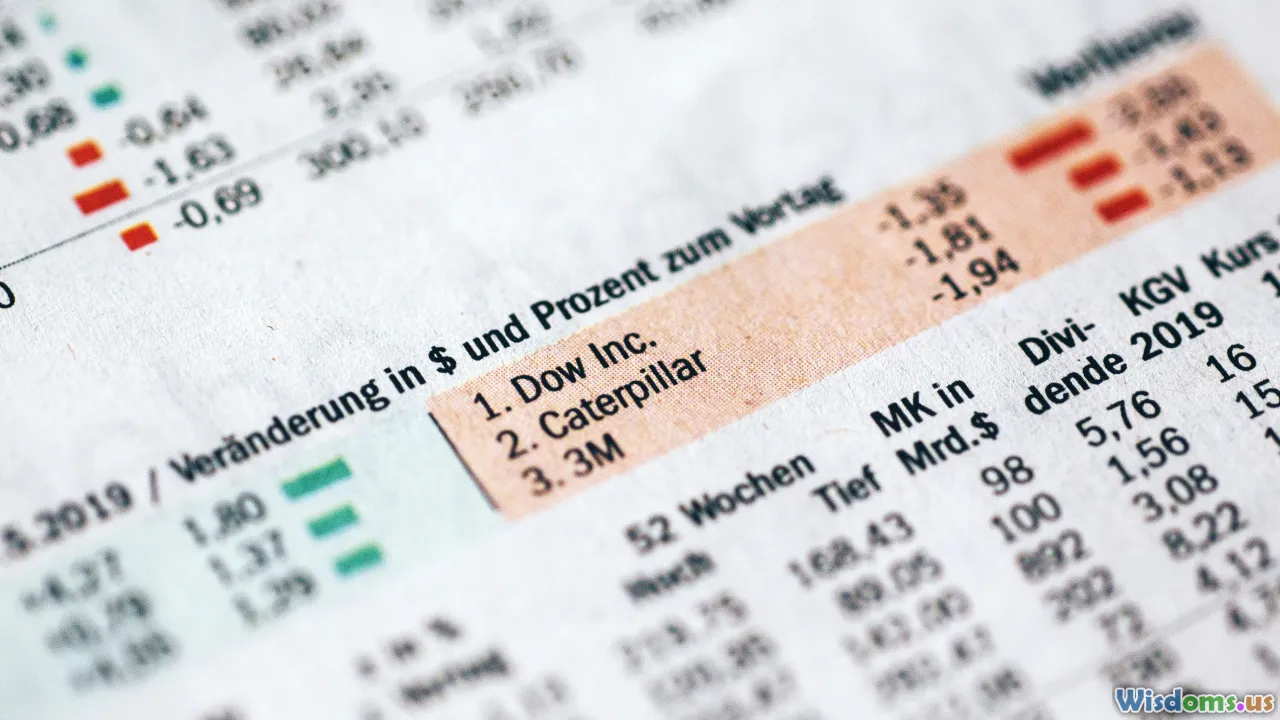
Financial statements are designed for clarity, but the gray zones are where secrecy thrives. The goal isn’t necessarily to falsify—it’s to frame.
How the loophole works
- Segment minimalism: Companies can group dissimilar operations into a single reportable segment if management views them together. Less segmentation means fewer disclosures about margins, growth rates, and risks. While accounting standards have begun nudging firms to break out more expenses by segment, there’s still room to obscure underperformers within blended categories.
- Non-GAAP add-backs: “Adjusted EBITDA” and friends exclude a rotating cast of costs: restructuring, litigation, stock-based compensation, even routine marketing. Used judiciously, these help investors see through noise. Abused, they manufacture a pretend business.
- Off-balance arrangements: Although lease accounting reforms brought many leases on-balance sheet, service contracts and variable interest entities still create shadows. Some tech firms rely on contractual control structures (e.g., VIEs) that leave key assets outside the consolidated legal ownership chart, introducing legal and political risk that’s easy to miss if you focus only on the P&L.
- Tax footnote opacity: Effective tax rates can look low without obvious havens if profits are booked to IP-heavy entities in low-tax countries. “Unrecognized tax benefits” and indefinite reinvestment assumptions can be large, real, and hard to parse.
Why it matters
- Valuation mirages: Investors pricing off adjusted metrics can overpay for momentum that disappears when the add-backs stop.
- Hidden concentration: A business line that’s flailing can be masked within a broader segment until it’s written down in a single, shocking quarter.
- Legal risk: Structures that rely on uncertain law or political tolerance (for example, contractual control in countries that restrict foreign ownership) can unravel abruptly.
Real-world signposts
- Ever-changing adjustments: If a company routinely excludes “one-time” charges that appear every year, or invents bespoke metrics with flattering labels, assume the number is there to sell a story, not to inform.
- Big “Other” buckets: Watch for revenue or expense lines labeled “Other” swelling over time, or for cash flow that depends on supplier financing or receivables sales tucked away in the notes.
- Vague CAMs/KAMs: Auditors now disclose “Critical Audit Matters” (U.S.) or “Key Audit Matters” (international). If the language is boilerplate for a business with unusual structures, push for details in investor calls.
How to re-anchor to reality (actionable steps)
- Reconcile non-GAAP to GAAP: Build your own bridge. Add back the add-backs that look recurring. See what the business looks like if stock-based pay and marketing are real costs—as they are.
- Read the segment footnotes forward and back: Track changes in segment reporting. If the company reorganized its segments, restate prior-period numbers and see who’s winning or losing under the new map.
- Hunt for off-balance obligations: Lease and purchase obligation tables, supplier finance programs, and guarantees tell you where future cash demands hide.
- Tax telltales: Compare the effective tax rate to statutory rates where the company actually operates. Large deferred tax assets and uncertain tax positions deserve follow-up questions.
- Model downside cases: If a risky jurisdiction or structure is central, run scenarios where it’s impaired or unwound. What happens to cash, covenants, and control?
Pro tip: The most dangerous metric is the one management highlights but cannot define precisely in Q&A. If it can’t be reconciled or repeated without guesswork, treat it as marketing.
5. Political Spending in the Dark: Trade Associations and “Social Welfare” Routes

A company may pledge not to “engage in politics” while still funding politics by proxy. The workaround is perfectly legal: give to entities that don’t have to name you.
How the loophole works
- Trade associations as pass-throughs: 501(c)(6) organizations (chambers of commerce, industry groups) and 501(c)(4) “social welfare” organizations can lobby and run issue ads without revealing their donors. A company writes a check, the association advocates—no public breadcrumb connects the two.
- Dues vs. donations ambiguity: Membership dues can include components used for lobbying. While associations must tell members the nondeductible portion for tax purposes or pay a proxy tax, public investors are often left guessing how much of a company’s spend fuels politics.
- Executive side doors: Even when a corporate policy restricts direct political contributions, senior executives can give personally to allied political committees. The separation is formal; the signaling is not.
- Regulatory comment letters and astroturf: Corporations and associations flood agencies with “grassroots” comments during rulemaking, many via campaigns that manufacture the appearance of public support. These become part of the administrative record without a donor roster.
Why it matters
- Policy drift: A company’s sustainability report can promise climate progress while its trade association funds efforts opposing emissions rules. Customers and employees assume alignment that doesn’t exist.
- Reputational snapback: Investigations later reveal the ties; brands pay twice—once to influence, again to distance themselves from the influence.
Real-world signposts
- Selective transparency: Watch for companies that publish PAC donations and candidate contributions but stay silent on trade association payments, or disclose totals without naming recipients.
- Model bill fingerprints: If a company’s policy agenda looks uncannily like an industry group’s “model legislation,” it’s reasonable to ask whether the company is a member, donor, or board participant.
- Comment blitzes: Spikes in repetitive, template-like public comments on regulatory dockets often reflect organized campaigns; companies may be behind the scenes.
How to map the influence (actionable steps)
- Start with the company’s political spending policy: If it omits associations or 501(c)(4) giving, that’s the hole.
- Use external indices: Benchmarks like the CPA-Zicklin Index evaluate disclosure and accountability around political spending; low scores are a nudge to ask harder questions.
- Search the association’s materials: Many trade groups list corporate members or sponsors in annual reports, conference brochures, or IRS filings.
- Follow the issues: On OpenSecrets and state databases, track lobbying on specific bills or rules, then see which associations took the lead. If your company is a member, assume some fraction of dues funded that position.
- Push for enhanced reporting: Investors can file shareholder proposals asking for itemized disclosure of association payments and the portion used for lobbying, plus board oversight of misalignment risks.
Pro tip: Alignment audits—comparing a company’s stated ESG commitments to the known positions of its top associations—often find the biggest credibility gaps in climate and labor policy.
A quick field guide: spotting secrecy in 10 minutes
- In the 10-K, jump to Exhibits to skim the subsidiary list; note any low-tax or secrecy jurisdictions and repeat names.
- Compare non-GAAP and GAAP earnings; circle any “one-time” items that recur across three years.
- Scan “Legal Proceedings” and “Contingencies” for growth in reserves without a matching uptick in public cases.
- Open the political spending policy; check for silence on trade associations and 501(c)(4) giving.
- Look at the sustainability report’s supply-chain section; if it brags about audits but not unannounced visits, worker voice, or remediation, assume you’re seeing the surface.
What to do when the trail goes cold
- Ask defined questions: Vague asks get vague answers. Instead of “Are you transparent?”, try: “List your top ten trade associations by dues and the percentage of each used for lobbying last year.” Or: “Provide tier-2 supplier mapping for your top three commodities, with methodology.”
- Request governance proof: For sensitive structures, seek board minutes or committee charters showing oversight of tax, political spending, and human rights risks. Words are easy; governance is work.
- Compare peers: If competitors disclose what your target won’t, the claim that disclosure is “impractical” loses force. Use peer transparency as leverage.
- Leverage public datasets creatively: Cross-reference shipping data, NGO reports, satellite imagery, and court dockets. One weak link—an address, a director’s name, a registration number—can unlock an entire network.
A final thought
Secrecy endures because it hides inside normality. Subsidiaries are basic; so are NDAs, audits, accounting choices, and association memberships. None is inherently nefarious. The problem is the space they create when combined with incentives to avoid scrutiny. You don’t need subpoena power to narrow that space—you need precision questions, persistence with public records, and the discipline to reconcile a company’s claims to the evidence available.
The moment you start treating the ordinary as a map—where addresses, footnotes, and policy gaps are landmarks—the loopholes stop being places to hide and start being places to look. Companies may hope you miss them. Now you don’t have to.
whistleblowing Corporate Governance Secrets & Secret Societies Corporate and Financial Secrecy Business Ethics third-party risk Compliance & Risk Finance & Regulation shell companies beneficial ownership regulatory arbitrage offshore SPVs NDAs attorney–client privilege algorithmic opacity data retention
Rate the Post
User Reviews










Popular Posts